
REVIEW · LONDON CITY TOURS
Indian Cooking Masterclass in London
Curry lessons in London that feel personal. You’ll get a small-group cooking class led by Monisha Bharadwaj, an award-winning author and professional chef, and you’ll learn more than recipes, including how to choose ingredients that actually work at home. I especially like the grocery stop first, because it turns shopping into part of the lesson, and the hands-on kitchen time where you do the stirring, grinding, and layering.
One possible drawback: the menu is set, so you’re not customizing a personal tasting flight. You’ll make a north Indian curry (either Murgh Masala or Channa Masala), plus pulao rice, a vegetable side dish, and a smoked cumin raita, then you eat what you cooked. If you have very specific dietary needs beyond the chicken vs chickpea choice, it’s smart to ask ahead.
Key highlights
- Meet at Hounslow West Underground and keep it simple with a clear start point near public transport
- Grocer visit for ingredient know-how, so you learn what to buy and why before you cook
- Monisha Bharadwaj teaches as you cook, with lots of personal guidance in a max 8-person group
- A full north Indian meal: curry, pulao rice, subzi, and smoked cumin raita
- You eat the results right after cooking, not later, not as leftovers
- Recipe sheets provided, so you can repeat the dishes in your own kitchen
How the class runs, from Hounslow West to Monisha’s kitchen
Plan for about 2.5 hours in total. The class runs Tuesday to Friday, with the session starting at 10:30 AM and ending around 1:00 PM. The pace is practical: you start by meeting at Hounslow West Underground Station (Stop A), then you head out to buy ingredients before you ever touch a stove.
After the grocer stop, you walk about five minutes to the Cooking With Monisha kitchen, and the walk is described as having no steps. That matters because it keeps the experience from turning into a “hunt for directions” day. In a class like this, you want your brain focused on flavor and technique, not where to go next.
The group size stays small, with a maximum of 8 travelers. That changes everything. In a bigger class, you might watch more than you cook. Here, you’re expected to work with your hands, so you leave with confidence that you can reproduce the dishes later, not just remember the taste.
You can also read our reviews of more cooking classes in London


The grocer stop that makes the recipes actually usable
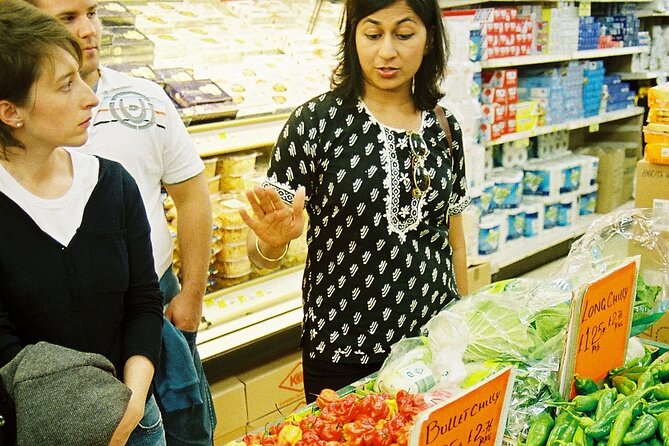
The ingredient shopping portion is one of the best parts, and it’s not just window dressing. You’ll be taken to a local Indian shop right after meeting at Hounslow West Station, and you’ll learn how to select the key items that shape the final flavor.
Here’s what this does for you as a home cook:
- You stop guessing what “the right” spice or staple looks like.
- You learn how to choose ingredients so the flavors come through the way they’re supposed to.
- You get practical substitutions in your head, because once you understand the ingredient’s role, you can swap wisely.
This is also where the class feels less like a performance and more like real food training. Monisha’s background includes writing and teaching, so she doesn’t treat ingredients as trivia. She treats them as tools. And when you understand the tool, your cooking stops being fragile.
Bring this mindset with you. If you show up just to follow instructions, you’ll still have fun. If you show up ready to learn ingredient logic, you’ll get something you can use every time you cook Indian food at home.
Masala chai first, then building an Indian meal in order
Before cooking, you’ll be offered masala chai. It’s a small start, but it sets the tone. You’re not rushing into the kitchen to figure things out. You’ll talk through how to put together an Indian meal, which is important because Indian cooking is about the order and interaction of components.
You’ll then work through a menu that creates balance:
- A main curry that gives warmth, depth, and sauce
- Pulao rice to anchor the meal with lightly spiced grains
- A vegetable side dish to add texture and variety
- A yogurt-based raita to cool, add tang, and make the spices feel smoother
This structure matters for taste and technique. Many people can cook one dish. Fewer can cook a whole meal that feels cohesive. In this class, you practice that cohesion, so your plate ends up tasting intentional, not random.
The curry and pulao part: layering flavors the way home cooks can repeat
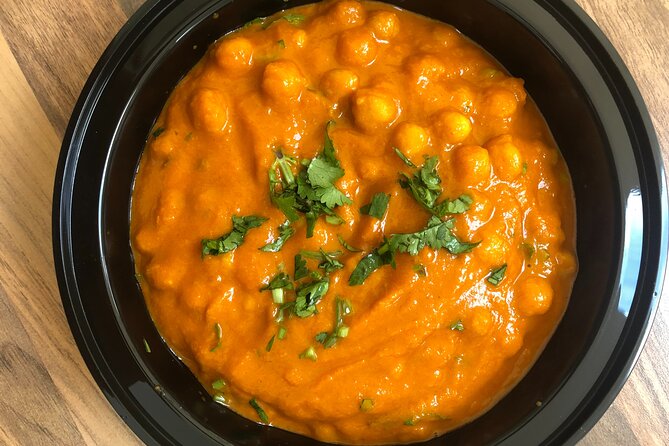
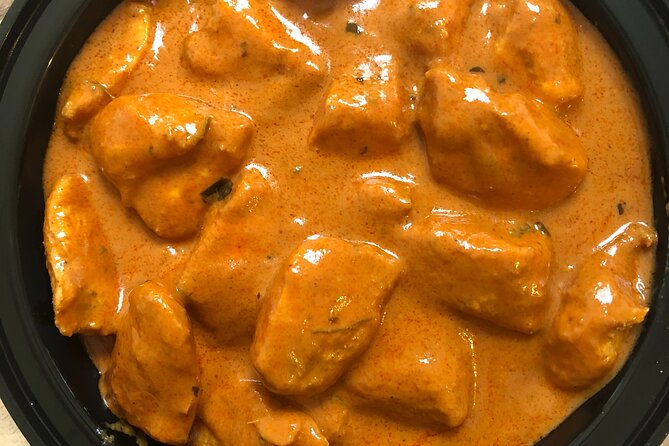
Your main curry will be Murgh Masala (home style chicken) or Channa Masala (home style chickpea). Both are described as north Indian curries that rely on a relatively small number of spices, but develop flavor through layering and cooking method.
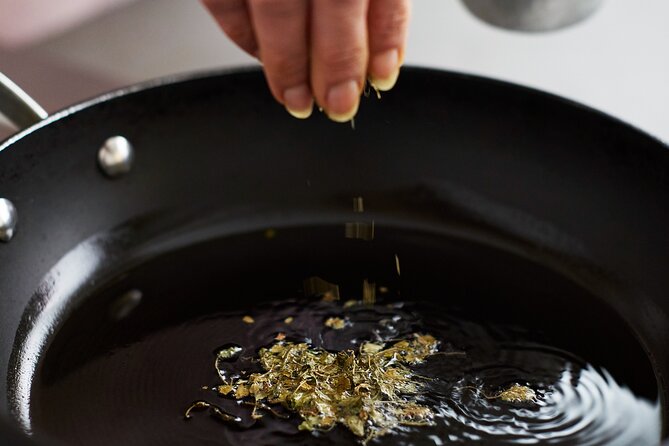
That’s a key lesson. Spice variety isn’t the whole story. You’ll learn how flavor comes from timing and layering, not from dumping in more ingredients. In other words, you’re being taught technique that survives when your pantry is less fancy than a chef’s.
As the curry develops, you’ll also cook pulao rice, described as perfectly cooked and lightly spiced basmati rice. Pulao sounds simple, but it’s one of those “details are everything” dishes. If the rice is overcooked or under-seasoned, the whole meal feels off. Having you make it in the class helps you learn how the rice should behave so it becomes reliable at home.
One more practical point: you’re cooking as a group, but the structure still pushes you to do the work. You’ll get lots of hands-on activity, and because it’s small-group, you can ask questions without waiting your turn for a distant instructor.
Subzi and smoked cumin raita: the cooling counterpoint that makes everything work
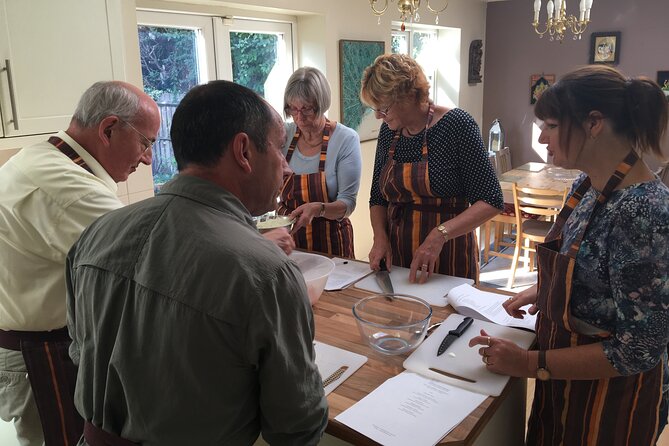
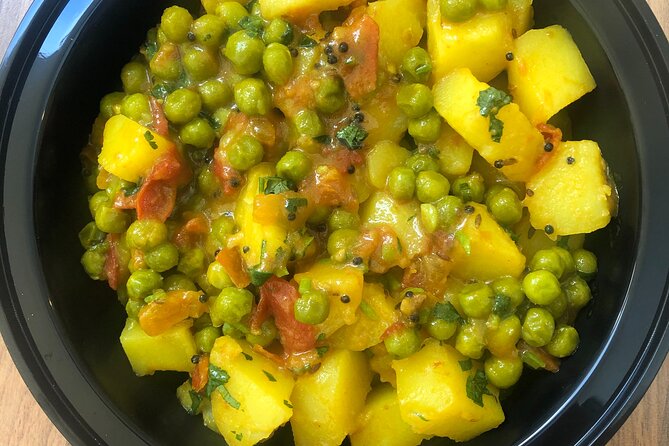
After the mains, you’ll cook subzi, a family style everyday Indian vegetable dish built with spices that complement the curry. Subzi is where you learn a very useful home skill: how to make vegetables taste like part of the meal, not like an afterthought.
Then comes the raita: smoked cumin raita. This is made with salad vegetables such as cucumber mixed with yogurt, finished with a sprinkle of smoked cumin. The “smoked” note is the kind of flavor detail that’s hard to recreate from memory. Cooking it on-site helps you understand how a finishing spice changes the final taste.
This combo is more than a side. It does a real job on the palate:
- The yogurt cools down the curry heat.
- The cucumber adds crunch and freshness.
- The smoked cumin brings aroma right at the end.
Once you taste it with the curry, you’ll understand why Indian meals often rely on creamy, cooling elements. It’s not just tradition, it’s flavor engineering.
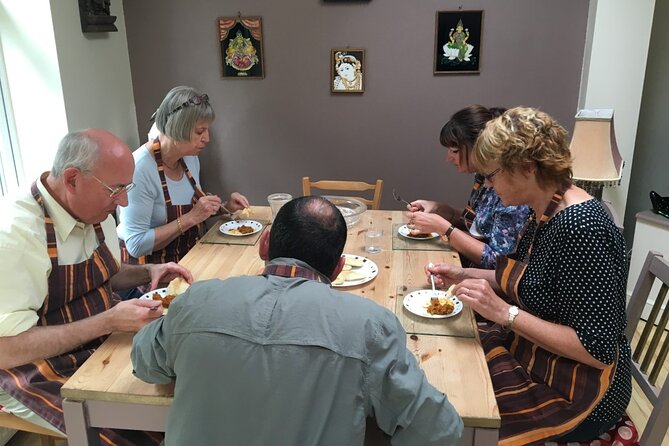
And at the end, you sit down and eat what you cooked. That feedback loop matters. You’ll taste your own handiwork, adjust mentally for next time, and leave with a clear sense of what worked.





Monisha Bharadwaj’s teaching style, and how it helps you repeat the dishes
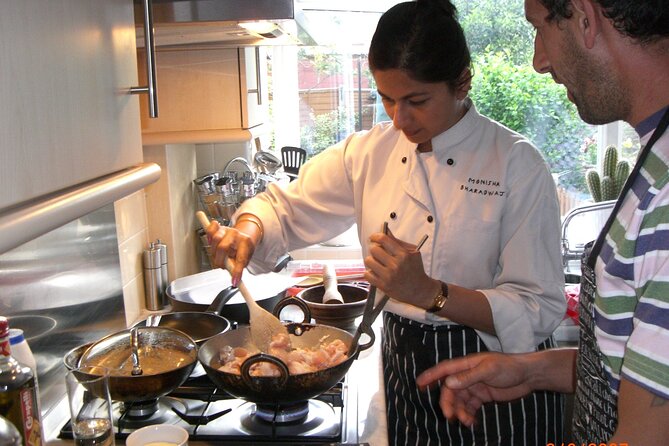
Monisha Bharadwaj leads the class, and her credentials are the kind that explain why her instruction lands well. She’s an award-winning author of 17 books, including titles like The Indian Cooking Course, Indian in 7, and Indian Cooking for Dummies. She also serves as a judge for Iron Chef America, and she’s listed as a Recognised Culinary Educator for 2025 in the UK.
What that means for you in practice is that the lesson stays structured and clear. You get recipe guidance, but you also get the thinking behind it. In particular, you should expect explanations that include the science behind building flavors, not just a memorization checklist.
I love when a cooking teacher connects technique to result, because it makes the dish easier to repeat under real-world conditions. You might not have every exact brand of spice at home. But if you understand what the spice does, and what the cooking step is trying to achieve, you can adapt without ruining the meal.
Also, the class atmosphere is described as warm and engaging, with patience and encouragement. In a kitchen class, nerves are common. This style makes it easier to ask questions, even if you’re not a confident cook.
What’s included, and why the price feels fair for London
The price is $122.64 per person, for about 2 hours 30 minutes. In London, that can sound high if you compare it to a casual restaurant meal. But the value is different here, because you’re not just eating, you’re learning in a kitchen setting.
What’s included:
- Lunch (the meal you cook)
- Coffee and/or tea
- The cooking instructor
You’re also given recipe sheets and ingredients, and you get that grocer stop as part of the learning. If you’ve ever tried to repeat a restaurant dish at home, you know the hardest part is usually not the recipe itself, it’s ingredient selection and technique.
That’s why this price can make sense. You’re paying for coaching, for ingredient education, and for a ready-made “practice session” with a real result at the end. You leave with food in your stomach and a plan in your hands.
Not included: alcohol. So if you want beer or wine with the meal, you’d need to arrange that separately.
Practical details that help you prepare (and enjoy the walk)
The meeting point is very clear: Hounslow West Underground Station (Stop A) at TW3 3DH. The class ends back at the meeting point. That loop is helpful because you don’t have to plan your way home from somewhere unfamiliar.
The kitchen walk is short at around five minutes and has no steps, which reduces stress if you’re trying to move comfortably. You should still wear shoes you’re happy cooking in, since you’ll likely be moving and standing for much of the session.
The class is offered in English, and confirmation is received at booking time. Service animals are allowed.
One more note: the experience requires good weather. If it’s canceled due to poor weather, you should expect the operator to offer another date or a full refund, so keep an eye on conditions close to your session.
Who this Indian cooking masterclass is best for
This class is a strong fit if you:
- Want hands-on cooking, not just watching someone else work
- Like the idea of learning ingredient shopping, not only following a recipe
- Enjoy north Indian flavors like layered curries, pulao rice, subzi, and raita
- Appreciate a teacher who can explain flavor in plain language, including the why behind techniques
It’s also ideal if you’re traveling solo or as a couple, because the small-group setup makes it easier to connect with the instructor and get attention.
You might think twice if you:
- Want a class with lots of dish variety beyond this set menu
- Need very specific dietary customization that goes beyond chicken vs chickpea and the included vegetable and raita components
- Are hoping for a longer, slower, multi-course evening experience, since this is a morning session with a fixed structure
Should you book the Indian Cooking Masterclass in London?
If you want a practical cooking skill you can use at home, I think you should book this. The best reason is the combination: ingredient shopping with a local grocer, then cooking a full meal yourself in a small group, then eating it right after. That’s how learning sticks.
Go for it if you like clear guidance, patient teaching, and a menu that teaches core Indian meal-building. Skip it only if you’re looking for strict customization or a totally open menu.
If you’re even a moderately curious cook, you’ll leave with more than memories. You’ll leave with a method, and that’s what turns a London day out into real value.
More Cooking Classes in London
More Tour Reviews in London
Not for you? Here's more nearby things to do in London we have reviewed










More London City Tours worth a look.
 ★ 4.6The London Eye Entry TicketTickets from $3935,875 guest reviews
 ★ 4.7From London: Harry Potter Warner Bros Studio TourTickets from $11726,588 guest reviews
Westminster to Greenwich River Thames CruiseTickets from $2222,836 guest reviews
Magical London: Harry Potter Guided Walking TourTickets from $2022,044 guest reviews
★ 4.7From London: Harry Potter Warner Bros Studio TourTickets from $11726,588 guest reviews
Westminster to Greenwich River Thames CruiseTickets from $2222,836 guest reviews
Magical London: Harry Potter Guided Walking TourTickets from $2022,044 guest reviews
 ★ 4.6Madame Tussauds LondonTickets from $3620,915 guest reviews
 ★ 4.5Stonehenge, Windsor Castle, and Bath from LondonTickets from $11118,662 guest reviews
 ★ 4.7Warner Bros. Studio Tour with TransfersTickets from $14417,586 guest reviews
 ★ 4.7Tower Bridge Entry TicketTickets from $2115,560 guest reviews