
REVIEW · LONDON CITY TOURS
Slavery and City of London Walking Tour
London has a slave ledger in plain sight. This City of London walk threads hard history through familiar streets, from the Tower of London area to St. Paul’s Cathedral. I especially liked Sam’s clear, funny delivery that turns dense facts into an actual street conversation, and I loved how the route mixes famous landmarks with quieter City corners most visitors miss.
The drawback to note is that the subject matter is grim. If you’re looking for carefree sightseeing only, this tour can feel heavy even though the walk has a thoughtful, human tone.
You also get a practical format: about 90 minutes, small-group feel (up to 35), and a mobile ticket. It’s a good way to get your bearings fast while learning why parts of the City look the way they do, including some surprisingly specific abolition connections.
Key highlights you will feel on the walk
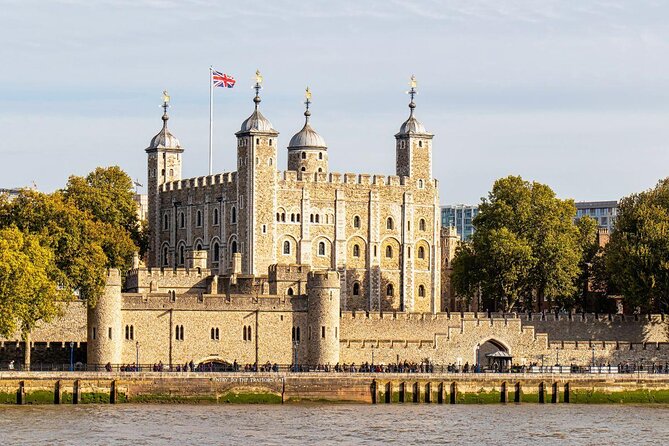
- Tower Hill anti-slavery starting point with Granville Sharp’s employment tied to the Ordnance Office at the Tower of London
- Roman wall visuals from Londinium times, plus the uncomfortable reality that Roman slavery existed too
- East India House site context on the East India Company’s reliance on slave labor and trans-Atlantic trafficking
- Fen Gardens’ Gilt of Cain sculpture marking the abolition of the transatlantic slave trade
- Bank of England Museum focus including the Bank of England’s apology and planned removal of certain displays
- A finish near major transit after seeing St Paul’s area landmarks, designed for an easy wrap-up to Aldgate
Why this tour works in the City of London
The City of London can look like a theme park for finance and old stone. This walk refuses to let you keep it “just pretty.” You will spend 90 minutes connecting the dots between power, trade, and slavery, then you will look at the same streets with a second, more honest layer.
What makes it especially usable is the way the facts are stitched to place. You are not floating in theory. You stop at specific points, and each one gives you a new reason to notice what’s in front of you. When the guide points out the Roman wall fabric still visible under later buildings, or how civic leaders sat inside trade-linked institutions, it makes the City’s layout feel logical instead of random.
Also, the pacing fits the real world. The tour runs about 1 hour 30 minutes, and you get a sequence of short stops, so it does not turn into a half-day grind. You can slot it between other London plans and still feel like you learned something substantial.
You can also read our reviews of more walking tours in London



Starting at Tower Hill, and meeting Granville Sharp’s story

You begin at Tower Hill Tram stop near Trinity Square (Tower Hill Tram, Trinity Square, London EC3N 4TH). It starts at 12:00 pm, and the walk sets a serious tone immediately.
The first stop centers on the Ordnance Office at the Tower of London, where Granville Sharp was employed. Sharp matters here because he is strongly associated with anti-slavery work in 18th-century Britain. Starting with him does two things. It shows that abolition was not only a distant idea, and it frames the rest of the walk as more than “bad things happened.” There are also people in the same country who pushed back.
Practical note: this start area is busy, so give yourself a few minutes to get oriented before 12:00. You’ll likely find it easier if you arrive early and take a quick look at your surrounding landmarks.
Stop 1: Roman wall of Londinium, where the past is literally under your feet
Next you move to the Roman wall of Londinium. The key idea here is that this kind of boundary helped shape where the early settlement grew into a city. The tour explains that Londinium traces back about 2,000 years.
Then comes the uncomfortable context: the Romans took Britons as slaves. Even in Roman times, exploitation was baked into how empires operated. The guide also includes the twist that the Romans complained the locals were lazy, which is a sharp reminder that domination often comes packaged with excuses.
Why this stop is more than trivia: it breaks the myth that slavery only belongs to one era. You see that forced labor can run through different systems, even when the names and time periods change.
This is also one of the fastest stops, listed around 5 minutes. You can enjoy it without burning your whole morning energy. It’s a quick “read the stone” moment that sets you up for everything later.
The East India House site, and how company power worked
You then reach the site where East India House once stood, the headquarters of the East India Company. This part of the walk is direct. The East India Company relied on slave labour and trafficked enslaved people from East and West Africa.
This is where you start seeing the trade machine as a network, not a single villain. A headquarters is a symbol of organization. Here, the tour helps you understand how business structures, political influence, and human suffering were tied together.
The route also gives you a sense of why the City of London looks the way it does. If you want the “architecture with meaning” angle, this is it. You are not asked to memorize dates. You’re asked to connect institutions to the streets you can still walk today.
Expect another short stop, around the time listed for the section. The value is the framing, not the time on one corner.
Fenchurch Street and Fen Gardens, with the Gilt of Cain
In Fenchurch Street, you head to Fen Gardens and the Gilt of Cain sculpture. The tour connects this sculpture to the abolition of the transatlantic slave trade.
This stop is worth your attention because it shows public memory at work. Instead of only focusing on what was done to people, the walk points you toward what later generations tried to change and commemorate.
Also, it’s a good “reset” in the middle of heavy history. You still learn, but you do it through a memorial object in a small garden space. If you find that the subject can get too intense, this kind of pause matters.
The listed time is about 10 minutes. Use it to slow down and actually look at the sculpture area, not just pass through.
You can also read our reviews of more city tours in London





Jamaica Wine House area, where coffee houses meet sugar trade
Next you reach the Jamaica Wine House, described as the location of London’s first coffee house, the Jamaica Coffee House. The tour links it to the sugar trade and slave plantations of the West Indies.
This is one of the most surprising stops if you mainly associate coffee houses with debate and gossip. Here, the guide makes the point that everyday social spaces can sit beside trade systems that caused mass suffering. In other words, the City’s “public life” was not isolated from slavery.
If you like odd-but-true details, this is a strong stop. You can almost feel the contradiction in the street. People meet for conversation, and the conversation is tied to money made elsewhere through forced labor.
St. Mary Woolnoth Church and John Newton’s rector role

At St. Mary Woolnoth Church, the connection is John Newton, who was the rector. Newton is tied to abolitionist work, and the guide uses the church to show how religion and moral argument shaped the push to end the slave trade.
This stop gives you a different angle than commerce. It shifts your focus toward the kinds of institutions that helped move public opinion. It also keeps the story from becoming one-note. The City held both trade power and abolition-minded leadership.
The stop is listed around 10 minutes. That’s enough time to orient yourself, take in the church setting, and absorb the name connection without turning it into a lecture.
Bank of England Museum, apologies, and what leaders once signed off on
One of the longest stops is the Bank of England Museum, around 15 minutes. The tour brings up a specific shift in public stance: the Bank of England has apologized for involvement by some past directors and governors in the slave trade. It also promised to remove all statues and paintings of them from public display in its Threadneedle Street building.
This is powerful because it’s about today, not just yesterday. You get to compare what was displayed in public life in the past, with what is being handled now. It raises a practical question you should carry with you while you walk: Who controls the story when the people and institutions change?
The stop also returns to the “leaders and institutions” theme. The guide notes that sheriffs, mayors, and aldermen of the City of London met at this type of site as shareholders of the Royal Africa Company.
So you are not only learning that slavery existed. You are seeing how civic authority and company structure connected. That is the real learning payoff.
St Paul’s Cathedral area, ending near key transit at Aldgate
The walk includes St. Paul’s Cathedral, one of the classic landmarks the City always gets credit for. Here, it is more than a photo stop. It sits at the end of the story you’ve been building all along.
The tour also mentions that it finishes near St Paul’s underground station on the Central line. Separately, the meeting info says the end point is Aldgate station on Aldgate High Street.
What this means in practice is simple: you finish in a central, transit-friendly zone that lets you keep your day moving. You can grab a tube quickly and still feel like you learned something with real location-based context.
The price of $27.43 and what you get for your money
At about $27.43 per person for roughly 90 minutes, this is priced for value over volume. You are paying for a tightly guided route with multiple meaningful stops, all set inside the City of London where walking is the point.
You also get a mobile ticket, which helps if you plan your day last minute. And the tour includes free admission for listed stops like the Roman wall of Londinium segment, Fen Gardens/Gilt of Cain, St. Mary Woolnoth Church, and the Bank of England Museum.
Is it “cheap”? Not exactly, but it is not trying to sell you a long museum ticket day either. It’s a short, concentrated education route. If you care about how London got built, and you are comfortable facing hard history, this is a fair deal.
What the group size does to the experience
The group maximum is 35 people. That matters because it affects how much the guide can steer the conversation and how easy it is to keep up. In a crowd, some walking tours turn into a one-way line of people staring at the guide’s back.
Here, the smaller size makes it easier to hear details, and it supports the style of storytelling. The guide, Sam, is described as clear and engaging, with a sense of humor. That matters because it keeps the walk from becoming a nonstop grim lecture.
In the reviews, people also call out that the length is just right, the walk moves quickly, and the time feels shorter than you expect. That lines up with the stop-by-stop format and the overall 1h30 duration.
Best-fit for your trip, and who should think twice
This tour is a strong fit if you want more than postcard London. If you like history that explains why institutions and street layouts matter, you will probably enjoy it.
It is also a good match for people who want an honest perspective without turning the day into anger-only. The walk includes abolition links, including people like Granville Sharp and John Newton, and ends with familiar landmarks like St Paul’s. That balance can feel grounding.
Think twice if you are very sensitive to topics involving human trafficking and slavery. This is not a light sightseeing route. The goal is understanding, not comfort.
Before you go: what to expect on the ground
Because this is a walking tour in the City of London, plan for outdoor time. You should also know that the tour requires good weather. If conditions are poor, you will be offered a different date or a full refund.
One more practical note: confirmation happens at booking. So after you reserve, you should have what you need to show up with your mobile ticket.
If you like to take photos, give yourself permission to put the camera away at a few stops. For the Roman wall and the memorial sculpture, looking slowly matters more than shooting quickly.
Should you book this slavery and City of London walking tour?
I think you should book it if you want London history that connects directly to the City’s institutions, not just the broad headlines. Sam’s style, the tight 1h30 timing, and the way the route uses landmarks like St. Paul’s Cathedral plus less-famous City corners makes it a smart use of limited time.
If you want cheerful, casual sightseeing only, skip this. The topic is heavy, and the tour does not soften that part of the story.
One last decision tip: if you are the type who reads plaques, watches how cities are laid out, and likes the story behind the stone, this tour is your kind of London.
FAQ
How long is the Slavery and City of London walking tour?
It lasts about 1 hour 30 minutes.
How much does the tour cost?
The price is $27.43 per person.
What time does the tour start, and where do I meet?
It starts at 12:00 pm. The meeting point is Tower Hill Tram, Trinity Square, London EC3N 4TH.
Where does the tour end?
The walk ends at Aldgate Station, Aldgate High Street, London EC3N 1AH.
Is the ticket mobile?
Yes, the tour uses a mobile ticket.
How large is the group?
The maximum group size is 35 people.
Do I need to pay admission at stops?
The tour information lists admission as free for the stops included (for example Roman wall of Londinium, Fen Gardens, St. Mary Woolnoth Church, and the Bank of England Museum).
What if the weather is bad?
The tour requires good weather. If it is canceled due to poor weather, you will be offered a different date or a full refund.
What is the cancellation policy?
You can cancel for a full refund up to 24 hours in advance. If you cancel less than 24 hours before the start time, the amount paid is not refunded.
More Walking Tours in London


More Tours in London





More Tour Reviews in London


Not for you? Here's more nearby things to do in London we have reviewed










More London City Tours worth a look.
 ★ 4.6The London Eye Entry TicketTickets from $3935,875 guest reviews
 ★ 4.7From London: Harry Potter Warner Bros Studio TourTickets from $11726,588 guest reviews
Westminster to Greenwich River Thames CruiseTickets from $2222,836 guest reviews
Magical London: Harry Potter Guided Walking TourTickets from $2022,044 guest reviews
★ 4.7From London: Harry Potter Warner Bros Studio TourTickets from $11726,588 guest reviews
Westminster to Greenwich River Thames CruiseTickets from $2222,836 guest reviews
Magical London: Harry Potter Guided Walking TourTickets from $2022,044 guest reviews
 ★ 4.6Madame Tussauds LondonTickets from $3620,915 guest reviews
 ★ 4.5Stonehenge, Windsor Castle, and Bath from LondonTickets from $11118,662 guest reviews
 ★ 4.7Warner Bros. Studio Tour with TransfersTickets from $14417,586 guest reviews
 ★ 4.7Tower Bridge Entry TicketTickets from $2115,560 guest reviews
Continue by place or experience