
REVIEW · CITY TOURS
Money and Power in the City Sightseeing Tour
Money runs London, and so does the story, and this City of London walk is built around how money and power shaped the streets. I like that it is a small-group tour with clear, on-foot stops that connect big names and big decisions to places you can actually point to.
What I especially like is the way the route moves in logical jumps, Roman and medieval starts first, then the East India Company, and then the financial set pieces like the Royal Exchange and Bank of England. You come away with a cleaner sense of how the City grew from trade muscle to modern finance.
One consideration is simple: it is an on-foot tour and it is weather-dependent, so if the forecast looks bad, plan for the tour to be rescheduled or refunded. Also, with a 2-hour time limit, you will want to pick this as your focused history walk, not as a long linger-and-read session.
Key highlights at a glance
- Up to 8 people, so questions and side stories do not get lost
- A tight 2-hour route that covers Romans, medieval guilds, and today’s finance
- Real financial landmarks, including the Royal Exchange, Bank of England, and Mansion House
- Exchange Alley and Change Alley, a practical shortcut tied to how trade happened
- Guildhall and nearby guild buildings, showing how civic rules worked before modern institutions
- St Paul’s Cathedral used as a power “finish line” over the modern stock market scene
Why Money and Power Works So Well in the City of London
The Financial District can feel like a wall of stone and office towers if you only look at today. This tour gives you a way to read the area using the one theme that keeps repeating in London’s story: who controls trade, who funds decisions, and who gets to set the rules.
The great trick here is that the walk is designed around changing kinds of power. You start with early beginnings of the district, then you move to the era when trade companies could act like governments. After that, you hit the moment when institutions dress themselves in impressive buildings. And near the end, you look up and see how the modern stock market sits under the shadow of St Paul’s.
If you like tours that explain why a place matters, not just what it looks like, you will feel at home.
You can also read our reviews of more city tours in London

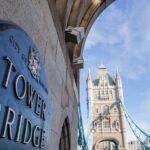
Meeting at Emperor Trajan, Ending at the London Stock Exchange
The tour starts at Emperor Trajan A100, London EC3N 4DR, and it ends at the London Stock Exchange near Paternoster Square. The listed start time is 2:00 pm, and it runs about 2 hours.
You get a mobile ticket, and the language is English. That sounds basic, but it matters in London, where last-minute confusion can eat your energy. You also have service animals allowed, and the meeting area is near public transportation, which makes the whole thing easier to fit into a day in the City.
Group size is capped at a maximum of 8 travelers. For a topic like finance and power, that small group limit is not just a comfort detail. It keeps the pace conversational, and it makes it more likely your guide can answer questions as they come up.
Stop 1: Roman and Medieval Beginnings of the Financial District
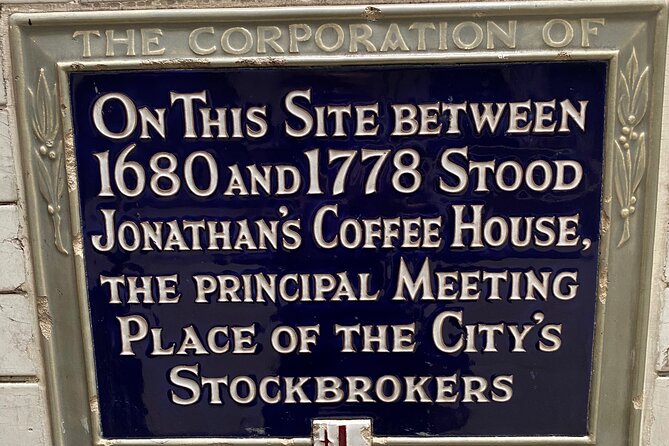
The first stop is all about origins, the Roman and medieval beginnings of the Financial District. That is the right place to start, because it reminds you that London’s finance story did not begin with spreadsheets and skyscrapers.
In practical terms, this part sets the frame: you learn how the City’s geography and early systems helped trade and governance grow. Once you have those roots in mind, the later stops stop feeling random. A building you might have walked past before starts behaving like a clue.
Also, the guide approach matters here. Instead of listing rulers and dates, the tour focuses on how early London functioned, and how those patterns set up later power centers. It is the kind of foundation that makes the rest of the walk click.
Stop 2: East India Company Power, Told Through Key Locations
Next you visit important locations tied to the East India Company, after seeing other sites linked to it. This is where the theme of power gets sharper.
The East India Company is one of those historical forces that makes you rethink the difference between commerce and authority. Even if you know the name, the tour helps you connect it to specific places and to the idea that large-scale trade often came with political weight.
I like this stop because it shifts the conversation from abstract history to a story with cause and effect. You start to see how trade routes, wealth, and influence could reinforce each other, and how that kind of power shaped London’s growth.
One drawback to be aware of: if you already have a strong grasp of the East India Company era, you might want extra time to linger and read beyond the walk. The tour is designed to move, so it gives you momentum, not museum-style staying power.
Stop 3: Royal Exchange, Bank of England, and Mansion House
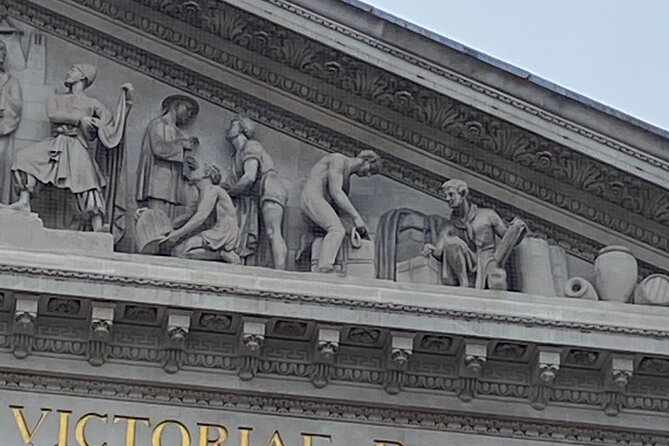
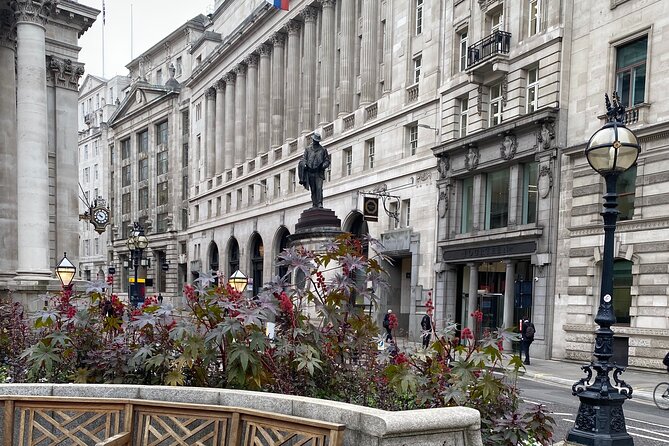
Then the route moves into the iconic institutions. You see the neo-classical splendour of the Royal Exchange, the Bank of England, and Mansion House.
This trio works as a “power triangle.” The Royal Exchange signals the formal marketplace side of finance. The Bank of England represents the authority side, the place where money policy and banking systems concentrate. Mansion House connects to civic leadership and the ceremonial side of city authority.
What helps is how the buildings are discussed as more than architecture. You get context for why these sites became centers of influence, and why their presence in the City feels almost theatrical. In London, the look of authority often matters, and these stops show you that in stone.
If you are a first-time visitor, this is where you start taking the City personally. If you have visited before, this is where you get a reason to stop looking fast.




Stop 4: Exchange Alley and Change Alley, the Finance Shortcut
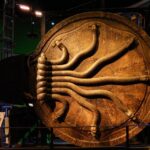
After the major landmarks, the tour gets more street-level. You visit Exchange Alley, also known as Change Alley, a narrow connection between Cornhill and Lombard Street. The route here is not just scenic. It is practical.
These alleys mattered because they offered shortcuts between the Royal Exchange area and the post office zone on Lombard Street. That means faster movement for people, goods, and information. In a city like London, speed can become an advantage, and in finance, information flow is everything.
I like that the tour includes this kind of in-between space. You learn how real power often lives in the short route, not only the grand building. And once you understand the alley’s purpose, you can picture daily patterns, where commerce and communication kept feeding each other.
Stop 5: Guildhall and the Rules Behind Medieval Civic Power
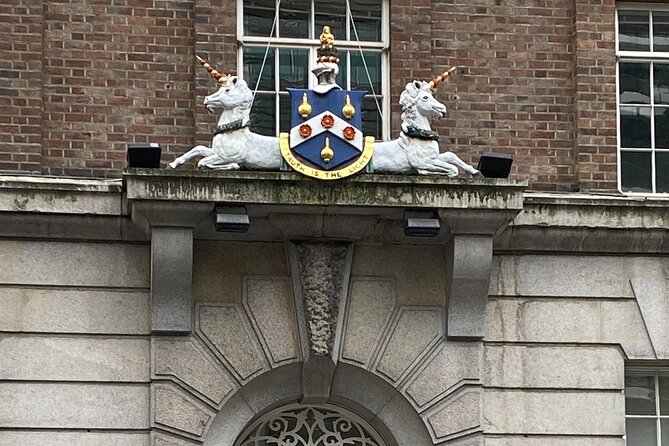
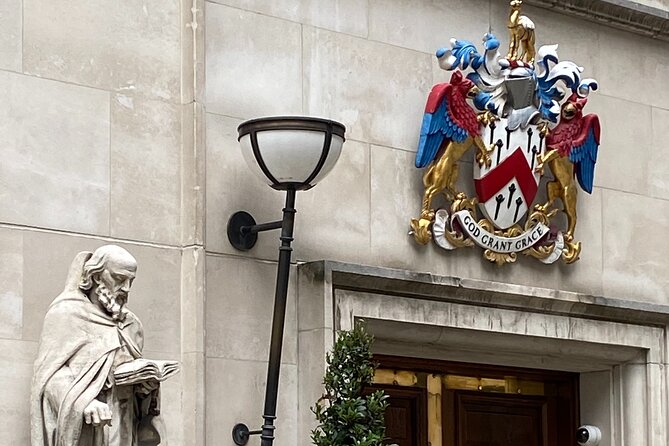
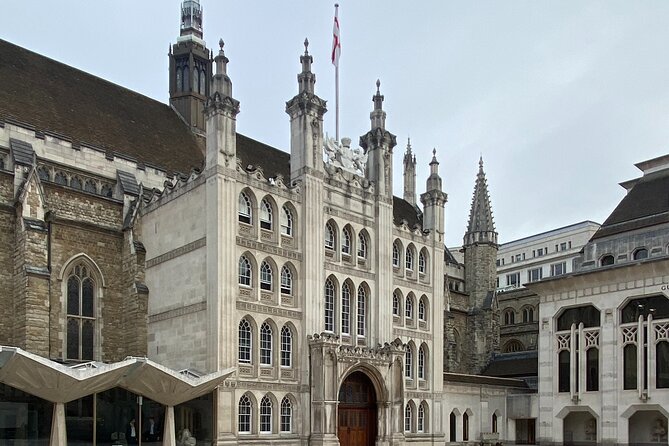
Next comes the medieval Guildhall and selected nearby Guild buildings. The tour explains that medieval guild halls were used to store goods and host celebratory events. When they were not in use for guild members’ occasions, the halls could also become places for entertainment, such as Passion plays.
That detail matters. It reminds you that guild power was not only economic. It was social and civic too. Guilds helped regulate trade, protect standards, and shape community life. So when you look at a place like Guildhall, you are not just seeing a relic. You are seeing a system that blended business with public culture.
The guide’s storytelling style is particularly useful here. You get a sense of how the same place could serve different functions depending on the season of the city’s needs. It makes medieval London feel less like a separate world and more like an earlier version of organized community life.
Stop 6: From the Modern Stock Market to St Paul’s Cathedral
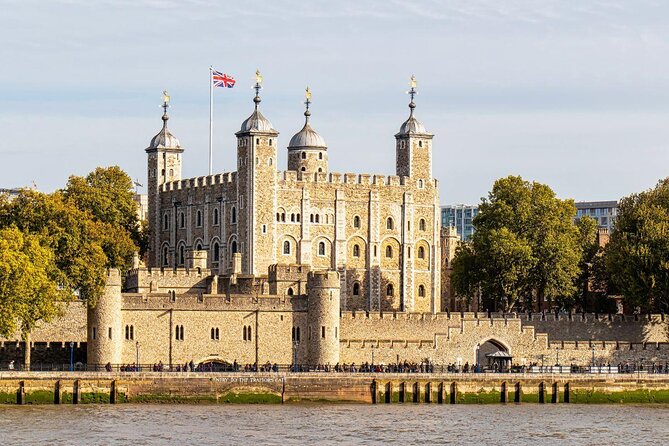
The final stretch brings everything into view. You see the modern Stock Market and then St Paul’s Cathedral, with the cathedral positioned over the highest point of the City.
St Paul’s is an Anglican cathedral and the seat of the Bishop of London, serving as the mother church of the Diocese of London. The tour connects it to the idea of power and visibility, how the modern financial district can look up and still feel dominated by older authority symbols.
This ending is a smart choice. It gives you a visual “full stop.” You finish with the sense that London’s finance story is still shaped by earlier religious and civic geography. The City can change its instruments and institutions, but the map of influence keeps echoing forward.
What You Learn Beyond the Sights
This is not a random stop-and-photo walk. The tour is built as a sequence, Roman and medieval beginnings, East India Company influence, financial institutions in neo-classical form, then civic and guild power, and finally the modern stock market scene under St Paul’s.
That structure helps you connect past and present without needing a textbook. When you stand outside places like the Royal Exchange or the Bank of England, you can place them in a longer chain of how London organized trade and authority.
I also like that the guide can adjust to your comfort level. People with no background still get a clear line through the story, and people who know more get their questions answered. The small group format helps here, because you are not competing for attention.
Price and Value: Is $41.14 Worth It?
At $41.14 per person for about 2 hours, the price sits in the practical range for a focused walking tour in central London. What makes it feel worth it is the density of key stops and the fact that you are not spending half the time just relocating.
With a small group of up to 8, you also get more back-and-forth than a large bus-style tour. For a theme like money and power, that matters. You want context, not just facts, and the guide’s approach aims to explain why each place fit into the bigger system.
If you are trying to get your bearings fast in the City, this is a strong match. If you prefer long museum time or deep inside visits, you might find the 2-hour format a little tight. But for an organized history walk that ties directly to the institutions you see every day, it is strong value.
Who This Tour Is Best For
You will probably enjoy this tour if you like history that connects to real systems, finance, government, trade, and the way institutions gain legitimacy over time. It also suits people who like walking routes that make a city feel readable, with each stop acting like a chapter.
It is also a good option if you are traveling with a mixed group, including people who want an education but do not want to sit in a classroom. The story approach keeps the pacing lively, and the guide can meet you at your level.
If you hate walking tours in general, then the on-foot format will be your limiting factor. But if you are happy with a couple of hours on your feet, this is an effective way to understand the City without feeling lost.
Should You Book Money and Power in the City?
Book it if you want a clear, practical way to understand London’s Financial District as a story of power, not just a list of famous buildings. The small group size, the focused 2-hour route, and the mix of Roman beginnings, trade company influence, civic guild power, and modern finance make it one of those tours that pays off when you keep looking around after it ends.
Skip it if you want long indoor time, deep museum-style immersion, or a slow pace built for lingering. Since the tour is weather-dependent and on foot, also keep the forecast in mind.
If you are in the City and want your time to translate into better sight-seeing, this is a smart pick.
FAQ
How long is the Money and Power in the City sightseeing tour?
It runs for approximately 2 hours.
How much does the tour cost?
The price is $41.14 per person.
How many people are in the group?
The tour has a maximum of 8 travelers.
What language is the tour offered in?
The tour is offered in English.
Where does the tour start and end?
It starts at Emperor Trajan A100, London EC3N 4DR, and ends at the London Stock Exchange at Paternoster Square, London EC4M 7LS.
Is a mobile ticket used, and are service animals allowed?
A mobile ticket is provided, and service animals are allowed.
More City Tours in London



More Tours in London



More Tour Reviews in London
Not for you? Here's more nearby things to do in London we have reviewed










More City Tours worth a look.
 ★ 4.4City Sights Hop-On Hop-Off Bus & Bookable ExtrasTickets from $566,579 guest reviews
 ★ 4.0City Sightseeing London Hop-On Hop-Off Bus Tour & Bookable ExtrasTickets from $371,224 guest reviews
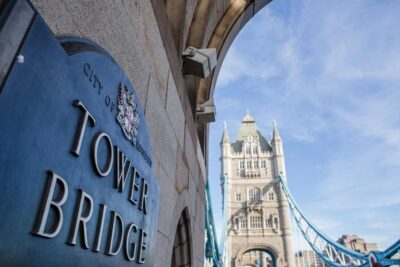 ★ 4.3Go City Explorer Pass® – Tickets for 2-7 AttractionsTickets from $721,111 guest reviews
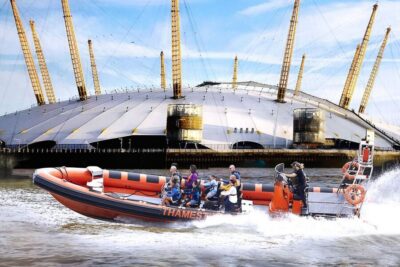 ★ 5.0Speedboat Tour Through Heart of the CityTickets from $66387 guest reviews
 ★ 4.0Upside Down House Westfield White City Entry TicketTickets from $10338 guest reviews
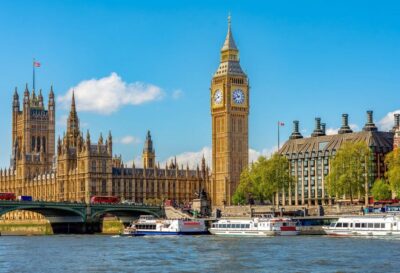 ★ 4.5Westminster Abbey Priority Access & Guided City TourTickets from $73282 guest reviews
 ★ 5.0Eating London: The Heart of ‘The City’ Food TourTickets from $131206 guest reviews
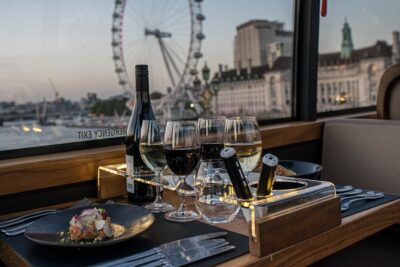 ★ 4.5London Luxury Dinner Experience with Panoramic City ViewsTickets from $166174 guest reviews
Continue by place or experience