
REVIEW · LONDON CITY TOURS
London: Natural History Museum Private Tour & Skip the line
London can feel huge, but this tour keeps it human-sized. You get skip-the-line entry and a private guide, so you spend less time funneling and more time seeing the museum’s headline displays. I love that it mixes classic dinosaur and fossil stops with interactive science like an earthquake simulator and hands-on physics experiments. One thing to consider: it is only 2 hours, so you will hit the highlights rather than see every room.
This is a great match for families, couples, and anyone who wants a calmer visit without sprinting between galleries. You also get live guidance in Italian or English, which makes the museum feel less like a maze and more like a guided story.
The only real drawback I’d flag is age logistics: unaccompanied minors are not allowed, so plan on being there with kids. If your group is ready to walk comfortably for a short museum sprint, this tour is a strong way to spend a focused morning or afternoon.
Key things to know before you go
- Skip-the-line entry through a separate entrance, so you start faster
- Private group pace with a live guide in Italian or English
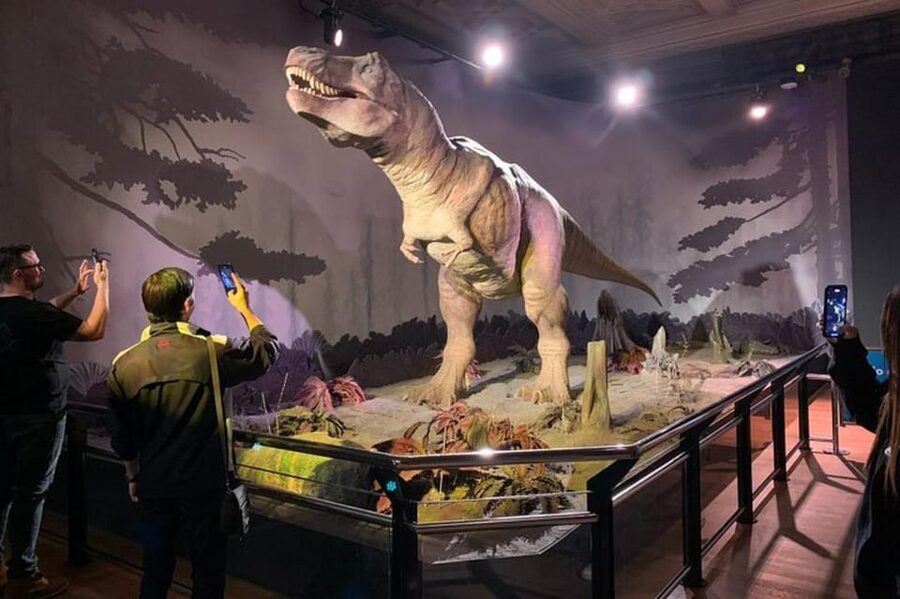
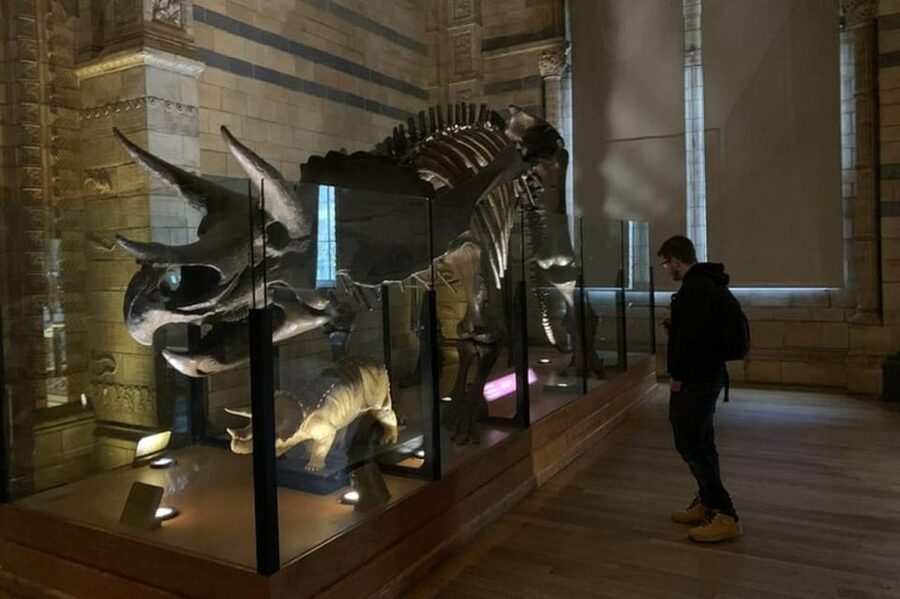
- Dinosaurs plus fossils, including Megatherium, Ichthyosaur, Mastodon, and Mantellisaurus
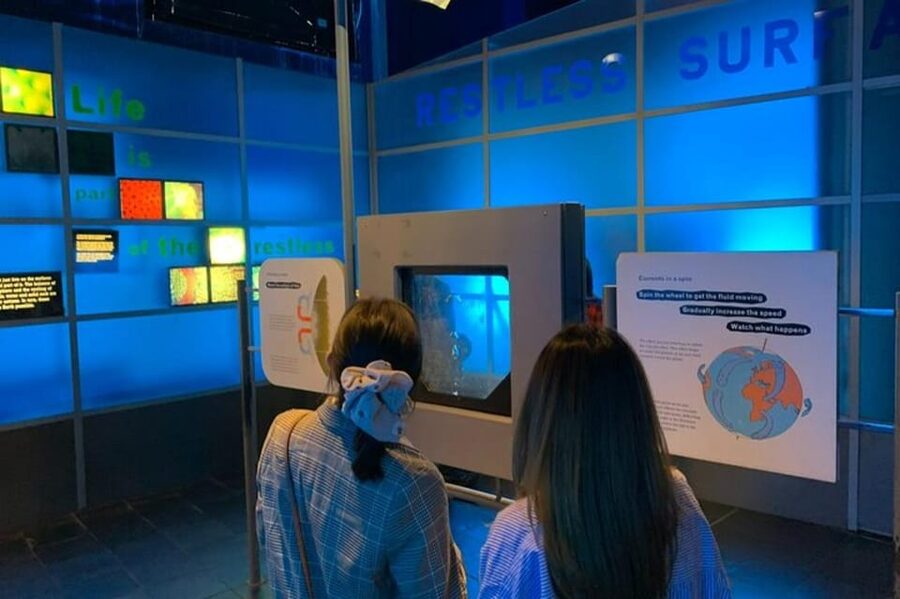
- Hands-on science moments like the earthquake simulator and physics experiments
- Hope and Sophie skeletons plus a Sequoia section tied to over 1500 years
Where You Start at South Kensington Museums
Your tour starts at South Kensington Museums (Stop L), which is a smart choice because it keeps you close to the museum zone where you actually want to be. If you’re arriving by transit, this area is well set up for walking and quick crossings, and you won’t need to make a whole adventure out of simply getting there.
From there, you head to the Natural History Museum in South Kensington, with its famous “wow” factor the moment you step inside. The museum already has crowds at peak times, so the biggest practical win here is how quickly you get access.
If you care about reducing stress, this is the big theme: you are not joining a giant swarm and then trying to stay with a guide. It’s a private setup, so you can actually hear what your guide is saying and adjust your pace.
You can also read our reviews of more private tours in London

Skip the line without losing your afternoon
Skip-the-line is not just about convenience, it changes how the visit feels. Instead of spending the first chunk of your time waiting and scanning for your group, you get to begin the tour with momentum. That matters because the Natural History Museum has so many “I can’t believe that’s real” moments that waiting around too long can make the whole experience feel rushed.
The tour includes skip the line through a separate entrance, which helps you avoid the slow start that many people deal with on busy days. Once you’re in, you can settle into the best areas of the museum without losing your bearings.
And since the tour lasts 2 hours, speed is helpful, but not at the cost of understanding. The guide’s job is to steer you toward the museum’s most meaningful highlights, not just the most obvious ones.
What a private guide changes in the Natural History Museum
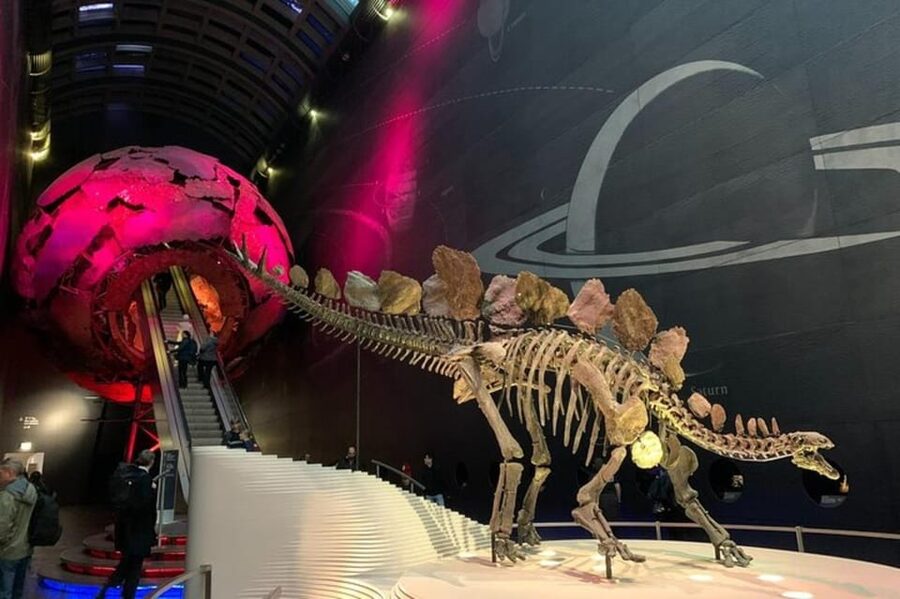
The Natural History Museum is full of details, but most visitors only see a fraction of them. A private guide helps you make sense of what you’re looking at so your brain can file it away.
This tour focuses on major attractions and connects them. You won’t just see dinosaur bones and fossils, you’ll get context for what makes each creature or exhibit special. That’s especially valuable in a museum like this, where similar-looking skeletons can actually represent very different animals from different time periods.
Also, the language options matter. You can get a live guide in Italian or English, which is a big deal if your group includes someone who would rather not rely on audio guides. In the feedback, guides such as Stefania and Damiano are specifically called out for being engaging and prepared, including when kids are part of the group.
If you’re traveling with children, this kind of guide skill is huge. A good guide knows how to turn a museum room into a story kids want to listen to, not a lecture they have to endure.
Dinosaur and fossil highlights you’ll actually remember
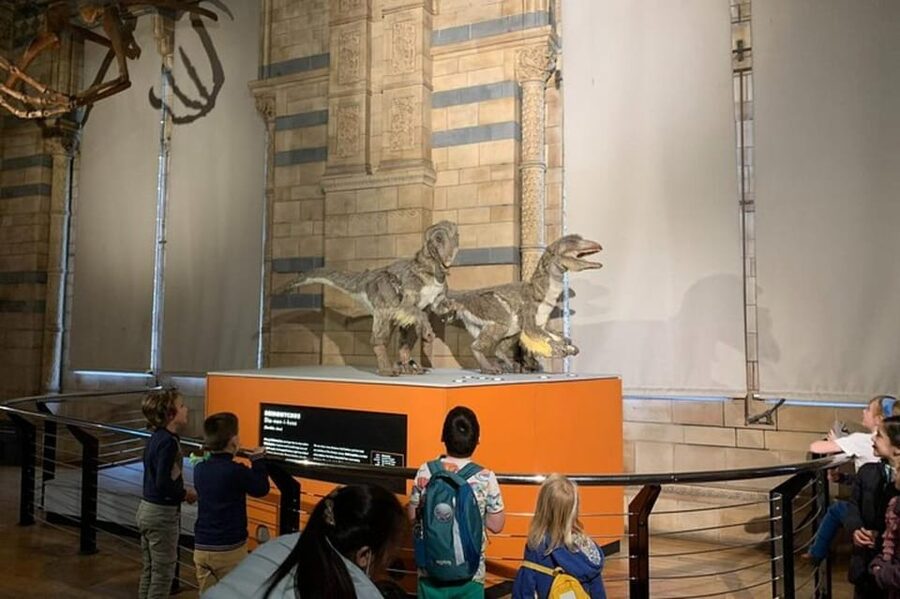
The backbone of the tour is the museum’s dinosaur and fossil zone. You’ll see major attractions and learn about creatures that many people only know from books or documentaries.
Here are some of the named highlights you can expect:
- Megatherium, a giant ground sloth
- Ichthyosaur, a marine reptile
- Mastodon, an ice age relative of elephants
- Mantellisaurus, a well-known dinosaur from the museum’s collections
- Plus other favorites you might pass along the way, such as Blue Marlin and Giraffes
Why this matters: a dinosaur museum can turn into a blur if you only have time for photos. With a guide, the tour helps you connect the dots between bones, environments, and scientific ideas.
Even better, the tour includes a mix of creatures, not just dinosaurs. When you throw in sea life like an Ichthyosaur or fish like a Blue Marlin, you start to see the museum as a record of life across environments, not just a single theme.
Earthquake simulator and volcano birth: science that feels real
A museum visit for kids often needs one thing, hands-on moments. This tour delivers that with interactive science stops, including an earthquake simulator and learning about how volcanoes are born.
What I like about this kind of stop is that it breaks the “stand and read” rhythm. You get a more physical understanding of forces that normally feel abstract. Instead of only learning that earthquakes happen, you get to experience what shaking feels like in a controlled setting, which helps the lesson stick.
This also gives adults a payoff. If you’ve ever walked past science galleries feeling like you’re just browsing, the interactive part pulls you back into the material. It turns the visit into something you participate in, even if you’re not the type to do museum activities.
You can also read our reviews of more historical tours in London



Physics experiments and the Hope and Sophie skeletons
The tour doesn’t stop at geology and fossils. It also includes physics experiments, which is a smart pairing with the earthquake and volcano content. Gravity, motion, and forces are the common language behind a lot of science, and you’ll see that theme show up in how the exhibits are presented.
Then you get two museum mascots that people love for a reason:
- Hope, the skeleton of a Blue Whale
- Sophie, the skeleton of a Stegosaurus
These are the moments that often become the photos and the “wait, that’s massive” memories. A whale skeleton hits differently than a dinosaur because it forces you to think about size in a different way. And Stegosaurus, with its recognizable silhouette, is the kind of exhibit that helps even first-time museum visitors feel like they understand what they’re seeing.
A small practical tip: if you’re bringing kids, this section is where you can manage attention best. Tell them to focus on one detail, like the whale’s scale or Stegosaurus shape, and your whole group usually stays engaged longer.
The Sequoia stop: a slower moment in a fast tour
You also get a visit to a Sequoia section dating back more than 1500 years. This is a different tempo from dinosaurs and geology, and that’s exactly why it works.
Why it’s valuable: after you spend time on fast-evolving time scales like ice age animals or volcanic forces, the sequoia gives you a long view. It makes evolution and natural history feel grounded in something that has literally outlasted human time.
If your group tends to rush, this stop can act like a reset button. You can breathe, look around, and then go back into the energy of science exhibits.
The 2 hours: how to make the most of a tight window
This tour is 2 hours, which sounds short because the museum is big. But that time limit is also the point. You’re not trying to conquer the whole building. You’re getting a guided route that covers the big attractions and adds interactive science.
In practice, that means:
- You’ll spend time where the museum is most photogenic and most iconic
- You’ll get the explanation behind the pieces, not just the objects themselves
- You’ll leave with a stronger sense of what you saw, which is often the difference between a blur and a meaningful visit
One timing consideration: wear comfortable shoes. You’re walking through a major museum with multiple exhibits, and the tour format assumes you can keep moving at a moderate pace.
Also, photography is allowed, so you can capture the dinosaur halls and science stops without feeling like you need to skip the fun parts for rules.
Price and value: what $168 per group really buys you
The price is listed as $168 per group, for up to 3 people, for a 2-hour private tour. On paper, private tours can look expensive compared to general admission plus an audio guide.
But here’s where the value comes from:
- You get private, live guidance in Italian or English
- You get skip-the-line entry through a separate entrance, which saves time at busy moments
- The tour includes specific included experiences, like the earthquake simulator and interactive physics experiments
If you’re a family of three, the math often becomes easier because you’re paying for one guided experience instead of splitting attention across multiple devices or trying to follow a large group. If you’re two adults, the value still holds if you care more about understanding the exhibits than just ticking boxes.
If your group is larger than 3, this specific format may not be the best fit unless you can arrange multiple private groups. The price is built around the small-group size.
Who this tour suits best, and who might want a different plan
This tour is a strong fit if you want:
- A calmer pace than large group tours
- A guided route through major attractions like dinosaurs, fossils, and the whale and Stegosaurus skeletons
- Interactive science moments like earthquakes and physics experiments
- A private setup for couples and small families
It may be less ideal if:
- You want to roam the museum freely without structure, because this tour is designed to cover highlights in limited time
- You’re traveling with a group of minors who would be left unattended, because unaccompanied minors are not allowed
Practical details that help your day go smoothly
A few basics make the visit easier:
- Bring comfortable shoes for walking
- Plan on photography being fine, since photography is allowed
- Note that food and drinks are not included, so you’ll want to eat before or after
- Transportation to and from the museum is not included
On meeting point: the tour meets at the bus stop in between the Victoria and Albert Museum and the Natural History Museum, at Exhibition Road, close to the traffic light. That’s specific enough that you can find it without wandering for long.
Should you book this private Natural History Museum tour?
I’d book this if you want a smart, time-efficient way to see the Natural History Museum’s best-known dinosaurs and fossils, and you also want science you can actually do, not just read about. The combination of skip-the-line access, a private guide, and included interactive stops like the earthquake simulator is a rare mix for a short tour.
You should probably skip it if you prefer a long, self-directed museum day where you can linger in every gallery, because a 2-hour highlight route will move faster than a free-roam plan.
If your group is small, especially up to 3 people, this format often feels like good value because the guide time is concentrated where it matters most.
FAQ
How long is the Natural History Museum private tour?
The tour duration is 2 hours.
Where does the tour meet?
The meeting point is at the bus stop on Exhibition Road, located between the Victoria and Albert Museum and the Natural History Museum, near the traffic light (Stop L at South Kensington Museums).
What is included in the price?
The tour includes skip the line entry, a private guide, an earthquake simulator experience, and interactive experiments.
What is not included?
Food and drinks, transportation to and from the museum, temporary exhibitions, and gratuity are not included.
What languages are the guides?
The live tour guide is available in Italian and English.
Is the tour wheelchair accessible?
Yes, the tour is listed as wheelchair accessible.
Can I take photos during the tour?
Yes, photography is allowed.
Are there any age or child restrictions?
Unaccompanied minors are not allowed.
Do I need to bring anything?
You should bring comfortable shoes for walking.
Is free cancellation available?
Yes. Cancellation is free up to 24 hours in advance for a full refund.
More Private Tours in London


More Tours in London

More Tour Reviews in London

Not for you? Here's more nearby things to do in London we have reviewed








More London City Tours worth a look.
 ★ 4.6The London Eye Entry TicketTickets from $3935,875 guest reviews
 ★ 4.7From London: Harry Potter Warner Bros Studio TourTickets from $11726,588 guest reviews
Westminster to Greenwich River Thames CruiseTickets from $2222,836 guest reviews
Magical London: Harry Potter Guided Walking TourTickets from $2022,044 guest reviews
★ 4.7From London: Harry Potter Warner Bros Studio TourTickets from $11726,588 guest reviews
Westminster to Greenwich River Thames CruiseTickets from $2222,836 guest reviews
Magical London: Harry Potter Guided Walking TourTickets from $2022,044 guest reviews
 ★ 4.6Madame Tussauds LondonTickets from $3620,915 guest reviews
 ★ 4.5Stonehenge, Windsor Castle, and Bath from LondonTickets from $11118,662 guest reviews
 ★ 4.7Warner Bros. Studio Tour with TransfersTickets from $14417,586 guest reviews
 ★ 4.7Tower Bridge Entry TicketTickets from $2115,560 guest reviews
Continue by place or experience