
REVIEW · JACK THE RIPPER TOURS
Jack the Ripper Walking Tour with Expert Ripperologist
Whitechapel turns spooky with real street detail. This 2.5-hour walk pairs a costumed guide with clear 14-inch backlit tablet photos, so you follow the story without pulling out maps. I also like how it stays grounded in the 1888 neighborhoods and the women at the center of the case, not just movie-style mayhem. The main drawback is practical, not scary, it asks you to walk and stand for 2+ hours with very limited toilets on the route.
The route is built for orientation. You start at Aldgate Station, then work through Whitechapel with guided stops that explain poverty, policing, and how the area fit together in 1888. You end near Liverpool Street, so you can roll right into dinner or a tube ride after.
This is a small-group experience, capped at 30 people, and it runs in English. The tone stays respectful toward the victims, while still allowing for a bit of theatrical flair from the guide’s costume. If you hate crowds, you’ll want to arrive early for the meeting point so you can settle in before the first stop.
Key Things I’d Make Time For

- 14-inch backlit tablet visuals that help you picture sites from 1888 without squinting at maps
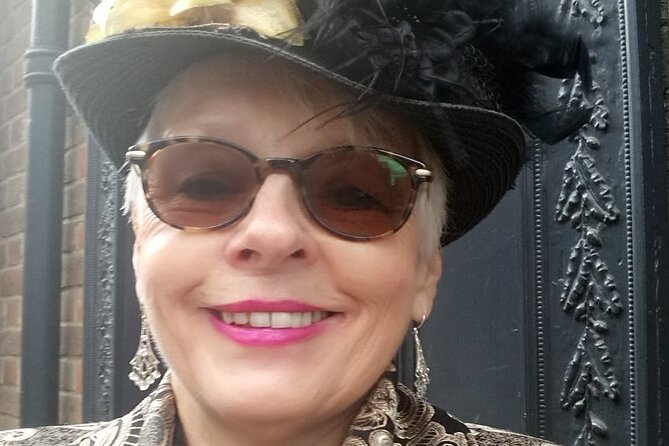
- Costumed guide style that adds atmosphere while keeping the focus on the people involved
- City of London versus Metropolitan policing, explained as you cross key boundaries
- Document-based clues, including the discussion around the Dear Boss letter and the people tied to it
- A route that groups well, with a max of 30 and a guide who can be heard
- An end that sets you up for transit, with a finish near Liverpool Street Station
Why This Ripper Walk Feels Practical in London
Jack the Ripper tours can go one of two ways. Some are mostly spooky storytelling with little sense of geography. This one is the opposite kind of useful.
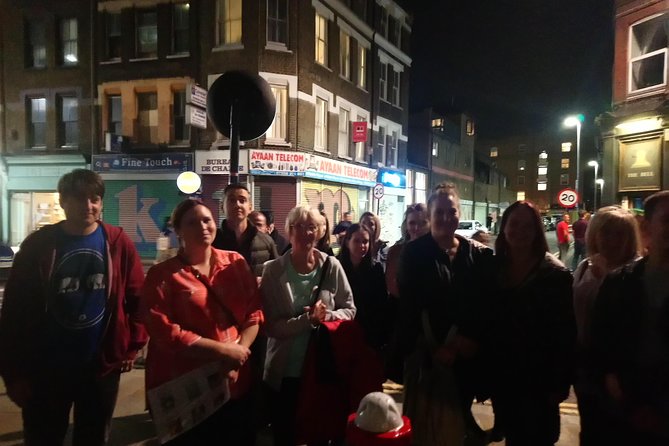
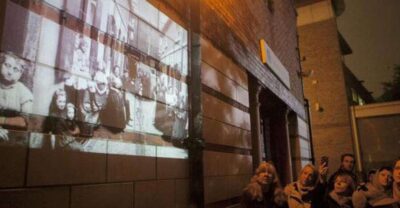
You’re not just hearing names and dates. You’re seeing how the streets connect, where boundaries mattered, and why certain locations became focal points. The guide uses photos displayed on a 14-inch backlit tablet, so you can track what the area looked like in the 1800s and what it looks like today.
I also like the pacing. The stops are short and focused, which keeps the tour moving without dragging. You get just enough time at each location to understand what it means before you’re guided to the next street corner.
You can also read our reviews of more walking tours in London



Price and Time, and Whether It’s Good Value
At $23.61 per person for about 2 hours 30 minutes, the price lands in the “worth it if you like the topic” zone. This isn’t a long, all-day history seminar. It’s a targeted walk that concentrates on the core geography of the case.
The value comes from two things. First, the guide uses high-visibility visuals via a tablet, so you’re not relying on your memory after the fact. Second, the route is built around key real-world spots, from churches and courts to pubs and exchange buildings.
Two other value signals help too. The tour is offered in English, and it uses a mobile ticket, so you can keep it simple on your phone. Also, since it’s capped at 30 people, you’re less likely to feel swallowed up.
Getting Ready: Tickets, Clothes, and the Reality of Standing
You’ll need a working phone for the mobile ticket. Confirmation is provided at the time of booking, and the tour runs in English.
What matters most is your body. The walk is not recommended if you cannot walk and stand for 2+ hours. Also, there are very limited toilets along the route, so plan for that before you meet your guide.
If you’re visiting in cooler weather or rain, you’re still in the streets. That’s part of the point here, since the tour uses the neighborhoods as the “text.” Wear shoes that are comfortable for standing and walking, because you’ll be on the move throughout.
Aldgate Station to St Botolph’s Church: Setting the Scene
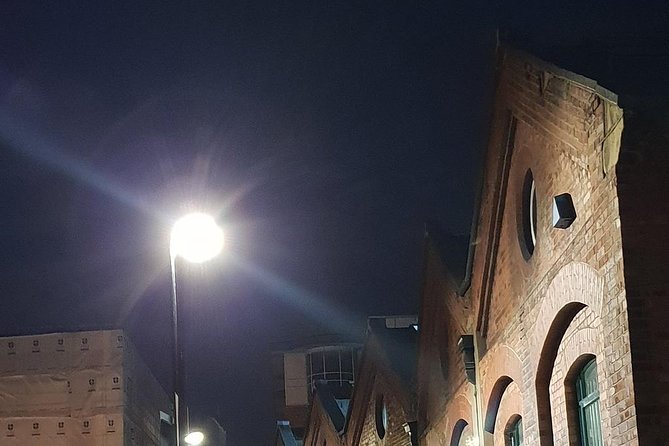
The tour starts at Aldgate Station on Aldgate High Street (London EC3N 1AH). It’s a strong start because it puts you right on the edge of the story, with transport access that’s easy to work into your day.
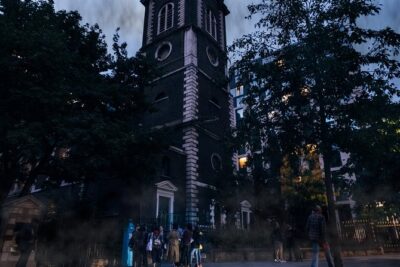
Stop 1 is outside St Botolph’s Aldgate. Locally, the church is known as the Prostitutes Church because women used to solicit on the island where the church stood. This is a big tonal choice. The guide isn’t jumping straight into gore. Instead, you get context for why certain corners of Whitechapel became traps in the first place.
Stop 2 moves to Aldgate Square near the church. Here the focus shifts to daily life in 1888 Whitechapel, especially the crowded poverty, the sense of squalor, and how crime could thrive when people were living on the breadline. This matters because it reframes the case from an isolated set of killings into something shaped by the area’s pressures.
If you’re new to the topic, this first stretch is what helps everything click. If you already know the basics, it’s still useful, because it explains the environment without turning it into a lecture.
Mitre Street, City Boundaries, and the Logic of Policing
From there, the tour heads to the Mitre Street area, specifically around Mitre Square and just inside the City boundary. This stop is tied to Elizabeth Stride, often called Long Liz, described here as the first victim killed on the night of the double event. Then, the guide shifts to Catherine Eddowes, killed only about 45 minutes later in the same general area.
This pairing is smart. It prevents the story from feeling like separate episodes. You see how timing and geography overlap, which is exactly what made the hunt so complicated.
Stop 4 takes you toward Petticoat Lane Market, also connected here with the old name Middlesex Street. The key idea is the boundary between the City of London and the Metropolitan area. The guide explains that these weren’t just lines on a map. They were real administrative boundaries, with separate police forces. That one detail helps you understand why investigations could feel messy, overlapping, or delayed.
The only consideration here is that if you’re expecting constant new “twists,” you might find this part more analytical than theatrical. But it’s also where the tour becomes more than spooky entertainment.




Goulston Street and Gunthorpe Street: Clues You Can See
Stop 5 is Goulston Street, where you stand near the doorway associated with the only clue found on the route police took that night while following Jack. The value of this stop is that it gives you a sense of how the hunt unfolded in motion. You’re not stuck in one dramatic moment. You’re watching the trail conceptually, step by step.
Stop 6 looks toward Gunthorpe Street, with a viewpoint arranged from Wentworth Street toward the spot where Martha Tabram was found murdered on 7 August 1888 in George Yard Buildings. In this story, Martha Tabram is now thought to be the most likely first victim. Even if you’ve heard different theories elsewhere, the way this tour frames Tabram gives you a grounded entry point into the timeline and why people still debate it.
A practical note: these stops are short and outdoors. You might need to pay attention to the guide’s direction cues, since you’ll be facing slightly different angles for sightlines and street layout.
Brick Lane Stops: Nichols, Chapman, and the Weight of Ordinary Streets
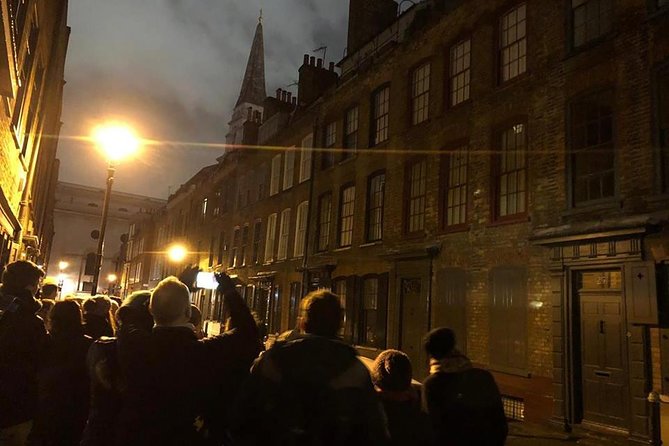
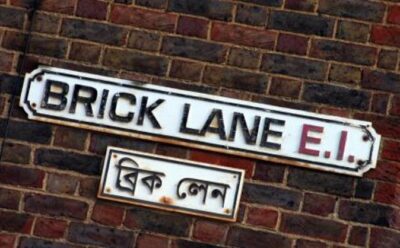
As the route continues, you move into the Brick Lane area. Stop 7 is opposite the Frying Pan Pub at the corner of Thrawl Street. Here the story focuses on Mary Ann Nichols, described as having her last drink before staggering down Whitechapel Road to be murdered in Bucks Row behind Whitechapel Station.
This is one of the tour’s most effective moments, because it anchors the violence to something painfully normal. A pub, a street, a movement you can follow. The guide’s photos on the tablet help you keep the narrative straight while you’re standing in modern surroundings.
Stop 8 turns into Hanbury Street, where Annie Chapman was murdered in the back yard of 29 Hanbury Street. This stop is longer than some of the earlier ones, which gives you more time to absorb the location’s layout and what “back yard” implies in an overcrowded neighborhood.
If you’re the kind of person who likes connecting history to street plans, this section will feel especially satisfying. If you prefer a lighter mood, it can feel heavy, but the guide’s stated sensitivity keeps it from turning into spectacle.
Puma Court, Ten Bells, Itchy Park, and the Documentary Thread
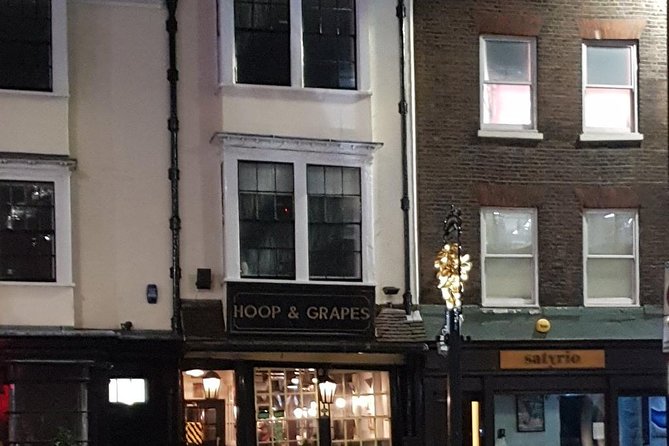
Stop 9 moves into Wilkes Street, described here as a street that remains untouched by time since the 1800s. The tour then makes its way to Puma Court, where the guide discusses the Dear Boss letter. This is the documentary angle of the walk, the part that reminds you that the story didn’t live only in the streets, it lived in ink and attention.
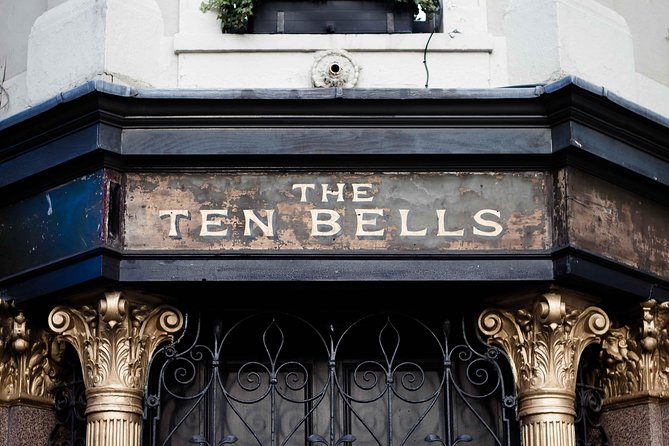
Stop 10 is The Ten Bells, where you stop opposite Mary Kelly’s favorite pub. You also view Christchurch Graveyard, known here as Itchy Park, described as a daytime sleeping place for the homeless.
This double stop works because it shows two sides of the same environment. A favorite pub is everyday life. A graveyard used for shelter is what happens when life has no safe place. The guide’s costume and theatrical touches add mood, but these locations keep the tone anchored.
Old Spitalfields Market to London Fruit Exchange: The Ending That Lands Near Transit
Stop 11 is Old Spitalfields Market, where you pause opposite the London Fruit and Wool Exchange. The tour stops near the entrance for the letter sent to George Lusk, head of the Whitechapel Vigilance Group. This continues the theme from Puma Court, showing how public attention, vigilance, and correspondence shaped what people believed and how they responded.
Stop 12 ends in the square behind the London Fruit and Wool Exchange. This is where the tour closes with Mary Kelly, described here as Jack’s last victim, killed on 9 November 1888. It’s a fitting finish because the exchange area ties together the idea of commerce, crowds, and information flows, not just isolated violence.
From the end point at 66-68 Bell Lane, there’s a short walk to Liverpool Street Station, with tube connections that make it easy to keep your day moving.
Guides, Style, and the Part You’ll Actually Remember
The walk’s signature is the combination of storytelling plus visuals. The 14-inch backlit tablet means you’re not guessing at what the guide is referencing, especially when older buildings and street layouts have changed.
The guide’s style is also part of the experience. Past guides mentioned in the tour’s history include Lindsey, Jenny, and Paul, and the consistent theme is a blend of strong research, a clear delivery pace, and a more respectful focus on the women victims. There’s also room for a light theatrical touch via costume, so the atmosphere feels earned, not just forced.
One more thing I value in a tour like this: it helps you feel oriented. If you’ve ever done a dark-history walk that leaves you with names but no map sense, you’ll appreciate that this one is structured so you can follow along in real London streets.
Who This Tour Is Best For, and Who Might Want to Skip It
This is best for you if you like true-crime style history, especially the kind rooted in real neighborhoods, real boundaries, and real locations. It’s also great if you don’t want to spend your vacation time researching afterward, since the guide gives you the street logic plus the key documentary references.
It also suits you if you enjoy a tour that’s a bit atmospheric but still grounded. The route includes churches, markets, courts, pubs, and graveyards, so you’re not just staring at one “murder corner.”
Skip it if you struggle with walking and standing for 2+ hours. Skip it too if you strongly prefer restrooms on a schedule, since toilets are very limited on this route. And if you’re traveling with kids, note the tour does not allow children under 15, and 16 to 17 year olds must be accompanied by an adult.
Should You Book This Jack the Ripper Walking Tour?
Book it if you want a compact, street-level Ripper experience that explains why the geography and policing mattered. The tablet visuals are a real quality boost, and the route is designed to keep you oriented as you move from Aldgate toward Spitalfields.
Don’t book it if you need frequent breaks, mobility support, or bathroom access. Also, if you want a purely light and playful London outing, this is dark history, and the subject matter stays centered on the women victims.
If you like learning fast, walking a focused route, and leaving with a clearer sense of how Whitechapel fit together in 1888, this one is a strong pick.
FAQ
How long is the Jack the Ripper Walking Tour?
It runs for about 2 hours 30 minutes.
How much does the tour cost?
The price is $23.61 per person.
Where do I meet the guide, and where does the tour end?
Meet at Aldgate Station, Aldgate High St, London EC3N 1AH. The tour ends at 66-68 Bell Ln, London E1 7LA, in the square of the London Fruit & Wool Exchange on Brushfield St.
What language is the tour offered in?
The tour is offered in English.
Is there a mobile ticket?
Yes, the tour includes a mobile ticket.
Are children allowed?
No children under 15 are allowed. Ages 16 to 17 must be accompanied by an adult.
Is the route physically demanding?
Yes. It is not recommended if you cannot walk and stand for 2+ hours, and there are very limited toilets along the route.
More Walking Tours in London


More Tours in London



More Tour Reviews in London
Not for you? Here's more nearby things to do in London we have reviewed









More Jack the Ripper Tours worth a look.
 ★ 4.7The Original Jack the Ripper Walking TourTickets from $257,833 guest reviews
 ★ 4.5London Jack the Ripper Guided Tour with Ripper-VisionTickets from $274,840 guest reviews
 ★ 4.7Jack the Ripper Small Group TourTickets from $263,159 guest reviews
 ★ 5.0London Jack The Ripper Guided Walking TourTickets from $03,131 guest reviews
 ★ 4.6German Language : Original Jack the Ripper TourTickets from $241,805 guest reviews
 ★ 4.5Jack the Ripper Walking Tour – Ripper Vision ToursTickets from $261,752 guest reviews
 ★ 5.0Ultimate Jack the Ripper : Guided Tour of LondonTickets from $271,495 guest reviews
 ★ 4.9Jack the Ripper Evening Walking TourTickets from $331,449 guest reviews
Continue by place or experience