
REVIEW · CITY TOURS
The Roman City of St Albans Private Tour
Roman St Albans is history you can walk. This day trip links Roman Verulamium sites to the medieval heartbeat of St Albans Cathedral, plus a stop at the hypocaust and Roman mosaic that you will not forget. I like that you are not just seeing stones, you are getting the story behind them as you move from one landmark to the next. One consideration: it is a full 6 hours with a lot of ground to cover, so you will want comfortable shoes.
What makes it especially good is the format. This is a private tour with hotel pickup and drop off, and your guide helps you connect the Roman town to the later Christian and city life that came after. In at least one recent tour, the guide was Kevin, and his energy and detail level are exactly what you hope for on a day like this.
Yes, it costs $377.07 per person, but the value is in the guide time and the fact that key sights have entry tickets included. Meals and drinks are not included, and return train fare (about £15) is not included either, so it is worth budgeting for that once you are in St Albans.
Key highlights at a glance
- Hotel pickup and drop off from London so you spend less time wrangling transport and more time at the sites
- Roman Verulamium power points, including walls, an active-feeling hypocaust area, and a top-tier mosaic floor
- St Albans Cathedral visit where Roman-era martyr history connects to centuries of pilgrimage and abbey life
- Verulamium Museum with finds from the park and city, which helps the ruins make sense
- Stops beyond the main ruins, including an old Saxon church, a famous pub, and WW1 living history
- A guide who keeps the pace human, so even when you get tired, you still get meaning from what you see
Roman St Albans, what makes this half-day feel special
St Albans is close enough to London to feel practical, but old enough to feel like you stepped into another country. That is the trick of this tour: you start with Roman-era places where you can still picture daily life, then shift into the Christian and medieval layers that made St Albans matter.
The best part is that the route is built like a story. You are not jumping across town hoping the pieces fit. Instead, the day walks you from the Holy Well area, across the Roman remains in and around Verulamium Park, and then into the heart of the city with the cathedral and market stops.
And because it is private, you can set your own rhythm within the schedule. If you want more time at something, you usually can. If you need breaks, you can. In one recent tour, the guide was especially accommodating when the group got tired, which is a good sign for anyone who wants a day that feels guided, not rushed.
You can also read our reviews of more city tours in London



Getting to St Albans without the hassle, hotel pickup and timing
The tour runs for about 6 hours, starting at 8:30 am, and it is designed for a straightforward day trip. You get hotel pickup and drop off, and the tour is described as round-trip transport direct from your London hotel. In practice, that kind of setup typically means you are escorted on the ride in, so you are not stuck figuring out transfers with a paper map and a fully booked morning.
A private tour also helps you avoid the “everybody gathers at a different time” feeling you get on public tours. Your guide is there, you start together, and you move through St Albans with a plan.
One practical note: the itinerary includes places that are free and places where entry is included. That matters because it saves you time and money at the ticket counters. You still may want spending cash for snacks and meals, since food and drinks are not included.
Holy Well to Verulamium Park, the Roman town starts at the ground level
Your morning begins at Holy Well, a site tied to early Christian legend and the Arthur cycle. The Holy Well is described as being visited by the martyr himself, and the story goes further by linking the waters to Uther Pendragon before a battle. If Arthur myths are your thing, this stop is a fun way to get the imagination working before you hit Roman brick and stone.
Next comes Verulamium Park, which you will want to take in slowly. The park sits on top of the old Roman city, while the later modern town grew up on the hill above it. That small geographic detail makes the whole day click: you are literally walking over Roman layers, then moving toward later landmarks that rose as the city changed.
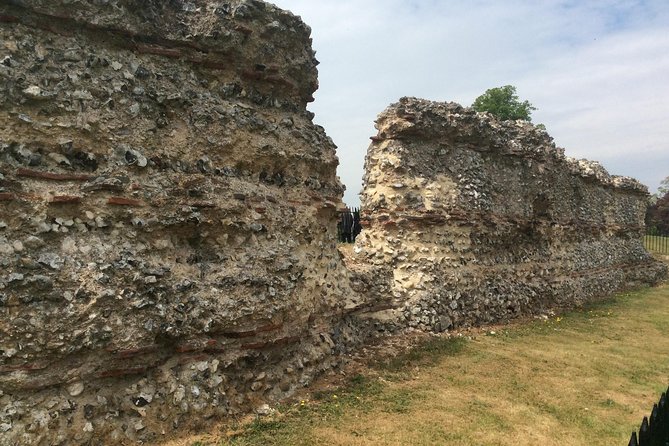
From there, you get Roman Walls of St Albans. These are surviving sections, so you are not just reading about Rome. You are seeing physical proof of Roman defenses and planning.
Even though some of these stops are short, they set the tone. You are learning the geography as you go, and that is what makes later stops like the museum feel relevant instead of random.
Hypocaust and Roman mosaic, the stop where the site does the explaining
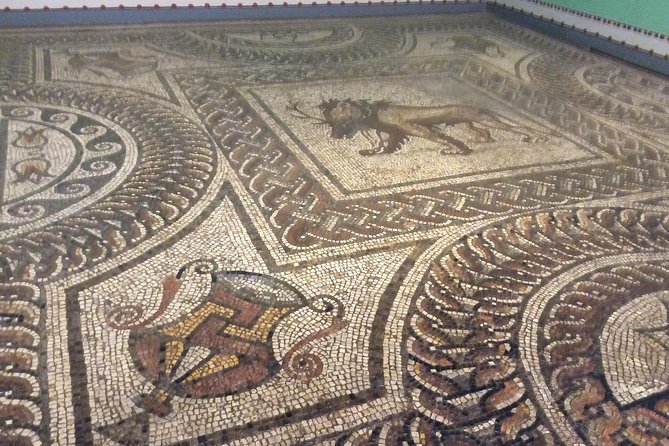
If you only remember one Roman element from this tour, it should be the hypocaust and Roman mosaic. The mosaic floor is described as one of the finest Roman mosaic floors in Britain, even anywhere, and once you see Roman mosaics in person, you understand why the hype is real.
The hypocaust matters too. It is the kind of Roman tech that turns ruins from scenery into function. You begin to grasp how homes and public spaces could be warm, and you start spotting what would once have been practical details rather than just fragments.
This is also one of the best places on the route for your guide’s skills. The more your guide can translate what you are seeing, the more you get out of the short time slot. The good news is that the tour is built around that sort of explanation, and a guide like Kevin is the exact sort of person you want next to you when Roman details are easy to miss.
St. Michael’s Church, Saxon roots still in use
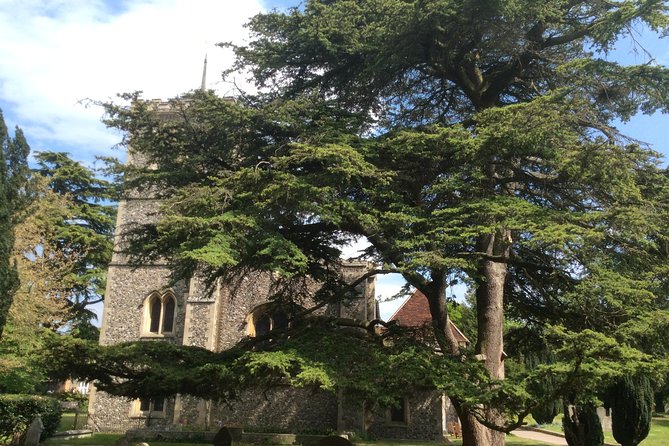
Roman St Albans is impressive, but the day stays interesting because it keeps shifting eras. St. Michael’s Church is Anglo-Saxon in origin and is described as about 1,000 years old, and it is still used today.
That “still used” part changes the feeling. You are not only looking at a memorial. You are stepping into a living site that has been part of daily religious life far longer than most visitors realize.
In a schedule full of ruins and exhibits, this church works as a reset. It also gives you a sense of continuity, how St Albans kept its spiritual identity even as the surrounding world changed.
You can also read our reviews of more private tours in London





Roman Theatre and shops, then Verulamium Museum to make sense of it all
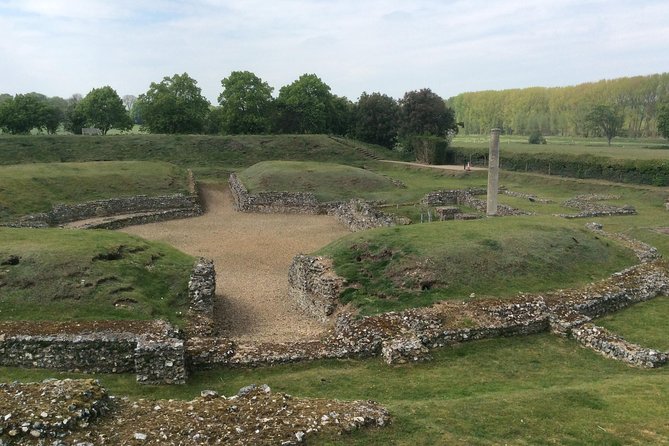
The Roman Theatre of Verulamium is a quick but meaningful stop. You explore the ruins and the idea of the theatre complex, which includes shops. Even in fragments, theatres help you picture public life, not just the quieter household side of Roman living.
From there, you move to Verulamium Museum for a full hour. This is where the day stops feeling like a set of photos and starts feeling like understanding. The museum is described as bursting with Roman objects discovered in the park and city around St Albans, so the exhibits directly support what you saw outside.
This pairing is smart. Ruins can be frustrating when you are not sure what anything was for. The museum closes that gap. It is the difference between seeing Rome as “cool old stuff” and seeing it as “a real city.”
Ye Olde Fighting Cocks and the monastery gateway, a break with meaning
When the schedule includes Ye Olde Fighting Cocks, you know the tour understands pacing. This pub is described as a contender for the oldest in Britain, with service dating to shortly after the Romans. Even if you do not stop for a meal, the location gives you a useful contrast: Roman life to modern life, right in the same urban fabric.
Then comes The Great Gateway of the Monastery. It is described as imposing and also as a hidden standout in the city. What you get here is another lesson in how St Albans layers its power. A gateway is not subtle. It tells you who had authority and what mattered at the time.
This segment works especially well because it breaks up the heavy Roman content with something more human, more street-level, and very “walkable England.”
St Albans Cathedral, Roman martyr roots and a must-know practical tip
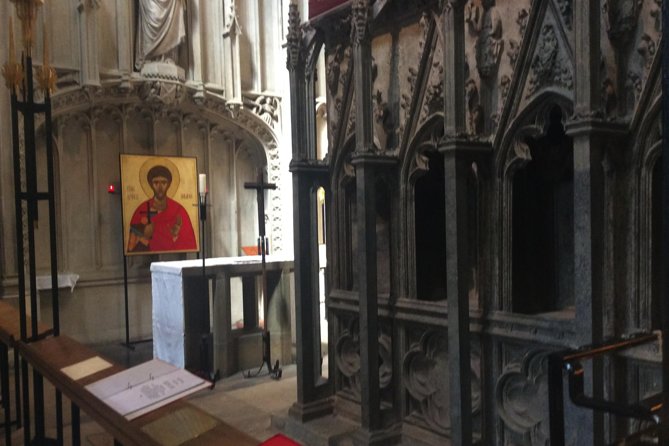
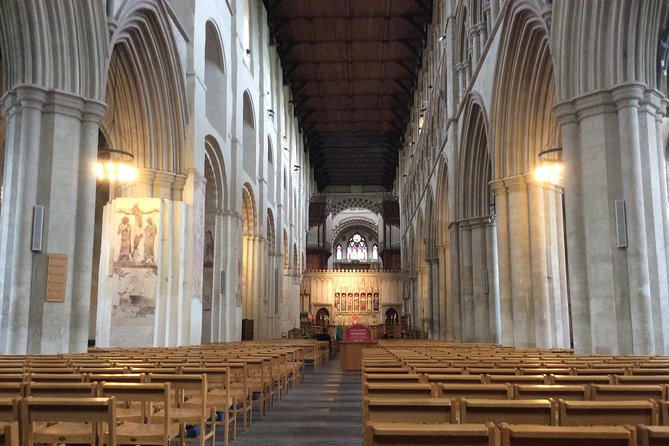
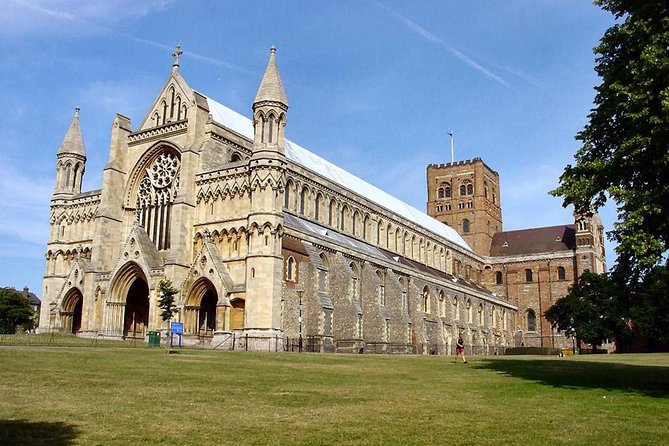
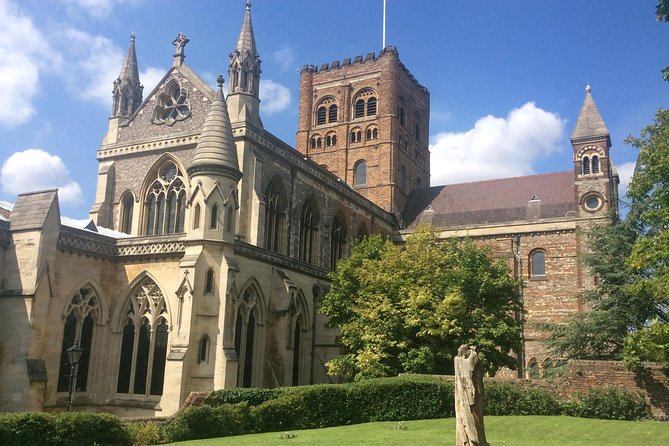
You finish the structured tour at St Albans Cathedral, with plenty of time to explore, about 1 hour 20 minutes. The cathedral is described as one of the finest in Europe and it also ties directly back to Roman-era story elements, including the first Christian martyr from Roman times.
That is the key idea to carry with you here. The Roman background is not just an academic setup. It is part of why St Albans became a major pilgrimage and abbey center, and why the cathedral mattered even through major historical shifts, including the time of King Henry VIII.
Practical tip: the tour specifies a dress code of smart casual for entrance into the Abbey Cathedral. I would follow that advice even if you usually dress casually. It saves you from awkward last-minute adjustments at the door.
Verdun Tree, market time, and the Clock Tower, what to expect in the city stretch
After the cathedral, the day adds a couple of lighter but interesting stops that still fit the theme of time passing.
The Verdun Tree is a WW1 living-history point, a quick 5-minute stop that adds a different kind of historical layer. It reminds you St Albans is not only “ancient.” It keeps recording its story.
Next is St Albans Market. The market does not run every day, but the area still has plenty to see when it is on. This is a good slot for browsing local shops or just taking a breather.
Then you reach St Albans Clock Tower, built in 1403 and described as the only free standing belfry in Britain. Ticket for this specific stop is not included, so if it is on your must-do list, plan for any extra cost.
Finally, there is a city centre hour. You get time to enjoy the atmosphere and choose where to spend your energy: ancient pubs, cafes, crepieries, high-end shopping, and that laid-back day-trip vibe. This part is where you turn the guided story into your own St Albans day.
Price and value, is $377.07 per person worth it?
Let’s talk money the honest way. At $377.07 per person, this is not a cheap outing. The value comes from what you are buying: a private guide for about 6 hours, hotel pickup and drop off, and entry tickets for major parts of the route.
You are also getting a tight itinerary that covers Roman, Saxon, medieval, and later city life within one day. If you tried to do this on your own, the time sink would be figuring out what is worth seeing, in what order, and how to connect the dots between stops.
The one cost caveat is that meals and drinks are not included, and return train fare is not included either. If you want lunch in town, budget for it so the day does not feel expensive at the last moment.
In my view, this tour is most worth it when:
- you care about Roman sites but want help reading them
- you prefer a guide-managed schedule instead of planning every ticket and route
- you want the cathedral experience without hunting for the right entrance and timing
Who this private St Albans Roman tour suits best
This is a great match for history-minded travelers who want more than surface descriptions. If you like understanding why sites are where they are, St Albans rewards you.
It also suits couples, friends, and small groups who like the ease of hotel pickup and a guide who can adapt pacing. A notable point from a recent experience is that the guide was accommodating when someone got tired and helped the group find food. That is exactly how you want a private guide to behave.
If you have very limited mobility or you hate walking, you might need to consider the day’s length and the number of exterior stops. The tour operates in all weather conditions, so you will also want layers and rain protection.
Should you book the Roman City of St Albans private tour?
Book it if you want a guided day trip that actually connects Roman Verulamium to the Christian and medieval St Albans that grew on top of it. The combination of St Albans Cathedral, hypocaust and Roman mosaic, and a museum hour makes this tour feel complete instead of scattered.
Hold off if you are the type of traveler who wants total freedom, because this is structured and scheduled. Also, if you are on a tight budget, the price plus meals and any excluded ticket items will add up fast.
If your goal is one great day learning St Albans the right way, with a guide who brings the sites to life, this tour is a strong choice.
FAQ
What time does the St Albans private tour start?
It starts at 8:30 am.
How long is the Roman City of St Albans private tour?
The duration is about 6 hours.
Is hotel pickup and drop-off included?
Yes. Hotel pickup and drop-off are included, and round-trip transport from your London hotel is offered.
Are entry tickets included?
Yes, entry tickets are included. Some stops are listed as free, and St Albans Clock Tower is noted as not included.
What should I wear to enter the Abbey Cathedral?
The dress code is smart casual for entrance into the Abbey Cathedral.
Is food or return train fare included?
No. Food and drinks are not included, and return train fare is not included (about £15).
More City Tours in London



More Tours in London




More Tour Reviews in London


Not for you? Here's more nearby things to do in London we have reviewed










More City Tours worth a look.
 ★ 4.4City Sights Hop-On Hop-Off Bus & Bookable ExtrasTickets from $566,579 guest reviews
 ★ 4.0City Sightseeing London Hop-On Hop-Off Bus Tour & Bookable ExtrasTickets from $371,224 guest reviews
 ★ 4.3Go City Explorer Pass® – Tickets for 2-7 AttractionsTickets from $721,111 guest reviews
 ★ 5.0Speedboat Tour Through Heart of the CityTickets from $66387 guest reviews
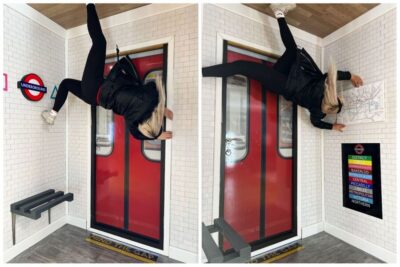 ★ 4.0Upside Down House Westfield White City Entry TicketTickets from $10338 guest reviews
 ★ 4.5Westminster Abbey Priority Access & Guided City TourTickets from $73282 guest reviews
 ★ 5.0Eating London: The Heart of ‘The City’ Food TourTickets from $131206 guest reviews
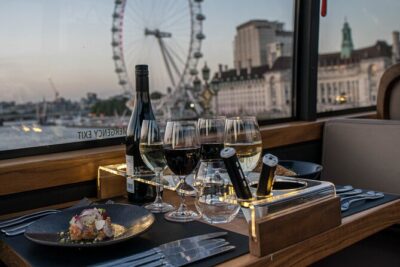 ★ 4.5London Luxury Dinner Experience with Panoramic City ViewsTickets from $166174 guest reviews
Continue by place or experience