

REVIEW · LONDON CITY TOURS
City of London History Tour: The Square Mile that Rose to Empire
Roman walls, medieval churches, and finance. I like how this walk feels off the beaten track, yet still lands you at the City’s power spots like Guildhall. You’ll also get a fast-moving, story-led sweep from Roman to Norman influences, though each stop is time-limited so you should not expect long, sit-and-read museum hours.
Second, I’m a big fan of the tour’s practical mix: wheelchair and stroller accessible routes, a small group size (max 8), and a mobile ticket that keeps things simple. If you want one guided line to follow through the Square Mile’s layers, this is a strong choice, especially with guides like Argun bringing the places to life with clear, education-first explanations.
Key highlights to look for
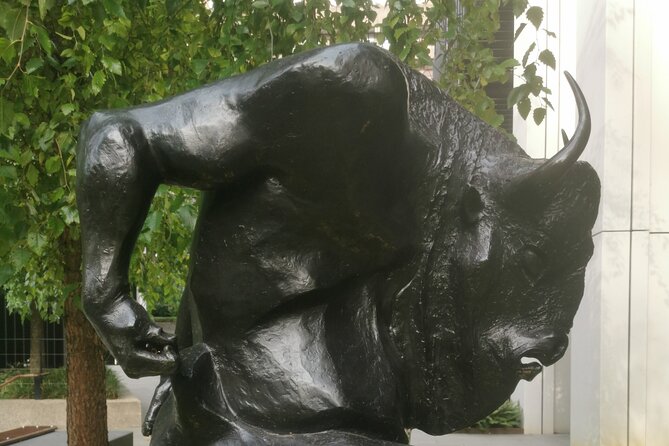
- Roman city wall and St. Alphage London Wall start you with the oldest physical clues in the area
- Churches that show the City’s age, like St. Giles Cripplegate and St. Lawrence Jewry
- Livery company stories via Salter’s Hall, Brewers’ Hall, and the wider governance angle
- Guildhall and the Roman amphitheatre site for big names plus the ancient ground beneath them
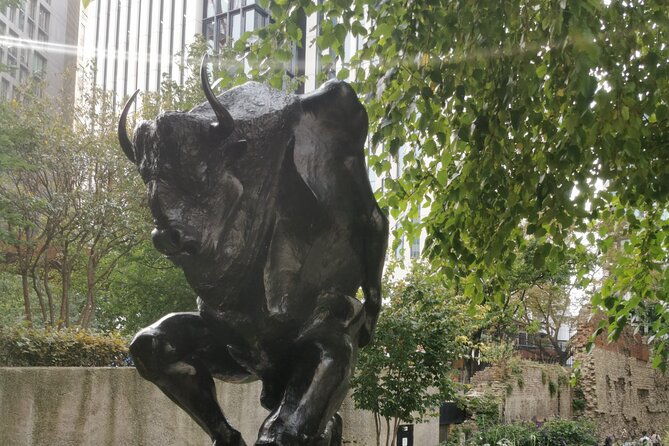
- Symbol-heavy landmarks, including the golden grasshopper and the dragon-lamp circle that ties back to the Minotaur story
Why this Square Mile walk feels different
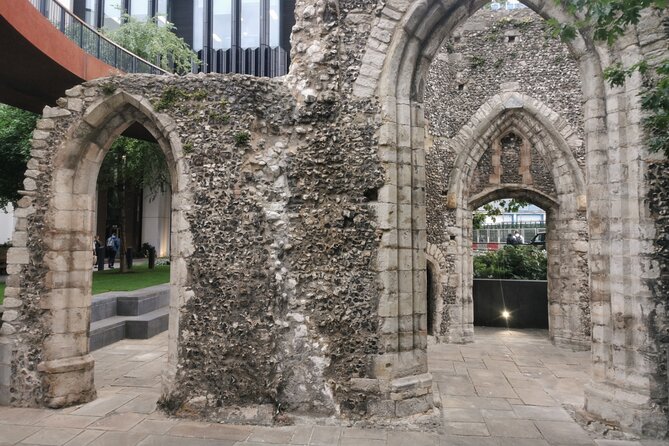
The City of London is only about one square mile, but it has a talent for hiding its past in plain sight. This tour is built around that idea, using religious buildings, surviving walls, and working civic sites to show how the area grew into an engine of trade and governance.
What I like most is the balance. You are not stuck staring at one theme all the way through. You start with stone and architecture, then switch to people and institutions, then end at the modern symbols of finance and authority.
Also, the group stays small. With a maximum of 8 people, you can usually keep your questions going without feeling like you are shouting over a crowd.
You can also read our reviews of more city tours in London


Starting at St. Alphage London Wall, Salters garden first
You meet at Barbie Green by London Wall in the Barbican area. The walk begins in the Salters garden at St. Alphage London Wall, where you get an early lesson in how layers of London history overlap.
This is where the tone sets itself: you get to see the kinds of details that city blocks usually swallow. The tour frames the site as a convergence point, with Roman to Norman threads tied together in the same stretch of space.
Admission here is listed as free, and the stop runs about 15 minutes. That means it is not a slow start, but it does help you get oriented fast.
Why this first stop works for newcomers
If you are new to London, you often spend your first day hunting for famous landmarks. This is a smarter approach for your second or third day. It gives you a mental map of how the City’s boundaries and defenses shaped everything that followed.
The Roman city wall, Fort foundations you can still sense
Next comes the Roman city wall, described as the oldest part of the wall and a kind of Fort point. This is short, around 10 minutes, but it is the kind of stop that makes the rest of the tour click.
You are not just hearing that London was once Roman. You are standing near the older structure that helped fortify Londinium from outside influence. Even if you only catch a few key points, you leave with a physical reference for the story.
Again, this stop is ticket free. And since it is time-limited, it is a good “payoff” moment early in the tour.
Practical note
Because the stops are short, you will get more out of taking one or two quick notes than trying to write down everything. If you like photos, snap the wide view first, then zoom in on any wall details you can spot.
You can also read our reviews of more historical tours in London






St. Giles Cripplegate, a medieval church with older roots
St. Giles Cripplegate is one of the oldest medieval churches in the City, with Norman time connections. The tour also points out that it was once a site of an older Saxon church, so you get a feel for how sacred ground can keep getting reused.
This stop runs about 10 minutes and is also marked free for admission. It is short, but it helps you understand why London’s church locations matter for the long story of governance and community.
What to watch for
Look for cues about age in the building, but also pay attention to the concept: a site can survive even when the original structure changes. That idea shows up again and again across the rest of the walk.
Salter’s Hall Garden, trade and governance with a human edge
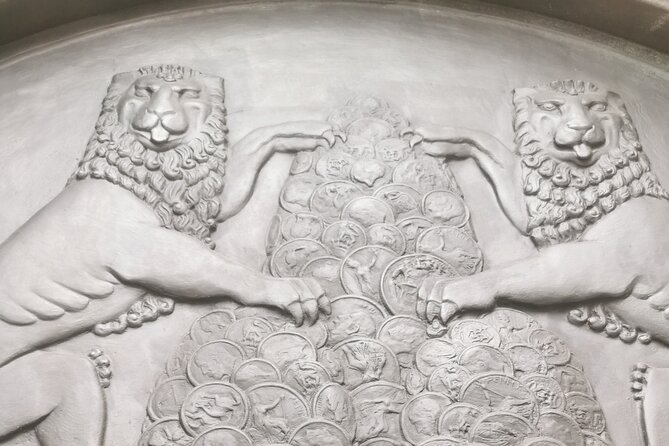
Now you move into Salter’s Hall Garden, where the tour shifts from walls and churches into institutions and people. The Roman wall is presented as the physical fortification that supported the City over centuries, and then the story expands into Celtic people, described as indigenous groups whose presence helped make Roman fortification necessary.
This is also where livery-company history enters the picture. The Salter’s Hall is ranked 9th among the 12 most important Livery companies, so you get an actual number and a sense of ranking, not just vague “guilds mattered” chatter.
Time here is about 10 minutes, and admission is free.
Why this section is a great value
Most London tours either go full monarch or full museum. This one gives you the trade and governance angle through the livery system, which is an essential but often overlooked part of how the City functioned. If you like understanding how power works, this is one of the most useful portions.
Brewers’ Hall, where standards come with a sense of humor
Next is Brewers’ Hall, described as the livery company that set the standard for booze. That’s a fun hook, but the point is serious: trade guilds were not only about making and selling. They helped define what “proper” practice meant in their industries.
This stop is about 10 minutes with free admission.
How to get more out of it
Treat this stop like a mini case study. Ask yourself: if you were running a business in the City, would rules from your trade community feel like protection or control? The tour nudges you toward thinking that way without turning it into a lecture.
St. Mary Aldermanbury Garden, the story behind the aldermen
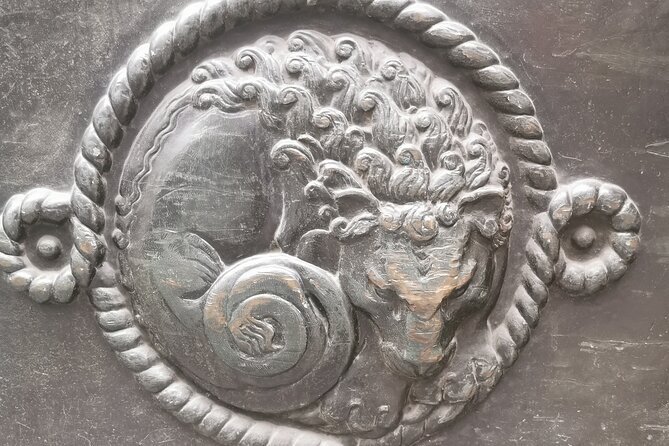
St. Mary Aldermanbury Garden connects the name to ancient courts for aldermen, with the note that these courts are now held at the Guildhall. The garden today also hosts memorials tied to a Shakespeare and legends from two different livery companies.
This is about 10 minutes and free.
You might find this stop charming because it’s not always obvious you are in a place with official municipal meaning. The tour makes the connection between public authority and everyday city space.
A balanced expectation
Garden stops can be hit or miss for some people, but here it works because it is doing more than scenic pauses. You are getting meaning attached to the spot.
City of London, the municipal governing heart
Then you have a short stop simply labeled City of London, described as the municipal governing body and historic centre of London. This is about 5 minutes with free admission.
It sounds basic, but it is a useful “reset” moment. After learning about walls, churches, and specific companies, you step back and remember: this is all tied to governing a place.
For first-time visitors
If you have ever felt like London’s history jumps around too much, this kind of zoom-out moment is helpful. It keeps the story from turning into a pile of unrelated facts.
Guildhall, mythology plus civic power in about 15 minutes
Guildhall is next, and it is a big one. The tour describes it as the town hall of the City of London, on its current site since at least the 13th century. You also get mythology and influence from Greek through Roman, Saxon, and Norman eras.
This stop is about 15 minutes, ticket free.
What makes Guildhall so good on a tour like this
Guildhall can feel intimidating if you only know it as a “famous building.” Here, you get a guided way to interpret it. You come away seeing it as a long-running symbol of civic continuity, not just a stop on a checklist.
St. Lawrence Jewry, church history with a stark story
St. Lawrence Jewry is presented as the official church of the City of London Corporation, tied to the saint and a sacrifice described as unforgettably cruel. The stop runs about 5 minutes with free admission.
This is one of those moments where the tour keeps moving, and the emotional content is heavy. If you prefer gentle pacing, just know this is brief but direct.
Why it still matters
This kind of religious storytelling helps explain how moral authority and civic authority used to overlap. The City’s identity was not just economic. It was also spiritual and institutional.
Guildhall Art Gallery area, Roman amphitheatre beneath your feet
Next you reach the Guildhall Art Gallery, described as the location of a Roman amphitheatre. This is a longer stop at about 25 minutes, still marked free for admission.
Even if you do not linger for a deep museum-style visit, the tour angle makes the amphitheatre idea click. You are learning how entertainment and public gathering fit into the City’s Roman footprint.
How to enjoy this stop most
Use the first part of the time for orientation, then decide if you want to focus on any interpretive materials in the space. Since the overall tour is time-tight at other points, this is your chance to slow down a bit.
St. Margaret Lothbury, wards and how “Worshipful” fits in
St. Margaret Lothbury Church represents two of the wards of the City of London, and the tour connects that to how livery companies came to be called worshipful companies. This stop runs about 5 minutes with free admission.
It is a quick link, but it matters. If you have ever wondered why the livery companies sound so ceremonial, this is where you get a practical explanation.
The Royal Exchange, legends, and the golden grasshopper
The Royal Exchange comes next, described as built by a legend for adventurers to meet. The tour also flags the golden grasshopper on top, and uses it as a prompt for how the building ties into trade and city imagination.
Time here is about 5 minutes and admission is free.
Why this works even though it is brief
You get a famous landmark, then you get the one detail you can remember later. The golden grasshopper is exactly the kind of thing that helps your photos mean something.
Mansion House, the Lord Mayor’s home at the head of governance
Then you see Mansion House of the City of London. The tour explains that the Lord Mayor of the City of London is at the head of governance, and that this is his home, plus his role as an international ambassador for the UK’s financial and professional services sector.
This stop is about 5 minutes with free admission.
What you should expect
This is more about function than interior touring. You leave with an understanding of where the City’s civic leadership lives and how it connects to finance.
London Troops War Memorial, dragon-lamp circle and Minotaur story
You end your sequence at the London Troops War Memorial area, described as inside a circle of 12 dragon lamposts representing the 12 great livery companies. The tour highlights notable figures remembered around this area, then concludes by returning to the story of Minotaur.
This stop is about 10 minutes and free.
The dragon-lamp idea is a clever way to visualize how livery-company identity gets symbolized in public memorial space. It’s also a satisfying payoff if you have been paying attention to how often the tour repeats the theme of City identity through institutions.
Bank of England, traditional symbol with a forward-looking institution
Finally, the tour reaches the Bank of England. The guide points out how influential it is, and notes it is traditional but still forward looking. You also get a detail about a golden statue on top and the story tied to it.
This stop is about 5 minutes, ticket free.
The main takeaway
Even if you know the Bank of England exists, it usually stays abstract. Here it is treated as part of the same City line you started with: defense and governance in earlier centuries, then finance and regulation in later ones.
Price and value, what $30.69 buys you
At about $30.69 per person for roughly 2 hours 30 minutes, this is priced like an efficient guided sampler, not a full-day deep specialist outing. The value is the number of major City stops you cover, plus the fact that each listed stop is marked admission ticket free.
Where it pays off for you is time and coherence. You are not trying to stitch together multiple sights across the Square Mile on your own, and you are not guessing which details matter. A guide like Argun can keep the story straight while you move from Roman walls to civic government to finance symbols.
One drawback to factor in
Because the tour is built from many short segments, it is not ideal if you want extended time inside buildings. You will learn a lot, but you will not linger long at any single site.
Who should book this tour
This tour fits best if you are:
- A history buff who likes institutions, not just dates
- A London newcomer who wants the City’s identity in one guided thread
- Someone who prefers smaller groups and straightforward walking pace between stops
- A wheelchair user or parent with a stroller, since it is described as wheelchair and stroller accessible
If you are the type who needs 45 minutes in one museum room to feel satisfied, you might feel the stop durations are too short.
Getting the most out of it (without overthinking)
Bring comfortable shoes and plan for quick photo moments, not long gallery-style browsing at every stop. Since the tour runs about 2 hours 30 minutes with many brief stops, your best strategy is to pick a few moments to photograph and just listen closely for the “remember this” details like the golden grasshopper and the dragon-lamp circle.
If you have specific interests, go in with one question ready. For example, ask how livery companies connect to governance in the City, then use that thread to judge every stop that comes next.
Should you book this City of London history walk?
If you want a compact, guided way to understand how the Square Mile grew from Roman defenses into a center of trade and governance, I think this is an easy yes. The pricing feels fair for the number of key stops, and the story focus on livery companies and civic power gives you something you will not get from a typical landmark-only stroll.
Book it when you:
- Have limited time in London and want maximum orientation
- Like off-the-beaten-track context, not just top 10 tourist photos
- Enjoy short guided stops with clear takeaways
Skip it if your ideal day is slow, museum-heavy, and deeply detailed inside one building for a long stretch. This tour moves, and it moves for a reason.
FAQ
How long is the City of London History Tour?
It runs for about 2 hours 30 minutes.
How much does the tour cost?
The price is $30.69 per person.
What language is the tour offered in?
The tour is offered in English.
Where does the tour start and end?
It starts at Barbie Green 2 London Wall Pl, Barbican, London EC2Y 5AU, UK and ends at London Troops War Memorial, 1 Cornhill, London EC3V 3LN, UK.
Do I need an admission ticket for the stops?
The provided stop details list admission ticket free for each listed stop.
How many people are in a group?
The maximum group size is 8 travelers.
Is it accessible for wheelchair users or strollers?
Yes, it is listed as wheelchair and stroller accessible.
Do I get a mobile ticket?
Yes, the tour includes a mobile ticket.
Can I cancel for a full refund?
Free cancellation is available up to 24 hours in advance for a full refund.
More City Tours in London



More Tours in London




More Tour Reviews in London


Not for you? Here's more nearby things to do in London we have reviewed










More London City Tours worth a look.
 ★ 4.6The London Eye Entry TicketTickets from $3935,875 guest reviews
 ★ 4.7From London: Harry Potter Warner Bros Studio TourTickets from $11726,588 guest reviews
Westminster to Greenwich River Thames CruiseTickets from $2222,836 guest reviews
Magical London: Harry Potter Guided Walking TourTickets from $2022,044 guest reviews
 ★ 4.6Madame Tussauds LondonTickets from $3620,915 guest reviews
 ★ 4.5Stonehenge, Windsor Castle, and Bath from LondonTickets from $11118,662 guest reviews
 ★ 4.7Warner Bros. Studio Tour with TransfersTickets from $14417,586 guest reviews
 ★ 4.7Tower Bridge Entry TicketTickets from $2115,560 guest reviews
Continue by place or experience