
REVIEW · LONDON CITY TOURS
London Self Guided City Tour With an App
App-guided London walks are surprisingly calming. For $9.99, you follow the Trippy Tour Guide through landmark and lesser-known stops, with an offline map and 30+ narration points built into your phone. It is a smart way to see a lot without booking separate tours or constantly checking your bearings.
My favorite part is how the route mixes big-name sights with smaller moments you would normally miss. You also get detailed directions to keep the walk flowing, plus a private setup for only your group. The one thing to watch is time: the full route is packed, so the listed 1 to 2 hours can feel tight if you pause often.
If you like walking at your own pace, this can be a great fit. You get enough structure to stay oriented, and enough freedom to linger when a view or detail grabs you.
Key things I’d plan for on this London app tour
- Offline map support so you can keep walking without relying on Wi-Fi or roaming data
- 31 stops on the full route, meaning you should plan for more than the advertised 1 to 2 hours
- Free-entry stops listed throughout, from Sky Garden to the Monument to Borough Market area
- Clear audio wayfinding, with narration points tied to what you see around you
- A start at Monument Station and an end at St Paul’s Churchyard, good for linking to other plans
Value for a first London walk, $9.99 and a real route
This tour is priced at $9.99 per person, which is the big reason it works. You are not paying for a guide’s labor, you are paying for a guided route you can run on your own schedule. In practical terms, that can save money and time if you want to hit the core East and South side sights without stacking multiple tickets and tours.
It is also a solid choice if you are the type who likes to wander, but still needs a nudge. The combination of directions and narration points means you are not just walking from photo stop to photo stop. You get story context as you move, which is especially helpful in London where streets can look similar and intersections can sneak up on you.
One more value angle: the tour is described as private for your group. Even though it is self-guided, your booking is not mixed with strangers. That matters if you are traveling with colleagues, family, or anyone who wants the pace to feel comfortable.
The only catch is that low cost can invite higher expectations, and some people find the app navigation needs patience. If you want a strict, turn-by-turn “Google Maps” experience, you might find the phone screen takes some getting used to before it feels easy.
You can also read our reviews of more guided tours in London


Trippy Tour Guide: offline map, narration points, and GPS you should enable
The tour runs through the Trippy Tour Guide app, and the key promise is a fully offline map. That means you can keep moving even when cell service gets flaky. It is great for long walks where you do not want to hunt for signal.
You also get 30+ narration points and “detailed directions” to popular spots and smaller stops. The narration is what turns the walk from simple sightseeing into something more like a guided stroll, where you learn why a building, plaque, or vantage point matters.
Here is the practical part that makes or breaks it: before you start, make sure the tour content is downloaded and your phone has GPS permission enabled. If you skip those steps, you can end up with the app not tracking you correctly, and then the route can feel frustrating fast. A setup minute at the beginning is worth it.
Finally, the tour is offered in English, so you will get the spoken guidance in that language. If you are traveling with someone who prefers a different language, this specific experience may not match your needs.
Start-to-finish route feel: Monument Station to St Paul’s Churchyard
The tour starts at Monument Station (King William St, London EC4R 9AA) and finishes at 100 St Paul’s Churchyard (London EC4M 8AE). Starting at Monument is smart because it anchors you near major Great Fire sites and key river crossings. Ending near St Paul’s keeps the last stretch aligned with one of London’s most central viewpoints, so you can naturally roll into dinner or an evening walk.
In terms of time, the listing says 1 to 2 hours (approx.), and yet the full route is built with many stops. One feedback experience put it well: the route has 31 stops, and they only made it through about 14 within the shorter window. My advice is to treat 1 to 2 hours as a light run, and assume you will do more if you like reading plaques, taking photos, or stepping inside when offered.
Operating hours are listed as 6:00 AM to 9:00 PM daily. That flexibility helps if you want a morning start to beat crowds, or a later slot when London’s light is prettier and you can slow down.
Also note that private transportation is not included. This is a pure walking tour with app navigation, so plan for footwear that handles cobblestones, stairs, and long sidewalks.
Sky Garden and the Monument: two quick wins with big view payoffs
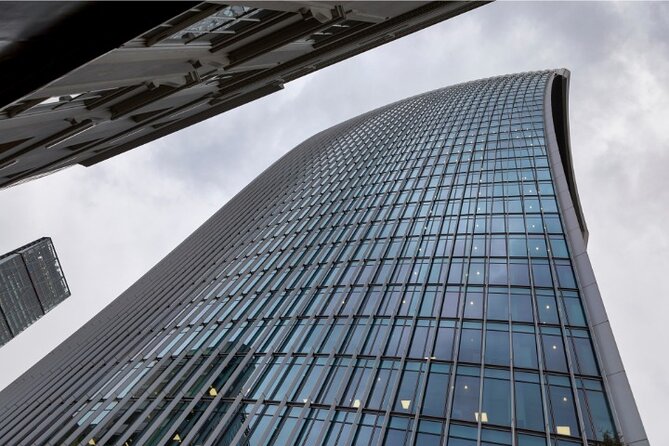
The route kicks off at Sky Garden and the famous Walkie-Talkie building, Fenchurch. The pitch here is a mix of city drama and calm space. From the top, you get panoramic views and a rooftop garden feel, which is a nice contrast to London’s busy street-level energy.
The itinerary labels the stop with free admission, and it also mentions Sky Garden’s height being limited to protect views of St Paul’s Cathedral. That context matters because it explains why the skyline looks the way it does from certain angles. When you are standing above the city, that kind of “why this looks this way” information makes the view feel more meaningful.
Next up is the Monument to the Great Fire of London. You get a clear lesson in resilience, plus a classic challenge. The itinerary notes a climb of 311 steps for a panoramic view and a commemorative certificate. Even if you do not care about certificates, the steps are a fun way to “earn” a view instead of just arriving at one by elevator.
This is also one of the best early stops for first-time visitors. You connect a landmark to a specific event, and you immediately understand the city’s layers.
The consideration: if you want a smooth, fast walk, the climb at the Monument can change your pacing. Build in breathing room, because taking photos on stairways and looking out windows takes time.
Old churches and Tower Hill plaques: All Hallows and the Sundial stop
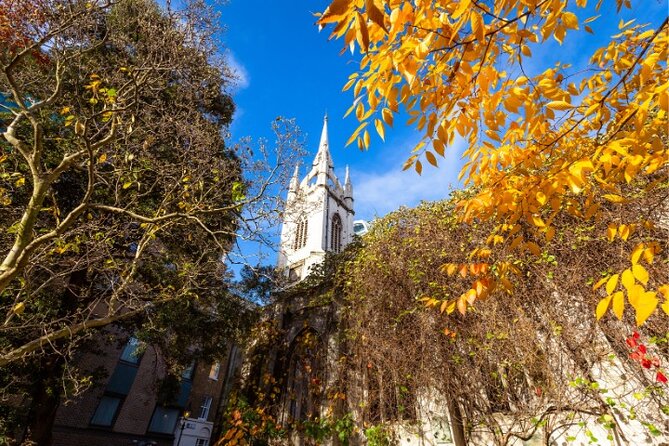
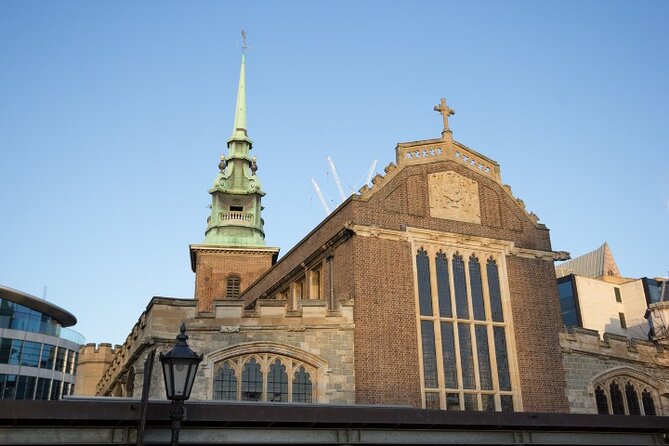
At All Hallows By The Tower, you step into one of London’s oldest church sites, dating back to 675 AD. The key draw is survival and layers. It is described as surviving the Great Fire, and the interior includes remnants from the 13th and 14th centuries, plus a hidden Roman road.
That combination is what makes this stop special for app-guided touring. When you learn the building’s age and see what remains, you stop thinking of the church as just a pretty photo spot. You start noticing how the past survives inside modern streets.
The itinerary also highlights that notable visitors once frequented the church, including John Quincy Adams. That kind of name recognition helps you connect London’s story to wider world events, even if you are not a dedicated UK history buff.
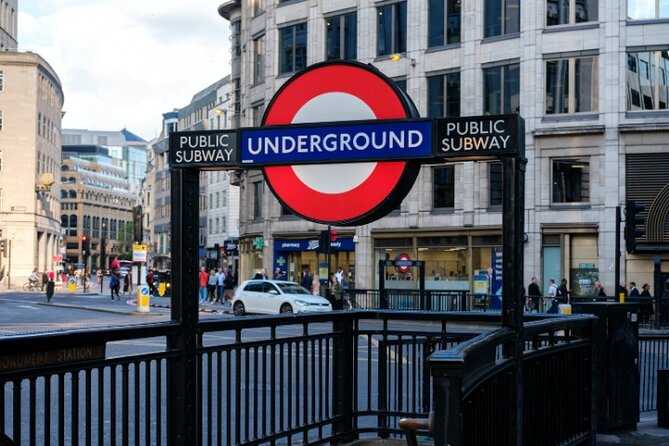
Right after, you hit the Sundial at Tower Hill Underground Station. This is one of those stops that sounds small, but can be surprisingly satisfying. The sundial is paired with bronze plaques that mark pivotal moments, from the Roman invasion through the end of World War II, guided by sunlight as the day moves.
The practical value: this is a “slow down” stop. You can pause, read, look at the light, and mentally map time onto place. If you are rushing, you might miss what makes it different from a standard landmark photo.
You can also read our reviews of more city tours in London






Tower Bridge to the Queen’s Walk: Thames landmarks with walking momentum
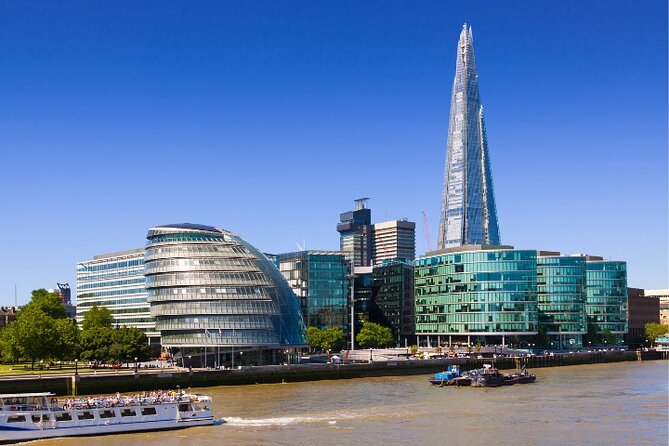
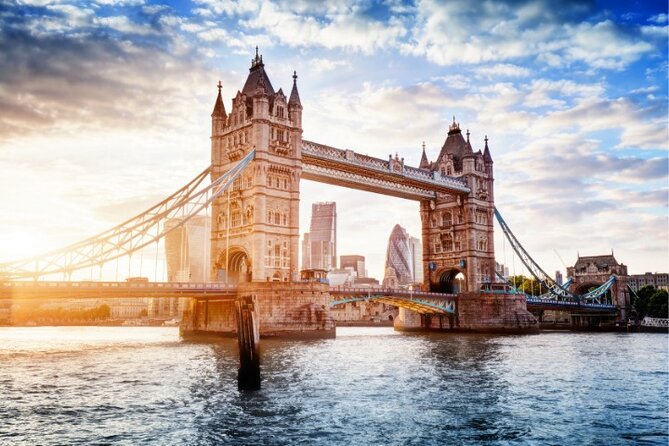
Then the route pushes into the river corridor with Tower Bridge and the Queen’s Walk. The point of Tower Bridge here is design and function. The itinerary explains it is a mix of bascule and suspension, built to let ships pass for over a century. It also calls out how it often gets confused with London Bridge, so the app focus helps you keep the landmarks straight.
You also get a fun anecdote about a bus driver in 1952 who reportedly leaped the bascules. Whether you treat the story as pure trivia or just as a way to make the bridge memorable, it makes the bridge feel alive instead of static.
After that comes Queen’s Walk, described as a riverside tribute to queens who shaped London. The walk is framed as a timeline you can feel under your feet, starting from the 15th century and moving into the 16th century after Henry VIII’s reign, with references to the 1666 Great Fire along the way. Modern landmarks like the London Eye sit alongside older structures, so you get “then and now” without changing cities.
The consideration on this part: the Thames is gorgeous, but it is also where you can get delayed by crowds and slow crossings. If you care about keeping to a tighter schedule, consider taking photos quickly and reading plaques in the gaps.
The Shard, London Bridge, and Borough Market: modern skyline to real street life
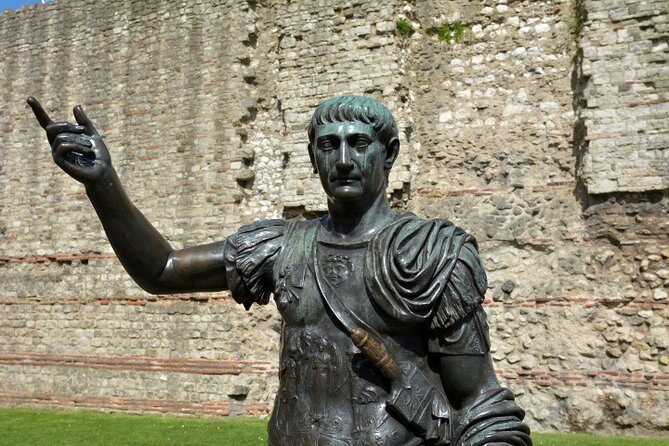
The route then hits The Shard, described as Western Europe’s towering icon at 310 meters. Here the contrast is the point. The itinerary ties the modern skyscraper back to Southwark and notes that the area once held inns and the Shakespeare’s Globe Theatre.
That is useful because London can feel like a collage of eras. When you get that “this view sits on older ground” detail, you are less likely to treat the skyline as just impressive, and more likely to treat it as layered.
Next comes London Bridge, with emphasis on the fact it was more than a bridge. The itinerary notes that in the 15th century it functioned like a lively street with shops, homes, and even a chapel. It is a good reminder that bridges were once places to live, not just places to cross.
Then you reach Borough Market, a food-focused stop with a long timeline. It is described as being at the heart of London since 1014 AD, tied to trading by London Bridge, and flourishing as a key hub by the 16th century.
Even if you are not hungry, Borough Market is a strong stop for people who like atmosphere. You can snack, browse, and reset your energy for the next stretches.
The one cautious note: the itinerary lists “admission ticket free” for many stops, but real-world access can vary by platform and timed entry. One piece of feedback complained that tickets for a viewing stop were not included. Before you bank your plan on free access, double-check the app instructions for any place that might require timed entry.
Shakespeare’s Globe and Tate Modern: theatre spirit and industrial-to-art views
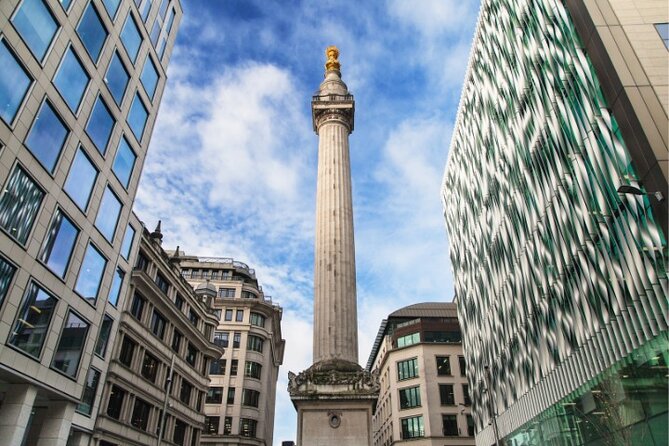
After the market area, the tour includes Shakespeare’s Globe Theatre. The itinerary calls out the modern Globe opened in 1997, inspired by actor-director Sam Wanamaker, and built as a replica using traditional materials like unseasoned oak and thatch. It also highlights that the theatre style encourages participation, which is a fun way to experience Elizabethan theatre energy.
Even a short stop can feel worth it here because the Globe is designed to communicate performance. You are not just looking at a building, you are looking at a stage mindset.
Then the route heads to Tate Modern. This is a history-meets-design stop. The itinerary explains that Tate Modern used to be a power station designed by Sir Giles Gilbert Scott, and it was repurposed in 2001 with transformation by Herzog and de Meuron. Inside, the former turbine hall is where you get the big open spaces, and upper floors offer views toward the Thames.
The practical benefit for your day: Tate Modern gives you options. If you want a quick glance, you can spend your time strategically. If you want to slow down, you can linger without feeling like you are wasting the route. It is a flexible stop for different pacing styles.
The consideration: art galleries can expand your time quickly. If you are trying to keep the walk within a shorter window, decide ahead of time how long you will spend inside.
Millennium Bridge and your final approach toward St Paul’s
The last major highlight listed is the Millennium Bridge. The itinerary notes that it was notorious for an unexpected wobble after its debut in 2001, and that it stands firm today. The “walk it” nature of this bridge makes it a satisfying penultimate stop because you are still moving, still seeing, and still connecting viewpoints.
From there, you finish near St Paul’s Churchyard. Even if your personal attention is split between photos and audio narration, ending here is useful. You end in a central area where it is easy to find food, transit, or a follow-on walk.
If you are trying to turn this into a half-day plan, St Paul’s Churchyard is a smart launchpad. You can also use it as a “pause point” where you decide whether to continue on foot or switch to transit.
Who this app tour suits best (and who should skip it)
This tour is a great fit if you want a budget-priced, self-guided London walk that still has structure. I also think it is ideal for history-focused first-timers who like being told why a landmark matters, even if they are not into long guided lectures.
It is also good for groups who prefer to stay together without matching one guide’s pace. The private setup for only your group can feel more comfortable than joining a mixed group.
Skip it if you need a very precise turn-by-turn experience with zero confusion. One negative experience centered on navigation going the wrong way, and the other feedback flagged that the shorter duration estimate can be misleading. If you hate managing your phone while walking, you may find it distracting.
Also, if you plan to add extra museum time or long indoor stops, give yourself more than the advertised time. This route is dense, and the narration points are designed to keep you moving stop to stop.
Should you book this London self-guided app tour?
Book it if you want a cheap, offline-friendly way to cover a wide range of London highlights from the Monument area to St Paul’s. The standout value is the combination of an offline map, narration points, and a route that includes major sights like Sky Garden and the Monument, plus stops like the Sundial at Tower Hill and Borough Market that make the walk feel more London than postcard.
Hold off if you need tight timing or perfect navigation. The listed duration is likely optimistic for anyone who stops often, and at least one booking issue suggests that app setup and access details can make the difference between a smooth walk and a frustrating one.
If you do book, do two things: download the tour before you start, and keep GPS enabled. Then treat the route like a half-day exploration, not a sprint. You will enjoy it more, and you will actually get to read the small details that make this kind of tour feel like a local stroll.
FAQ
How much does the London Self Guided City Tour with an App cost?
It costs $9.99 per person.
How long is the tour, and how much time should I plan?
The duration is listed as about 1 to 2 hours, but the full route has many stops, so you may want to plan extra time if you want to explore at each location.
Do I need Wi-Fi during the tour?
No. The tour includes a fully offline map, so you do not need Wi-Fi or data to use the route.
Where does the tour start and end?
It starts at Monument Station, King William St, London EC4R 9AA and ends at 100 St Paul’s Churchyard, London EC4M 8AE.
What attractions are included on the walking route?
The tour route includes stops such as Sky Garden, the Monument to the Great Fire of London, All Hallows By The Tower, the Sundial at Tower Hill Underground Station, Tower Bridge, Queen’s Walk, The Shard, London Bridge, Borough Market, Shakespeare’s Globe Theatre, Tate Modern, and the Millennium Bridge.
Is transportation included?
No. Private transportation is not included.
What is the cancellation policy?
You can cancel for a full refund if you cancel at least 24 hours in advance of the experience start time. Free cancellation is available up to that window.
More Guided Tours in London


More Tours in London




More Tour Reviews in London


Not for you? Here's more nearby things to do in London we have reviewed










More London City Tours worth a look.
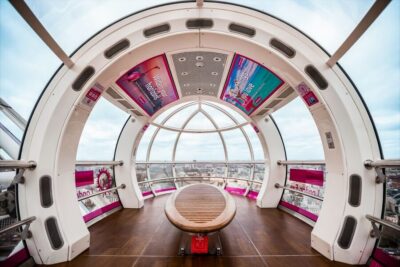 ★ 4.6The London Eye Entry TicketTickets from $3935,875 guest reviews
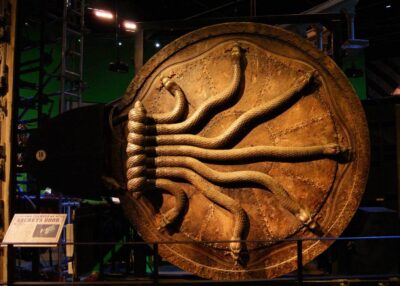 ★ 4.7From London: Harry Potter Warner Bros Studio TourTickets from $11726,588 guest reviews
Westminster to Greenwich River Thames CruiseTickets from $2222,836 guest reviews
Magical London: Harry Potter Guided Walking TourTickets from $2022,044 guest reviews
★ 4.7From London: Harry Potter Warner Bros Studio TourTickets from $11726,588 guest reviews
Westminster to Greenwich River Thames CruiseTickets from $2222,836 guest reviews
Magical London: Harry Potter Guided Walking TourTickets from $2022,044 guest reviews
 ★ 4.6Madame Tussauds LondonTickets from $3620,915 guest reviews
 ★ 4.5Stonehenge, Windsor Castle, and Bath from LondonTickets from $11118,662 guest reviews
 ★ 4.7Warner Bros. Studio Tour with TransfersTickets from $14417,586 guest reviews
 ★ 4.7Tower Bridge Entry TicketTickets from $2115,560 guest reviews
Continue by place or experience