
REVIEW · JACK THE RIPPER TOURS
Jack the Ripper: Night Murder Mystery Walking Tour in London
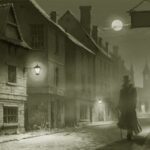
London gets eerie after dark. This Jack the Ripper night murder mystery walk takes you through Whitechapel on a tight, chronological route, with a guide in a Ripperologist-style voice who keeps the story moving street by street. I especially like how the tour uses real neighborhood details, not just spooky talk, so you can picture what life felt like for the people involved.
Two things I also really like are the interactive mystery solving along the way, and the way the walk is paced around specific locations tied to the case, including a stop outside The Ten Bells. One possible drawback: it’s an outdoor nighttime walk, and if the weather is rough or you stand too far back, you might find parts of the commentary tough to hear.
Key highlights to expect on this Whitechapel night walk
- Chronological storytelling that helps you see the timeline click into place
- A guided mystery built around clues at real locations
- The Ten Bells Pub stop tied to victims’ final hours
- Tight group size (maximum 25), which keeps the experience more personal
- Focus on victims’ lives, not only the suspect story
- Plenty of walking, but short stops (about 17 minutes each) to reset your bearings
A Ripperologist walk at night, and why it actually works
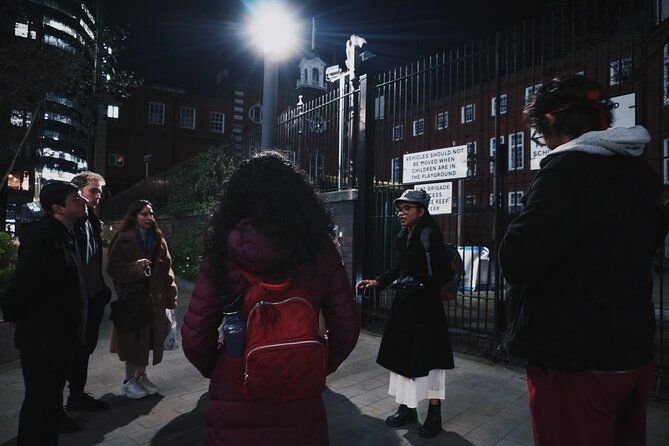
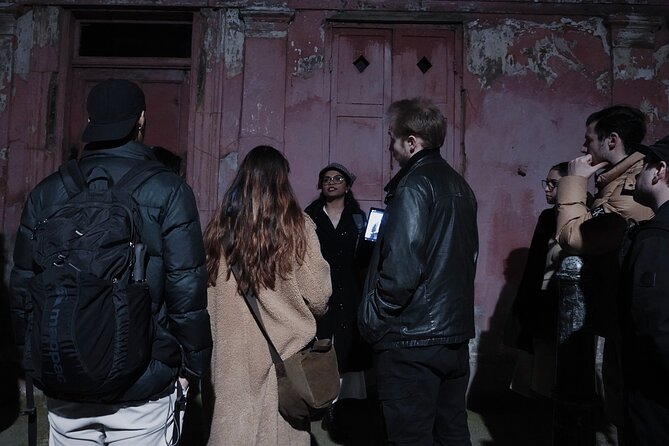
Night is the right time for this kind of story. The route runs through the same Whitechapel streets where people once had to live in cramped conditions, and the darker light makes the atmosphere feel more real. You’re not just hunting for scares, you’re building a map in your head, linking poverty, fear, and daily survival to the case.
The guide takes on a Ripperologist guise, which matters more than you might think. It gives the tour a consistent voice as you move from one stop to the next. I also like that the tour tends to bring in the broader neighborhood context instead of treating everything like a supernatural puzzle.
If you prefer your history with structure, you’ll appreciate the way the story is organized in order. One of the most common praises is how guides keep things chronological, so you don’t feel lost when theories start popping up.
You can also read our reviews of more walking tours in London



Price and logistics: what you’re paying for in 2.5 hours
At about $22.93 per person for around 2 hours 30 minutes, this is priced for a full night experience, not a quick stop-and-go. You’re paying for a guided route through multiple sites, plus an interactive element where you’re asked to think like you’re investigating. Since each stop is described as free of extra admission, you are not likely to get hit with surprise entry fees mid-walk.
The group cap at 25 travelers is a big deal for a walking tour. Smaller groups usually mean fewer people crowding the sidewalk at each clue stop, and that helps when the guide is explaining details and you’re trying to take photos or keep up.
You’ll also get a mobile ticket and confirmation at booking. That’s handy if you like to travel light and avoid extra paperwork.
Where you start and finish: St Marys Whitechapel to Mitre Square
You begin at St Marys Whitechapel Church Memorial (London E1 1FE). The exact “memorial” location is worth checking in advance on a map, because Whitechapel has several nearby landmarks and you don’t want to waste time at night. The tour ends at Mitre Square in London EC3A 5DE, where Mary Jane Kelly is tied to the story.
The route includes a finish-style wrap at The Ten Bells Pub in Whitechapel, so it helps to think of the walk like this: you’ll hit major clue locations, then close in on the final area near Mitre Square. In practice, that means you can plan a pub stop or a quick bite afterward, since the tour closes in the neighborhood connected to the case.
One more logistics point I like for planning: the tour is offered in English, and it’s described as something most travelers can participate in. You still want comfortable shoes, because you’re walking at night for a solid stretch, but the pacing is built around short, frequent stops.
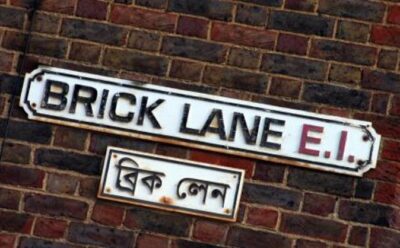
Stop 1: Brick Lane and the setup of desperation
The tour kicks off at Brick Lane, where you’ll be talking about the difference between then and now. Today it’s known for food and culture, but the tour frames it as once part of the working-class pressure-cooker of Victorian slum life. The key idea is to understand why the neighborhood became fertile ground for violence, with poverty, overcrowding, and desperation setting the stage.
This first stop is doing important work. It prepares your brain before the clues start sounding like a movie script. If you’ve only heard Jack the Ripper as a list of headlines, this stop helps you see the human conditions behind them.
Drawback to consider: because this is an opening location, it can feel like you’re being given context before the “mystery” mechanics fully kick in. If you want instant action, you’ll likely need a few minutes to settle.
Stop 2: Princelet Street and the quiet that hides horror
Next is Princelet Street, a narrow street that the tour treats as a place where echoes linger. This stop leans into the living conditions of women connected to the story, including Annie Chapman. The vibe here is less about spectacle and more about how easily a life can disappear in plain sight when people are vulnerable and overlooked.
I like this stop because it slows your thinking down. Instead of sprinting from dramatic location to dramatic location, you’re asked to consider everyday streets, daily routes, and why those details mattered.
You can also read our reviews of more evening experiences in London


Stop 3: Puma Court and why unchanged streets shape the imagination
Then you reach Puma Court, described as virtually unchanged since the 19th century. That detail matters for a walking tour because it reduces the distance between “then” and “now.” Standing in a space that still reads like its original layout can make the story feel less like guessing and more like spatial reasoning.
At this stop, you’re not just hearing names. You’re building a mental model of how someone could move in and out of sight, and how a person could vanish into shadows in a cramped setting.
If you’re the type who likes photos, this stop is usually a natural one to capture, because the streets can still look like the era the story refers to.
Stop 4: The Ten Bells Pub, final hours, and the mood shift
The most well-known landmark on the route is The Ten Bells. The tour connects many victims to the idea of visiting the pub shortly before their deaths. You step outside the doors and focus on why the pub became such a permanent piece of the case.
This is where the atmosphere often changes. Up to this point, you’ve been learning about conditions and specific streets, but now you’re concentrating on last-known movements and the uncomfortable closeness between ordinary spaces and deadly outcomes.
Practical note: pubs are busy places. Expect a sidewalk crowd if other groups are nearby, and be ready to stand where the guide can keep you oriented. That’s one reason the small group size helps.
Stop 5: Gunthorpe Street and the clues around Martha Tabram
The route continues to Gunthorpe Street, a narrow passage tied in part to the murder of Martha Tabram, sometimes suggested as possibly connected as an early victim. This stop gets into the clues and competing theories around her case, including why some experts include her on the list.
This is a good moment to practice “hold two thoughts at once.” The tour doesn’t only present one story as unquestionable truth. It sets up how investigation works, how theories grow, and why even careful historians can disagree.
If you hate uncertainty, you might find these discussions frustrating. If you like puzzles and critical thinking, this stop is one of the most interesting.
Stop 6: Goulston Street and the chalk message controversy
Next is Goulston Street, where the tour points to a chilling clue tied to Catherine Eddowes: a bloody piece of apron. Nearby, there’s mention of a mysterious chalk message, which is where controversy and conspiracy theories come in.
I like this stop because it’s a lesson in how messy real cases can be. Even with physical clues, interpretation can shift, and rumors can shape what people believe. The guide’s job here is to keep you grounded in what’s known while showing how speculation filled in the gaps.
Consideration: chalk-message theories can get emotionally intense. The tour’s overall approach, based on what guides are praised for, tends to stay respectful and human-centered rather than turning the stop into gore for entertainment.
Stop 7: St Botolph without Aldgate and remembering the vulnerable
The final named stop is St Botolph without Aldgate. This church is presented as a haunt for vulnerable women seeking refuge, and you pause here to reflect on how Victorian society failed people now remembered through the case.
This stop is different from the clue stops. It’s about framing victims as real lives, not just names in a mystery. Many people love that the tour keeps attention on victims’ experiences, not only on the hunt for the suspect.
If you’re someone who wants closure, this is where the story stops feeling like a scavenger hunt and starts feeling like a memorial.
The interactive mystery: how you solve the case while walking
The tour is described as interactive, with you visiting crime scenes and solving a mystery. That means the experience is not only listening. You should expect moments where you’re asked to connect clues, track details, and think through what might explain the patterns you’re seeing on the ground.
I like this format because it keeps you engaged even when the subject turns heavy. Instead of zoning out during context, you have a purpose for paying attention: you’re looking for the pieces that fit together.
Guides with a sense of humor and a steady pace are often mentioned as a reason groups stay motivated, especially on chilly nights. If you’re the type who gets restless on long story sessions, this interactive structure helps break the time into active segments.
What the best guides do for you, and what to watch for
The most praised guides are the ones who stay organized, keep the timeline clear, and tell the story with care. Names that show up in guide feedback include Tyson, Kory, Dougal, Hadi, and Lisa. Across those examples, the theme is the same: strong storytelling, good pacing, and a willingness to chat through theories after the walk.
One practical thing to consider is audibility. Outdoors at night, guides sometimes have to look around to keep everyone together. If you know you struggle hearing in wind or at a distance, aim to stay closer to the front.
Another thing I appreciate is how the tour handles tone. You’ll hear about horrific violence, but it’s presented in a respectful historical frame, with victims emphasized as people who suffered, not as entertainment props. That approach keeps the “mystery” from crossing into sensational.
Value for your money: why $22.93 can feel fair here
For $22.93, you’re getting a guided night walk of about 2.5 hours, a route with multiple clue stops, and a structured story that stays chronological. That makes it comparable to other London walking experiences, but with the added benefit of interaction.
Value also comes from what you do not have to pay. Since the stop descriptions note free admission tickets at each listed location, the cost stays simpler. You’re paying for the guide and the route, not a series of paid entries.
The group size also supports value. With a maximum of 25 travelers, you’re less likely to feel like a number in a crowd. And since the tour ends near Mitre Square, it’s easy to plan your next move without backtracking.
One more value point: you’re exploring a part of London many people skip. Whitechapel can be a blur if you only pass through by transit. This walk gives you a route you can follow on foot and remember.
Comfort tips for a chilly, rainy London night
This tour is timed for night, so plan for weather. If you do London in rain, bring a waterproof layer and consider a hood or hat that won’t blow away. One benefit of having an organized guide is that they typically keep the group together even when conditions make it harder to move smoothly.
You’ll also want shoes with grip. The route includes narrow streets and passages, so the ground can feel uneven and slippery. A light backpack helps for a phone, water, and a warm layer, but keep it small enough to move easily with the group.
Finally, bring your curiosity, not your expectations of certainty. Some parts of the case involve disagreement and competing explanations. If you like historical debate, you’ll have more fun.
Should you book this Jack the Ripper night murder mystery walking tour?
I’d book this tour if you want a structured, interactive way to experience Jack the Ripper’s London. It’s a good fit for history lovers who also enjoy puzzles, and for anyone who wants to focus on victims’ lives and the neighborhood context, not just the headline name.
I would skip it if you need lots of seating breaks, or if you hate walking for about two and a half hours with limited chances to stop and rest. Also, if you know you struggle hearing in outdoor conditions, plan to stand where you can see and listen clearly.
Overall, the combo of short stop times, chronological storytelling, and an ending near Mitre Square makes this a strong value evening in London.
FAQ
How long is the Jack the Ripper walking tour?
The tour lasts about 2 hours 30 minutes.
Where do I meet, and where does it end?
You start at St Marys Whitechapel Church Memorial in London E1 1FE, and you end at Mitre Square in London EC3A 5DE.
What does it cost, and is there added admission at stops?
The price is listed as $22.93 per person. Each listed stop notes admission ticket free, so you should not need to buy separate entries during the walk.
What language is the tour offered in?
The tour is offered in English.
How big are the groups?
The tour has a maximum of 25 travelers.
Can I cancel for free, and are service animals allowed?
Free cancellation is available if you cancel up to 24 hours in advance for a full refund. Service animals are allowed.
More Walking Tours in London


More Tours in London




More Tour Reviews in London


Not for you? Here's more nearby things to do in London we have reviewed









More Jack the Ripper Tours worth a look.
 ★ 4.7The Original Jack the Ripper Walking TourTickets from $257,833 guest reviews
 ★ 4.5London Jack the Ripper Guided Tour with Ripper-VisionTickets from $274,840 guest reviews
 ★ 4.7Jack the Ripper Small Group TourTickets from $263,159 guest reviews
 ★ 5.0London Jack The Ripper Guided Walking TourTickets from $03,131 guest reviews
 ★ 4.6German Language : Original Jack the Ripper TourTickets from $241,805 guest reviews
 ★ 4.5Jack the Ripper Walking Tour – Ripper Vision ToursTickets from $261,752 guest reviews
 ★ 5.0Ultimate Jack the Ripper : Guided Tour of LondonTickets from $271,495 guest reviews
 ★ 4.9Jack the Ripper Evening Walking TourTickets from $331,449 guest reviews
Continue by place or experience