
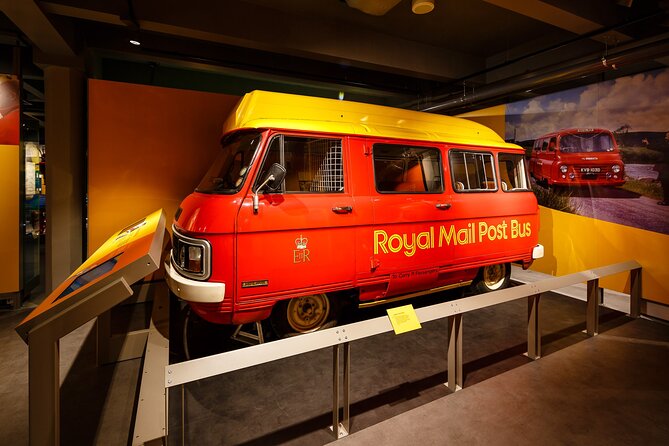
REVIEW · MUSEUMS
The Postal Museum Admission Ticket
Riding the old mail tube beats a usual museum. The Postal Museum turns mail into a hands-on story, from early stamps to London’s secret underground post railway (Mail Rail). I like that it is made for both kids and adults, not just silent reading and glass cases.
My other favorite is how practical it feels. You can pick a time slot that fits your day, and the experience includes interactive displays you can actually touch and try. One thing to consider is that the Mail Rail is the big draw, so if operations are affected by weather or maintenance, you may have less of the ride than you hoped.
Key highlights before you go
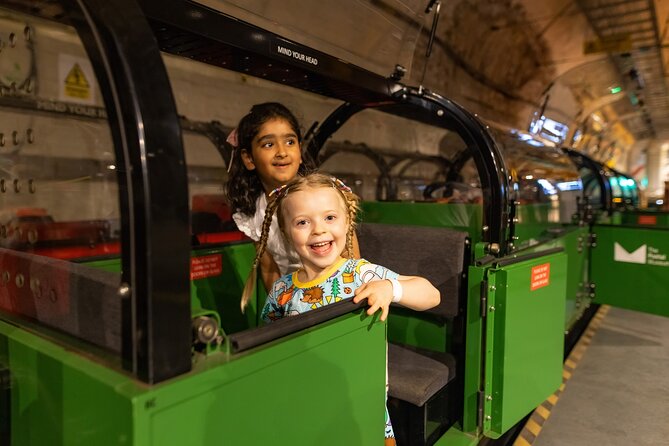
- Mail Rail ride: a story-driven trip underground that kids usually remember the longest
- Time slots: choose a start time so you can plan around other London sights
- Audio guide upgrade: optional add-on if you want more context while you walk
- Family-friendly extras: Sorted! play space is available for younger kids (priced separately)
- Rainy-day winner: good indoor option when London weather turns
- Two-part site: main museum and Mail Rail area feel like separate stops
Why the Postal Museum works for both kids and adults
London has big, serious museums. This one has that same feel of importance, but it tells its story through objects and motion. You start with the idea that postal communication shaped daily life, trade, and connections across the UK and beyond.
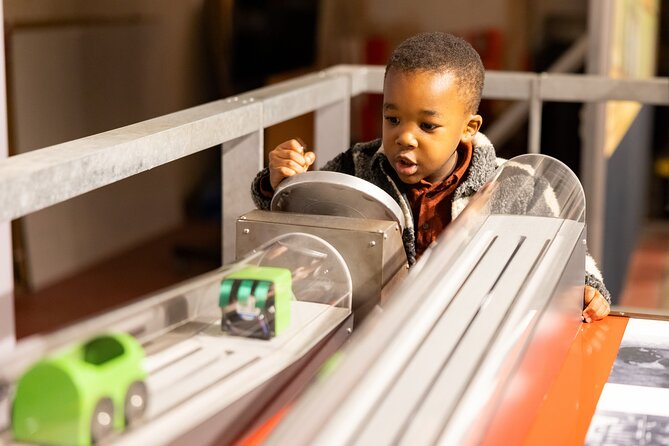
What I like most is that it stays human. You’re not just learning about stamps and dates, you’re seeing how postal work affected neighborhoods and families. The museum also leans into hands-on details, including pneumatic tubes and interactive elements that help the history land fast for kids.
It is also unusually good for mixed ages. If you’re traveling with a history buff and a child who gets bored easily, the place gives both something to do. Even adults tend to pause more than they expect, because the displays are built like a sequence, not a warehouse of artifacts.
There is a little planning that helps. The site is essentially two parts: the main Postal Museum and the Mail Rail area. If you want the full effect, give yourself enough time that you are not rushing between them.
More London tours and experiences for the shortlist



Mail Rail: the underground trip that steals the show

The Mail Rail experience is where the magic happens, because you get to ride a working-style underground railway that was built for moving mail. The journey is guided by story beats and facts along the route, so it does not feel like a generic ride through tunnels.
Expect it to feel like a real operation from the past. Reviews often mention that the journey adds clarity to how the system worked, and the train setup makes the history feel tangible. It also helps that you get a clear, guided flow, which can be a relief if you are traveling with kids who need structure.
Two practical notes matter here. First, the ride area can be loud and dark, which might be scary for some children who dislike that sensory mix. Second, the ride is not built for tall people, so if you are very tall, you may find the clearance tight. One clear piece of advice is to go early in your visit, so the ride is not something you try to fit in at the end.
If the Mail Rail is temporarily unavailable during your visit, it can be a real letdown because the ride is the centerpiece. It is worth building in a bit of buffer time so you can still enjoy the rest of the museum even if the ride does not happen as planned.
The main Postal Museum galleries, stamps, and social history
After (or before) the ride, the main museum part focuses on postal communication and its impact on global society. You see five centuries of communication history brought to life through postal artifacts and thematic displays.
I also like that it does not treat mail as a boring topic. It connects postal work to community life, safety, and how people stayed linked. If you enjoy social history, you’ll likely find this museum hits the mark, because it looks at how postal systems changed the world around them.
One standout exhibit name you should look out for is Voices of Resistance: Slavery and Post in the Caribbean. If you have any interest in how communication networks intersect with big historical events, this is the type of display that can change how you think about mail.
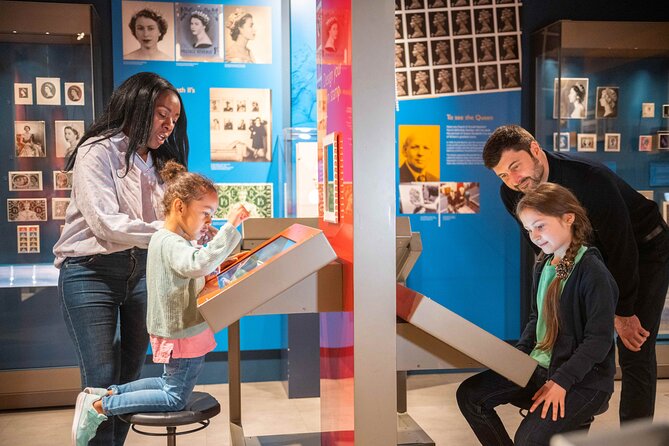
You’ll also find interactive models. These are especially useful for families because kids can do things instead of only watching. Some visitors recommend planning extra time if you want kids to explore the hands-on stations without you constantly moving them along.
A small timing tip helps if you enjoy quiet corners. There is an archive area upstairs that is open every second Saturday of the month, and people mention it as a calmer break when the rest of the museum feels noisy.
Audio guide and how to get more value from your ticket

Your ticket gets you admission. If you want to go deeper, there is an audio guide upgrade available. This is a smart add-on for adults who enjoy context, or for families who want narration to keep everyone engaged as you move through the galleries.
The museum also has accessibility resources, including an audio described introduction, which can make the museum content easier to follow. Even if you do not need those features, audio-style guidance tends to make the exhibits more connected instead of a series of disconnected facts.
If you are traveling with younger kids, you might skip the audio guide and let the interactive parts do the talking. If you have a teen or an adult who loves details, the audio upgrade can turn a fun outing into a more satisfying learning experience.
Timing your visit in London, and how long it really takes
The booked experience is listed at about 1 hour 30 minutes to 2 hours 30 minutes. In practice, I think you should plan toward the higher end if you want a relaxed pace, especially with children or if you want to linger at interactive displays.
One reason timing matters is that the museum feels better when you do it in a sequence. A common strategy is to do the Mail Rail first, then continue to the main building after. That way, the headline attraction stays near the front of the day when your group still has energy.
Queues can happen, particularly around the ride. In rain-heavy seasons, indoor attractions often run full, and the ride can become the moment where you wait your turn. Building in buffer time means you do not end up skipping the galleries because you ran out of steam.
Because the experience requires good weather, it is wise to check conditions close to your visit. If it is canceled because of poor weather, you should expect an alternative date or a full refund, which is comforting. Still, a Plan B in your schedule helps you keep the day smooth.
You can also read our reviews of more museum experiences in London






Price and extras: what $25.55 covers, and what costs extra
Your admission ticket is priced at $25.55 per person. For this kind of London attraction, what makes it feel like decent value is the combination of a museum plus a ride experience. Many museums are mostly walking and reading, while this one adds a moving part that gives kids a payoff beyond display cases.
What your ticket includes is admission. Audio guide is an upgrade, not included. There are also separate priced add-ons you might want depending on who is traveling with you.
Here are the extras to keep in mind:
- Annual entry to the museum’s exhibitions is listed at £2.00 per person
- Sorted! The Postal Play Space for children aged 0-8 is £4.50 per person
If you are traveling with a toddler or preschooler, the play space might justify the extra fee. If your kids are older and already into hands-on exhibits, you might skip it and put your time into the main museum and the ride.
Also note that the museum has a family-friendly café. It is handy when you need a break, but it is still smart to check what food options are available, since café experiences can vary.
Families and first-timers: what to expect on the ground
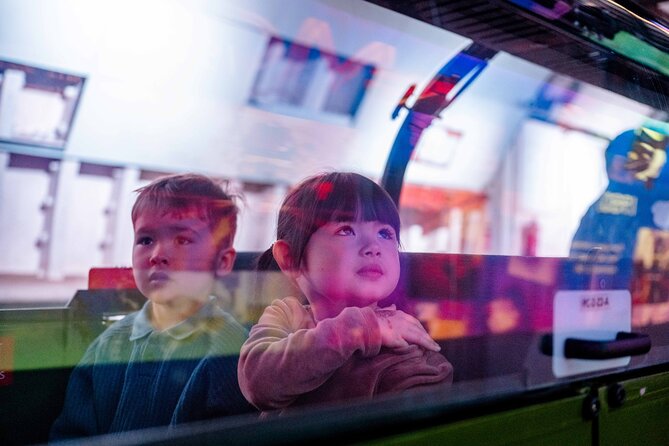
This is a strong choice for families. The museum includes family-friendly interactive exhibitions, and the Mail Rail ride is usually a hit for kids who love trains, tunnels, or anything that feels like a secret route.
There are a few practical things to plan for. The ride is loud and dark, which means it can be too intense for some children with sensory sensitivities. If you know your child dislikes that kind of setting, it is worth thinking about whether you want to participate in the ride or focus on the main galleries instead.
There is also a height reality check. If you are very tall, the ride area can feel cramped. It is not just about comfort, it can also affect how much you enjoy the ride if you are constantly worried about clearance.
Children must be accompanied by an adult. That is a good rule because it keeps the experience family-based, but it also means you should plan group pacing around adult supervision rather than assuming kids can explore fully on their own.
If you have kids who get overstimulated, plan for breaks. People mention the upstairs archive area as a quieter escape when the main spaces feel busy, and that kind of reset can save the day.
Getting around the site, step-free access, and practical limits

One of the easiest parts of planning is that there are step-free routes for the museum spaces. All spaces in the Postal Museum have step-free access. In the Mail Rail building, step-free access applies to areas other than the ride itself.
That matters because the ride is the one part that is not step-free. So even if your route to the ride is accessible, you may need to plan an alternate way to participate, or at least set expectations for what the accessible path can and cannot include.
The museum also has gender-neutral accessible toilets and a Changing Places facility, which is great to know if you rely on those amenities. Service animals are allowed too.
The site has a clear movement requirement for participation. You should expect to be able to walk unaided for at least 100 meters on uneven surfaces with minimal lighting, and to manage up at least 70 steep steps. If you are unsure, it is worth checking before you go so you don’t waste a trip.
Should you book this Postal Museum admission ticket?
I’d book it if you want a London museum that feels like an experience, not a chore. The Mail Rail ride is the headline, and it gives the history a sense of play, movement, and story. It is also a smart rainy-day choice, and it works well for families because you get interactive content instead of only looking.
I would reconsider if your group is mainly expecting a peaceful, quiet museum stroll. The ride environment can be dark and loud, and if operations are affected, you might lose the main attraction you planned around. Tall visitors should also be aware that space can feel tight on the train.
If your schedule is flexible, the time-slot setup and the two-part flow make it easier to fit into your day. For many people, it ends up being one of those London stops that surprises them in a good way, because mail history turns out to be way more human than it sounds.
FAQ
How long does the Postal Museum ticket take?
The experience is listed at about 1 hour 30 minutes to 2 hours 30 minutes.
How much does admission cost?
The price is $25.55 per person.
What is included with the ticket?
Your admission ticket is included. An audio guide is available as an upgrade, and family play space has separate pricing.
Can I choose a time slot?
Yes, you can choose from a range of time slots to match your schedule.
Is this ticket mobile?
Yes, it is offered as a mobile ticket, and it is in English.
Does the museum require good weather?
Yes. The experience requires good weather, and if it is canceled due to poor weather, you are offered a different date or a full refund.
Are children allowed?
Yes, but children must be accompanied by an adult. There is also Sorted! The Postal Play Space for children aged 0-8, sold separately.
Is it accessible for wheelchair or step-free visitors?
All spaces in the Postal Museum have step-free access. In the Mail Rail building, step-free access applies to areas other than the ride, which is not step-free. The site also has gender-neutral accessible toilets and a Changing Places facility.
What are the group size limits?
This experience has a maximum of 7 travelers.
More Museum Experiences in London
More Tickets in London


More Tour Reviews in London




Not for you? Here's more nearby things to do in London we have reviewed










More Museums worth a look.
 ★ 4.5Tower of London and Crown Jewels Exhibition TicketTickets from $496,677 guest reviews
 ★ 4.8Chelsea Football Club Stadium and Museum TourTickets from $434,576 guest reviews
 ★ 5.0Chelsea FC Stadium Tours and MuseumTickets from $441,908 guest reviews
 ★ 4.5London Transport Museum Entrance TicketTickets from $331,323 guest reviews
 ★ 4.3British Museum Guided TourTickets from $231,182 guest reviews
 ★ 4.5Official tickets: Moco Modern & Contemporary Art MuseumTickets from $361,157 guest reviews
 ★ 5.0British Museum London Guided Tour Semi-Private 8ppl MaxTickets from $108984 guest reviews
 ★ 4.2Jack the Ripper Museum TicketsTickets from $18894 guest reviews
Continue by place or experience