
REVIEW · LONDON CITY TOURS
The History of London City Center Tour Semi-Private 12ppl Max
Roman roots, big landmarks, quick pace. This is a semi-private city-center tour that moves on foot through the key spots, with a guide tying what you see to London’s story from early days through modern power. I like that it hits famous landmarks in a logical route, so you get your bearings fast, without feeling stuck on one long bus stop.
I love the small-group size (up to 12), because you get more attention and more chances to ask questions when something sparks your interest. I also love how the guide links each location to real people and turning points, with stops that reference everyone from Queen Elizabeth II to Winston Churchill. The main drawback: it is mostly an outdoor walk with exterior viewing at several sights, and you must be ready for a steady pace (it is not set up for wheelchair use).
Key takeaways
- Up to 12 people keeps it lively and manageable, not a cattle-car tour.
- You get a high-density route from Covent Garden to Westminster Abbey in about 2.5 hours.
- The guide turns famous buildings into stories, from naval victories to WWII command rooms.
- Westminster Abbey entry is included, but the interior tour is unguided, so plan your own pace.
- Churchill War Rooms and Big Ben are not included for entry tickets, so you may want to budget extra.
Why this walk works for first-time Londoners
London can feel like a thousand postcards at once. This tour is built to prevent that overload. You start in Covent Garden and end at Westminster Abbey, with the guide steering you through the core of political and royal London in a way that makes the map click in your head.
I also like that it runs rain or shine. London weather is its own character, so having a walking plan that still keeps going helps you actually use your day instead of waiting for a perfect sky. And because it is semi-private, you are not fighting through huge crowds with strangers for every photo.
The price, while not “cheap,” is easier to justify once you see what you get for the time: a professional guide, a group cap, and at least one meaningful ticketed moment at the end. If you like learning while you walk, this format tends to feel efficient rather than rushed.
You can also read our reviews of more city tours in London


Covent Garden to Trafalgar Square: market life and naval legend
You begin at Covent Garden, an area with roots going back as far as the 7th century, when it was described as a Saxon settlement. Starting here matters, because it sets a different tone than jumping straight into palaces and parliaments. You get a sense that London did not always start with power and ceremony, it started with everyday life and trade.
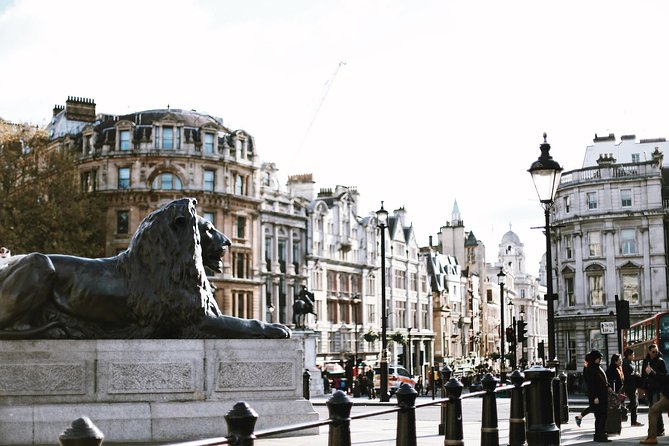
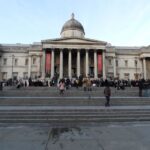
From there, you pass into Trafalgar Square, and the guide frames it around the Battle of Trafalgar, a British naval victory in the Napoleonic Wars. That “why this square exists” story is useful, because it explains the monument, the layout, and even the way people still use the space for demonstrations.
You also see Nelson’s Column, built to commemorate Admiral Horatio Nelson after his death at the 1805 battle. If you have ever wondered why this is such a central meeting spot, the answer is right there in the symbolism. The square is both a civic stage and a memory machine.
Practical note at this stage
Most of these are walk-past stops, so your best photos often come when the guide gives you context and you know what you are looking at. Wear shoes you trust. This is a city-center stroll, not a museum sit-down.
Admiralty Arch and Whitehall: the government corridor in human scale
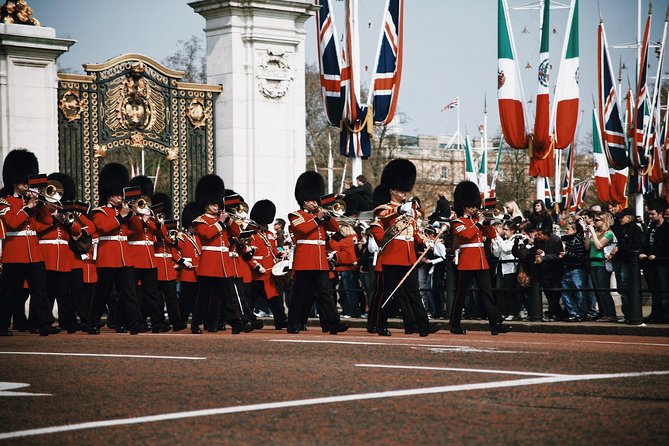
Next you move toward Admiralty Arch, a landmark that connects street-level London to the monarchy. It was commissioned by King Edward VII in memory of his mother, Queen Victoria. That detail gives the arch more weight than just being a good photo backdrop.
Then you walk along Whitehall, the street between Charing Cross and the Houses of Parliament. The name Whitehall is also used for the area of small streets and government buildings nearby. The guide ties the name to government offices that trace back to Henry VIII’s court at Whitehall Palace in the 1530s. That one moment helps you understand why this stretch feels like it has always been about decision-making.
As you near Westminster, you get the visual shorthand for modern power: the next stops are about the Prime Minister and the royal presence nearby. Even if you do not care about politics on a personal level, it is hard to ignore how the physical layout reinforces authority.
10 Downing Street, St. James’s Palace, and Buckingham Palace
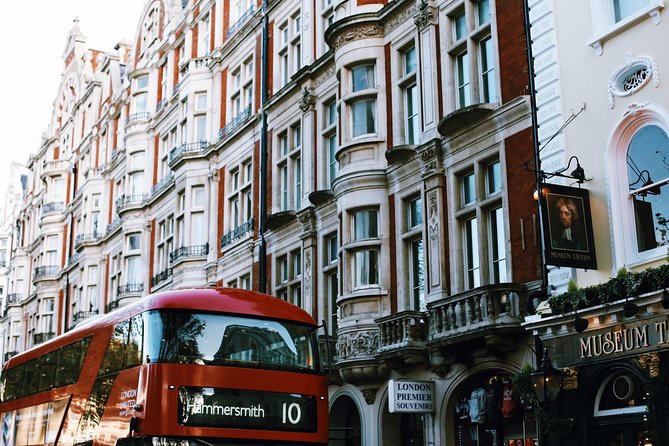
You pass by 10 Downing Street, including the famous address, which is the official location of the Prime Minister’s office. You also learn that the street itself dates to the 1680s. This is one of those places where people arrive expecting a dramatic moment, but the real payoff is the context. Once you know the timeline, it stops being just a landmark and starts being a system.
Then you walk by St. James’s Palace, described as the most senior royal palace in the UK and the setting for key royal events after serving as a royal residence for over 300 years. That long duration matters, because it shows the monarchy is not only about ceremonies, it is about continuity.
After that, you see Buckingham Palace. It has been the official London residence of the UK’s sovereigns since 1827, and today it is described as a working building with administrative headquarters for the Monarch. That distinction is useful. You get the spectacle, but also the structure behind it.
You can also read our reviews of more private tours in London






What you should watch for
Even when you cannot go inside (and some sites on this route are limited by security measures), you can still read the city. Look at how entrances are positioned, where crowds gather, and how the streets funnel movement toward the next landmark.
Churchill War Rooms: WWII told where decisions were made
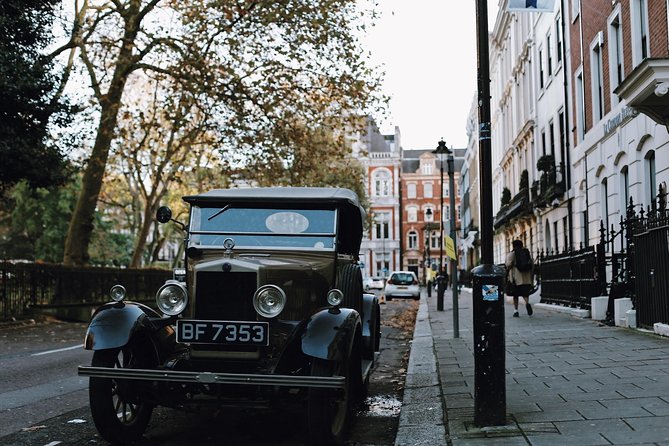
The tour includes a pass-by at the Churchill War Rooms, but it’s important to know the ticket situation. Admission is not included, so if you want to go in, you will need to plan for the cost and time yourself.
Still, the stop is worth it. The War Rooms are part of the Imperial War Museum network and include the Cabinet War Rooms, an underground complex that housed a British government command center during the Second World War, plus the Churchill Museum dedicated to Winston Churchill. That combination helps you connect leaders to operations, not just names to dates.
If WWII is part of your London interests, this is the kind of add-on that can turn your “big sights” day into something that feels personally meaningful. If WWII is not your focus, you can still appreciate the exterior and keep moving.
A helpful thing I like about this tour style is that the guide does not treat the city like a checklist. You get stories that make it easier to decide what extra entry might be worth your time later.
Big Ben and the Houses of Parliament: Gothic power with a long timeline
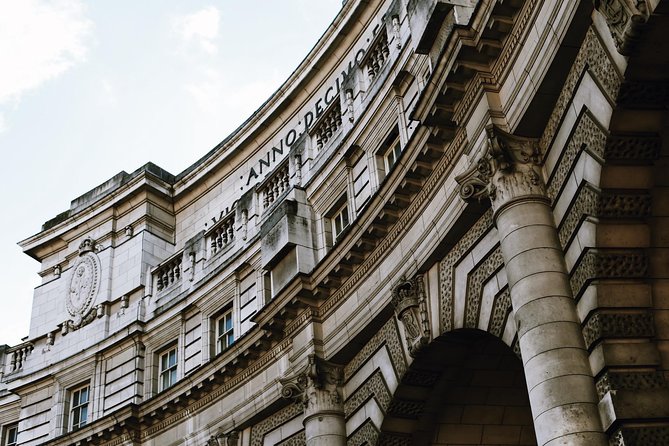
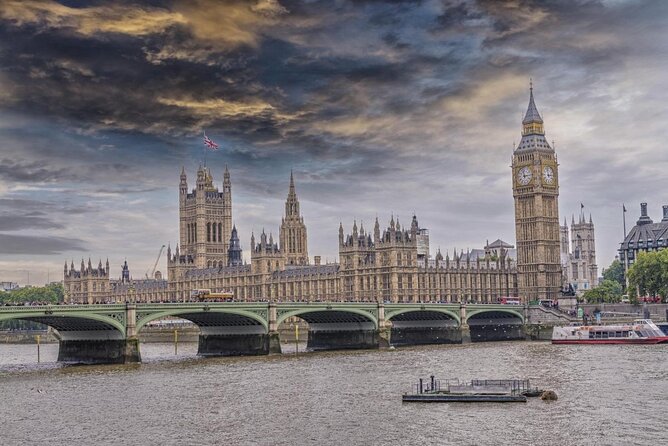
You see Big Ben, the clock tower at the end of the Palace of Westminster. The key detail here is simple: it anchors the Westminster complex visually. Even if the name Big Ben gets used loosely in everyday talk, the moment still works as a landmark because it organizes your sense of where you are.
Then you continue to the Houses of Parliament, also known as Westminster Palace. The building is described as Gothic style and spanning over 900 years, and it is where the House of Commons and the House of Lords meet. Hearing that timeframe on a walk helps the architecture make sense. This is not a single era frozen in place, it is a long-running machine for governance.
The trade-off is that your time at these stops is brief. This tour is built for overview. If you want a deeper architecture or legislative history experience, you would pair it with an entry tour or a separate museum stop later.
Westminster Abbey finish: entry included, guided interior not included
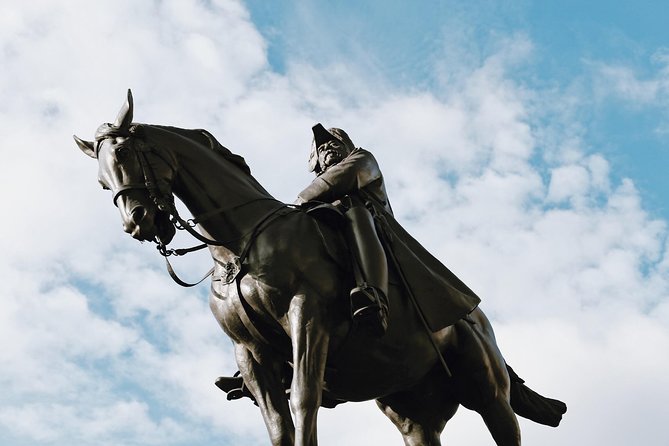
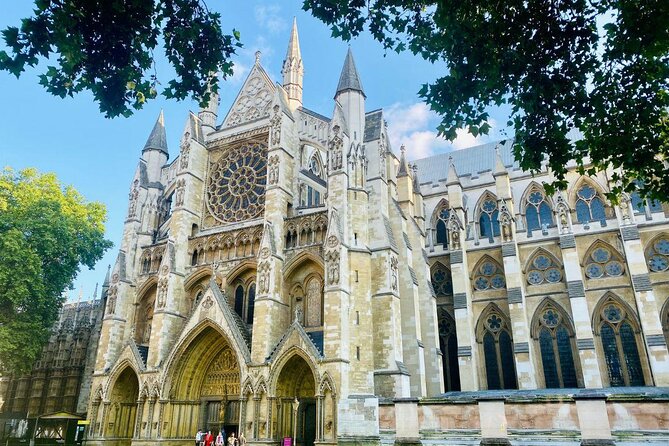
The tour ends in front of Westminster Abbey. Here is the most important detail for planning your final hour: entry or tour of the interior is not included as a guided experience, but you do get entry at the end of the tour. The interior visit is unguided, so you can take it at your own pace.
Why that matters: you control how long you stay, and you can focus on what interests you most. Westminster Abbey is packed with memorials and history, so an unguided visit can be a good match if you like wandering. It can also feel slow if you were hoping for a guided “highlights” explanation inside. Either way, you will want to budget time right after your tour ends.
Also, note the practical reality: some of the famous places along the route are limited by security measures, so you might not be able to go inside or linger at certain points. The tour keeps the focus on what you can actually see and understand in motion.
Walking comfort and photo timing, what to bring
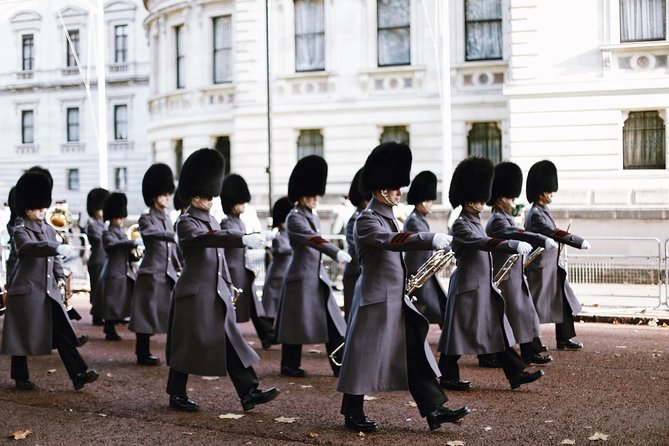
This tour is for moderate physical fitness, and it is designed as an active walk. You should expect to keep moving and spend most stops listening outside. That is not a complaint, it is the deal. If you prefer to sit and be chauffeured between sights, you will likely feel antsy.
Here is what helps most for a smooth experience:
- Comfortable shoes, because the ground is real and the pace is steady.
- A bottle of water, especially in warm months.
- An umbrella if rain is in the forecast, because the tour runs rain or shine.
- A hat in summer, if you are prone to getting overheated.
- Avoid large bags or suitcases. Large items are not allowed on this tour.
For photos, plan to take your best shots right after the guide gives you the story. Context makes photos better, and it also helps you decide which angle is worth your effort.
Price and value: what $59.28 gets you
At $59.28 per person, the value comes from three things working together.
First, you are paying for a professional guide and a structured route. You are not just walking around famous buildings. You are learning why they matter while you stand right in the middle of them.
Second, the group cap helps the experience feel personal. With up to 12 people, the guide can manage the pace and still respond when someone has a question. That is a real quality-of-life factor in a city where crowds can swallow your attention.
Third, the end includes Westminster Abbey entry. Even though the interior visit is unguided, the fact that entry is part of your package is meaningful. It means the tour is not just “see from the outside and go,” you do get at least one ticketed cultural moment.
What is not included matters too. Churchill War Rooms and Big Ben entry tickets are not part of the tour price. So if you want the museum experience for Churchill, plan extra. Also, some stops are exterior-only due to security measures, so expectations should match what is realistically possible during the walk.
Who this tour suits best (and who should skip it)
This is a great fit if you want an overview of London in one focused afternoon and you enjoy walking while learning. It works especially well for:
- First-time visitors who want a clean, organized route through central highlights
- People who like history tied to specific leaders and turning points
- Active travelers who are comfortable with a steady pace for about 2.5 hours
- Families with children who can manage the walk, since children must be accompanied by an adult
It is not the right fit if you use a wheelchair or have walking disabilities, since the tour is not available for those needs.
Should you upgrade to a private tour?
The option to upgrade to a private tour is worth considering if your group has specific needs. A private format can help if you want more flexibility at each landmark, more time for questions, or a slower pace without worrying about keeping everyone together.
Even if you stay semi-private, the small-group format already helps. But if you are someone who likes to linger, take lots of photos, and ask lots of follow-up questions, a private guide can turn “good overview” into a more tailored experience.
Final call: book it or hold off
I would book this tour if you want a structured walk through Westminster-area power and royal London, with a guide who explains the connections, not just the postcard view. The small-group cap is a big reason to choose it, and the Westminster Abbey entry at the end adds real value to the experience.
Hold off only if you dislike walking, need wheelchair access, or you are expecting a lot of inside visits along the way. Some ticketed attractions on the route are not included, and security limits what can be visited from the inside at certain points.
If you match the walking style, you will come away with a much clearer mental map of London, plus stories that make the landmarks feel like more than scenery.
FAQ
How long is the London City Center Tour?
The tour runs about 2 hours 30 minutes.
What is the price per person?
The price is $59.28 per person.
Where does the tour start and when?
It starts at Covent Garden, London, UK at 10:00 am. The tour ends in front of Westminster Abbey.
How big is the group on this semi-private tour?
The maximum group size is 12 travelers. The tour is described as semi-private, with group size never more than 12.
What is included in the tour price?
You get a semi-private walking tour, a professional tour guide, and the tour runs rain or shine. Westminster Abbey entry at the end is included.
What is not included?
Tour price does not include hotel pickup or drop-off. Gratuities are not included. Tickets for Churchill War Rooms and Big Ben are not included. The Westminster Abbey interior is unguided.
Is the tour accessible for wheelchair users?
No. The tour is not available for those with walking disabilities or those using a wheelchair.
What is the cancellation policy?
You can cancel up to 24 hours in advance for a full refund. If you cancel less than 24 hours before the start time, the amount paid will not be refunded. Free cancellation applies only within that 24-hour window.
More City Tours in London



More Tours in London




More Tour Reviews in London


Not for you? Here's more nearby things to do in London we have reviewed









More London City Tours worth a look.
 ★ 4.6The London Eye Entry TicketTickets from $3935,875 guest reviews
 ★ 4.7From London: Harry Potter Warner Bros Studio TourTickets from $11726,588 guest reviews
Westminster to Greenwich River Thames CruiseTickets from $2222,836 guest reviews
Magical London: Harry Potter Guided Walking TourTickets from $2022,044 guest reviews
★ 4.7From London: Harry Potter Warner Bros Studio TourTickets from $11726,588 guest reviews
Westminster to Greenwich River Thames CruiseTickets from $2222,836 guest reviews
Magical London: Harry Potter Guided Walking TourTickets from $2022,044 guest reviews
 ★ 4.6Madame Tussauds LondonTickets from $3620,915 guest reviews
 ★ 4.5Stonehenge, Windsor Castle, and Bath from LondonTickets from $11118,662 guest reviews
 ★ 4.7Warner Bros. Studio Tour with TransfersTickets from $14417,586 guest reviews
 ★ 4.7Tower Bridge Entry TicketTickets from $2115,560 guest reviews
Continue by place or experience