
REVIEW · LONDON CITY TOURS
The History of London City Center Exclusive Guided Walking Tour
London reads best on foot. This guided walk strings together the big names of central London with a guide who explains what you are actually looking at. I especially like the tight 2.5-hour pacing and the fact that you finish at Westminster Abbey with entry for your own visit. One thing to consider: it is a lot of walking in a concentrated area, and some spots are only seen from the outside due to security.
You start in Covent Garden, where street life and historic layers sit side by side, then you move through the Parliament and royal corridor. I also like that the tour can run rain or shine, and the guide is set up to help you notice details you would easily miss alone. The only real drawback is that route changes can happen around national celebrations, and in those cases refunds or discounts are not offered.
Key highlights I’d plan around
- A focused 2.5-hour route from Covent Garden to Westminster Abbey, built for first-time orientation
- Real decision points for you: small-group or private options, so you can match your pace and preferences
- Photo-worthy landmarks in sequence: Trafalgar Square, Whitehall, 10 Downing Street, St James’s, Big Ben area, Parliament exteriors
- Guides who time things well, including getting the changing of the guard moment when schedules line up
- Westminster Abbey entry at the end, but unguided, so you control how long you stay inside
- Rain or shine, with a route plan that still aims to hit the highlights even if access is affected
A 2.5-hour walk that nails the London “center story”
This tour is designed for people who want context fast. In about 2 hours 30 minutes, you cover the spine of central London, from the lively mix around Covent Garden to the Westminster finish line. It is paced for moderate fitness, and you will be on your feet long enough that comfortable shoes are not optional.
The price is $59.28 per person, which is a fair value when you consider what you are getting: an expert guide for the full walk plus strategic stops at major landmarks. You are not paying just for sightseeing, you are paying for translation, historical connections, and practical navigation. In a city where lines and logistics can drain your day, this kind of guided sequence helps you spend your energy looking, not figuring out where to go next.
If you care about flexibility, you can pick a small-group option or a private tour option. That difference matters because private or near-private groups tend to get more tailored storytelling. The guides here are repeatedly praised for friendly attention and keeping things organized, including when the group is very small.
You can also read our reviews of more walking tours in London


Where you start in Covent Garden, and why it matters
Meeting at Covent Garden sets the tone immediately. The area has roots going back to very early settlement, and today it is still a mix of shopping, theatre energy, and streets that feel like they have a pulse. You get an early orientation hit with street performers and designer boutiques around you, which makes the “history meets present” theme click right away.
This is also a smart kickoff because Covent Garden is easy to reach and it is a place where you can arrive with a coffee, settle your bearings, and then walk into the more formal power areas of the city. You will start getting names and themes from the guide before you even reach Trafalgar Square, so you feel like you are building a map instead of chasing random monuments.
If you are the type who likes to get the story before the photos, Covent Garden is a good match. If you prefer quiet, this starting zone is not quiet. It is lively by design.
Trafalgar Square, Nelson’s Column, and Admiralty Arch in one flow
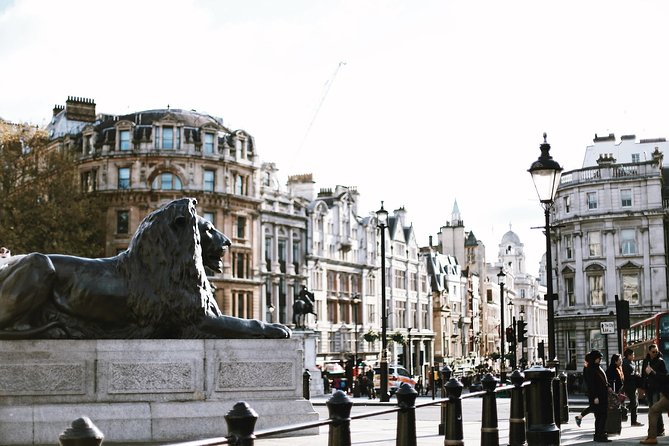
The tour moves quickly from Covent Garden into the classic civic center: Trafalgar Square. The guide explains the square as a commemorative space tied to Britain’s naval victory in the Napoleonic Wars, and you also hear how the square has remained a stage for demonstrations over time. That matters because Trafalgar Square is not just a pretty postcard spot, it is part of how public life has played out in London.
Next comes Nelson’s Column, a monument tied to Admiral Horatio Nelson, who died in 1805. From a practical standpoint, seeing the column here helps you connect scale. It is one of those structures that makes the rest of the area feel like a designed stage.
Then you pass through Admiralty Arch, a landmark building that connects pedestrian and road access between the Mall and Trafalgar Square. You will learn why it was commissioned, including its memorial purpose linked to King Edward VII and his mother, Queen Victoria. This stop is short, but it is the kind of architecture trivia that makes you look up more during the rest of the walk.
Whitehall and Downing Street, seeing power up close
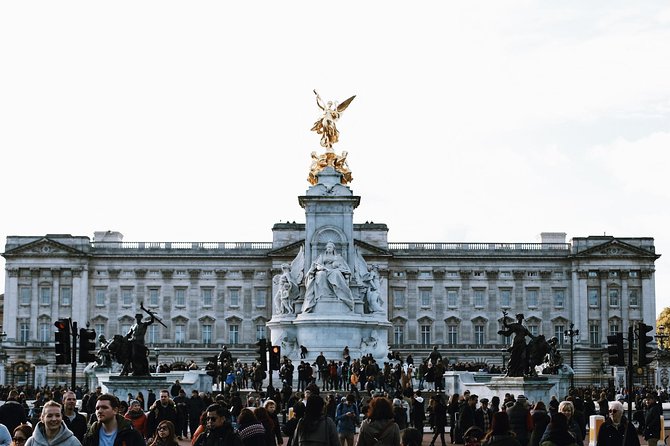
After Trafalgar, you shift from commemorative monuments to government geography. Whitehall is the street that runs toward the Houses of Parliament, and the name carries the story of where principal government offices have been since Henry VIII’s court at Whitehall Palace in the 1530s.
Then you get the landmark people expect: 10 Downing Street. You see it as the official location of the Prime Minister’s office, and the guide helps you connect the idea of leadership to the buildings around you. It is a rare moment where you can stand near one of the most famous political addresses on Earth without having to plan a separate day.
One practical note: you will not get insider access here. Security and current restrictions can limit what you can enter. You are there for the exterior views and the guided context, which still works well if your goal is understanding rather than ticket lines.
St James’s Palace and Buckingham Palace without a long detour
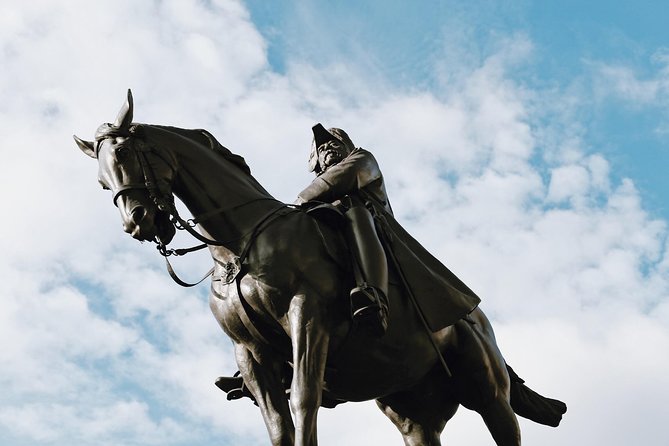
As you continue, you walk past St James’s Palace, described as the most senior royal palace in the UK. It has been a royal residence for over 300 years, so you get the feeling that this is not just one era’s fashion. It is layers stacked on layers.
Then you head toward the area near Buckingham Palace. The guide’s focus stays on the bigger thread, monarchs and leaders, and how power and ceremony have shaped London’s layout. The tour is structured so you can appreciate this corridor without losing an hour to detours.
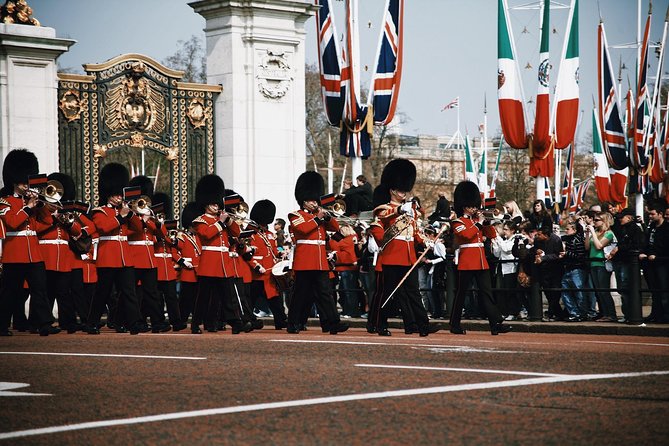
If timing cooperates, this is also where you might catch the changing of the guard. In at least one instance, the guide timed the walk to line up with it, which is exactly the kind of attention you hope for in a guided tour. You are not guaranteed it because schedules shift, but the fact that guides plan for these moments is a strong signal.
You can also read our reviews of more guided tours in London





Churchill War Rooms, Big Ben, and the Parliament area exteriors
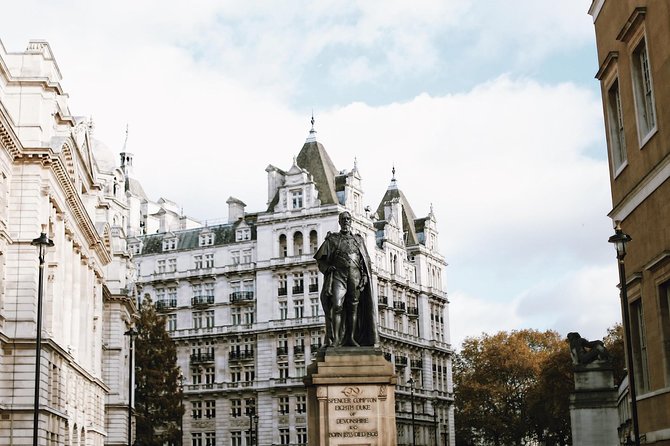
By the time you reach Churchill War Rooms, you are moving into the territory where London turns dramatic. This stop is about the museum tied to the Imperial War Museum network, with references to the underground Cabinet War Rooms command center from World War II and the Churchill Museum component. Even if you do not go inside, the guide’s framing helps you understand why this area feels weighty.
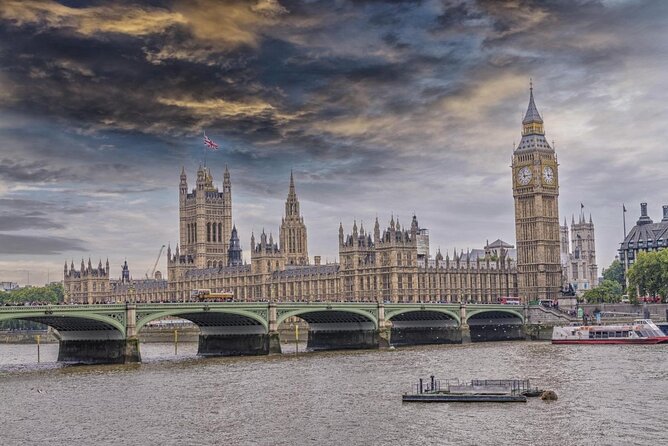
Next you see Big Ben, specifically the clock tower at the end of the Palace of Westminster. You might not have time for a long photo session, but you will get the orientation you need to picture where everything sits and why it is centered.
Then you continue to the Houses of Parliament, with a quick look at Westminster Palace and its Gothic style spanning over 900 years. You also learn what goes on inside in terms of the House of Commons and the House of Lords. Again, this is an exterior experience for this tour format, but it is still a high-impact moment because you are tying architecture to function.
This section is often the highlight for people who like “place-based storytelling.” You see the landmarks back-to-back, and the guide connects them so your brain keeps the thread.
Westminster Abbey finish: entry at the end, unguided inside
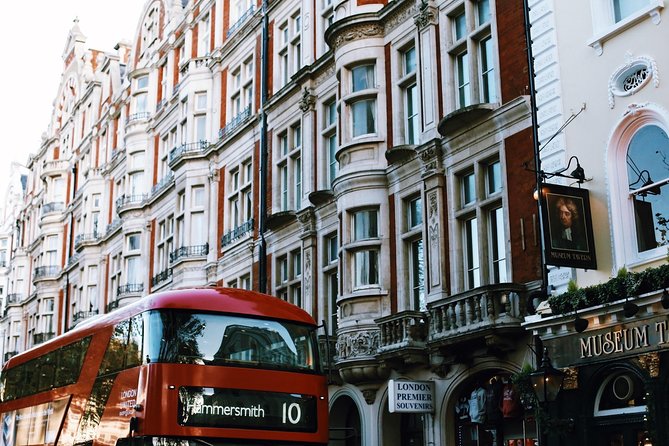
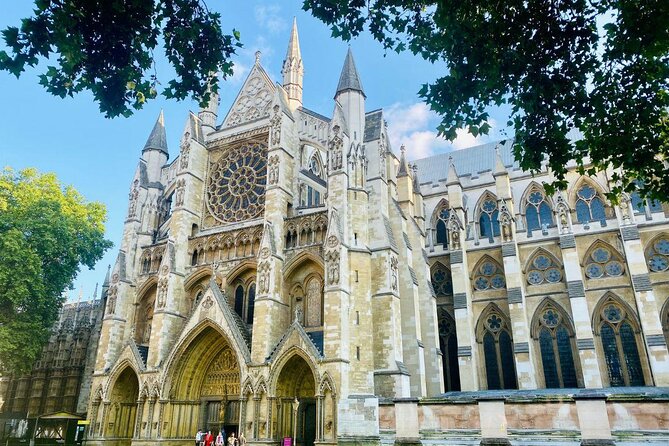
The tour ends at Westminster Abbey (exterior), and you receive entry so you can visit the interior on your own. That is an important detail. The guided portion ends with the exterior, and the inside visit is unguided, meaning you control how long you stay and which rooms you prioritize.
This is a smart design for most people because the inside of Westminster Abbey is huge and personal tastes matter. Some people want tombs and monuments first, others focus on architecture and space. If you are the type who likes to wander without a script, unguided entry is a plus.
It also helps that the guide may mention literary and cultural angles related to the Abbey area, including name drops like Chaucer, so when you walk in you feel like you already started the conversation. And since the tour finishes right there, you avoid the hassle of finding your way from the tour crowd to a separate entry time.
The guide is the product here, and the pacing shows it
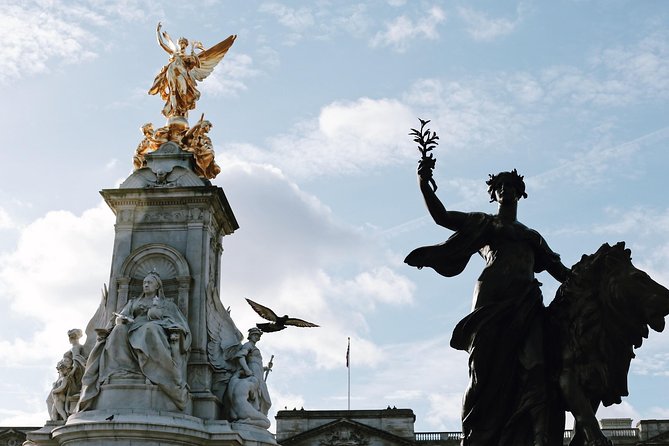
What separates this tour from a self-guided walk is how the guide connects dots. In the feedback for this experience, three guide names show up as standout examples: Lucy, Sheldon, and Jake. Across those examples, the common thread is friendly, attentive guidance plus historical perspective that stays practical.
Sheldon is noted for keeping a packed walk feeling organized, including timing that helped a group catch the changing of the guard. Jake is described as super knowledgeable and attentive, which matters because crowded London can make even simple navigation stressful. Lucy, in particular, is praised for intimacy when the group is small, including adjusting what to emphasize based on the group’s interests and even taking the group to places not on a normal route when the size allowed it.
Even if you do not get those exact guides, the point is the same: this tour is built so the guide is working, not just reading facts. You will feel it most during the transitions, like moving from Trafalgar Square to Whitehall, then into Downing Street and the royal corridor. That is where context saves you time later in your trip.
Small-group or private choice, and what it changes for you
You can choose between a small-group or private tour. The difference is not just who you walk with, it changes how flexible the guide can be.
With smaller groups, you tend to get more breathing room for questions and for the guide to adjust the order or focus. With private, you get the most control over pacing. If you love photos, you can slow down where you want. If you want to get through quickly and then spend the afternoon exploring, you can do that too.
One detail worth knowing: there is also a mention that the option labeled SAVE! BOOK SEMI-PRIVATE changes whether the guide is exclusively for you. If your goal is maximum personal attention, choose the option that clearly matches that.
Weather, route changes, and why your shoes matter
This tour runs in all weather conditions. That is great in London, but it also means you should plan to dress for rain and cold. You will want a bottle of water and an umbrella if rain is likely, plus a hat during summer. The route may be affected by national celebrations, and the provider states that an alternative route may be used to still see the highlights.
In those cases, refunds or discounts are not offered. That policy is worth keeping in mind, but practically speaking, the tour is still designed to deliver the main landmarks in the same general arc. You just should expect that the exact sidewalk route can shift.
Also, security measures at many attractions mean some sites cannot be visited from the inside as part of this walking format. The tour is structured around exterior viewing and guided context, with Westminster Abbey entry added at the end, but not a guided interior walkthrough.
Finally, bring a plan for your bag. No large bags or suitcases are allowed. For most people, that is not an issue, but if you are traveling light baggage only, you can go straight from luggage to shoes.
Price and value for a first-time London day
At $59.28 for about 2.5 hours, you are buying a guided route with high concentration of top sights. You are not paying for entry at most stops, and you are not getting a guided tour inside everything. That is the trade.
So here is the practical value equation I would use:
- If you want to know what you are seeing as you walk, the guide pays off.
- If you want to spend hours in museums and inside attractions, you will likely need other tickets and time.
- If you have limited time and want a structured orientation, this tour can save you a lot of guesswork.
This is also a strong option for history buffs and culture lovers who are okay with exterior landmark viewing. It is especially useful early in a trip. Once you know this corridor, your future walks around Westminster, Whitehall, and the royal area feel easier.
It is also a good fit for first-time visitors who want a legible sense of London’s power geography. You will see monarch and prime minister references repeatedly, and those connections help the city click.
Should you book this London city-center walking tour?
I think you should book it if you want a smart, guided primer through London’s core, without spending your day on transport transfers and research. It is short enough to fit into a busy schedule, and it ends where many people want to go anyway, Westminster Abbey with entry at the finish.
Skip it or pair it with other plans if you mainly want inside access to a lot of buildings. This walk is built for seeing landmarks in sequence and learning the why behind them, not for extensive ticketed museum time throughout.
If you do book, do one small thing that makes it better: plan your day so you are not rushing afterward. That way, when you reach Westminster Abbey, you can choose how long to stay inside without pressure.
FAQ
Where does the tour start and end?
The tour starts in Covent Garden, London and ends at Westminster Abbey (Stop R) in London SW1H 0NE.
How long is the London City Center Exclusive Guided Walking Tour?
The duration is about 2.5 hours.
What is included in the price?
Included items are a guided walking tour, a tour guide (not exclusively for the semi-private Save option), and that the tour runs rain or shine. You also get entry tickets to Westminster Abbey at the end, but the guided tour of the Abbey is not included.
What is not included?
Hotel pickup or drop-off is not included, and gratuities are not included. Some sights along the route are not included for entry, and the Westminster Abbey interior is unguided.
Does the tour run in bad weather?
Yes. It is stated that the tour will run rain or shine, so you should dress appropriately.
Is the tour walking only, and what fitness level is needed?
It is a walking tour, and it notes that travelers should have a moderate physical fitness level.
What happens if there are national celebrations or route changes?
The route may be affected by national celebrations, and the provider may offer an alternative route that still aims to see all highlights. In those cases, refunds or discounts are not provided.
More Walking Tours in London



More Tours in London





More Tour Reviews in London


Not for you? Here's more nearby things to do in London we have reviewed









More London City Tours worth a look.
 ★ 4.6The London Eye Entry TicketTickets from $3935,875 guest reviews
 ★ 4.7From London: Harry Potter Warner Bros Studio TourTickets from $11726,588 guest reviews
Westminster to Greenwich River Thames CruiseTickets from $2222,836 guest reviews
Magical London: Harry Potter Guided Walking TourTickets from $2022,044 guest reviews
★ 4.7From London: Harry Potter Warner Bros Studio TourTickets from $11726,588 guest reviews
Westminster to Greenwich River Thames CruiseTickets from $2222,836 guest reviews
Magical London: Harry Potter Guided Walking TourTickets from $2022,044 guest reviews
 ★ 4.6Madame Tussauds LondonTickets from $3620,915 guest reviews
 ★ 4.5Stonehenge, Windsor Castle, and Bath from LondonTickets from $11118,662 guest reviews
 ★ 4.7Warner Bros. Studio Tour with TransfersTickets from $14417,586 guest reviews
 ★ 4.7Tower Bridge Entry TicketTickets from $2115,560 guest reviews
Continue by place or experience