
REVIEW · LONDON CITY TOURS
The Freemasons Tour of London
Masons, monks, and military stories in one walk. I like the private, question-ready guide feel and the way the route mixes major sights with places most visitors miss. The one catch is that 3 hours packs in a lot of stops, mostly in short bursts, so comfy shoes matter.
You start in the historic core at Farringdon with pickup from central London hotels, and you finish at Freemasons’ Hall near Holborn and Covent Garden Underground. It is a religion and military themed route that still makes practical sense for your day, since you end where you can keep wandering after the tour.
If you want a fast way to understand how London’s institutions overlap, this is a smart bet. Just keep expectations realistic: you will see many landmarks, but you are not settling in for long museum sessions.
Key highlights worth planning for
- Hotel pickup in central London: meeting your guide at your hotel reception saves time and stress.
- A tight 3-hour route: many stops are quick hits, built for orientation plus stories.
- Included entries at two Templar sites: Temple Church and Inner Temple have admissions included.
- Knights of St John Museum included: you get a weapon-and-armour look, if your day is open.
- Freemasons’ connections before the finale: Seven Stars pub, then Freemasons’ Hall to wrap it up.
- Guide quality can make or break it: guides like Kevin are known for answering lots of questions and stitching the places together.
Price and logistics: what $253.66 buys you in real life
At $253.66 per person for about 3 hours, this tour is priced like a focused private experience, not a slow museum day. What makes it feel worthwhile is that it includes hotel pickup and several admission tickets that would otherwise eat into your time.
Most stops run around 5 minutes, with a few stretching to 10 to 15 minutes, so your money goes toward route design and interpretation. You should treat it like an efficient walking sampler of the City of London’s layers: medieval orders, religious sites, and the kind of civic history that usually requires deep searching.
A few practical notes that will help you avoid friction:
- Plan for some walking and turns through alleys and church-adjacent areas. It is listed as moderate physical fitness.
- Tube tickets before and after are not included, so think about how you will get to Farringdon and then back out after Freemasons’ Hall.
- You get a mobile ticket, which makes check-in easier on a phone.
- Group discounts are available, so if you are traveling with friends, it can improve value.
Finally, this is scheduled to start at 9:30 am from Farringdon Station. The tour is often booked about 68 days in advance on average, so if your dates are set, you will want to lock it in.
You can also read our reviews of more tours and experiences in London.
Route overview: a City circuit that jumps eras fast
This is a tight loop in the City, where the story keeps shifting from religion to military orders to civic institutions. You begin in Clerkenwell, move through Crusader-linked churches and monastic remains, then transition into the legal quarter around Middle Temple and the Templar Church. From there you walk into the streets tied to journalism and Dickens, and you end at Freemasons’ Hall.
You also get a useful mix of landmarks and “left turns” into quieter corners:
- Some stops are free to view from outside or in public spaces.
- A few stops include admission, giving you time inside places tied to the theme.
- A couple of museums have day-of-week limits, so your itinerary may feel slightly different depending on when you go.
Now, the stops, in order, and what each one adds.
From Clerk’s Well to the Knights: Clerkenwell’s hidden beginnings
Stop 1 is Clerk’s Well, a less-known site where an old knights’ well is tied to the name of the district. It is a small start, but it sets the tour’s tone: London’s place names often point to vanished structures and forgotten communities.
Stop 2 is the Marx Memorial Library, where you see how Clerkenwell’s story includes communist heritage through a working institute. It might feel like a left field move at first, but it helps you notice that London identity is not one-note.
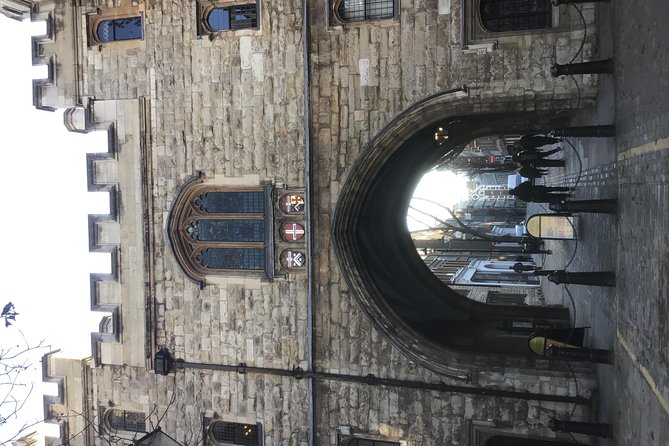
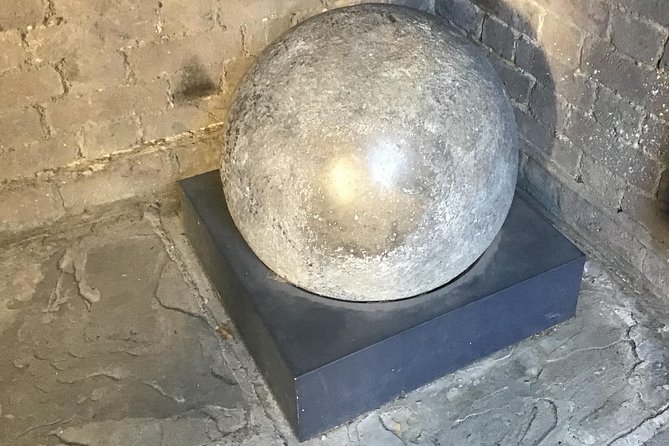
Stop 3, St John Priory Church, adds a sharper “how did this work?” angle. You are looking at a church garden planted with traditional medicinal plants, plus an unexpected ancient military weapon in the mix. Stop 4 is St John’s Gate, the old entryway linked to the Knights of St John compound. If you like reading stonework as evidence, these gate structures are exactly the kind of detail that makes the route click.
Stop 5 is The Museum of the Order of St John, and this one is admission included. You visit the gatehouse and get a quick look inside their collection of weapons and armour. Do check the day you go: the museum is noted as closed on Mondays and Tuesdays, so if your tour falls then, you may miss that interior component.
Plague pits, Crusader churches, and Wallace’s memorial spot
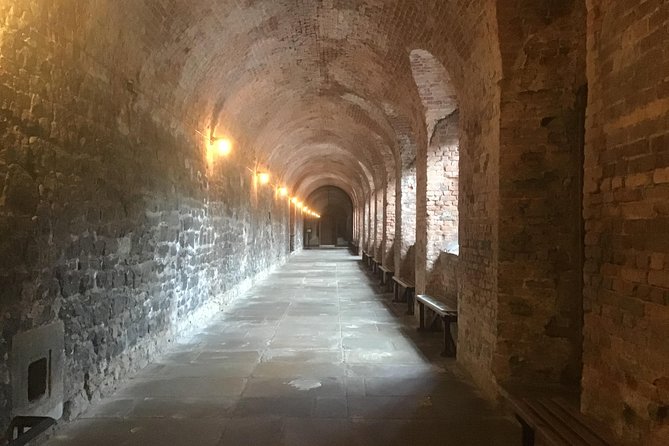
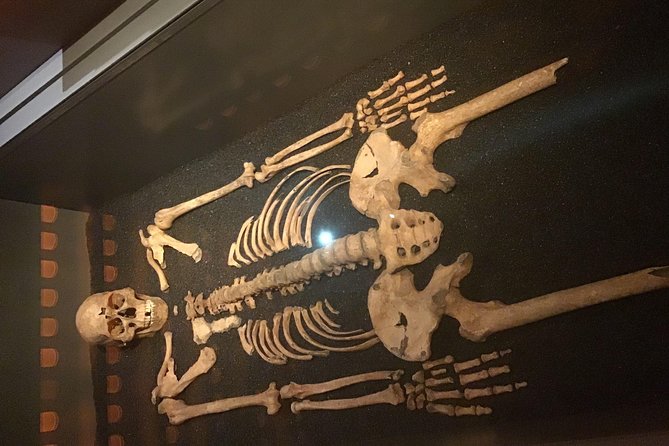
Stop 6 is The Charterhouse, tied to Charterhouse Square and one of the area’s largest plague pits. The big hook here is the presence of a recently discovered skeleton linked to a Black Death victim, plus the lead-in toward the Charterhouse chapel. It is free for this stop, but the note says the museum is closed on Mondays, so again, day matters.
Stop 7 is Church of St. Bartholomew The Great, described as one of the oldest churches in London, built by a Crusader. Stop 8 is St Bartholomew’s Gatehouse, another one of those City survivals that makes you realize how many London landmarks are still rooted in medieval defense and passageways.
Stop 9 is William Wallace Memorial, which anchors the route to a dramatic historical moment. It is a short stop, but it gives the military theme a more personal, story-based angle, before the tour shifts back into religious and monastic spaces.
Stop 10 is Christchurch Greyfriars Church Garden, where ruins create a peaceful garden under the shadow of St Paul’s Cathedral. This stop is a nice change of pace, and it is one of the places where the route earns its “fast but not rushed” feel.
City of London gates and hidden crypts toward St Paul’s
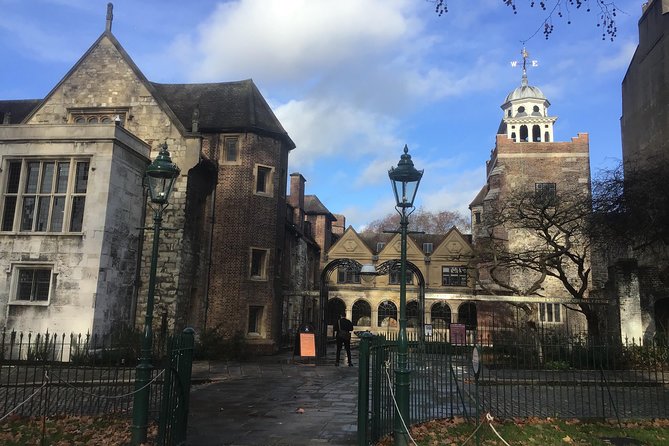
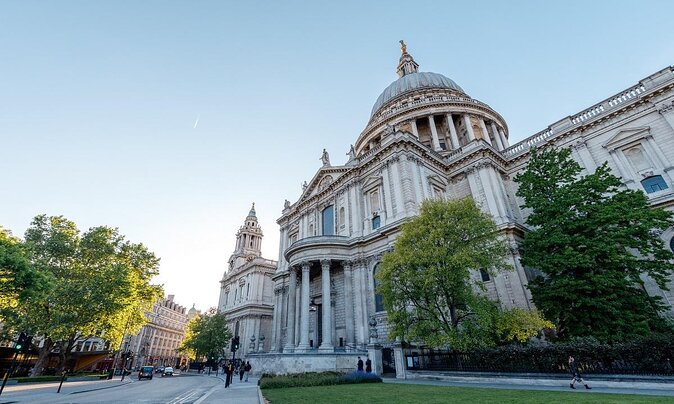
Stop 11 is Christopher Wren’s Temple Bar, the old gate of the City of London with a past that can be described as sometimes gory. Stop 12 is St. Paul’s Cathedral itself, treated here as a symbol of the City rather than a deep interior stop. Even if you have seen the exterior before, it helps to see it from the angle the tour uses, because you connect it to the institutions around it.
Stop 13 is Blackfriars, where you find what remains of an institution that gave this part of London its name. It is located in a small yard off a tiny alleyway, so it rewards you for slowing down for five minutes and looking for the entrance.
Stop 14 is Crypt on the Green, explicitly described as off the beaten track. This is one of those “you will remember this because you would not have found it alone” stops, and it stays in your path toward a larger landmark zone.
Stop 15 is Middle Temple Lane, tied to film and TV settings like Downton Abbey and Charles Dickens. Even if you do not care about productions, the lane helps you understand London’s legal quarters as lived-in space, not just a background.



Temple Church and Inner Temple: where admissions are actually included
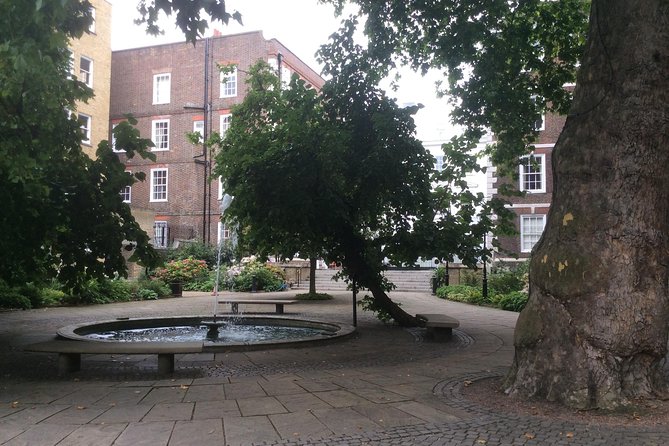
Stop 16 is Temple Church, with admission included. The tour frames it through the Templars: inspired by what they saw in the Holy Land, they built a church that later became linked to pop culture interest from the Da Vinci Code films. Practical tip: if you care about the specific religious architectural references, ask your guide what Temple Church is modeled after, since it is often confused. The Temple Church concept is tied to the Holy Sepulcher rather than King Solomon’s Temple.
Stop 17 is Inner Temple, also with admission included. This one is described as tranquil, and that is the right word for what you are getting: a break from the street noise and a chance to see how the legal world occupies historic space.
Stop 18 is Fleet Street, once central to the British newspaper trade. It also includes a visit to a long-lost ruin from a monastic order, so you get one foot in media history and one foot in the deeper medieval layers beneath the City’s everyday life.
Stop 19 is The Old Curiosity Shop, passed by as the oldest shop in London tied to Charles Dickens. It is quick, but it works as a cultural punctuation mark, reminding you that London’s institutions are not only religious and political, they are literary and commercial too.
The Freemasons lead-in: Seven Stars, Lincoln’s Inn, then the big finale
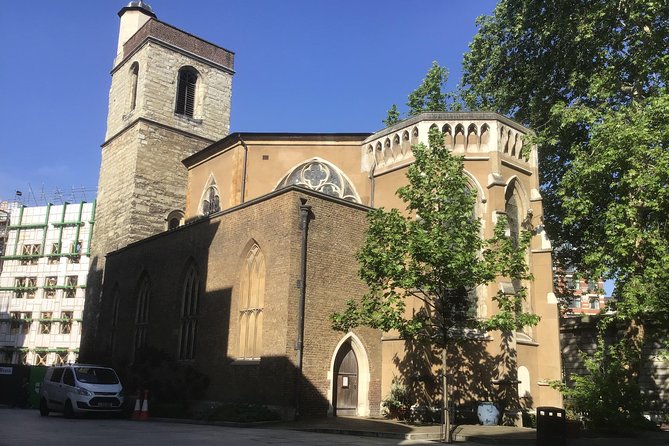
Stop 20 is The Seven Stars, a tiny old pub described as an early meeting place of the Freemasons. It is not a long hang, but it lands the theme where it belongs, in a place that feels like it could hold secret conversations over a pint.
Stop 21 is Lincoln’s Inn, where you pass through the largest square in London, though it is rarely visited by tourists. You learn the story of the Great Fire here, which gives the tour an important civic-history thread, not just order-to-order comparisons.
Stop 22 is Freemasons’ Hall, where the tour ends. This is the headquarters of the United Grand Lodge of England and the Supreme Grand Chapter of Royal Arch Masons of England, plus a meeting place for masonic lodges across London. The stop is free for this part, with a note that the Freemasons Museum is closed on Mondays. If you are visiting on a Monday, you may still reach the hall but should expect less museum access.
Ending here is smart for your evening plans. It is a short walk from Holborn and Covent Garden Underground, which means you can pair your tour with a meal and more sightseeing without hunting for transit routes.
What makes this tour work, and where it may not
The best part of this experience is the way it connects themes. The route is built around religion and military orders, but you are also seeing civic institutions, plague history, and even communist heritage in the middle of it. Guides like Kevin are specifically praised for being passionate and for answering lots of questions, which matters on a tour where you might think, Wait, how does this connect to that?
The other standout is pacing. Because most stops are quick, you get variety without feeling trapped in one museum. You leave with a mental map of the City of London as a stacked set of eras, not a single era.
The main drawback for some people is the density. With many short stops, you cannot expect long sitting time. If you want to read every sign at leisure or want deeper museum time, you might feel slightly rushed unless you plan to do follow-up visits after.
Who should book this Freemasons Tour of London
This is a great fit if you:
- like themed routes that explain connections, not just locations
- enjoy churches, old gates, and the “why does this exist here?” side of London
- want a private tour format where you can ask questions and keep control of your pace within the overall schedule
It is less ideal if you:
- hate walking, especially through tight lanes or uneven ground near churchyards
- want lots of interior time in multiple museums
- are visiting on days where key museums close, like Mondays for the Charterhouse and Freemasons Museum, or Mondays and Tuesdays for the Museum of the Order of St John
Should you book this Freemasons Tour of London?
I think it is a strong booking if you want a half-day orientation tour that actually teaches you how the City developed. The value comes from hotel pickup, a private group setup, and included admissions at Temple Church and Inner Temple, plus the Museum of the Order of St John when open.
Book it if your ideal London day includes gates, crypts, and the overlap between belief, power, and civic identity. If you are only looking for a casual stroll with minimal stops, you may find the schedule packed. But if you want stories you can use while you keep exploring on your own, this one gives you the kind of mental shortcuts that make London easier to understand.
FAQ
How long is the Freemasons Tour of London?
The tour lasts about 3 hours.
What time does the tour start?
The start time is 9:30 am.
Is hotel pickup included?
Yes. Hotel pickup is offered for central London hotels, with the guide meeting you in your hotel reception area.
Where do I meet the guide, and where does the tour end?
You start at Farringdon Station, Cowcross St, London EC1M 6BY. The tour ends at Freemasons Hall, London 60 Great Queen St, London WC2B 5AZ.
Is this a private tour?
Yes. It is listed as private, meaning only your group participates.
What admissions are included versus not included?
Admission is included for The Museum of the Order of St John (noted as closed Mondays and Tuesdays), Temple Church, and Inner Temple. Other stops are listed as free or not included.
Are there any day-of-week closures I should know about?
The Museum of the Order of St John is closed on Mondays and Tuesdays. The Charterhouse is noted as closed on Mondays. The Freemasons Museum is noted as closed on Mondays.
What language is the tour offered in?
The tour is offered in English.
Do I need tube tickets for the tour?
Tube tickets before and after the tour are not included.
What is the cancellation policy?
Free cancellation is available. You must cancel at least 24 hours before the experience start time for a full refund.
More Tours in London


More Tour Reviews in London
Not for you? Here's more nearby things to do in London we have reviewed





More London City Tours worth a look.
 ★ 4.6The London Eye Entry TicketTickets from $3935,875 guest reviews
 ★ 4.7From London: Harry Potter Warner Bros Studio TourTickets from $11726,588 guest reviews
Westminster to Greenwich River Thames CruiseTickets from $2222,836 guest reviews
Magical London: Harry Potter Guided Walking TourTickets from $2022,044 guest reviews
 ★ 4.6Madame Tussauds LondonTickets from $3620,915 guest reviews
 ★ 4.5Stonehenge, Windsor Castle, and Bath from LondonTickets from $11118,662 guest reviews
 ★ 4.7Warner Bros. Studio Tour with TransfersTickets from $14417,586 guest reviews
 ★ 4.7Tower Bridge Entry TicketTickets from $2115,560 guest reviews