
REVIEW · LONDON CITY TOURS
Secrets of Central London Walking Tour
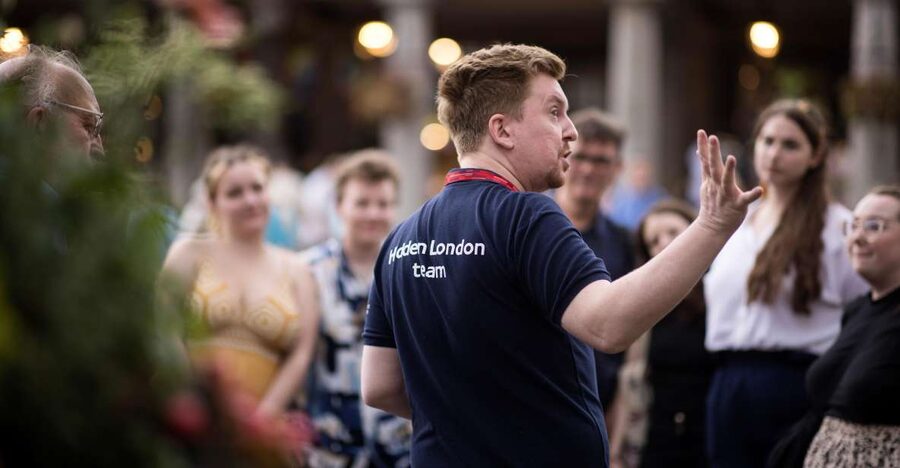
London trains have stories most people miss. This 2-hour Central London walking tour from the London Transport Museum spotlights transport secrets tied to Theatreland, Covent Garden, Kingsway, and the Embankment. I especially liked the way the guide links old street history back to the 1500s and how you hear the engineering logic behind things you can still sense today, from the Thames as a transport thoroughfare to why trains rumble near quiet Embankment Gardens. The main drawback is pace: the guide can move quickly, so if your English is limited, you may miss some details unless you’re comfortable asking for repeats.
You’ll meet outside the main entrance of London Transport Museum, Covent Garden Piazza, WC2E 7BB, and a Hidden London team member meets you about 15 minutes early. The tour runs about 2 hours, you cover a lot on foot (including busy crossings and uneven ground), and there’s no cloakroom plus no large bags allowed, so pack light and wear sturdy shoes. One odd note to plan around: it’s listed as wheelchair accessible, yet it also says it is not suitable for people with mobility impairments, so if you have specific access needs, check directly with the operator before you go.
Key highlights to look forward to

- 1500s to today: a timeline of Central London told through transport and city change
- The Thames as a first public thoroughfare: river transport framed as part of daily life, not just scenery
- Holborn’s underground layers: you’ll hear about the many tunnels under the Holborn area
- Kingsway Tram Tunnel and Piccadilly line links: street design connected to rail decisions
- Crossrail in the 2010s: you get a sense of how major upgrades reshape the surface too
- Theatreland and Covent Garden details: from early theatres to Convent Garden’s older name
Why this London Transport Museum walk feels different
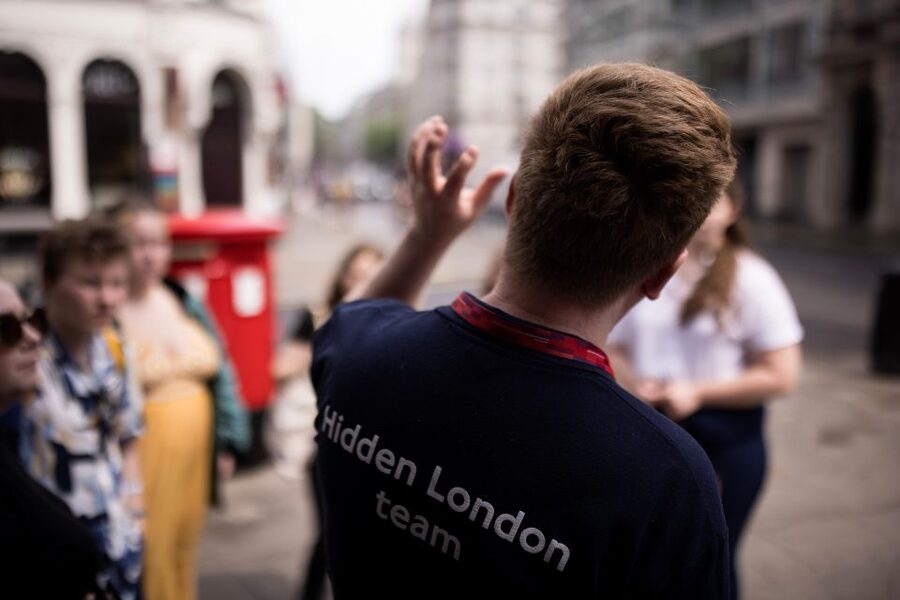
This is not the usual sightseeing loop where you stop, take photos, and move on. It’s a guided walk that treats streets like evidence. You’ll look at corners, alignments, and sounds, then connect them to how London’s transport grew from early city life into a machine that still works every day.
I like that the tour focuses on transport as lived experience, not transport as trivia. You’re asked to notice patterns: where people could move, where construction happened, how the city chose routes, and how underground infrastructure affects what you hear and see above ground. Even if you think you know Central London, the framing helps you understand why certain places feel connected.
Another reason I’d put this in your Central London plans is value. For about $26 for a roughly 2-hour walk, you get a guide who’s running on archive material from the London Transport Museum and covering multiple major areas in one go: Theatreland, Covent Garden, Kingsway, and the Embankment. You’re also not stuck inside a museum ticket line just to get the context.
You can also read our reviews of more walking tours in London



Meeting point and timing, plus what the 2 hours includes
The meeting point is outside the main entrance of London Transport Museum at Covent Garden Piazza, WC2E 7BB. Plan to show up early, because Hidden London team staff meet you about 15 minutes before the tour starts.
The tour duration is listed as around 2 hours, and the walking can be a real workout. It includes uneven ground and crossing roads through busy areas. That matters because it affects how you take in the stories. If you’re trying to read every sign and also listen carefully, you might feel rushed, especially if traffic crossings interrupt your concentration.
Also note what’s not included: there is no entry to the London Transport Museum during the tour. This walk is the context outside the museum, and the stories stay with you as you go.
Finally, the tour does not visit any disused tube stations or underground spaces. So if you hoped for actual underground stops, set expectations now. You’ll learn about the underground world nearby, but you’ll stay above ground for the experience.
Theatreland and Covent Garden: the street story starts in the 1500s
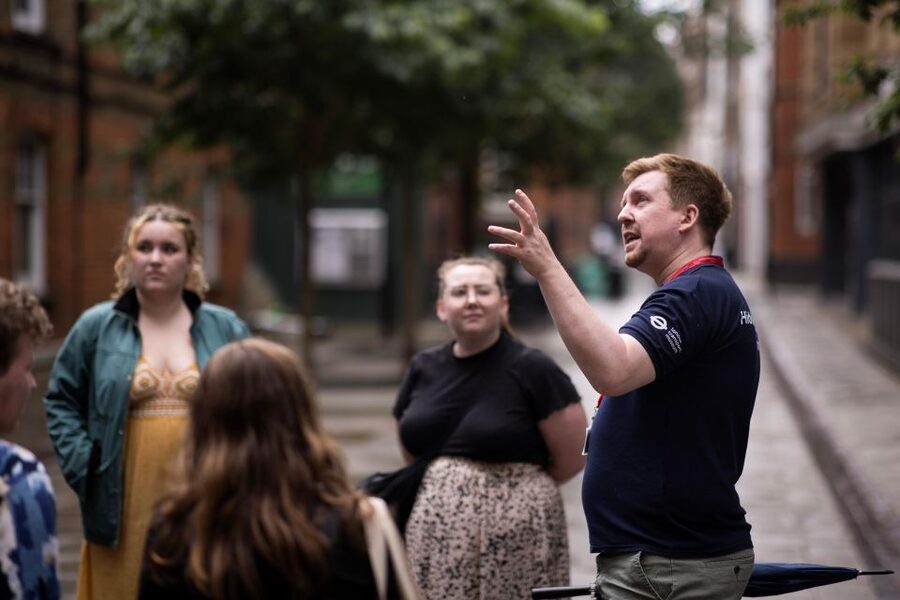
The tour’s early focus is the Theatreland and Covent Garden area, and that matters because these districts shaped London’s movement patterns long before modern subway maps existed.
You’ll hear how Covent Garden was originally known as Convent Garden, plus how the area’s identity formed around public life like entertainment and commerce. The tour also brings in the first theatres that opened in the area, which is a smart way to anchor dates. Instead of learning history as a list, you get it tied to real places people visited and why those visits created foot traffic.
One detail that feels extra practical here is the way the guide uses the streets themselves as prompts. You’re not just hearing about famous buildings. You’re learning how known streets helped shape the transport systems that later developed around them. That makes the rest of the walk easier to follow, because you start to think like a planner: where would people go next, how would they get there, and what would that require from the city?
You’ll also see the oldest shop in the city. The exact shop name is not specified in the tour info you provided, but it’s a neat reminder that Central London doesn’t only have layers of infrastructure. It also has layers of business life, and those patterns influence how transport routes and street activity grow.
If you’re someone who likes to understand the why, not just the what, this first section is where the tour earns its keep. It turns famous landmarks into clues.
Kingsway and the transport links hidden in plain sight
From Covent Garden, the walk turns toward Kingsway and the broader Central London transport system. This is where the tour starts connecting street design to rail and tram planning.
You’ll learn about street-building and line construction themes, including the construction of the Piccadilly line and the role of Kingsway tram infrastructure, as well as how well-known streets shaped transport systems. That concept is simple but useful: major routes are not random. They’re selected because they make movement more efficient, then they become part of everyday behavior.
One of the tour’s interesting promises is that it has transport secrets hidden in plain sight. In practice, this means you’ll get facts tied to the layout you’re walking through. If you’ve ever stood in London and wondered why a street feels like it was designed for fast passage, this section gives you the reasoning, not just the impression.
The walk also touches on why you hear certain sounds in certain places. That becomes relevant later near the Embankment, but the idea is introduced earlier: underground and near-surface transport are often louder or more noticeable than you’d expect from a distance.
If you want to get the most out of this part, slow down for a minute before road crossings. In busy areas, it’s tempting to drift into autopilot. The guide’s best moments happen when you’re able to look and listen at the same time.
Engineering lessons around Kingsway Tram Tunnel and Piccadilly line decisions
A standout theme in the tour description is engineering. You’ll hear about the Kingsway Tram Tunnel and the works that relate to how transport grew beneath and around street networks.
This is not engineering explained with heavy technical diagrams. It’s engineering explained with human-scale clues: what kind of transport was planned, what problem it solved, and why the construction mattered to the city’s future. That’s the difference between trivia and insight. You’re learning how infrastructure choices affect everything that comes after, including traffic patterns, station placement, and even the flow of pedestrians after showtimes.
And since the tour is walking-based, the engineering stories are tied to the streets you’re on. That keeps it from feeling like a lecture. You’ll be moving, then you’ll stop at the right moment and suddenly the street makes sense in a new way.
The engineering focus continues to connect past and future. Even when the guide is talking about older infrastructure, the point is often how those earlier decisions created the conditions for modern projects to happen.





Holborn tunnels, the Thames, and why Embankment Gardens sounds like a railway
If you enjoy that moment when a city’s sounds make sense, this is your payoff section. The tour description calls out two sound-related and underground themes: the multitude of tunnels in the Holborn area, and why trains run loudly enough to hear while walking in tranquil Embankment Gardens.
Start with Holborn. The tour promises stories about the tunnels underground in that area. Even without visiting disused tube spaces, you’ll get a sense of London as layered, with travel happening under your feet in ways the average person never thinks about. That changes how you read the city. You stop treating the surface as the whole story.
Then comes the Thames. The guide frames the Thames as London’s first public transport thoroughfare. This is a strong idea because it reframes the river from background scenery to working infrastructure. You’ll connect river travel to how people moved and how the city grew around that movement.
Finally, Embankment Gardens. The fact that you can hear trains running from a comparatively quiet walking spot is exactly the kind of urban contradiction that makes this tour fun. The tour’s promise here is that you’ll learn why that happens. Without promising a technical breakdown, the takeaway is clear: Central London soundscapes are shaped by rail lines and underground routes that run close to places that feel calm on the surface.
This section is where I think the tour is strongest for value. Many tours show you sights. This one explains why the city behaves the way it does.
Price and value: is $26 worth your time?
At about $26 per person for around 2 hours, this walk is priced like an affordable, high-information city add-on. It’s not competing with museum admission. It’s supporting it.
You get:
- A route that covers multiple districts in one outing (Theatreland, Covent Garden, Kingsway, Embankment)
- Transport-focused context that’s hard to recreate on your own without time-consuming map research
- Museum-led storytelling through a live guide
The biggest value question is whether you were planning to visit the London Transport Museum anyway. Since entry to the museum is not included, you should think of this as a prequel or companion experience. If you plan to visit the museum later, this walk can help you understand what you’ll see indoors. If you’re not planning museum time, you can still enjoy the tour as a transport history sampler. You just won’t get the museum galleries on top of the walk, because this tour stays outdoors.
Also keep in mind the walking demands. If you’re tired already, you may feel the $26 is fine but the logistics are annoying. Choose this when you still have the energy to pay attention.
Practical tips so you can catch every detail
Based on how this type of walk is described and how guides typically pace it through busy areas, here’s what I’d do to make sure you don’t leave with half the stories.
- Wear sturdy shoes. You’ll be on uneven ground and crossing roads, so comfort matters more than style.
- Don’t bring large bags. The tour info says luggage or large bags are not allowed, and there’s no cloakroom.
- Plan for a listening challenge. The guide is English-language live narration, and at least one past participant noted the pace can feel quick enough to miss parts. If you need clarity, ask the guide to repeat or slow down when you get a chance at a stop.
- Keep your ID ready. The tour asks for a passport or ID card.
- Expect city noise. You’re in Central London, and part of the experience is the relationship between movement and sound, especially around Embankment.
Little choices like these are what turn the tour from OK into memorable. The stories are best when you’re present.
Who should book this Hidden London Secrets of Central London tour?
I’d point you to this walk if you enjoy:
- Transport history told through real streets, not only museum panels
- Engineering and infrastructure stories that connect to everyday life
- An easy way to cover Central London districts in a focused 2-hour format
It’s less ideal if:
- You need a tour that’s slow and classroom-like. The walking and busy crossings require attention, and the pace can be fast.
- You’re hoping to go underground or into disused tube locations. This tour explicitly does not do that.
- You’re traveling with kids under 9. It is not suitable for children under 9.
One more planning caution: it’s listed as wheelchair accessible, yet it also says it is not suitable for people with mobility impairments. If that applies to you, treat it as a flag to contact the provider and confirm what support or route adjustments are possible.
Should you book this walking tour or skip it?
Book it if you want a guided walk that explains why London’s transport works the way it does, using Covent Garden, Kingsway, Holborn, the Thames, and Embankment as your living textbook. At roughly $26 for 2 hours, it’s a strong value if you like practical context and you’ll be in the area anyway.
Skip it if you prefer slow, sight-first wandering, or if you’re sensitive to fast speaking in a busy outdoor setting. Also skip if you specifically want museum entry or disused tube station visits, because this experience stays outside and does not include those.
If you’re on the fence, I’d treat it like a timing choice. Pair it with lighter plans later the same day, and use it as your orientation to Central London transport patterns. You’ll likely leave with a new way to hear the city, not just see it.
FAQ
Where do I meet for the Secrets of Central London Walking Tour?
You meet outside the main entrance of London Transport Museum, Covent Garden Piazza, WC2E 7BB. A Hidden London team member meets you about 15 minutes before the tour starts.
How long is the tour, and is it a lot of walking?
The tour lasts about 2 hours and involves a lot of walking, including uneven ground and road crossings in busy areas.
Is London Transport Museum entry included?
No. The walking tour does not include entry to London Transport Museum.
Does this tour visit disused tube stations?
No. The tour does not visit any disused tube stations or underground spaces.
Is it wheelchair accessible?
It is listed as wheelchair accessible, but it is also marked as not suitable for people with mobility impairments. If you have specific needs, check with the operator before booking.
What should I bring, and is a cloakroom available?
Bring a passport or ID card. There is no cloakroom, and luggage or large bags are not allowed.
Is there a cancellation option?
Yes. Free cancellation is available up to 24 hours in advance for a full refund. You can also reserve now and pay later.
More Walking Tours in London


More Tours in London


More Tour Reviews in London
Not for you? Here's more nearby things to do in London we have reviewed




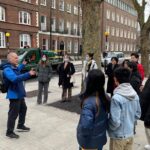





More London City Tours worth a look.
 ★ 4.6The London Eye Entry TicketTickets from $3935,875 guest reviews
 ★ 4.7From London: Harry Potter Warner Bros Studio TourTickets from $11726,588 guest reviews
Westminster to Greenwich River Thames CruiseTickets from $2222,836 guest reviews
Magical London: Harry Potter Guided Walking TourTickets from $2022,044 guest reviews
 ★ 4.6Madame Tussauds LondonTickets from $3620,915 guest reviews
 ★ 4.5Stonehenge, Windsor Castle, and Bath from LondonTickets from $11118,662 guest reviews
 ★ 4.7Warner Bros. Studio Tour with TransfersTickets from $14417,586 guest reviews
 ★ 4.7Tower Bridge Entry TicketTickets from $2115,560 guest reviews