
REVIEW · LONDON CITY TOURS
Palaces, Parliament & Power: A Walking Tour of London’s Royal City
London power is right on the pavement. This small-group walking tour strings together palaces, Parliament, and the people who shape the country. You get a route that makes Britain’s 1,000-year royal city feel readable, not random.
I especially like the small-group pace, capped at a maximum of 15 people, which keeps the experience from feeling like a stampede. I also like the storytelling focus, with commentary and anecdotes that connect what you see, why it matters, and how the city’s roles have changed over time.
One thing to keep in mind: you’ll spend only about 10 minutes at each main stop, so if you’re hoping to linger, go inside every site, or take lots of slow photos, you may feel a bit rushed. Entrance fees are not included, so decide ahead of time what you want to enter versus view from the outside.
Key points I’d plan around
- A tight route that fits a short visit, aimed at making Westminster make sense fast
- Maximum 15 travelers, which helps the guide keep the pace and answer real questions
- Iconic political and royal landmarks in one walk, from Downing Street to Westminster Abbey
- Clear connections between monarchy, Parliament, and wartime leadership, not just a list of buildings
- Mix of free viewpoints and paid-entry options, so you can control costs on the spot
- It ends near Green Park Station, handy for continuing your day
Why this 2-hour Westminster walk works for first-timers
If your time in London is limited, Westminster can feel like a visual blur. You see big buildings, you hear big names, and you still wonder what connects it all. This tour is built to reduce that confusion. You’re given a structured walk that moves from riverside London into the political heart of the city and then toward the royal center again.
The timing is also practical. At roughly 2 hours, you’re not stuck for half a day, and you’re not forced to commit to a full museum schedule either. Each stop is short, which means you get variety without suffering through “one more thing” fatigue. And because the group is small, you’re more likely to notice details and follow the guide’s thread between locations.
The biggest value to me is how the walk turns landmarks into relationships. You’re not just looking at palaces and public buildings. You’re learning how power shows up in stone, streets, and ceremonies, and why that matters when you look at London today.
You can also read our reviews of more walking tours in London


Starting at Victoria Embankment, and orienting yourself fast
Most London sightseeing starts with confusion, not clarity. That’s why I like beginning at Victoria Embankment. You get gardens overlooking the River Thames right away, which is a smart reset moment before you step into the denser, more formal government zone.
From there, you can orient your brain. The river helps you picture how Westminster sits in the broader layout of the city. Then the guide’s commentary helps you connect what you’ll see next, without making you work for it.
Also, this first stop is free, so it’s an easy win. If the day is cold or rainy, the river view and sheltered walking tempo still give you something worthwhile while you get your bearings.
Whitehall to Downing Street: how government looks up close
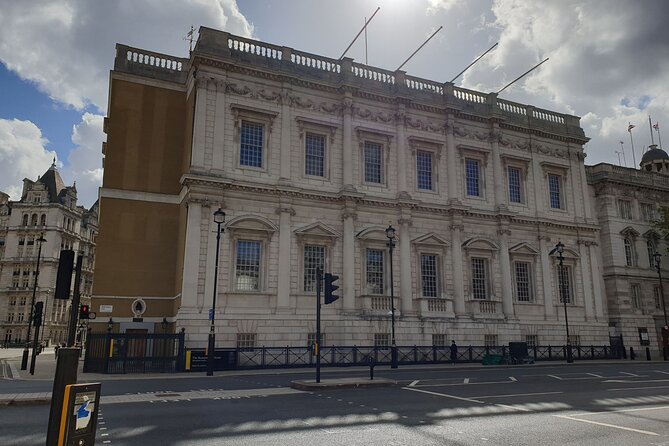
The walk moves from the Thames toward Whitehall, and that’s where the tour gets interesting quickly. One of the first high-signal stops is Banqueting House. The big detail here is that it’s described as the only major surviving part of the Palace of Whitehall. That kind of survival story makes a building feel like a living link to the past, not a random stop on a photo list.
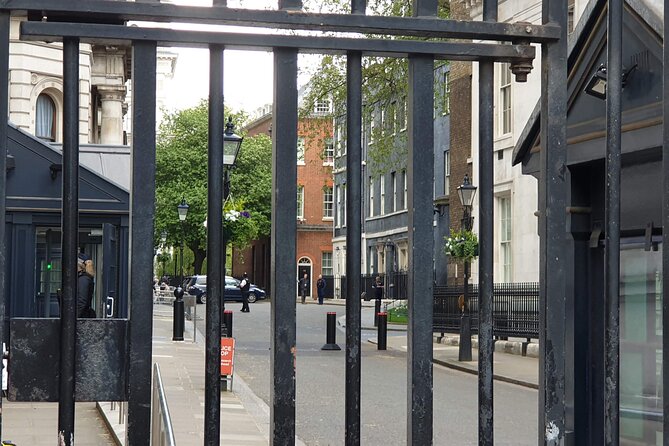
Then you hit 10 Downing Street. Even if you never go inside (entrance is not included), seeing it as the home of the Prime Minister and the Chancellor instantly grounds the idea of national power in one recognizable address. It’s one of those places where the street-level experience matters. You’re looking at how authority is presented in plain sight, and the guide helps put it into context with short, digestible explanations.
A small caution here: these are “you see it from outside” kinds of moments, and the time is tight. If you want a lot of time for photos, build that into your overall plan. Treat these stops as quick orientation points and trust the commentary to do the heavy lifting.
The Cenotaph and Houses of Parliament: where symbols do real work
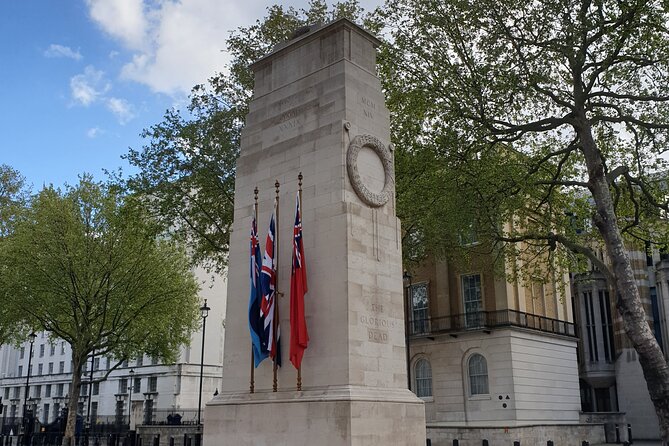
Next comes a more solemn turn: the Cenotaph, the UK’s official war memorial. Even if you’ve read about it, standing near it changes the tone. This stop works well because it reminds you that national identity in London is not only royal ceremony and political speeches. It’s also public memory, shared grief, and the way a country keeps promises to its past.
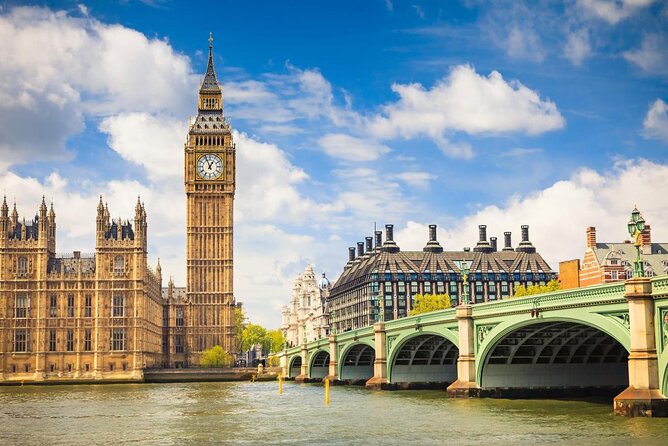
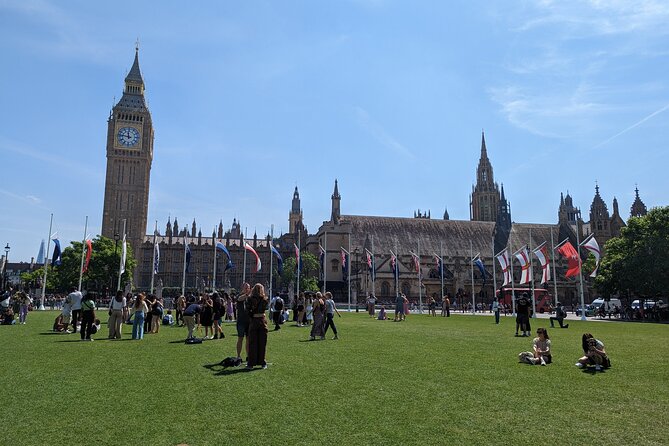
After that, you’re at Houses of Parliament, described as the centre of British democracy, and the Mother of all Parliaments. That phrasing is bold, but the point is clear: this is not just a pretty historic building. It’s where the national conversation gets processed, debated, and decided.
What I like about the way the tour handles this part is the balance. You’re not asked to memorize facts. You’re taught how to see meaning. The guide’s anecdotes help you notice how architecture, location, and tradition reinforce the role the place plays.
Practical tip: because entrance fees are not included, you’ll likely be viewing key areas from the outside. If you do want to pay to enter, decide quickly after the guide explains what it’s for. Time on this walk is a resource, and the route is designed to use it.
Jewel Tower and Westminster Abbey: monarchy and ritual in motion
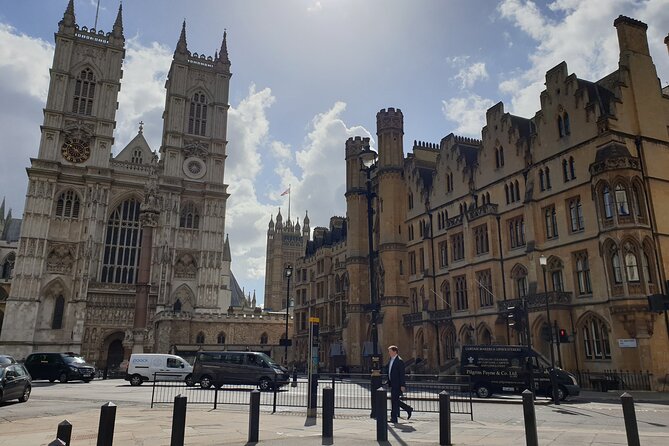
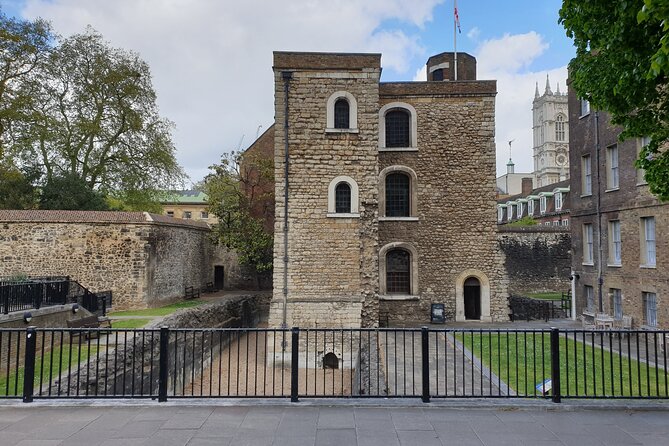
Now you start seeing the medieval layer of Westminster. The Jewel Tower is noted as one of the only surviving pieces of the medieval Palace of Westminster. Even in a city full of grand buildings, it’s easy to lose track of what survived, what was replaced, and what was lost. A stop like this fixes that in your mind. It’s a physical reminder that the political center has shifted around, but the ground still keeps evidence.
Then comes Westminster Abbey, highlighted as the site of royal burials and weddings. That’s a simple statement, but it’s powerful because it shows Westminster Abbey as both a family story and a public story. Royal power is not only about policy. It’s also about rites, continuity, and the way the nation marks major life events.
Entrance is not included, so the pace stays focused. You get the meaning without the cost. If you want to go in, you can choose based on your interests and time remaining that day.
One consideration: Westminster Abbey is a huge draw for visitors, so if you plan to enter afterward, keep your schedule flexible. This walking tour doesn’t replace a longer abbey visit, but it gives you context that makes a longer visit much more rewarding.
You can also read our reviews of more city tours in London



Churchill War Rooms: power during the hardest hours
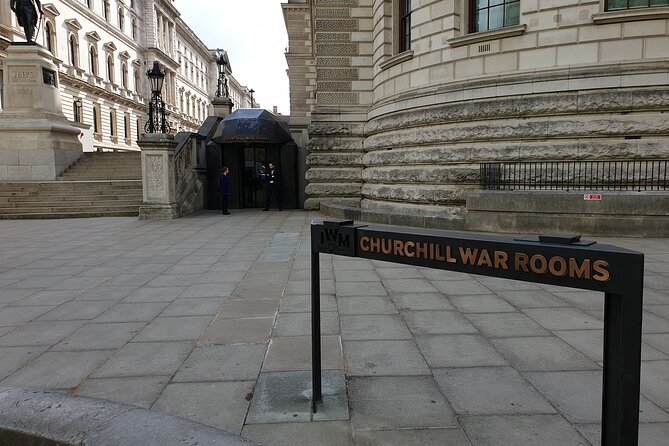
The Churchill War Rooms stop is a standout if you care about modern history and how leadership works under pressure. You’re told these are the rooms from which Winston Churchill directed the Second World War. That single detail reframes what the building represents. It’s not just a museum-like site. It’s presented as a real command center, tied to decisions that affected the course of the war.
Entrance is not included, so again, you’re guided through the story and shown where significance lives, without forcing a ticket purchase. Even if you don’t go inside, the commentary helps you understand why people are drawn here and why it’s placed in the broader Westminster narrative of power.
If you’re the type who likes your history practical, this stop helps. It connects the royal and parliamentary world to the moment Britain had to function differently. It shows another kind of authority, one built on wartime urgency rather than ceremony.
St. James’s Park and Buckingham Palace: royal settings that feel real
Once the tour turns toward St. James’s Park, the mood shifts in a good way. This stop is framed as the most beautiful Royal Park in London, and that description makes sense in the way the route flows. After dense government buildings and serious memorial spaces, a royal park gives you breathing room and sight lines.
Then you reach Buckingham Palace, the official London residence of the monarch. Again, entrance is not included, which means the experience is about looking and listening rather than checking boxes inside. This is the moment where you can start comparing what you’ve seen: government as decision-making, monarchy as public identity, and ceremony as national messaging.
And the tour doesn’t stop there. You also see St. James’s Palace, described as the most senior royal palace in the UK. That matters because it prevents you from treating royalty like one building only. The guide’s flow through both palaces helps you see the royal world as a system, not a single photo stop.
Timing note: the stops are short, so take your photos, then let the guide’s commentary finish the job. If you spend the entire ten minutes only trying to get a perfect picture, you’ll miss the interpretive value that makes the tour worth it.
Ending outside St. James’s Palace, and what to do next
The tour ends outside St. James’s Palace, not far from Green Park Station. That ending point is convenient because it helps you keep moving rather than feeling stranded near the start.
I also like that the tour is built to help with the rest of your London day. Part of the idea is that you come away with suggestions for where to go next, so this walk doesn’t just fill time. It gives you a better map of priorities.
If you still have energy, use this as your first Westminster lesson, then pick one deeper follow-up. For example, choose between paying to enter a specific site you were shown, or doing a slower walk to revisit the parts you care about most.
If you’re going to do more sightseeing, use the order you just learned. You now know what each cluster of buildings is meant to represent, which makes everything you see afterward feel less like random sightseeing and more like a coherent storyline.
Price and value: why $19 can work well here
At about $19, this is a budget-friendly way to get structure in a city where paid attractions can add up fast. The key is what you’re paying for. You’re not paying for entrances. You’re paying for a guided route that links major political and royal sites, plus commentary designed to make the area understandable.
Here’s the honest way to think about it: if you were already planning to pay for multiple attractions, this tour might feel less necessary. But if you want to see a lot, learn the relationships between what you’re seeing, and keep entrance costs under control, it’s strong value.
Also, the small group limit matters for value. In crowded, large-group tours, you lose time and attention. Here, the maximum of 15 travelers helps you stay oriented and engaged.
Bottom line: the price makes sense when you use it as a primer and then decide what, if anything, you want to pay to go inside.
Who this walking tour is best for
This is a good fit if you want:
- A first-timer-friendly Westminster orientation
- A compact walk that covers major royal and political symbols
- A tour style that favors story and context over long museum time
- A small-group experience that keeps energy up for everyone, including kids and teens
It may be less ideal if:
- You need lots of time at each stop to read every detail or sit and linger
- You’re only interested in interior access, since entrances are not included
- You want a slower pace with extended stops, because time here is intentionally tight
The good news is that the tour is marked as suitable for most travelers, with service animals allowed. It’s also near public transportation, which is helpful in London where walking and transit often blend together.
Should you book it, or skip and go on your own?
I’d book it if you want Westminster to click quickly. The route makes sense, the pacing fits a short London window, and the guided approach helps you understand why these places matter, not just what they look like.
Skip it if your priority is purely interior touring and you already know exactly which sites you want to enter. In that case, you might do fine with a self-guided plan and ticket purchases. But even then, having the storyline in your head can make the paid visits much more meaningful.
If you’re deciding between this tour and spending your first Westminster day piecing things together on your own, I’d take this walk first. It gives you a clear mental map, and then you can choose your own pace for whatever feels most important to you next.
FAQ
How long is the Palaces, Parliament & Power walking tour?
It’s about 2 hours long.
Where does the tour start and end?
It starts at 9152 Golden Jubilee Bridges, London WC2N 6NS, UK, and ends outside St. James’s Palace near Green Park Station at St. James’s Palace, Marlborough Rd, London SW1A 1BQ, UK.
What time does the tour run?
The start time listed is 11:00 am.
What is the group size limit?
The maximum group size is 15 travelers.
Is the ticket mobile, and do I get confirmation?
You’ll receive a mobile ticket, and confirmation will be received at the time of booking.
Are entrance fees included?
No. Entrance fees are not included.
Is the tour in an area with public transportation nearby?
Yes, it is near public transportation.
Are service animals allowed?
Yes, service animals are allowed.
Can I cancel for free?
Yes, free cancellation is available. You can cancel up to 24 hours in advance for a full refund.
More Walking Tours in London



More Tours in London



More Tour Reviews in London

Not for you? Here's more nearby things to do in London we have reviewed








More London City Tours worth a look.
 ★ 4.6The London Eye Entry TicketTickets from $3935,875 guest reviews
 ★ 4.7From London: Harry Potter Warner Bros Studio TourTickets from $11726,588 guest reviews
Westminster to Greenwich River Thames CruiseTickets from $2222,836 guest reviews
Magical London: Harry Potter Guided Walking TourTickets from $2022,044 guest reviews
★ 4.7From London: Harry Potter Warner Bros Studio TourTickets from $11726,588 guest reviews
Westminster to Greenwich River Thames CruiseTickets from $2222,836 guest reviews
Magical London: Harry Potter Guided Walking TourTickets from $2022,044 guest reviews
 ★ 4.6Madame Tussauds LondonTickets from $3620,915 guest reviews
 ★ 4.5Stonehenge, Windsor Castle, and Bath from LondonTickets from $11118,662 guest reviews
 ★ 4.7Warner Bros. Studio Tour with TransfersTickets from $14417,586 guest reviews
 ★ 4.7Tower Bridge Entry TicketTickets from $2115,560 guest reviews
Continue by place or experience