
REVIEW · TOWER OF LONDON TOURS
Medieval History Walking Tour from The Tower of London
London’s medieval layer comes at walking pace. This two hour guided stroll strings together Norman power, Tudor drama, and church and empire on a route you can actually manage, with storytelling that turns landmarks into scenes. I also like the small group size, which keeps questions flowing and the pace human. One thing to plan for, though, is that many sights are pass by moments, and some of the big attractions need separate tickets if you want to go inside.
You’ll start at Tower Hill near the Tower of London and finish at St Paul’s Cathedral, right by great transport links. The tour runs in English, uses a mobile ticket, and keeps stops to about ten minutes each, so you get context without spending your whole day in queues.
Comfort matters here. You’ll cover a lot of ground on foot in city streets and along the Thames, and you should bring good shoes, plus a layer for wind and rain. Also, the guide only stops for the allotted time at each spot, so if you want extra time in a museum or cathedral, you’ll need to plan that separately.
Key takeaways before you go
- Tower Hill to St Paul’s in about two hours: a tight route that gives you orientation fast.
- Big names, plus supporting players: Tower, Tower Bridge, WWII ship, markets, cathedrals, Drake, and Shakespeare.
- Some stops are free to enjoy from outside: London Bridge, Borough Market, Southwark Cathedral, Winchester Palace ruins, the Thames, and Millennium Bridge.
- Several major sites require separate tickets: Tower of London, HMS Belfast, Golden Hinde, Shakespeare’s Globe, and St Paul’s Cathedral, plus Tower Bridge.
- Guides like Mick and Michael get standout praise: for keeping it fun, clear, and story driven even in rain.
A medieval London route that ends at St Paul’s
This tour is built for people who want the “how did this city become this city” feeling, without needing to study a textbook. You’ll get a walking timeline that moves through medieval London’s power centers, its food and trade hubs, its religious conflicts, and its maritime adventures, all leading to the grand architecture of St Paul’s.
Timing is the key to enjoying it. Each stop is designed to be short, roughly ten minutes, so the guide can cover more ground. That means you’ll learn what to look for when you pass a landmark, but you won’t be stuck too long in any one place. For most people, that’s the sweet spot. If you like to linger, treat this as the best introduction, then return later for deeper visits.
Group size also shapes the experience. With a maximum of twenty travelers, it’s easier to hear the guide and ask questions, and the walk stays organized instead of turning into a shuffle.
You can also read our reviews of more walking tours in London



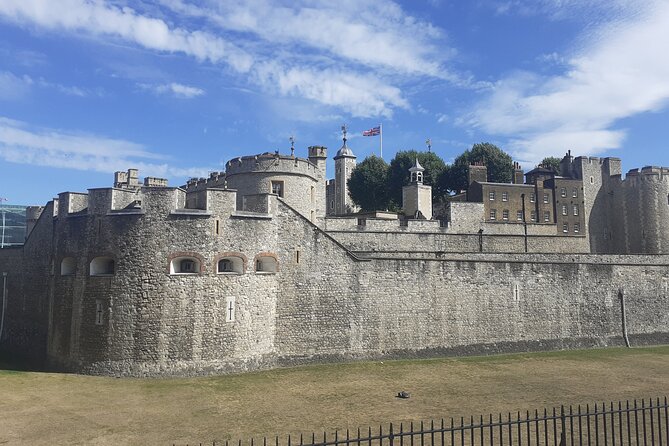
Tower Hill and the Tower of London, built in 1078
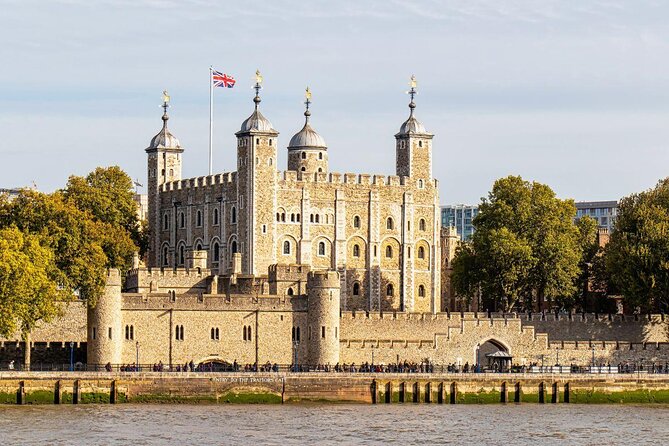
The first stop is the Tower of London area at Tower Hill. Even from the outside, you get the scale of the place, because this site has been through centuries of conflict and control. The tour frames the Tower as more than a tourist icon, built in 1078 and connected to the era after William the Conqueror, then continuing into later chapters up to the modern day.
What I like about starting here is the immediate sense of medieval London as a system of power. The Tower isn’t just one story, it’s a repeating theme: who holds the keys to the city, and what happens when that power gets challenged.
The only real drawback at this first stop is time and access. You pass by for about ten minutes, and admission is not included. If you want to go inside, you’ll need extra planning and tickets, then you can use what you learned on the walk to make sense of the exhibits.
Practical note: this is a very popular waterfront and landmark area, so if weather turns nasty, you’ll want a hood or umbrella and a steady pace.
Tower Bridge and HMS Belfast, London’s modern military edge
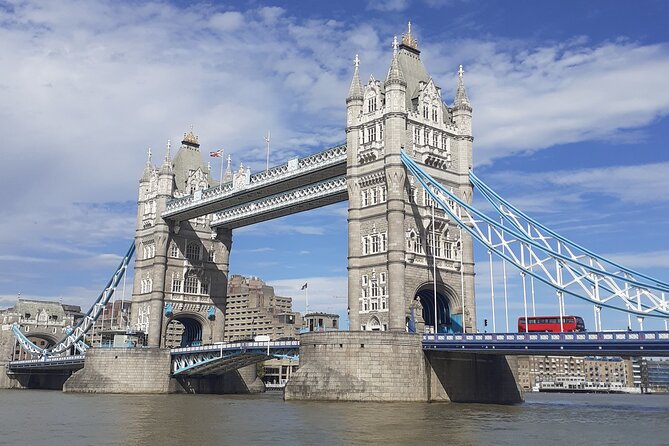
From the Tower of London area, you cross to Tower Bridge and learn how the bridge was built. It’s a nice change of scenery because Tower Bridge sits at the intersection of medieval setting and modern engineering, with the Thames acting as the main character.
Then you head toward HMS Belfast, a famous WWII battleship that saw action across multiple conflicts and took part in the D-Day landings. This is where the tour stretches your thinking beyond the medieval label. London’s medieval past doesn’t end neatly in the past, it becomes the backdrop for later eras of war, ships, and global reach.
Again, you’re not here for a long museum session. It’s about a brief, guided look, with admission not included. That said, the short time can still be worth it. If you’ve ever visited a ship and felt like you needed a guide to connect facts to emotion, this stop gives you that bridge between information and impact.
Weather can matter on this stretch. You’ll be near open river areas and exposed streets, so dress for wind, not just sun.
London Bridge to Borough Market, where trade and fires mattered
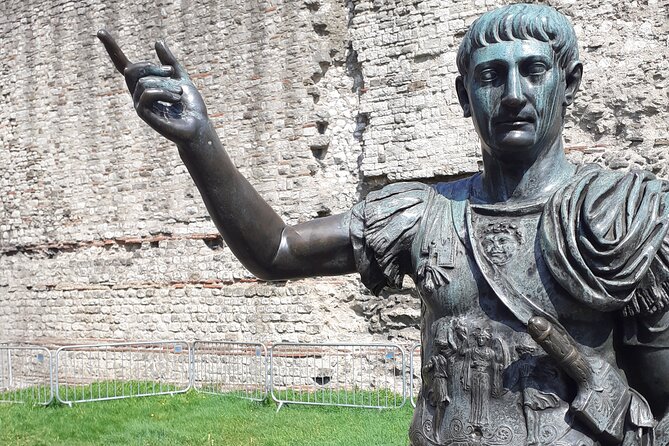
Next you move to London Bridge, and this stop is all about layers. You learn about London Bridge’s beginnings dating to 43 AD, then how it moved through medieval times. The tour also points you to the 1212 Great Fire of Southwark, the English Civil War of the 1640s, and how the place keeps changing.
This is a valuable part of the walk because it shifts you from castles and battles to everyday city survival. Fires, war, and rebuilding are not side stories in London. They shape streets, neighborhoods, and who had access to what.
Right after that, Borough Market takes you into the food economy. The market is described as about 900 years old and located beneath early Victorian railway arches. You also get the quick context of why it’s known as one of the oldest food markets around.
If you like to snack while walking, this is the moment. Even if you do not stop for a full meal, Borough Market gives you an easy way to connect medieval trade with what people eat now. It’s also a great photo stop if you enjoy street scenes more than monuments.
These two stops are free to enjoy from outside. There’s no ticket requirement just to look around and take in the atmosphere, and that helps keep value high for a paid walking tour.
Southwark Cathedral and Winchester Palace, religion and punishment
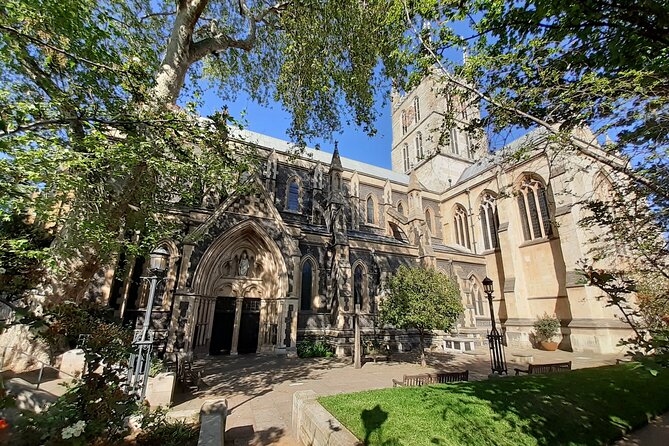
Southwark Cathedral is a standout if you care about how long places stay in use. The tour notes that worship existed on the site as far back as 606, and that the cathedral you’ll see has stood since 1420. You also learn that the cathedral holds historical figures’ resting places inside.
Then the story gets darker, connected to the 1550s heresy trials carried out by Bloody Mary. It’s the kind of moment that makes a building feel like an evidence file, not just a pretty facade.
After that, you head to Winchester Palace, where you see the ruins of a 12th century palace once central to medieval London. The tour frames it as part of the Liberty of the Clink, and you learn it features the country’s oldest prison. This is one of those stops where you have to use your imagination a bit, because you’re seeing ruins rather than restored halls.
What makes this section worth your time is contrast. Cathedral and palace ruins sit close enough to show how medieval authority worked on multiple levels. Spiritual power, legal power, and physical punishment all show up in the same walking day.
Both Southwark Cathedral and Winchester Palace are stops where admission is listed as free. That’s a big plus, since you’re getting major historical context without paying again at every turn.
You can also read our reviews of more historical tours in London




The Golden Hinde and Shakespeare’s Globe, sea voyages to stagecraft
The walk then turns to maritime adventure and global connection with the Golden Hinde at St Mary Overie dock. You learn about Sir Francis Drake’s famous 1577 round the world voyage and the controversies surrounding it. Even though this is later than medieval, it fits the theme of London as a launching point for trade, exploration, and political argument.
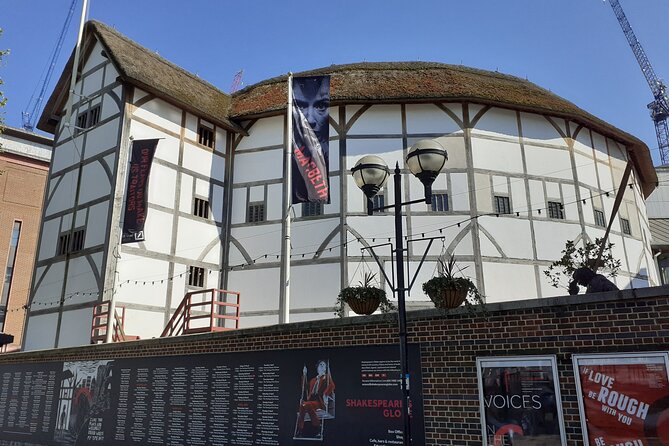
Then you move to Shakespeare’s Globe Theatre. The tour explains it was painstakingly rebuilt after a cannon related fire in 1613. You’ll get the sense that this theatre is like a time machine toward 16th century London, with the Thames nearby and St Paul’s off in the direction you’ll later reach.
Admission is not included at this stop, so you’ll likely appreciate it most as a viewpoint and story stop. If you want to actually go inside or catch a performance, plan for that separately. But even without entry, the guide’s context helps you understand why the Globe matters.
A quick tip for this portion: if you’ve never seen the Globe area before, take a moment to look toward the river and imagine the crowd. The setting is part of the show, and the guide helps you see that quickly.
Along the Thames and across Millennium Bridge, then final approach to St Paul’s
You spend time with the Thames itself, including a note about its 30 million year history. The tour also points out the unpleasantness that happened here between the 11th century and Victorian times, which gives you a grounded sense that rivers shape daily life, for good and for bad.
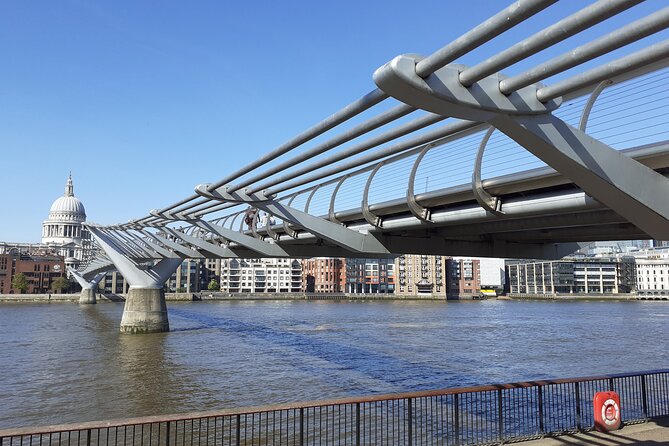
This stretch is where the walk starts feeling scenic and cinematic, especially as you move toward Millennium Bridge. Crossing the Thames again by the Millennium Bridge gives you fantastic views along the river on the way toward St Paul’s.
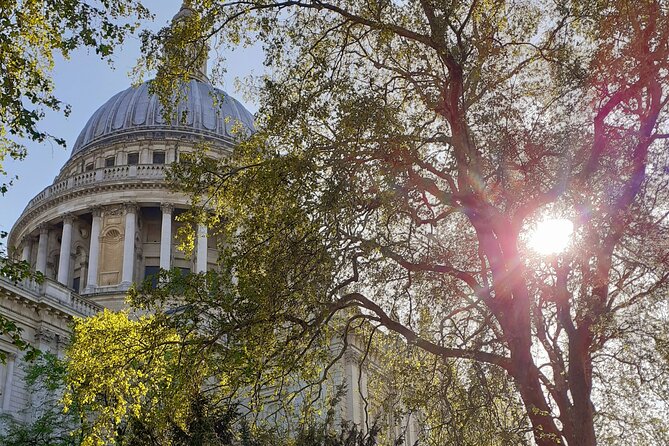
Then you finish at St Paul’s Cathedral. The tour frames it as the masterpiece of Sir Christopher Wren, with the cathedral standing majestically on Ludgate Hill since the 1670s. You also get that worship existed on the site as far back as the 7th century, which helps you connect the medieval layers you’ve been hearing about to the city’s later reimaging.
Admission is not included at St Paul’s during the walk, so you’re getting the guided arrival and the big-picture perspective. If you want to go in, you can treat it as your follow up stop after the tour. As a final note, the tour ends at St Paul’s Cathedral Churchyard, and that makes it easy to continue your day with public transport. St Paul’s is on London’s central red line.
Price and logistics, and why it feels like good value
At $25 per person for about two hours, this is priced in a range that makes sense for a guided “see a lot and understand it” format. You’re paying for the storytelling and the efficient route, not for admission tickets.
Here’s the honest value math: several of the biggest attractions on the route list admission as not included, meaning you will not be paying for those inside visits during the tour. Stops like London Bridge, Borough Market, Southwark Cathedral, Winchester Palace ruins, the Thames River, and Millennium Bridge are set up as free to enjoy from outside. That mix keeps the walk from feeling like a lineup where you feel pressured to spend more every ten minutes.
The other logistics help the value too. You get a mobile ticket, you’re traveling in English, and the group is capped at twenty. That makes the price feel less like a gamble and more like a guided orientation you can build on later.
The main consideration is expectation setting. If your goal is to enter every major building on the list, you’ll need to buy separate tickets and allow more time. The tour is not designed to replace a full day of museum visits. It’s designed to help you see the city’s medieval storyline quickly, then choose your next stop with more confidence.
The guide factor, why Mick and Michael change the whole day
One reason people keep praising this walk is the guide energy. Guides named Mick and Michael show up repeatedly in the kind of feedback that matters on a history tour: clear communication, humor, and a real ability to connect dates to real places.
The best guides also handle the group properly. There are mentions of taking group pictures, being happy to chat, and staying flexible for slower pace within the group. That matters because a history walk can become tiring if the pace is strict or the guide talks only at the front.
If you want a tour that feels like someone is telling you a London story in plain language, this is the type of format that tends to deliver. You’ll also leave with practical suggestions, like what to do next for food or transport. That’s the difference between a walking lecture and an actual travel day tool.
Who should book this medieval walking tour
I’d put this high on your list if you fall into any of these buckets:
- You want a first-timer friendly orientation to medieval and early modern London.
- You like big landmarks, but you also enjoy the supporting stops like markets and cathedral settings.
- You’d rather hear the stories while walking than read them later.
You might think twice if:
- You need long indoor visits at each stop.
- You dislike walking long distances, even if the tour keeps stop times short.
- You require full wheelchair access routes. The tour is listed as “most travelers can participate,” but the walking nature and urban steps are something you should consider.
It’s a good choice for families with older kids too, as long as the kids can handle a two hour walk and short stop explanations. For younger kids, you might find the pace a bit quick.
Should you book this medieval walk from the Tower?
I think it’s an easy yes for many visitors, especially if you want your London history in a format you can follow. The route hits major anchors like the Tower of London, Tower Bridge, and St Paul’s, but it also threads in details that make the city feel lived in, like Borough Market’s long timeline and the darker courtroom side of Southwark and the Liberty of the Clink.
Book it if you want:
- A guided route that keeps moving and stays organized
- A guide with real storytelling skill, including guides like Mick and Michael
- A mix of free outside stops and optional ticketed sites for later
Skip it or plan differently if your priority is entering every attraction. You’ll still learn a lot walking by, but you’ll need extra time and tickets for places where admission is not included.
FAQ
Where does the tour start and where does it end?
The tour starts at Tower Hill, London EC3N 4DJ. It ends at St. Paul’s Cathedral, St. Paul’s Churchyard, London EC4M 8AD.
What time does it start?
The start time listed is 2:00 pm.
How long is the tour?
The duration is approximately 2 hours.
Is the tour in English?
Yes, it is offered in English.
Is it a mobile ticket?
Yes, the tour uses a mobile ticket.
Is admission included for the stops?
Admission is not included for some stops, including Tower of London, Tower Bridge, HMS Belfast, Golden Hinde, Shakespeare’s Globe Theatre, and St. Paul’s Cathedral. Other stops are listed as admission free.
What is the group size?
The tour has a maximum of 20 travelers.
What is the cancellation policy?
Free cancellation is available up to 24 hours in advance for a full refund. If you cancel less than 24 hours before the start time, the amount paid is not refunded.
More Walking Tours in London


More Tours in London



More Tour Reviews in London


Not for you? Here's more nearby things to do in London we have reviewed










More Tower of London Tours worth a look.
 ★ 4.5Tower of London and Crown Jewels Exhibition TicketTickets from $496,677 guest reviews
 ★ 4.5London Sightseeing Tour: Guard Change with Tower of London OptionTickets from $952,672 guest reviews
 ★ 4.4Tower of London Entry & Beefeater Private AudienceTickets from $661,441 guest reviews
 ★ 4.7Easy Access Tower of London and Crown Jewels TourTickets from $1201,189 guest reviews
 ★ 4.5Tower of London: Crown Jewels & Beefeater Opening CeremonyTickets from $88969 guest reviews
 ★ 4.8VIP Tower of London & Tower Bridge Early-Access TourTickets from $201862 guest reviews
 ★ 4.5VIP Tower of London and Crown Jewels Tour with Private Beefeater Meet & GreetTickets from $155849 guest reviews
 ★ 5.0Skip the Line Tower of London & Westminster Tour and River CruiseTickets from $165730 guest reviews
Continue by place or experience