
REVIEW · LONDON CITY TOURS
London’s Hidden Gems and Secret History Private Guided Tour
London gets weird, in the best way. You get a private guide steering you away from the main tourist lanes into legal courtyards, Dickens landmarks, and the clues behind the Great Fire. I really like the way the stops connect stories across centuries, from Roman streets to 19th-century novels, but do plan for moderate walking and lots of short, focused viewing.
You’ll start at Embankment Station and finish near Monument Station, with hotel pickup and drop-off to keep your day simple. It’s built for small groups, it’s in English, and you can expect the guide to adjust what you lean into, especially literature fans and history lovers.
Key highlights to expect on this London secret history route
- Private, customizable pacing with a guide named Richard who adapts the stories to your interests
- Short walks with big atmosphere, slipping through courtyards and alleys instead of staying on main roads
- Dickens and the 1600s City of London threaded through pubs, markets, and churches
- Fleet Street to the Square Mile, from St Bride’s Church to the Bank of England area
- Great Fire context with a clear ending point, right by the Monument and the Underground station
- Plenty of free entries, plus one included church stop, with the Monument climb as an optional extra
A route that bypasses the obvious London
Most London tours sprint from one famous landmark to the next. This one slows down in the places you would struggle to find on your own, especially the legal lanes around Temple and the pocket passages that sit off the main streets.
I like that it feels practical, not performative. You’re not just told where things are, you’re shown how the City worked, what people did there, and why the same streets kept reappearing in new forms across time.
One thing to consider: the tour is designed for seeing and walking, not lingering for long museum hours. If you prefer slow, deep time in one building, you may want to pair this with a later self-guided return.
You can also read our reviews of more guided tours in London

Hotel pickup, a 10:00 start, and how the timing works
This is a 3 to 4 hour private experience, starting at 10:00 am. The meeting point is Embankment Station, Embankment Pl (WC2N 6NS), and you end at Monument Station on King William St (EC4R 9AA).
Hotel pickup and drop-off is included, so you avoid the stress of transit between stops. That matters here because the day is a chain of small areas: Temple, Fleet Street, the old market zone around Smithfield, then down toward the City’s financial core.
Walking is described as moderate, and the tour includes short stops at each location. If you have mobility issues, you should flag that up front so the guide can plan the route in a way that works for you.
Temple’s legal world: Middle Temple, Twelfth Night, and the Knights Templar
The tour opens at Temple Station, and the first move is the one I’d want: you leave the main tourist routes quickly. That sets the tone for the entire experience, because the City of London is all about layers, and those layers show up in side streets.
At the Honourable Society of the Middle Temple, you’re taken into the Inns of Court, the world that trained and supported the English legal profession. It’s not just a pretty courtyard stop. You also get story anchors tied to real literary and historical claims, including where Shakespeare first performed Twelfth Night.
A few details that make this stop fun rather than purely academic:
- You’ll hear about a fountain that inspired Charles Dickens.
- You’ll be shown the English headquarters of the Knights Templar.
- There’s tea culture woven in, with a shop that has sold tea for over 300 years.
Admission at this stop is free, and the time is about 45 minutes. That’s a solid window for a first taste of the tour’s style, enough time to look around and still move on before the afternoon turns into a slow shuffle.
St Bride’s Church: the press story and the crypt museum surprise
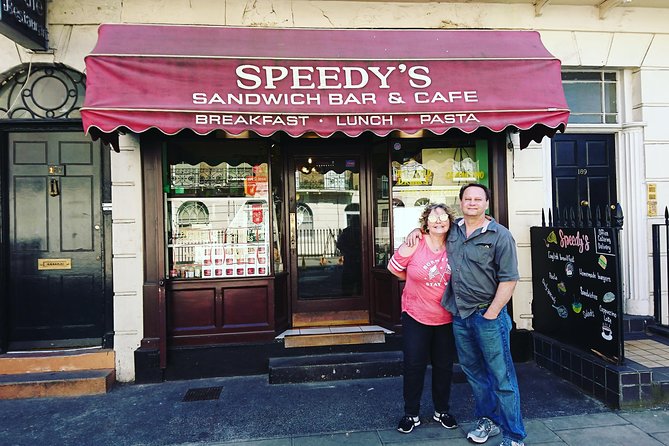
Next you shift toward St Bride’s Church, reached via older passageways and alleys such as Hanging Sword Alley. This is the kind of setup that makes the City feel lived-in, because you’re not marching down one road. You’re cutting through.
St Bride’s is often called the Cathedral of the Press because of its long association with Fleet Street newspapers. Then the tour turns the lights on archaeology.
The church survived the Great Fire of London and was remodeled by Sir Christopher Wren. Later, a bomb destroyed the roof during World War II, and that damage created an opening for archaeologists to look deeper into the crypts.
What I think you’ll appreciate is the mix of time periods you get in a small area:
- A hidden medieval chapel
- Charred remains linked to the Great Fire of 1666
- Roman pavements beneath the church layer
This stop is about 20 minutes, and admission is included. If you like the idea of seeing evidence, not just dates, this is one of the best-supported parts of the route.
Ye Olde Cheshire Cheese: Dickens warmth, a parrot story, and old cellars
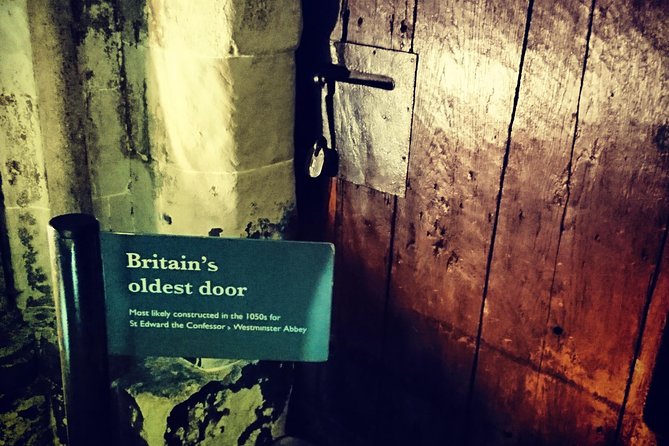
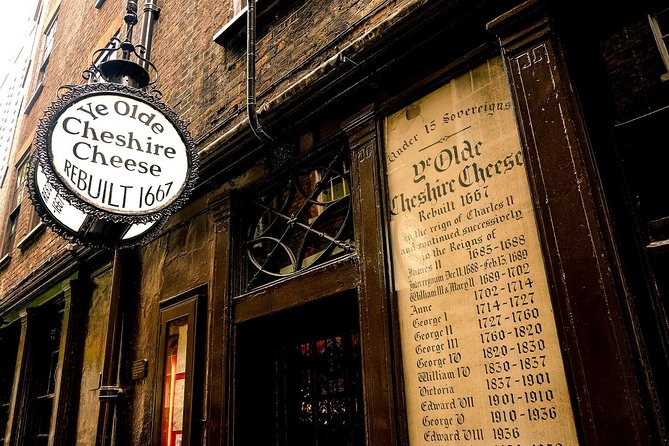
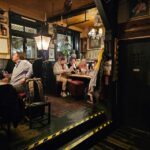
Then you hit Ye Olde Cheshire Cheese, which can claim London’s oldest pub status if you look at cellar history going back to the 13th century. The upper rooms were rebuilt in 1667, so even the interior feeling is part of the pitch.
You’re guided into the wooden-paneled, candlelit atmosphere, and the stop leans hard into Dickens. You’ll learn about Charles Dickens warming his feet by the same fireplace and the way the pub shows up in stories.
The best part here is the blend of real place with colorful tales:
- Polly the Parrot
- The Hellfire Club
- The rather naughty tiles from the 1960s
Admission is free here, and you get about 20 minutes. This is a short stop by design, but it gives you a satisfying literary jolt without turning into a long pub crawl.
You can also read our reviews of more private tours in London




Smithfield Market: meat-market grit, executions, and two buildings that survived
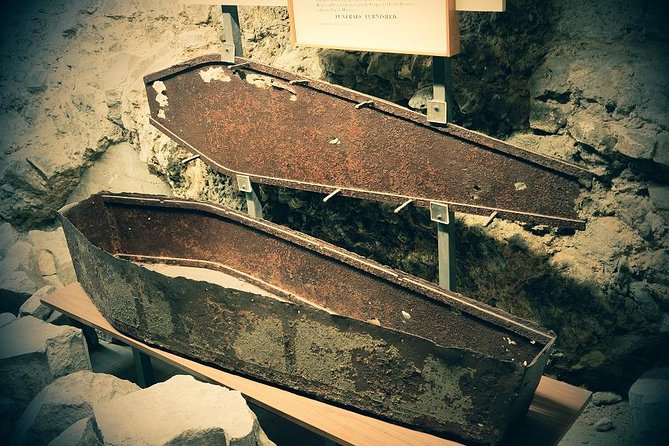
By the time you arrive at Smithfield Market, the tour admits the mood shift. This area is tied to selling meat and is described as London’s oldest market still operating for its original purpose.
The street setting also carries heavy history. You’ll hear about the Great Fire of London finally extinguishing in the surrounding area, as well as Bloody Mary burning people at the stake there. William Wallace, the man behind Braveheart, was executed nearby.
And yes, the tour layers in pop-culture and literature connections too:
- Fagin’s Gang had a den in the area
- Sherlock Holmes first met Doctor Watson at St Barts Hospital nearby
The guide also points out two surviving buildings that escaped the Great Fire of 1666, which is the kind of practical detail that makes a modern view snap into focus. You’re looking at present-day streets with old survivals in the frame, not just hearing about what burned.
This is about 20 minutes with free admission. Wear shoes you trust, because the vibe is outdoors and the topic is not light.
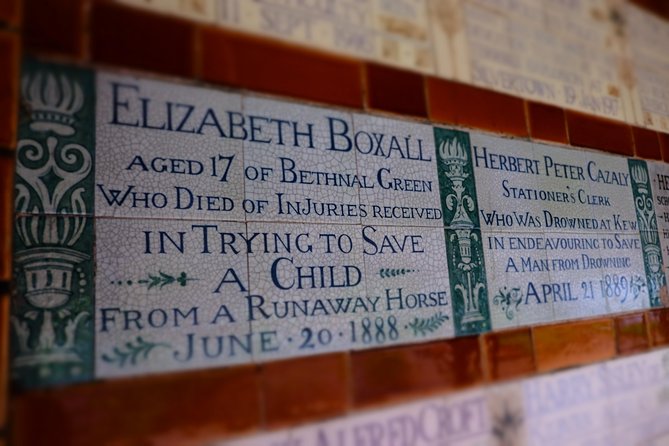
Postman’s Park: a quiet pause for London’s unsung heroes

After the intensity of Smithfield, Postman’s Park acts like a reset button. It sits next to the Old General Post Office, and the name comes from postal workers enjoying their lunch there.
This park is also a burial ground for St Botolph’s Church. The moment that makes the stop memorable is the memorial to unsung heroes of London. The guide has you sit, find a bench, and talk through the meaning of the names and lives behind it.
This portion is only about 10 minutes, and admission is free. It’s short, but it changes your headspace, which matters because the next steps bring you back to power, government, and finance.
Guildhall: Roman amphitheatre to medieval trials to a working City Hall
Next you land at Guildhall, which is basically London history stacked in one place. You’re told the Roman had an amphitheatre on the site, the Saxons built a hall where people paid taxes, and during medieval times it was first recorded as a guildhall.
The current building was built around 1411, but the crypts are thought to date back to the 13th century. That layering is the whole point. It’s not one monument, it’s an ongoing site of administration and community.
What I like about this stop is that it doesn’t pretend history is over. You’re shown that the City of London Corporation still runs its day-to-day administration from modern buildings just to the north.
The guide also talks about famous people tried here, so you get the legal thread again. This stop is about 10 minutes, free admission, and ideal if you want your history condensed but still connected.
The Square Mile: Bank of England, the Royal Exchange, and Dickens ghosts
Now you move into the Bank of England area, the ancient heart of the City known as the Square Mile. If you want a sense of London’s power structure, this is the right direction.
Highlights include the Royal Exchange and the Cornhill Devils. The Royal Exchange is also tied to Dickens, with a reference to the ghost of Christmas yet to come seeing colleagues discuss Scrooge’s funeral.
You’ll also hear the story behind why the Bank of England is called the Old Lady of Threadneedle Street. This is a name that sounds cute until you learn the context that made it stick.
This stop lasts about 10 minutes, with free admission. It’s quick, but it sets up the next sequence, because it shows the City as both financial machine and story engine.
George and Vulture, Leadenhall Market, and the London you see in books
From the Bank area, the tour pivots to George and Vulture, a Dickens favorite chop house. It’s mentioned over 20 times in the Pickwick Papers, and the interior is described as almost unchanged from Dickens’s time.
I like how the guide connects literature to physical space. Even if you are not a hardcore Dickens reader, the idea is clear: the stories were written in the same alleys and courts you can still walk today.
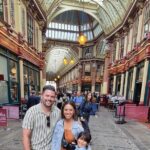
Then you head into Leadenhall Market, one of London’s oldest and prettiest markets on the site of a Roman cross road. This is a film and novel magnet, so you’ll hear that it has appeared in famous movies and novels, including the Harry Potter films.
Another literary hook comes from Dickens again, with the market linked to the moment where Scrooge sends a boy to get the biggest turkey on Christmas morning.
Leadenhall Market stop is about 15 minutes, free admission. If you enjoy photo moments, this is where you’ll want to look up and around, because it has that old-market geometry you can’t fake with a modern street.
Ending at the Monument: the Great Fire starting point and optional 311 steps
The tour ends at the Monument to the Great Fire of London near Monument Underground Station. You’ll get the core disaster framing: the Great Fire started here in 1666 and destroyed 80% of the old city of London.
What makes this ending feel complete is that your guide points out areas that survived. That helps you build a mental map of what was lost and what endured, instead of just treating the fire like a single dramatic paragraph.
The tour ends here after about 15 minutes. You also have an optional climb of the Monument’s 311 steps for views over London, but admission for the climb is not included.
This final stop is a good moment to slow down, check your bearings, and think about what you just walked through. The City looks different when you know which layers survived.
How good is the value at about $267 per private group
Pricing is $267.48 per group, with up to 1 person. That sounds steep until you compare what you actually get: a private guide, hotel pickup and drop-off, and a route built around multiple story-heavy stops that you likely would not find without local context.
For value, I’d focus on two things:
- You’re paying for interpretation, not just access. The tour ties each location to narratives across Roman London, the Great Fire, and 19th-century literature.
- You avoid the cost and friction of piecing together multiple guided experiences yourself. Pickup and drop-off alone save time and decision fatigue.
This is best value if you care about the connections, like Dickens references, court and legal history, and the way the City rebuilt after disaster. If you only want a list of famous sites, you might feel better spending your money on a different style of tour.
Who this private tour fits best
This tour fits you if:
- You like Dickens or you want London stories you can picture in your head.
- You want a walking route that uses side streets and courtyards instead of only big boulevards.
- You enjoy short stops that are rich in context, like crypts, courthouses, markets, and old church layers.
- You want a guide who tailors the route to what you care about. In the past, Richard has adapted what to hit and what to skip based on interest level.
It might not fit you if:
- You need long sit-down museum time at one stop.
- You want minimal walking.
- You are traveling with a group that needs lots of rest stops and long indoor breaks (the tour is short per stop and includes outdoor segments).
Practical tips to make your day smoother
- Bring comfortable walking shoes. Even with pickup and a private pace, you’ll be on your feet through alleyways, courtyards, and market streets.
- Bring layers. Churches and crypts can feel cooler, and London weather loves to change.
- If you care about the Monument views, factor in the optional climb timing and energy, since it is not included.
- If you want tea or food, plan it around the tour rhythm. Food and drinks are not included.
FAQ
FAQ
How long is the London Hidden Gems and Secret History private guided tour?
It runs about 3 to 4 hours.
What time does the tour start?
The start time is 10:00 am.
Where do I meet the guide?
You meet at Embankment Station, Embankment Pl, London WC2N 6NS.
Where does the tour end?
The tour ends at Monument Station, Underground Ltd, King William St, London EC4R 9AA.
Is this a private tour?
Yes. It is a private tour for your group only.
What languages is the tour offered in?
The tour is offered in English.
Is hotel pickup and drop-off included?
Yes, hotel pickup and drop-off are included.
Is food or drinks included?
No, food and drinks are not included.
Is walking involved?
There is moderate walking. You should inform the provider if you have mobility issues.
Are any admissions included?
St Bride’s Church admission is included. Many other stops are listed as free, and the Monument climb is not included.
What is the cancellation policy?
You can cancel for a full refund up to 24 hours in advance of the experience start time.
Should you book this private secret history walk?
If you want London that feels like stories you can walk into, book it. This route does a strong job of connecting places like Middle Temple, St Bride’s Church crypts, Dickens pubs, and the Great Fire Monument into one coherent day.
Go for it especially if you’re a Dickens fan, you like legal and City of London history, or you want side streets and atmospheric courts instead of the same postcard stops. If moderate walking and short stop times are a concern, you can still make it work, but tell the guide what you need before you go so the pacing fits you.
More Guided Tours in London
More Tours in London


More Tour Reviews in London

Not for you? Here's more nearby things to do in London we have reviewed






More London City Tours worth a look.
 ★ 4.6The London Eye Entry TicketTickets from $3935,875 guest reviews
 ★ 4.7From London: Harry Potter Warner Bros Studio TourTickets from $11726,588 guest reviews
Westminster to Greenwich River Thames CruiseTickets from $2222,836 guest reviews
Magical London: Harry Potter Guided Walking TourTickets from $2022,044 guest reviews
 ★ 4.6Madame Tussauds LondonTickets from $3620,915 guest reviews
 ★ 4.5Stonehenge, Windsor Castle, and Bath from LondonTickets from $11118,662 guest reviews
 ★ 4.7Warner Bros. Studio Tour with TransfersTickets from $14417,586 guest reviews
 ★ 4.7Tower Bridge Entry TicketTickets from $2115,560 guest reviews
Continue by place or experience