
REVIEW · LONDON CITY TOURS
London’s Alternative History: A Self-Guided Audio Tour
London gets stranger when you follow the audio. This self-guided alternative history walk uses GPS-tagged VoiceMap directions, so the stories match the exact place you’re standing. You can also move at your own speed and still hit key central sights.
I especially like the easy-to-use setup, because it tells you where to look and when to turn. I also like that you get lifetime access, so you can replay the route later when you return to London.
One drawback to consider: you’ll need your own smartphone to run the VoiceMap app, since the tour does not include one.
Quick hits
- GPS-based audio tagging means the commentary is linked to each location you pass
- Offline access for audio, maps, and geodata helps when mobile signal gets spotty
- Lifetime access lets you revisit the stories whenever you want
- A calm, well paced narrator makes the walk feel easy on the ears
- A great “use-your-time” route if you have 1 to 1.5 hours and want London stories without ticket lines
A self-guided audio walk that still feels organized
This is not one of those tours where you have to keep up with a group. You start at The Piazza, 1-7 Covent Garden and then you’re free to walk, pause, and restart whenever you want.
The whole experience is designed around a realistic walking pace, roughly 1 hour to 1 hour 30 minutes. If you stop to read a plaque, snap photos, or just take your time, that length stretches naturally, and that flexibility is part of the value.
Because it’s a private tour/activity for your group, you are not dealing with the usual squeeze of a big guided crowd.
You can also read our reviews of more guided tours in London


VoiceMap GPS tagging, plus offline audio when the city goes patchy
The heart of this experience is the VoiceMap app. The audio is GPS-based, so you get location tagged commentary as you move through London.
That matters more than you might think. When your phone knows where you are, you spend less time second-guessing street corners and more time actually seeing what’s around you. In practice, this style of tour helps you get your bearings fast, even if you find standard walking directions stressful.
The app also gives offline access to audio, maps, and geodata. So you can download ahead of time and spend your day less worried about data charges or whether your connection will hold.
Starting in Covent Garden, and learning what a name can hide
You kick things off at The Piazza (Covent Garden), right in one of London’s most well known shopping and street life areas. Even if you’ve passed through before, starting here works because the tour uses the area as a springboard into “alternative” London stories.
One early stop is the market and the origins of its name. You’ll hear that the name connects to Convent Garden, tied to the medieval idea of a convent’s garden.
This is the kind of detail that makes you look at the same place differently. Instead of just seeing crowds and storefronts, you start noticing how the modern street name preserves older layers.
Tip for you: arrive with a little curiosity. Covent Garden is easy to stroll through, but this route makes you slow down just enough to catch the odd, specific facts.
Actors’ Church, a first recorded punch-up, and famous performers remembered
As you continue, you reach a site known as the Actors’ Church. Here, the tour focuses on the people memorialized there, including actors who have left their mark on London’s stage.
You also get an offbeat legal style anecdote: it’s described as the location of London’s first recorded punch-up. That detail fits the theme of the walk: history that’s not always tidy, and often surprisingly human.
A stop like this is especially good when you like the culture side of London, not just the big landmarks. You’ll be walking in areas tied to performance, and the stories help you connect the dots between “what people did here” and “why the place matters.”
The oldest theatre site in London, plus ghosts and the Man in Grey
Next, the route moves to the oldest theatre site in London. Instead of treating it like a checklist stop, the audio leans into how long theatre life has shaped this part of the city.
You’ll hear about performances tied to the site, and also about ghostly apparitions, including the infamous Man in Grey. Whether you believe the supernatural parts or you just enjoy the folklore, it changes the vibe of what you’re looking at.
This is one of those stops where you can either speed past and move on, or you can let the story set the mood. The tour encourages the second option without forcing you to stand still for ages.
You can also read our reviews of more historical tours in London




Theatre productions, early electricity, and how London lights changed
From the older theatre ground, the audio shifts to the practical weirdness of theatre technology. One stop highlights famous productions, including The Lion King, plus the site’s connection to early electricity used for theatre lighting.
It’s a fun pairing, because it ties a major modern production to a very specific slice of how light technology evolved. The result is a story that feels both familiar and fresh.
If you’re the kind of person who likes seeing how today’s big brand names connect to earlier experiments, you’ll enjoy this segment. It’s also a smart break from political or legal anecdotes, giving your brain a new lane to follow.
Quirky court tales and legal history where you can still walk today
The route also includes stops tied to famous trials and cases. The audio is framed around the quirky side of London’s legal history, with an emphasis on intriguing stories that took place here.
This is valuable because it adds variety to what you’ll see in central London. Instead of only learning about monarchs, wars, and royal buildings, you get the human side of legal drama, including how strange and uneven the past could be.
If you like your history with character, this part of the walk keeps the tone light without skipping the facts.
A Tudor palace, a Navy office, and the British postal system
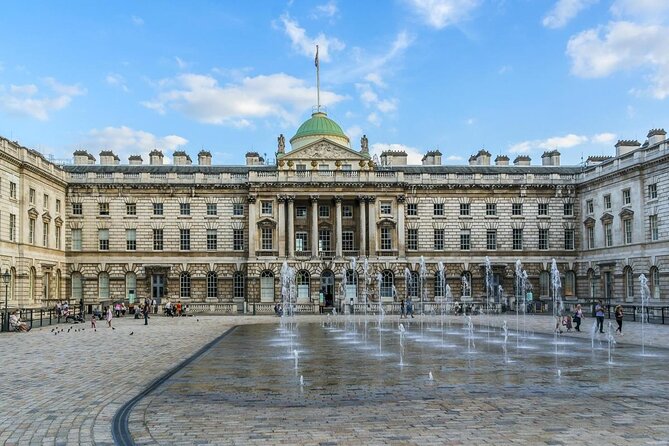
Another highlight is a grand building that the audio describes as transforming from a Tudor palace into a Navy office. You’ll also hear about its role in the development of the British postal system.
This stop is a reminder that many London buildings were built for one purpose, then reassigned when the city’s needs changed. The tour doesn’t make it feel like a dry timeline. It presents the building as a living piece of infrastructure that kept reinventing itself.
For you, that means your walk becomes more than a string of stories. You start understanding why certain places feel important, even when they look like they’re just “another big building.”
Riverside promenade stories, diverting the Thames, and hidden river secrets
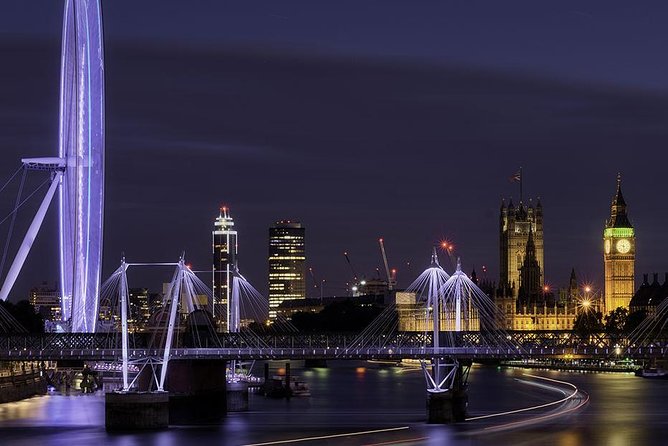
As you move along, the route heads to a riverside promenade and the stories behind its construction. The key detail here is that the work involved diverting the River Thames, which also helped reveal hidden river secrets.
That kind of information gives you a more physical sense of London. You’re not just hearing about history as dates. You’re hearing about how the city physically reshaped itself, and how water routes affected what could be built later.
If you like walking while thinking, this segment is perfect. You get open views, and the audio gives you something concrete to picture in your head.
The Ladies’ Bridge, women builders in WWII, and big London views
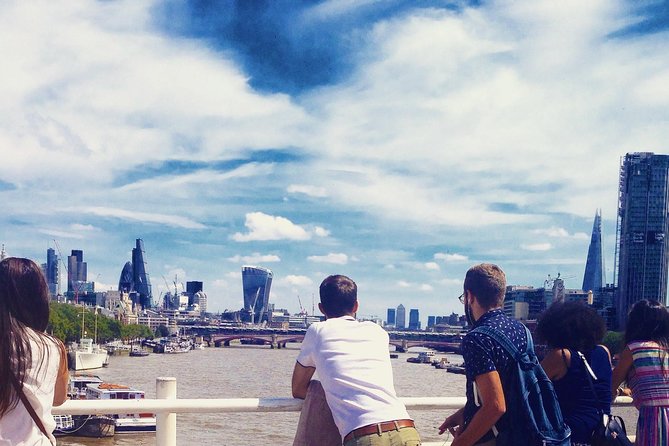
Next up is The Ladies’ Bridge, known by that name because it was largely built by women during World War II. The audio also calls out the spectacular views you get from there.
This is one of the stops where you’ll likely want a pause. Even if you just stand for the view, you’ll feel how the river and central London layout blend together.
It’s also a strong reminder of the tour’s focus: you’re not only learning names and dates. You’re learning who did the work, and how the city carried those contributions forward.
The Lamp that Lights Itself, powered by sewer gas
One standout stop is home to the last remaining Victorian gas lamp in London, powered by sewer gas. The route includes the nickname The Lamp that Lights Itself, which is exactly the kind of detail you’ll remember later.
This is one of those “small object, big story” moments. You get a tangible landmark, plus a reminder that old London solved problems in ways that are totally different from today.
It’s also a good stop if you like photo opportunities, because it’s specific and recognizable once you see it.
The Savoy and London’s first all-electric public lighting
The walk ends at The Savoy, Strand. This last stretch leans hard into electricity as a cultural shift.
You’ll hear that the Savoy was the first public building in the world to be lit entirely by electricity. The audio also mentions luxurious guests and infamous parties, which makes it feel like more than just a tech milestone.
As a closing note, this works well. You finish with a story about how electricity changed not only lighting, but the mood of nightlife and public life.
And since the tour ends at a major landmark, you’re also well placed to continue on your own, whether you want to head toward the river, hop on transit, or just wander.
Price and value, $9.99 for a whole route you can replay
At $9.99 per person, this is priced like an impulse friendly add-on, but it can also replace a guided session if you’re comfortable walking on your own.
Here’s what makes that price feel fair:
- You get lifetime access, not a one-time ticket.
- You get GPS-based audio tied to the route, which reduces navigation guesswork.
- You get offline access for audio and maps, so you are not stuck if your signal drops.
The main “cost” to watch is that it’s not a guided group with someone in your ear making sure you don’t miss turns. The trade is independence, paired with GPS support.
Also, tickets or entrance fees are not included for any stops en route. So if you want to go inside a specific building or attraction, budget that separately.
Practical timing, what to wear, and how to make it fun
Plan for about 1 to 1.5 hours, but let the route breathe. This is the kind of activity that works best when you’re not rushing.
Wear comfortable shoes. You’re walking through central London, and even a “short” route can add up if you stop often.
If you want to maximize enjoyment, do this:
- Start on a day when you’re already in the Covent Garden area
- Use the audio as your guide, then pause yourself when you want to look closer
- Take the moments that feel surprising, like the gas lamp or the all-electric lighting story, because those are the lines you’ll tell friends later
Who should book this alternative history audio tour
This suits you if you like history that feels a bit offbeat and human. You’ll enjoy it if you want a walk that mixes theatre stories, legal oddities, and city engineering facts, all without needing museum tickets.
It’s also a good choice for you if you prefer self pacing. The audio format works well when you want to chat, take photos, or simply slow down.
You might skip it if you hate walking or if you don’t want to use a smartphone. Since the tour does require a smartphone to run VoiceMap, it’s not ideal if you’d rather avoid phone based navigation entirely.
Should you book it?
Yes, if you want a low cost, high variety London walk with GPS tagged stories and the option to replay later. The stop list hits places that many people walk past, but it gives you the kind of detail that makes the city feel more specific and alive.
Book it on a day you have about an hour to spare, and then lean into the surprises. The punch-up anecdote, the theatre ghost lore, the sewer gas lamp, and the all-electric Savoy all land as memorable bits of London character, even when you’re just moving on foot.
FAQ
How much does London’s Alternative History cost?
It costs $9.99 per person.
How long is the audio tour?
The duration is approximately 1 hour to 1 hour 30 minutes.
What language is the tour available in?
The tour is offered in English.
Where do I start and where does the tour end?
You start at The Piazza, 1-7 Covent Garden, London WC2E 8HD. The tour ends at The Savoy Strand, London WC2R 0EZ.
What’s included, and what do I need to bring?
Included is lifetime access to the London’s Alternative History Tour, the VoiceMap application, and offline access to audio, maps, and geodata. You need to bring a smartphone, since it is not included.
Is the tour available offline?
Yes. Offline access includes audio, maps, and geodata.
Can I cancel for free?
You can cancel for a full refund up to 24 hours in advance. If you cancel less than 24 hours before the start time, the amount paid is not refunded. Confirmation is received at the time of booking. Service animals are allowed, and the tour is near public transportation.
More Guided Tours in London


More Tours in London




More Tour Reviews in London


Not for you? Here's more nearby things to do in London we have reviewed








More London City Tours worth a look.
 ★ 4.6The London Eye Entry TicketTickets from $3935,875 guest reviews
 ★ 4.7From London: Harry Potter Warner Bros Studio TourTickets from $11726,588 guest reviews
Westminster to Greenwich River Thames CruiseTickets from $2222,836 guest reviews
Magical London: Harry Potter Guided Walking TourTickets from $2022,044 guest reviews
 ★ 4.6Madame Tussauds LondonTickets from $3620,915 guest reviews
 ★ 4.5Stonehenge, Windsor Castle, and Bath from LondonTickets from $11118,662 guest reviews
 ★ 4.7Warner Bros. Studio Tour with TransfersTickets from $14417,586 guest reviews
 ★ 4.7Tower Bridge Entry TicketTickets from $2115,560 guest reviews
Continue by place or experience