
REVIEW · LONDON CITY TOURS
London Sightseeing Walking Tour with 30+ sights
London changes fast when you walk it, not when you bus it. This one strings together 30+ stops across both the City of London and Westminster in a single day, so you can mark off the big-name sights without spending your whole trip in ticket lines. You start at St. Paul’s Station, and you end at Buckingham Palace, which helps you keep your day moving in a clear direction.
Two things I really like: you get photo opportunities at every stop, so you are not stuck waiting for perfect timing. And the guide factor matters here, with people praising guides such as Mike, Carolina, Adam, Matt, Eric, and Andrew for staying on top of the group, helping with photos, and sharing lots of practical context.
One drawback to plan for: it is a long 5-mile walk. It is also not set up for wheelchairs, mobility issues, or strollers, so you need to bring solid walking comfort into the equation.
Key highlights worth showing up for
- Big-sight parade with smart context, from St. Paul’s to Westminster Abbey and on to Buckingham Palace
- Photo-first stops, so you can get the classic shots without sprinting between attractions
- Two London halves in one go, City of London landmarks and Westminster government sights
- One Tube journey included, which saves you time after the midday break
- A short lunch break near Tower Hill, with lots of nearby options for your own food plan
- Max group size of 25, which generally helps the pace stay under control
Price and what you actually get for $26.35
At $26.35 per person, this tour is priced like a value play for first-time orientation. The key detail is what is not included: you do not go inside the sights. That sounds limiting, until you realize what you are buying is time and order, not admission.
In real life, walking this route on your own takes planning. Here, you get the sequence, the explanations, and constant stopping points. You also get one Tube journey included, which is a small cost on its own, and a big convenience when you are trying to keep a tight day.
So the math is simple. If you want interiors and museums, you will still need separate tickets. If you want the layout of the city, classic photo views, and enough background to pick what to return to later, this tour is a strong deal.
You can also read our reviews of more walking tours in London



St. Paul’s Station start: the easiest way to begin your London day
The tour starts at St. Paul’s Station (Exit 2), meeting by Caffe Nero near 30 Newgate Street. Your guide will be holding a yellow umbrella, which makes it easy to spot the group quickly and avoid that early-day wandering that steals time.
Starting here is smart. It puts you right by the City of London edge, and you begin with one of the most visually dominant buildings in England. Even if you only catch the facade and the dome from outside, you get an immediate sense of scale, and the tour’s history thread starts rolling right away.
If you are trying to do this early in your trip, this starting point is a good reason why. You leave with a mental map, plus clear places to revisit once you decide what matters most to you.
St. Paul’s Cathedral, then Big Ben: iconic exteriors with tight timing
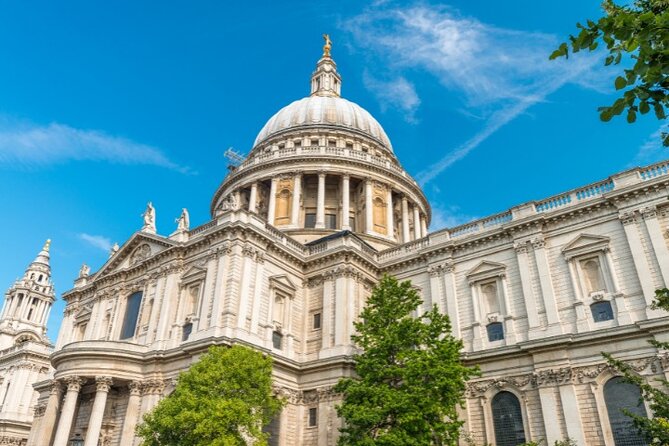
You kick off at St. Paul’s Cathedral, designed by Sir Christopher Wren. You will see why the dome dominates the skyline, and you get practical context about what it has hosted over the years, including royal weddings, state funerals, and jubilees. The visit window is short, about 15 minutes, and it is the right amount for outside views and key photo angles.
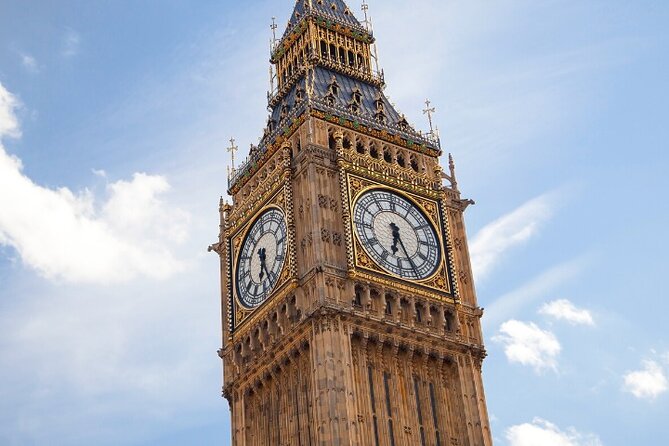
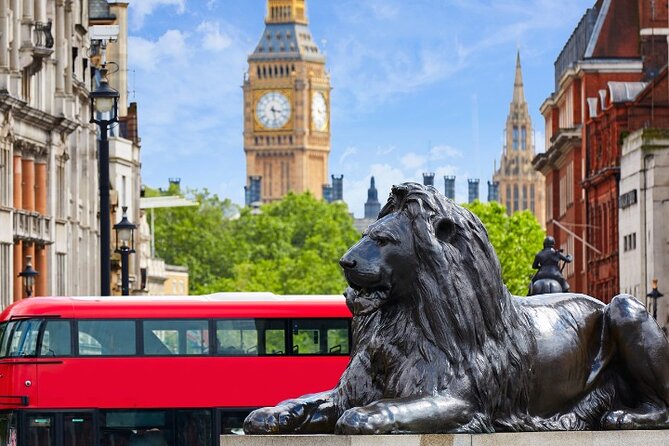
Next comes Big Ben, officially the Elizabeth Tower, next to the Houses of Parliament. Expect a quick stop that still hits the essentials: the massive clock faces, and the cultural identity of that hourly chime. For photos, the trick is patience. This is one of those spots where your best shot often depends on what angle lets you frame the tower cleanly.
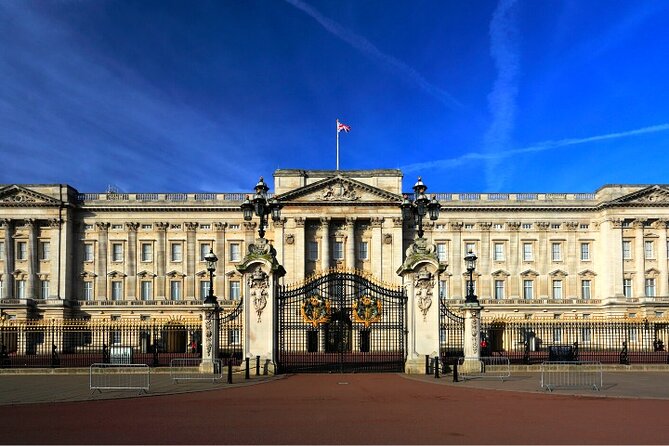
Then you continue to Buckingham Palace. It is quick, around 10 minutes, but the point is orientation. You get the palace as a working royal residence, set against the gardens and royal parks, which helps you understand why this area is so tied to national celebrations.
Westminster Abbey and Parliament Square: the places where UK history gets loud
In Westminster, the tour focuses on the landmarks you cannot miss, but it also gives you something useful: why these buildings matter beyond the postcard.
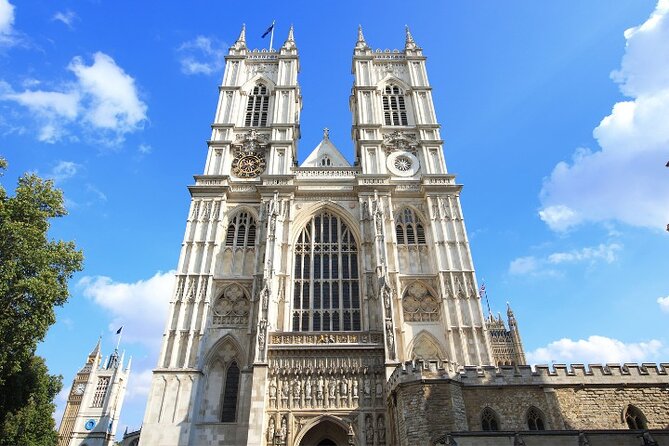
You stop at Westminster Abbey, a Gothic landmark with a founding date in 960 AD and coronations since 1066. You also hear why it functions as both a working church and a major symbol for the country’s spiritual and cultural life. The Poet’s Corner comes up as the kind of detail you would never notice on your own, unless someone points it out.
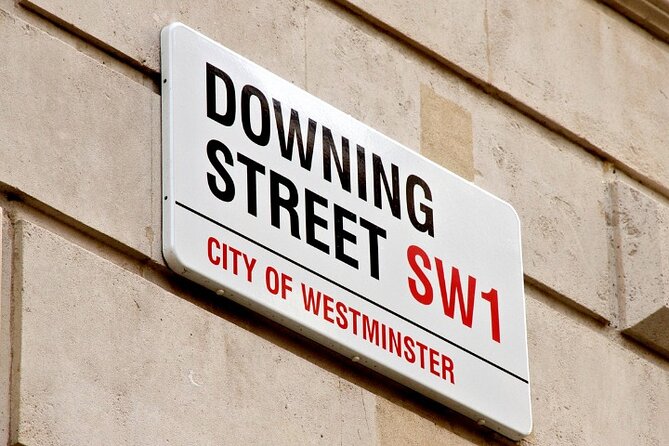
Then the walk keeps going through the government core. You get views connected to Houses of Parliament and political leadership sights like 10 Downing Street and the Cabinet Office area (the tour includes a stop at Cabinet Office as well). Even if you do not go inside, the exterior context helps you understand what you are seeing when you stand near the seats of power.
A quick stop at St Margaret’s Church on Parliament Square adds a helpful nuance. It is often called the Politician’s Church, and it is linked with royal weddings and state occasions. That is exactly the kind of detail that makes a fast stop feel like more than just a photo.
Tower of London and Tower Bridge: medieval power meets modern city views
From Westminster toward the river, you shift into older layers of London.
You hit the Tower of London next, and the story line is clear. Built after 1066, it served as a palace, prison, armory, and treasury, and it became famous for the Crown Jewels. The Yeoman Warders are part of the experience too, so even from the outside you get a sense of who runs the traditions that keep it alive.
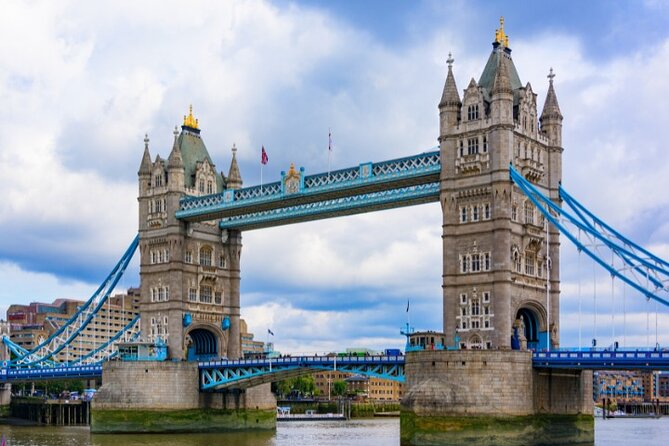
Then comes Tower Bridge. It is a famous icon, and you also learn why it exists as more than a photo wall. It is a functional bridge spanning the Thames, and it sits right by other major landmarks, which means you get multiple layers of skyline in one view.
You are also given a London Bridge stop later. That matters because it helps you compare the area across time. London Bridge has been rebuilt multiple times, and the current bridge opened in 1973, while the older medieval version is tied to the nursery rhyme London Bridge is falling down. That kind of contrast is exactly why a guided route can be more satisfying than random self-walking.


The City of London loop: finance landmarks and survival markers
After the big medieval and royal stops, the tour moves into the City of London side of life. This is where London looks more like a living business district, and the guide’s job becomes translating those facades into meaning.
You stop at the Bank of England, often called the Old Lady of Threadneedle Street. The explanation is practical: it oversees monetary policy, issues currency, and supports stability in the system. Even a short stop is enough to connect the building with the role it plays in the country’s day-to-day operations.
Nearby you also get Royal Exchange, a commercial hub dating back to 1571. It gives you a sense of how London traded, then evolved into a financial center. This is paired with Mansion House, the official residence of the Lord Mayor of the City of London, which adds civic flavor to the finance theme.
Then you stop at The Monument to the Great Fire of London, designed by Wren, commemorating the 1666 fire. That is a useful stop because it turns a major city tragedy into a simple landmark you can recognize later when you are exploring on your own.
A couple of modern-in-the-city moments also show up. You see the Bloomberg building and later the Bracken House stop tied to Financial Times headquarters. These shorter pauses help you read London as both old and working right now, not just a museum.
London’s river landmarks: Thames views that stitch the whole day together
The Thames is not just scenery here, it is a thread that connects the City and Westminster.
You get a dedicated Thames River stop, plus viewpoints tied to bridges and warship history later. The river’s length and role in trade and transport come up, and the guide helps you understand why so many landmarks cluster where they do.
One of the more memorable outside stops is HMS Belfast, a Royal Navy warship permanently moored by the Thames as a museum. If you like WWII connections, this is the stop that can make the war-era section feel human and specific, including roles in the Battle of the North Atlantic and the D-Day landings.
Then you pause at the Cenotaph, a war memorial tied to British and Commonwealth soldiers. It is closely linked to Remembrance Day on November 11. It is a solemn moment in a tour that otherwise moves fast, and it helps the day feel balanced.
Lunch near Tower Hill: a break that keeps the energy up
You get a short lunch break near Tower Hill, and it is timed to give you enough reset time without collapsing the schedule.
The tour does not include food, so you have to pick what you like from what is nearby. I like this approach because it keeps the cost down. It also means you can match your lunch to your tastes, whether you want something quick or something more sit-down.
Also note the rhythm afterward: the tour includes one London Underground journey. Based on how the route is commonly handled, you typically take Tube transit to reach the Westminster area after lunch. That makes the second half feel more manageable than trying to walk everything straight through.
Modern skyline hits: London Eye, The Shard, and Sky Garden
This tour balances classic icons with contemporary viewpoints, and that is one reason it stays fun even if you have visited London before.
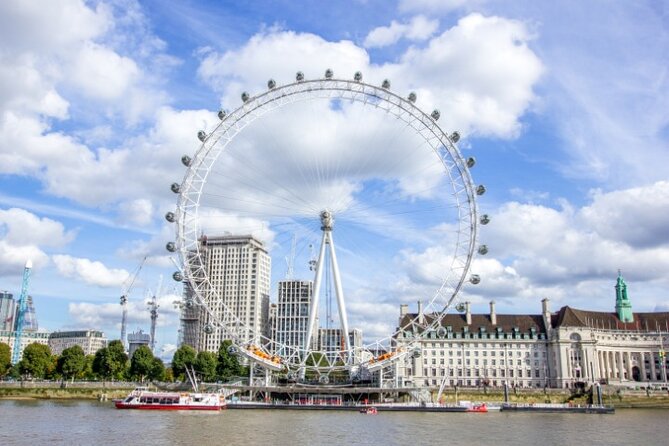
You stop at the London Eye, opened in 2000. You get the idea of it as one of the world’s tallest observation wheels, with panorama potential over key landmarks like Big Ben, St Paul’s, and Tower Bridge. You are not going inside here, so think of it as a photo and orientation stop.
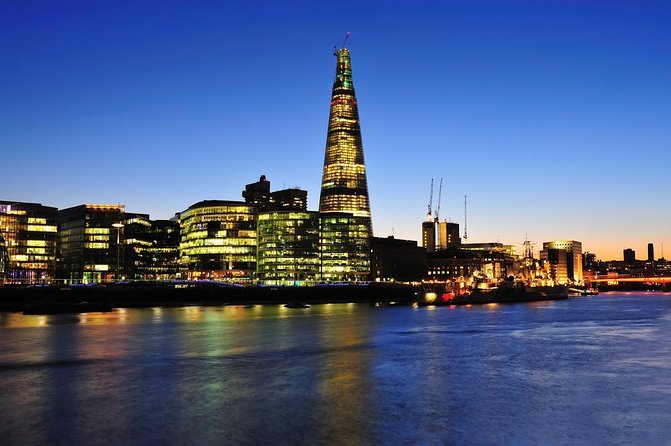
Next, you see The Shard. It is London’s tallest skyscraper, with offices, restaurants, a hotel, and a public viewing platform. The stop is short, so focus on capturing skyline shots and the way it slices the city’s horizon line.
In the modern-left-field category, you also get the Sky Garden at 20 Fenchurch Street, the Walkie Talkie building. It is described as London’s highest public garden with terraces and city views. Even if you do not enter, being aware of it matters. If Sky Garden is your style, you know exactly where to aim for later.
Extra photo stops that turn into useful memories
A highlights tour is only as good as its stopping points, and this one emphasizes photo access and repeatable angles.
You get a sequence of quick exterior stops such as Clarence House, associated with King Charles III and family, and St James’s Palace, one of the oldest royal residences tied to Henry VIII and later monarch residence history.
You also pass by places connected to law and order, including Great Scotland Yard (New Scotland Yard, Metropolitan Police headquarters). It is quick, but you get a sense of what runs the city’s policing in practice.
If you are a history person, you also get Watling Street, an ancient Roman road that ran from Dover to Wroxeter and passed through London. That is a great stop for helping you visualize how Roman routes shaped modern streets.
Finally, you end with a royal park view stop at St James’s Park and then finish at Buckingham Palace. The day closes with the kind of scenery that makes it easy to decide what to do next, because you already know the area.
Guide style and group size: why this walk feels smoother than it sounds
A long walk can go sideways when the guide is disorganized or the group gets too large. Here, the tour caps at 25 travelers, which typically keeps it easier to stay together and for you to hear explanations without playing phone-tag.
The other repeated theme is the guide’s active help with photos and pacing. You also hear about guides using names, answering questions, and helping people tweak their plans. In other words, you are not just getting facts dumped at you. You get support that makes the day feel easier.
On a tour like this, that matters because the sights are famous, but the timing between them is what decides whether you feel rushed or satisfied.
Practical note: wear comfy shoes. This tour is about 5 miles of walking, and even if the pace feels reasonable, you still want footwear that can handle London sidewalks without pain.
Should you book this London highlights walking tour?
Book it if you want orientation fast. If this is your first London trip, or you have only a limited number of days and you want to see Big Ben, Buckingham Palace, Westminster Abbey, Tower of London, and the river area in one sweep, this tour fits.
Skip it if you cannot do a long walk. It is not suitable for guests with walking or mobility difficulties, and it is not set up for prams or strollers. Also, if you want to go inside major sights during your day, you will need to plan separate ticketed visits.
One smart strategy: do this early, then come back later. This tour will help you decide where you want more time, and it gives you photo proof of the moments that mattered, without turning the day into a series of queues.
If you like a structured day with photo stops and a clear route, this is one of the best value ways to get your bearings in London.
More Walking Tours in London


More Tours in London


More Tour Reviews in London
Not for you? Here's more nearby things to do in London we have reviewed







More London City Tours worth a look.
 ★ 4.6The London Eye Entry TicketTickets from $3935,875 guest reviews
 ★ 4.7From London: Harry Potter Warner Bros Studio TourTickets from $11726,588 guest reviews
Westminster to Greenwich River Thames CruiseTickets from $2222,836 guest reviews
Magical London: Harry Potter Guided Walking TourTickets from $2022,044 guest reviews
★ 4.7From London: Harry Potter Warner Bros Studio TourTickets from $11726,588 guest reviews
Westminster to Greenwich River Thames CruiseTickets from $2222,836 guest reviews
Magical London: Harry Potter Guided Walking TourTickets from $2022,044 guest reviews
 ★ 4.6Madame Tussauds LondonTickets from $3620,915 guest reviews
 ★ 4.5Stonehenge, Windsor Castle, and Bath from LondonTickets from $11118,662 guest reviews
 ★ 4.7Warner Bros. Studio Tour with TransfersTickets from $14417,586 guest reviews
 ★ 4.7Tower Bridge Entry TicketTickets from $2115,560 guest reviews