
REVIEW · LONDON CITY TOURS
London: Natural History Museum Guided Tour
Dinosaurs, Darwin, and a 1300-year-old tree in one stop. I like how this tour keeps you focused on the Natural History Museum’s biggest crowd-pleasers, then links them together with clear explanations. I’m especially drawn to Sophie the Stegosaurus and the missing link fossil spotlighted here, the Archaeopteryx.
Two things I really like about this experience are the pace and the range. You’ll get fossil wow moments (Sophie, plus the Dodo and Archaeopteryx) and also show-stopper “how do we even know this?” objects, like Pompeii victims’ casts and the museum’s first-edition Darwin book. One drawback to consider: if you already know the basic science behind earthquakes, volcanoes, gems, and evolution, you may find parts of the tour feel more like an overview than a deep specialist lecture.
This is set up as a private or small-group guided visit, so you should be able to ask questions and move with purpose instead of wandering for hours. If your group prefers a slower museum day, you might want to pair this with extra self-guided time after.
Key highlights you will not want to miss
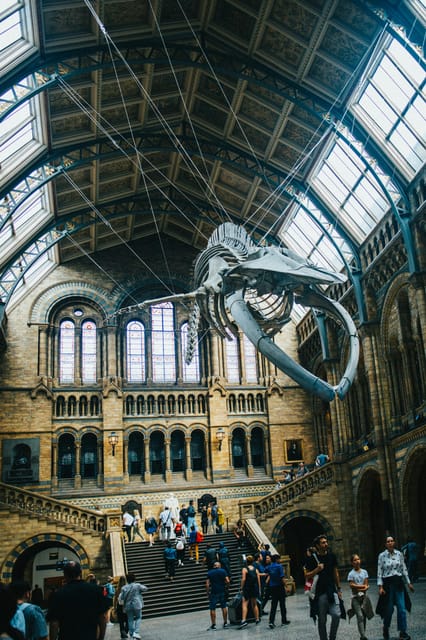
- Sophie the Stegosaurus: the museum’s most complete stegosaurus skeleton moment, built for big gasps.
- Archaeopteryx fossil focus: a direct explanation of the dinosaur-bird connection people talk about.
- Giant Sequoia cross-section: a 1300-year-old slice of time, displayed like a science diagram you can stand inside.
- Pompeii plaster casts: learn what the eruption did to people, with objects that feel uncomfortably real.
- Darwin’s On the Origin of Species (first edition): the “how ideas caught on” piece of the story.
- Earth’s vault plus Moon and Mars rock: geology and astronomy in the same guided sweep.
Where this tour starts, and why it matters
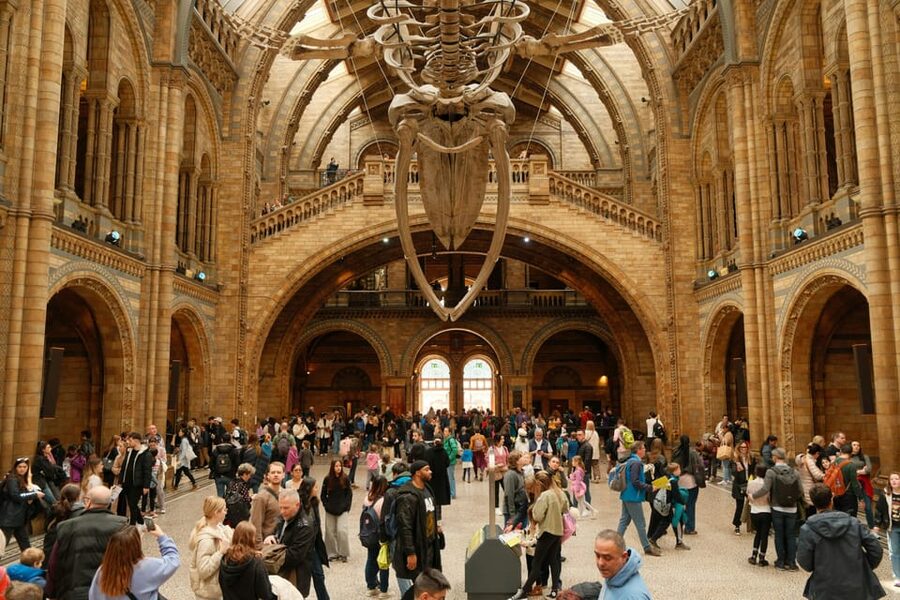
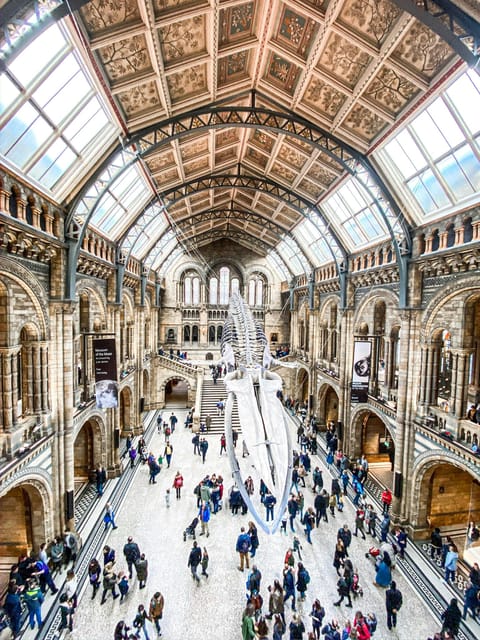
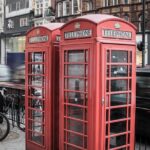
You meet outside the red telephone box opposite the Exhibition Road entrance to the Natural History Museum. That detail sounds small, but it helps you get oriented fast in a busy area. The museum is easy to reach and hard to navigate without a plan, so starting at a clear landmark is a win.
Your total time is 2.5 hours, with a 2-hour guided tour portion. You also get skip-the-line style help for security via an express security check. Translation: you spend less time stuck in queues and more time looking at specimens.
This tour is in English, and it is described as live guided, private or small groups available. That matters because you can typically get answers where you get stuck, instead of hoping a self-guided sign will hit your exact question.
You can also read our reviews of more guided tours in London

The Sophie the Stegosaurus moment: why it works
Sophie the Stegosaurus is the headline for a reason. Even if you do not consider yourself a dinosaur person, this is one of those skeleton displays that instantly makes you stop walking. It is not just size. It is the pose and the completeness, so your brain can finally build a clear picture of what a stegosaurus actually looked like.
On a guided visit, the value is not only that you see Sophie. It is that you see her with context, including how paleontologists interpret fossils and what features matter. A lot of museum visitors can feel “object tourism” creep in, where you just snap a photo and keep moving. This tour tries to keep you watching the story behind the object.
Practical tip: give yourself a second before you step in front of Sophie. Look first at the skeleton as a whole, then let your guide’s explanation pull you toward specific details. Otherwise, your eyes will bounce around and you will miss the point of the display.
Archaeopteryx, Darwin, and the evolution thread
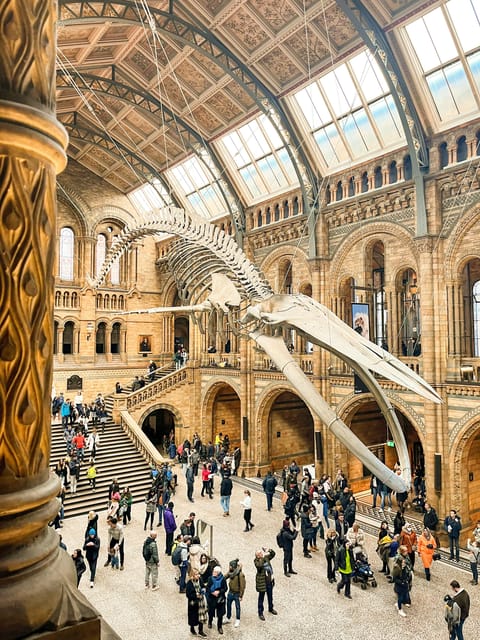
The tour then shifts into evolution and evidence. You will see the Archaeopteryx fossil, described here as a missing link between dinosaurs and birds. You will also admire the first edition of Darwin’s On the Origin of Species, a scientific classic.
What I like about pairing these is that it turns the evolution topic from a vague “big idea” into a set of physical clues. Fossils (like Archaeopteryx) are one type of evidence. Darwin’s book is another type of evidence, where the focus is on argument and how scientific thinking is built. When they are placed in the same guided run, they help you understand why people got interested in the connection in the first place.
If you already know the headline story, you might still appreciate how the guide keeps the facts orderly. If you are newer to evolution, the guided approach helps you avoid getting lost in terminology. Either way, you walk out with a clearer sense of how science collects and tests ideas using real objects.
The Giant Sequoia cross-section: museum-style time travel
One of the most memorable stops is the Giant Sequoia cross-section, described as a 1300-year-old tree. You are not just looking at a tree. You are looking at time made physical, with growth rings that give you a built-in way to think about age.
This kind of display is perfect for a guided tour because it invites you to slow down. Your guide can translate what you are seeing into plain meaning: what the rings represent, why age can be counted, and how specimens like this help scientists understand climate and environment over long periods.
The drawback is simple. This is a photo-friendly stop, so expect some crowds around the best viewing angle. If you want the quietest look, time it after the group forms. Stand slightly to the side first, read the explanation, then step in when the view clears.
Pompeii plaster casts: science with a human edge
Then comes something heavier. You will see casts of the victims of the eruption of Mount Vesuvius in Pompeii. These casts are described as plaster taken from the victims, which is a detail you should hold onto. The shock is not only that these people were affected by a volcano. It is that the museum translates a disaster into a display you can stand in front of and study.
For me, this part of the tour is where the museum’s “object lessons” become more than entertainment. You start connecting the dots between natural events and human impact. Even if you have read about Vesuvius before, the guided framing can help you understand why casts matter scientifically: they preserve information about shape and position at the moment of the event.
A practical note: expect people to take longer here, both emotionally and for photos. If your group is time-sensitive, you might need to keep your eyes open for the best viewing spot quickly.
You can also read our reviews of more historical tours in London





Gem stones, plus rock from the Moon and Mars
The tour includes a stop described as “fine gemstones from the earth’s vault,” along with rock from the Moon and Mars. This is a nice break from fossils, because it broadens the museum story into planetary science.
What you get here is a reminder that the same “how did we learn this?” question applies everywhere. Fossils and volcanic casts are about Earth’s past. Moon and Mars rocks are about Earth’s neighbors. Even the gemstones can connect to geology, formation, and the way materials travel from deep Earth to what we can hold and see.
If you like variety, this section is one of the most satisfying, because it shows the museum is not only dinosaurs and big nature history myths. It is also materials science, astronomy-adjacent rocks, and how specimens become evidence.
What makes a guided highlights tour good value
At $93 per person for 2.5 hours, you are paying for focus. You are not paying for a museum “entry ticket bundle,” since you still benefit most from the guide doing the selection work. The tour includes access to the museum’s main highlights, plus express security screening.
So the question is: does the guide help you see more, better, or faster than you would on your own? In this case, the answer is likely yes, because the Natural History Museum can be overwhelming. A guided highlights run helps you avoid spending your limited time wandering between departments without a plan.
The tour also feels designed for variety rather than specialization. You get paleontology, evolution ideas, botany time (the sequoia), and disaster history (Pompeii), then you finish with geology and planetary rocks. For a first-time museum visit, that mix is strong value.
Group size, guide energy, and what you can control
This is private or small-group by description. In plain terms, that means you are less likely to feel like a number in a giant herd. The experience is live-guided, so you can ask follow-ups if something clicks your curiosity.
Guide impact shows up in the feedback for this experience. Names that have been associated with this tour include Sasha and Wesley, and the strongest comments focus on engagement and knowledge holding attention. There is also one important caution: one entry notes that a guide did not show up. You cannot plan for every hiccup, but it is smart to confirm the meeting point clearly and arrive with a buffer.
Control what you can: wear comfortable shoes, keep your phone ready for photos only where allowed, and go in with a few questions you want answered, like how Archaeopteryx is interpreted or what the sequoia rings can tell you.
Photo rules and comfort notes that affect your experience
Flash photography is not allowed. It is a standard museum rule, but it matters because it changes your photo approach. Your best results will come from ambient light and patience, not from flash.
One more important note: it is not suitable for wheelchair users. If mobility access is a concern for your group, you should plan a different museum visit format that matches your needs.
Also, because this is a highlights tour, you will do more standing and walking than a slow “wander and snack” day. Build in a bit of energy, then consider adding a slower self-guided loop later.
Who this tour suits best
I think this tour fits best if you want a structured museum day with major set pieces. It is a smart pick for:
- First-time Natural History Museum visitors who want the headline fossils and science objects
- Families or mixed-age groups who benefit from clear explanations and clear stop points
- People who enjoy science evidence, not just science trivia
It may not fit as well if:
- You already know the evolution and geology basics and want a deeper, more specialized lecture
- You need accessible routes for wheelchair users
Should you book this London Natural History Museum guided tour?
I would book it if your goal is to make your museum time count in about 2.5 hours, while still seeing the most famous objects in a logical science thread. The $93 price looks more reasonable when you factor in express security screening, main highlights access, and the guided selection that prevents you from missing the big stuff.
Skip booking if you want a totally self-paced day, or if you are looking for advanced content that goes far beyond the basics. Also, if accessibility is an issue, do not assume the tour will work for wheelchair users based on the details you have.
If you do book, come early enough to stay calm at the meeting point, and treat Sophie, Archaeopteryx, and the Pompeii casts as your three “anchor moments.” Those are the stops most likely to make the whole tour click.
FAQ
How long is the Natural History Museum guided tour?
The tour duration is listed as 2 hours, with a total activity time of 2.5 hours.
Where do I meet the guide?
Meet outside the red telephone box opposite the Exhibition Road entrance to the Natural History Museum.
What is included in the price?
You get a 2-hour tour of the Natural History Museum, access to the museum’s main highlights, and access to the museum accompanied by a tour guide.
Does this tour include skip-the-line security?
Yes, it includes skip the line through an express security check.
What is the tour language?
The live tour guide is available in English.
Is flash photography allowed?
No, flash photography is not allowed.
Is this tour suitable for wheelchair users?
No, it is not suitable for wheelchair users.
More Guided Tours in London


More Tours in London


More Tour Reviews in London

Not for you? Here's more nearby things to do in London we have reviewed









More London City Tours worth a look.
 ★ 4.6The London Eye Entry TicketTickets from $3935,875 guest reviews
 ★ 4.7From London: Harry Potter Warner Bros Studio TourTickets from $11726,588 guest reviews
Westminster to Greenwich River Thames CruiseTickets from $2222,836 guest reviews
Magical London: Harry Potter Guided Walking TourTickets from $2022,044 guest reviews
 ★ 4.6Madame Tussauds LondonTickets from $3620,915 guest reviews
 ★ 4.5Stonehenge, Windsor Castle, and Bath from LondonTickets from $11118,662 guest reviews
 ★ 4.7Warner Bros. Studio Tour with TransfersTickets from $14417,586 guest reviews
 ★ 4.7Tower Bridge Entry TicketTickets from $2115,560 guest reviews
Continue by place or experience