
REVIEW · JACK THE RIPPER TOURS
London – Jack the Ripper Small Group Tour
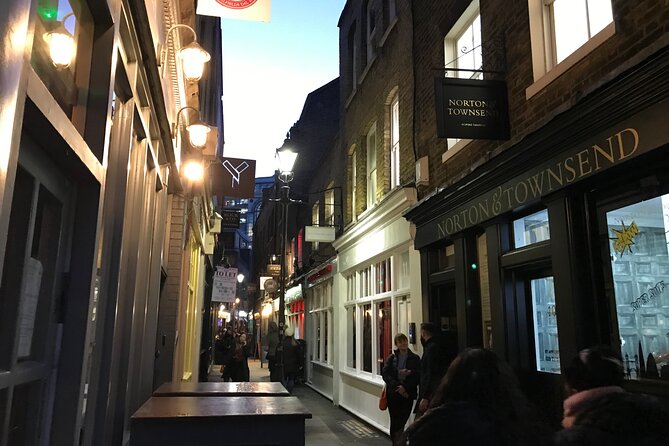
Whitechapel turns into a case file. I like how this tour follows the story street-by-street at night, so you get your bearings fast while the timeline clicks into place. I also like the small-group feel, plus radio headsets and iPad visuals that keep you from missing details in a busy area. One possible drawback: you do need to be up for a brisk, mostly standing walk, so it’s not ideal if you want lots of breaks to sit.
You’ll also come away with a victim-focused look at the murders, not just a loop of spooky legend. The guide, Richard Walker, uses real locations like Buck’s Row and Wilmott’s Lodging House connections to explain what investigators thought they saw, and why some popular assumptions have been questioned. Still, if you’re hoping for gore-heavy storytelling or a purely scary, creepy vibe, this tour may feel more historical and investigative than theatrical.
Key highlights to notice before you go
- Headsets and radio Mike help you hear the guide clearly, even with street noise
- iPad visuals give context for what key places may have looked like then
- Six targeted stops track the case from Whitechapel Road to Spitalfields
- Max 15 travelers means more room for questions and quieter listening
- Victim-first storytelling helps the neighborhood feel real, not cartoonish
A Jack the Ripper tour that moves fast, but makes sense
Jack the Ripper stories can turn into a blur of names and “who-done-it” theories. This London night walk keeps it grounded. You’re shown a chain of locations tied to the murders, and you’re guided through what each spot means in the wider puzzle. It’s structured enough that you don’t just wander through East London. At the same time, it’s paced enough that you’re not buried in dense facts.
I appreciate that the tour is built for sound and focus. You get a radio Mike and earphones, so the guide can speak clearly while you’re walking past pubs, markets, and traffic noise. That tech matters more than you’d think, because Whitechapel is not a quiet museum hallway at 7:00 pm. The included iPad visuals also help you picture what you’re seeing now versus what might have been there in the late 1800s.
For me, the best part is the mindset shift. Instead of treating the victims as plot devices, the tour frames them as real people living real lives in a hard time. That changes the tone from tabloid sensationalism to careful investigation, with some room for competing suspects and theories.
The one tradeoff is physical comfort. This is a walking tour with moderate fitness needs. There are no hints that it’s designed around frequent seating or long stops for rest. You can still enjoy it if you wear comfortable shoes and pace yourself, but it’s not the kind of tour you book for a leisurely stroll.
You can also read our reviews of more tours and experiences in London.
Meeting point and timing: what to plan for at 7:00 pm
You start at 279 Whitechapel Rd, London E1 1BY. The tour begins at 7:00 pm and runs about 2 hours 15 minutes. It ends at 126A Middlesex St, London E1 7HY, right by Liverpool Street Station, which is useful because you’ll have easy connections from there (Central, Circle, Hammersmith and City, Metropolitan, and the Elizabeth line).
Because this tour is in English and uses a mobile ticket, you don’t need to hunt for paper paperwork the day of. You do want to arrive a few minutes early. With a small group (up to 15), late arrivals can throw off the flow, especially when everyone is getting the headsets and syncing up before you set off.
Also, plan your evening around the route being in motion. This is not a sit-down lecture that ends with a souvenir shop. It’s a walking narrative. If you’re the type who likes to stop and read every sign you pass, you might feel the time pressure. If you’re good with “look, listen, move on,” this format fits well.
And yes, this is by night. Even though the tour stays in central London, you’ll still want to dress for evening cool and bring a small layer. A jacket that you can keep on while walking is a simple upgrade to comfort.
Stop-by-stop: Whitechapel Road to Spitalfields
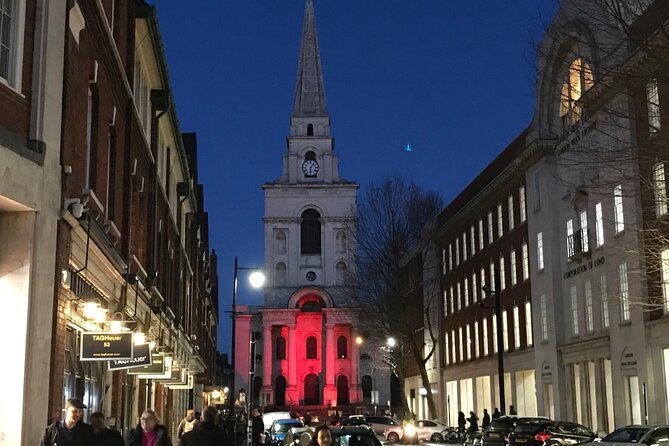
The route covers key East London areas tied to the murders, and each stop adds a piece to the geography. Think of it like a moving map, except you’re walking it.
Stop 1: Whitechapel Road and Emma Elizabeth Smith
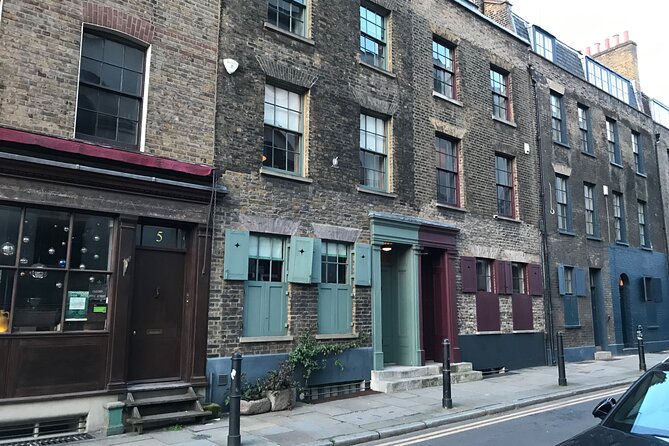
The tour opens opposite the London Hospital area on Whitechapel Road, near where Emma Elizabeth Smith died after an attack on April 3, 1888. This first stop matters because it sets a tone. Instead of starting with famous myths, you begin with one of the earliest named victims and the reality of where that harm happened.
You’ll get a quick “this is why this spot matters” introduction, and then you move on. The benefit of starting here is that the rest of the walk feels chronological and connected.
Stop 2: Buck’s Row, Whitechapel, and Polly Nichols
Next you visit Buck’s Row, Whitechapel, framed as a crime scene investigation of the first murder in the story. You’ll connect when, where, and how the case is discussed, and you’ll learn about Polly Nichols, described here as Jack’s first victim.
This stop also introduces the idea that you’re not just collecting names. You’re learning how investigators shaped assumptions, and how those assumptions ripple into suspects later. If you like true crime that explains reasoning instead of just pointing fingers, this is where the tour starts to feel satisfying.



Stop 3: Brick Lane, boundaries, and Wilmott’s Lodging House links
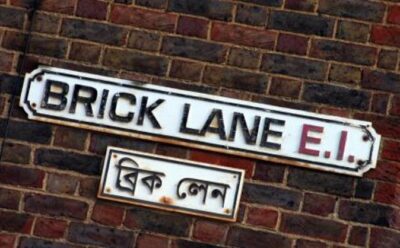
Then you head toward Brick Lane, famous for curry, but also meaningful as a boundary line for where the victims lived. This part of the walk ties the geography together in a way that can be hard to grasp from books.
You’ll hear how streets and lodging connections connect to Polly Nichols (including a link to Wilmott’s Lodging House) and how other locations like Flower and Dean Street relate to discussions about where Jack might have been living. You’ll also connect nearby areas with the finding of Annie Chapman, the second victim.
What makes this stop useful is the way it turns “East London” into a set of walkable decisions: which street is close to what, and why that proximity matters to the theory being presented.
Drawback to note: the walk in this area is active. It’s hard to linger. If you want to sit for a long moment and process, you may not get that luxury here.
Stop 4: Christ Church Spitalfields and the Ten Bells connection
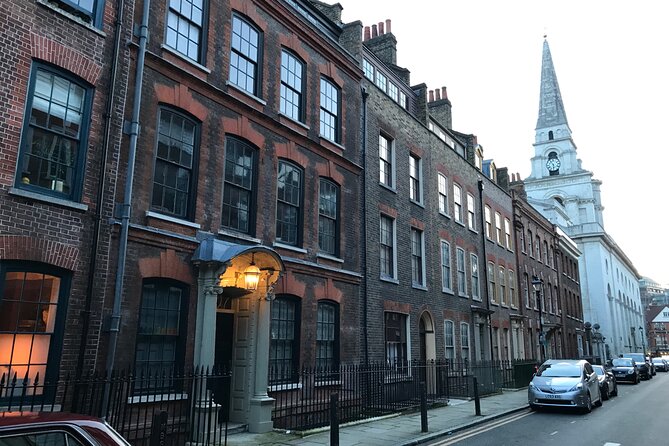
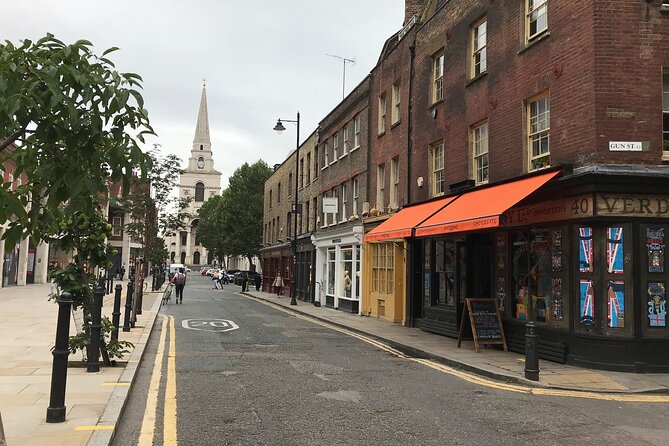
At Christ Church Spitalfields, you’ll see a striking example of work connected to Nicholas Hawksmoor. The church sits opposite the Ten Bells Pub, and the tour explains the pub gets its name from the church across the road. You’ll also be told that victims drank in the area.
This stop is the most “place and atmosphere” moment in the middle of the walk. You’re not just looking at a street corner. You’re seeing how the church and pub fit into everyday life in that neighborhood.
There’s one practical note: admission is not included here. So if you end up wanting to go inside, you’d need to handle that separately. Even if you don’t, the exterior context still gives you something to hold onto.
Stop 5: Old Spitalfields Market and the poverty you can still feel
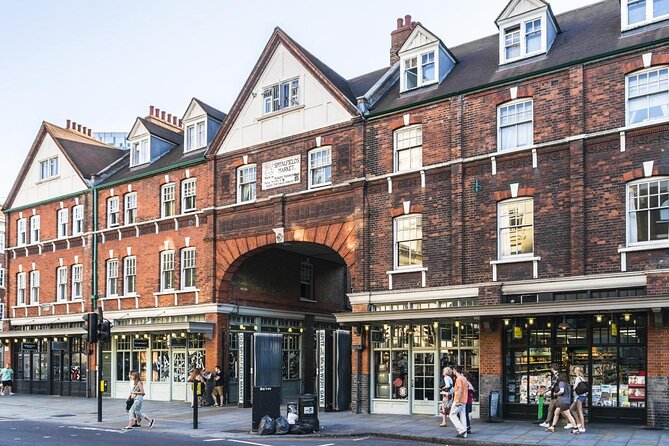
Next is Old Spitalfields Market, a community center for centuries. You’ll also hear a connection to Jack London, who witnessed harsh poverty there.
This stop adds humanity to the story. When you understand what the area was like socially and economically, the case stops feeling like a detached legend and starts feeling like an outcome of the time and the place.
It’s a good counterweight if you’ve read sensational accounts elsewhere. The tone stays serious, and you get a clearer sense of the neighborhood pressures that shaped daily life.
Stop 6: Spitalfields and Mary Kelly, plus the final suspect thread
The final stop is Spitalfields, described as having the worst street in London. Here, the tour revisits living patterns for Annie Chapman and then brings in Mary Kelly, who lived and was murdered here.
This stop also emphasizes the theory side, with a third suspect introduced in the closing narrative. By now, you’re not just hearing names. You’re seeing how suspects are argued using location patterns and assumptions about opportunity.
The ending placement near Liverpool Street also works well. You’re finished right where you can move on to dinner or the rest of your evening without backtracking.
Why the guide and the tech make a difference in the dark
A big reason this tour scores so high is that the delivery is built for real streets, not studio recordings. Richard Walker uses the radio Mike and earphones so your attention stays with him. There’s no constant “what did he say?” moment.
The iPad visuals help too. In cases like this, it’s not enough to hear a street name. You need a mental picture. The visuals also help you follow theories that rely on geography, like where people lived relative to where key events happened.
And Richard’s style matters. He’s described as fun, engaging, and energetic, even when the subject is heavy. He does not just recite facts. He helps you think through scenarios and asks you to notice gaps in what people assumed at the time.
One more practical detail: he hands out the amplified ear pieces, which makes the whole group experience feel coordinated. When everyone can hear without straining, the group can ask questions without repeating themselves.
If you prefer a tour where you do a lot of talking, this is not a full discussion circle. Still, the structure of small-group listening plus Q&A time usually gives you a fair shot to ask what you want.
What you actually learn: victims, assumptions, and suspect theories
The core of the experience is not just a “find the villain” game. The tour leans into how the victims’ lives connect to the neighborhood and how the case built its narrative.
You’ll learn details about the victims highlighted in the route: Emma Elizabeth Smith, Polly Nichols, Annie Chapman, and Mary Kelly. Instead of treating them as names you barely recognize, the tour frames them as people tied to specific streets and lodging areas.
Then comes the “why do theories differ” part. The guide discusses assumptions that were made early and how those assumptions still influence modern Ripper discussions. Some tours treat the story as a straight line. This one repeatedly nudges you to question how evidence was interpreted, and how geography affects thinking about opportunity.
That balance can be a dealmaker. If you like your true crime with context and reasoning, you’ll likely enjoy how the guide presents possibilities rather than pretending there’s one tidy answer.
Possible mismatch: if what you want is lots of gore, lots of shock, or a purely scary ghost-tour mood, this may not deliver that feeling. The presentation is more history and investigation than shock value. It’s still intense and sometimes grim, but the focus stays on people and place.
Walking effort and comfort: shoes matter more than you think
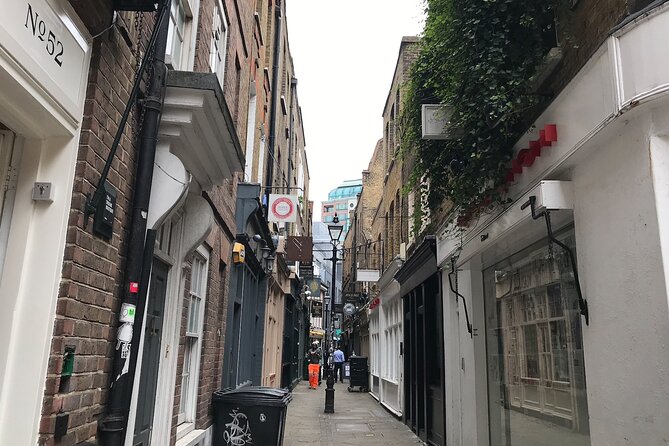
This is a brisk walking tour with moderate physical fitness needs. One review notes about 1.5 miles (2.5 km) covered, which is not extreme for an adult who walks regularly, but it does add up when you’re stopping and starting for explanations.
Wear comfortable shoes with grip. Since it’s a night tour in a city area, you’re also dealing with uneven pavement and crowds. You do not want your feet to be your main limiting factor.
Also, expect that you’ll spend time standing at street corners. There’s at least one review that suggests it would be easier with an option to sit. Since this tour is built around walking between points, you should plan on standing even if you’d personally prefer frequent rests.
If you can tolerate moderate street walking for about two hours, you’re in the right zone. If walking difficulties slow you down, this may be a poor fit, since it’s not marketed as a slow, seating-heavy outing.
Price and value: $41.67 for a focused small-group night
At $41.67 per person, the price is positioned for a short, specialized experience rather than a big-bus history stop. The value comes from three places:
First, you’re getting a guided route focused on specific murder locations, not just a general overview of Whitechapel.
Second, the audio setup and iPad visuals are included. Those extras matter in practice, especially in a noisy neighborhood at night.
Third, the small-group size is capped at 15 travelers. That means you’re more likely to hear questions answered and less likely to feel lost in a crowd of 30-plus people.
Two budget notes. You’ll likely want a water bottle or something small to drink before you go, since coffee or tea is not included. And bring a little extra spending allowance if you decide you want to go inside at Christ Church Spitalfields, since admission there is not included.
As for timing, it’s offered at 7:00 pm and runs a bit over two hours. That makes it a good add-on to dinner planning, as long as you’re not trying to squeeze it in right at the start of a late theater show.
Who should book this tour, and who might skip it
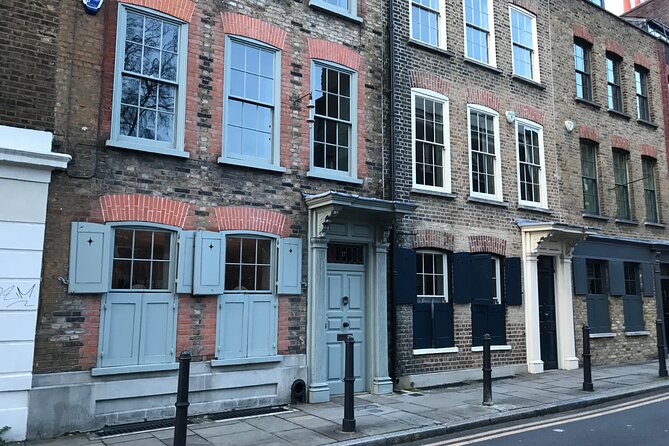
This tour is a strong fit if you want:
- A small-group night walk with clear hearing through headsets
- A victim-focused approach that explains why the area matters
- History presented as investigation, with theories based on geography
- An entertaining guide who stays lively even with heavy material
Consider skipping or swapping to a different style if you:
- Want a purely spooky, creepy ghost vibe with minimal history
- Expect lots of gory detail
- Need frequent seating breaks, since the format is mostly standing while you walk point to point
If you’re the type who likes true crime but also likes to learn how assumptions get made, you’ll probably leave feeling like you gained a sharper, more organized view of the case.
Should you book London’s Jack the Ripper small-group tour?
If you like your Jack the Ripper with structure, tech that actually helps you hear, and a guide who treats the victims and the neighborhood like real people, I’d book it. The combination of radio headsets, iPad visuals, and a capped group size makes the night walk feel precise instead of chaotic.
My main caution is comfort and expectations. Wear good shoes, plan to stand, and go in knowing the focus is history, victims, and suspect reasoning, not a horror show.
If that sounds like your kind of evening, this is a smart, well-priced way to see Whitechapel and Spitalfields with context you cannot easily pick up on your own.
More Tours in London

More Tour Reviews in London
Not for you? Here's more nearby things to do in London we have reviewed





More Jack the Ripper Tours worth a look.
 ★ 4.7The Original Jack the Ripper Walking TourTickets from $257,833 guest reviews
 ★ 4.5London Jack the Ripper Guided Tour with Ripper-VisionTickets from $274,840 guest reviews
 ★ 4.7Jack the Ripper Small Group TourTickets from $263,159 guest reviews
 ★ 5.0London Jack The Ripper Guided Walking TourTickets from $03,131 guest reviews
 ★ 4.6German Language : Original Jack the Ripper TourTickets from $241,805 guest reviews
 ★ 4.5Jack the Ripper Walking Tour – Ripper Vision ToursTickets from $261,752 guest reviews
 ★ 5.0Ultimate Jack the Ripper : Guided Tour of LondonTickets from $271,495 guest reviews
 ★ 4.9Jack the Ripper Evening Walking TourTickets from $331,449 guest reviews
Continue by place or experience