
REVIEW · LONDON CITY TOURS
London in a Day Walking Tour from the Tower to Kensington
One day, a whole London story. This private walking tour strings together an East to West route from Tower Hill to South Kensington and ends in Bayswater, using what you see outside to explain London’s arc from Roman themes to modern landmarks. I especially like the small-group attention (max 4) and the included pub lunch plus hot drinks, which keeps a long day from feeling like work.
One caution: this is an intensive 8-hour walking day, often around 30,000 steps, and most stops are brief and outside-focused. Some viewpoints and sites, like the Garden at 120 viewing area, are not always open, so you should expect quick photo windows and a plan that adapts to what is available.
Key highlights worth your time
- Private, max 4 group size so your guide can slow down, speed up, and tailor the day
- London-to-London in one day with a walking route that moves from Tower Hill across to Kensington
- Lunch and hot drinks included at a traditional British pub, plus a couple refreshment stops
- Architecture and stories on purpose, with strong emphasis on Sir Christopher Wren and Roman London
- A Roman amphitheatre stop beneath the Guildhall Art Gallery grounds, not just street-level sightseeing
Tower Hill to Bayswater: one walk across eras
This tour works because it is built like a single line through the city. You start at Tower Hill, then you steadily move west through the places that explain why London looks the way it does today. Instead of hopping between distant neighborhoods with lots of transit time, you get an all-day walk that ties together Romans, medieval power, the Great Fire legacy, and the modern city.
The route is designed for fit, healthy adults with moderate physical fitness. The pacing is not leisurely. You should plan on a lot of street time, frequent turns, and short stops that still add up. The upside is that your brain keeps connecting dots. You go from the Tower area into the City finance core, then across toward Bankside and Westminster, and finally into the museum-and-palace atmosphere of South Kensington.
A good example of the guide style: in private tours, the guide can customize your focus. If you care more about Romans, Sir Christopher Wren, architecture, art, or finance, you can steer the emphasis. That is the difference between a checklist tour and a tour that feels made for you.
You can also read our reviews of more walking tours in London



Price for a private group: what you get for $1,357.67
The listed price is $1,357.67 per group (up to 4). On a per-person basis, it depends on whether you travel solo, as a couple, or as a small group. If you split it four ways, the cost per person drops a lot compared to individual entry-ticket style tours.
Where it feels like value is the structure. You are not paying for bus time, you are paying for a guide who can:
- keep the stops efficient across multiple major districts
- explain what you are seeing from the street
- manage a 1-day schedule without you having to plan every turn
- include lunch and hot drinks so the middle of the day does not turn into a scramble
Also, you avoid a big part of London’s usual friction. You get a mobile ticket, a timed day plan, and guidance on where to spend time. If you like walking and want to maximize daylight hours, private pricing can actually make sense.
The tradeoff is that you are paying for a small-group day, not for museum-ticket access to every indoor site. If your dream London day is 6 hours inside galleries, you might feel capped here. But if your dream is to see and understand a lot in one continuous route, this is where the money earns its keep.
Pace, comfort, and start-time flexibility
Plan for an all-day grind, but a smart one. The tour is around 8 hours in daylight, and the start time can be negotiated between 8:00 AM and noon depending on the season. That matters because London daylight changes a lot across the year. If you book in winter, you can ask for an earlier start to avoid walking in the dark.
You should wear shoes you trust. The day is described as covering over 30,000 steps, and it is not just straight walking. There are turns, cobblestones, and short uphill or downhill stretches depending on the route.
The schedule is also built with practical breaks in mind. There are numerous bathroom and rest stops, plus two coffee or refreshment stops during the day. Lunch is served at a traditional British pub, with classic comfort options like fish and chips, pies, and hearty sandwiches. If you have dietary restrictions, the tour says they will try to accommodate.
One more comfort detail to remember: most of the sightseeing is outside. Even when you go into a stop like a gallery or church feature, you should still expect a good chunk of your day to be in the open air. Pack a layer, and bring water if you can.
Stop 1 at Tower Hill Underground: getting oriented fast
You begin at the Sundial at the Tower Hill Underground Station area, and the first stop is all about framing the day. You get an orientation that looks from the Roman-era themes up toward modern London. It is also where the guide can learn what you want most from the route.
This is the time to ask for personalization. The tour mentions customization options around art, architecture, history, Romans, Sir Christopher Wren, and finance. If any of those themes matters to you, you will get the most from the day if you flag it early.
This is also where the day’s rhythm starts: there are quick segments, plenty of movement, and breaks planned later. Admission is free for this first point, and it is designed for a smooth launch.
Tower of London and the quick-hit learning style
The Tower of London stop is short, about 15 minutes, and importantly, you do not go inside. Instead, the guide tells stories tied to what you can see and what the Tower represents in the City of London over the last 1,000 years.
This is a good fit if you like context more than ticket lines. The tour focuses on the Norman invasions, medieval battles, and Tudor intrigue themes. If you later want to add a separate Tower visit with deeper museum time, you will have a clearer sense of why the Tower matters and which parts to prioritize.
The possible drawback is also straightforward: if you want a long interior visit, 15 minutes outside will feel brief. This day is about mapping the whole city’s story across neighborhoods, not about turning one site into a full day.





City views at Garden at 120 and the finance walk at Bank
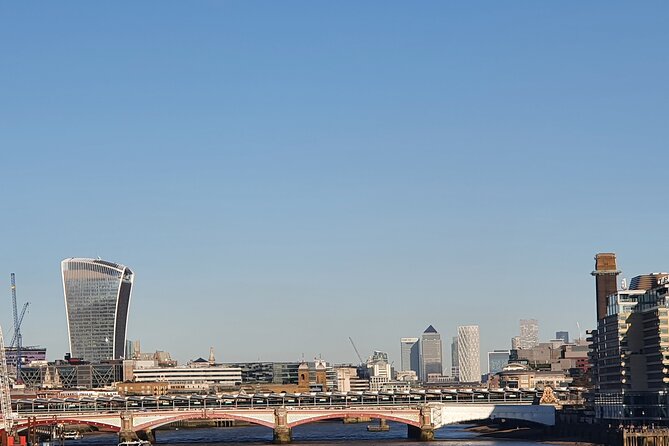
After the Tower area, you move into the City’s modern skyline scene. At 120 Fenchurch Street, the tour focuses on the view from the Garden at 120 for about 30 minutes. You get a chance to see the city in a way street level does not show, and it helps you understand how London stacks old and new.
Two practical things to know:
- This site is noted as not always open, so you should be ready for the plan to adjust.
- Even when it is open, this is still a viewpoint stop, not a long indoor visit.
From there, the tour turns into the finance core at Bank Junction. You stand near major institutions tied to London commerce: the Royal Exchange, the Bank of England, Mansion House, and the Monument. The guide connects the medieval era finance story to modern banking giants, using the streets around you as the anchor.
This is the part of the day where you feel the tour’s theme is real, not random. You are not just walking to famous photos, you are learning why these places sit where they do and how power used to work.
Bankside, Borough Market, and the Thames skyline from Millennium Bridge
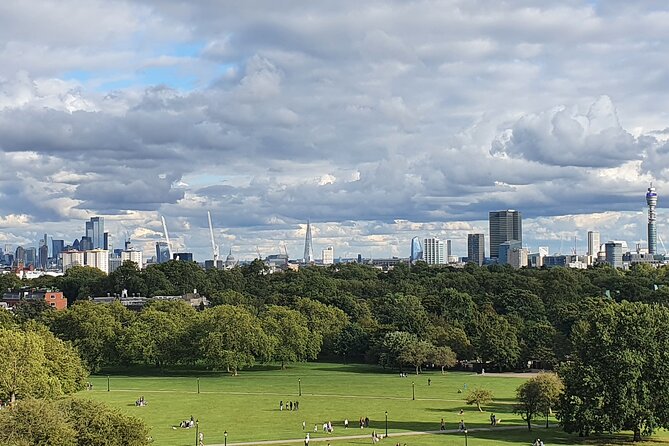
The Bankside section is described as optional, and it is where you start getting a more “London day out” feel rather than pure landmark-and-architecture.
In about an hour, you may include:
- a brief stop at Borough Market to check out the food scene
- a walk along Clink Street
- views near the Globe Theatre
- time around Tate Modern for contemporary art atmosphere
- and a crossing toward Millennium Bridge for Thames and skyline views
This stop can be a nice contrast to the City finance area. It also gives you a sense of how London changes by just crossing a few bridges and streets.
The drawback to keep in mind: a one-hour window means you will not get museum-level time. It is more about the neighborhood vibe and the right sightlines than deep indoor exploration. If you want to go inside specific museums, you might need a separate add-on day or a separate time window.
Guildhall Art Gallery and the Roman amphitheatre beneath
If you want one stop that feels like a true surprise, it is Guildhall Art Gallery. You spend about 30 minutes here, with the key highlight being the Roman amphitheatre hidden below.
This is the kind of stop that makes walking tours worth it. At street level, you see one layer of London. Underfoot, you get another. That Roman element is not just a name in a guidebook. It is physically present, which changes how the rest of the day lands in your head.
You should also know that this is not a quick photo-only detour. The tour frames it as a privilege to see that blend of art and archaeology, so you will likely be given time to actually look and understand what you are viewing.
St Paul’s Cathedral from the outside, plus Wren at St Bride’s
Next comes St Paul’s Cathedral, outside only for about 15 minutes. The guide focuses on the Great Fire of London and Sir Christopher Wren’s architecture. Even if you have seen St Paul’s before, this framing helps you notice details you might otherwise miss, like the way the cathedral reflects the city’s rebuilding story.
Then you move to St Bride’s Church for about 20 minutes. The focus is on the crypt and interior features. If St Bride’s is closed due to opening-hour changes, the tour says you will visit another Wren church nearby instead. That flexibility is helpful because churches can be unpredictable, especially on short-notice scheduling.
This pairing is a smart use of time. You get one of London’s best-known Wren landmarks at St Paul’s, then you get a quieter, more crypt-centered church stop that can feel like a deeper cut even though you are still keeping the pace moving.
Fleet Street’s courtyards, media history, and Dr Samuel Johnson’s house
The walk down Fleet Street lasts about 45 minutes. It is a storytelling stretch, with turns into courtyards and alleys that show how media and old London street life used to operate.
One specific detail included in the tour plan is the exterior of Dr Samuel Johnson’s house, an example of Georgian architecture you can spot along the route. If you care about writers and words, this is a good stretch because it helps connect London street patterns to the people who lived and worked there.
The drawback is time. This is not a “sit and read” kind of stop. If you need a lot of quiet time, you might feel this section is a bit more intense. But if you like walking while learning, Fleet Street is one of the better uses of a long day.
Covent Garden lunch at a traditional pub, then the performance buzz
You then reach Covent Garden for about an hour, with lunch included at a traditional British pub. The menu is described as classic fare, including fish and chips, pies, and hearty sandwiches, and the tour says it aims to accommodate dietary restrictions.
Lunch timing matters here. Because this tour is long and walking heavy, you want the meal to be planned, not improvised. Having lunch included prevents the usual London problem where you spend 30 minutes hunting for food, then eat quickly, then lose track of the route.
Covent Garden is also known for street performance energy. The tour lets you enjoy the atmosphere, including dining options around the area. Even with lunch served, you still get a window to absorb the neighborhood and reset your legs.
Westminster in 30 minutes: Parliament, Abbey, and Buckingham Palace
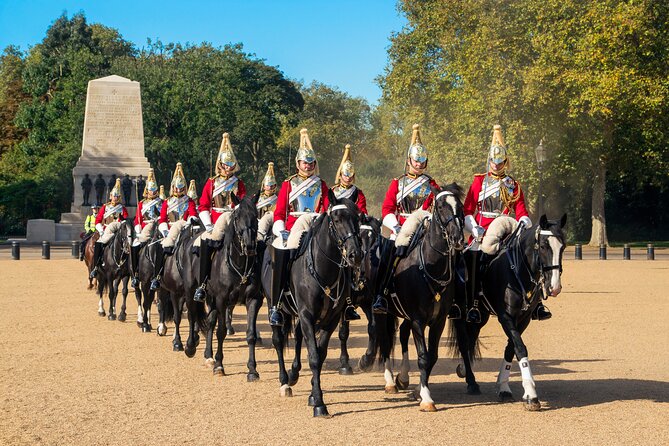
Westminster is a fast hit: about 30 minutes, covering Soho, Trafalgar Square, Whitehall, and Horse Guards Parade, plus views around the Houses of Parliament, Westminster Abbey, and Buckingham Palace.
This is not a slow, entry-and-explore experience. You are seeing London at its most ceremonial, from the outside and from major approach streets. The value is getting the lay of the land in a short time, so your later visits to these sites feel more organized.
If you already know you want to go inside Westminster Abbey or spend hours at the Houses of Parliament, this stop can work as a “get oriented” moment. It gives you the connections between streets and monuments without forcing you into ticket planning today.
Harrods, the Museums District, Albert Memorial, and Kensington Palace
South Kensington is where the day shifts into grand buildings and museum districts. You spend about 2 hours here, and the plan includes:
- a visit to Harrods
- walking the Museums District, including the Natural History Museum and the Science Museum
- looking at the Albert Memorial
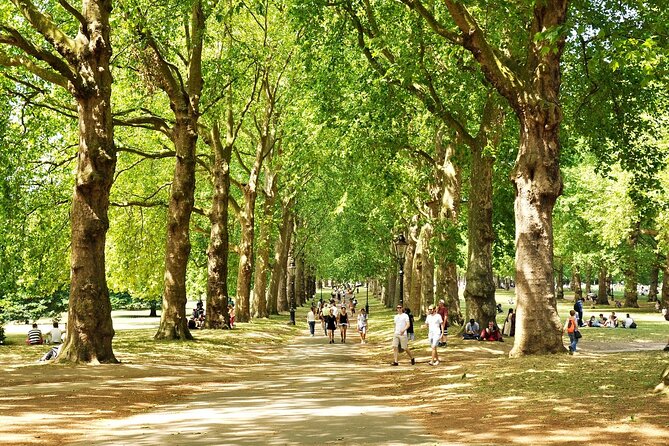
- visiting Kensington Palace and Diana’s Gardens
The big thing to understand is what 2 hours means. You will likely get a strong sense of the district and the main landmarks, but you should not expect full interior museum time for everything named. If you want deep museum galleries, treat this as a first pass, not your only stop.
Still, the combination is excellent for perspective. Harrods gives you a shopping-and-heritage contrast, the Museums District explains why South Kensington became a magnet for public learning, and Kensington Palace plus Diana’s Gardens add a royal and park-side mood.
Bayswater wrap-up: finishing the walk in a calmer zone
The tour ends in the Bayswater area, near Queensway (Bayswater Road). The final stop is about 10 minutes, which signals the day is meant to be closed out efficiently rather than turning it into a second sightseeing cycle.
Why this ending point works: Bayswater and Queensway can feel a little more practical and less “photo-monument dominated” than Westminster. It is a decent place to reset, get a snack if you want more food, and head back by public transport.
If you want a day where London’s major districts line up in your mind from east to west, this end position helps.
Should you book this private Tower-to-Kensington walking tour?
Book it if you want a private, max-4 day where the guide handles the route and the storytelling, and you are happy with a fast rhythm of outside stops. This is a great match if you like history that you can point at, like the Tower’s medieval layers, Wren’s influence from St Paul’s to St Bride’s, and Roman London shown in real form at Guildhall.
I would skip it or pair it with other plans if you need lots of inside time, because several highlights are explicitly outside-focused or short windows. Also, you should be ready for the walking load. If 30,000 steps sounds like a stretch, ask yourself if you can enjoy moving even when you are tired.
One last deciding tip: if you can line up your day around what you care about most, this tour is flexible. With the option to customize themes and the guide’s ability to keep the day understandable for groups with different English levels, it can feel both structured and personal.
If that sounds like the London day you want, this is an excellent pick.
More Walking Tours in London


More Tours in London



More Tour Reviews in London
Not for you? Here's more nearby things to do in London we have reviewed









More London City Tours worth a look.
 ★ 4.6The London Eye Entry TicketTickets from $3935,875 guest reviews
 ★ 4.7From London: Harry Potter Warner Bros Studio TourTickets from $11726,588 guest reviews
Westminster to Greenwich River Thames CruiseTickets from $2222,836 guest reviews
Magical London: Harry Potter Guided Walking TourTickets from $2022,044 guest reviews
 ★ 4.6Madame Tussauds LondonTickets from $3620,915 guest reviews
 ★ 4.5Stonehenge, Windsor Castle, and Bath from LondonTickets from $11118,662 guest reviews
 ★ 4.7Warner Bros. Studio Tour with TransfersTickets from $14417,586 guest reviews
 ★ 4.7Tower Bridge Entry TicketTickets from $2115,560 guest reviews