
REVIEW · LONDON CITY TOURS
London: Hidden Tube Tour of Holborn’s Secret Platforms
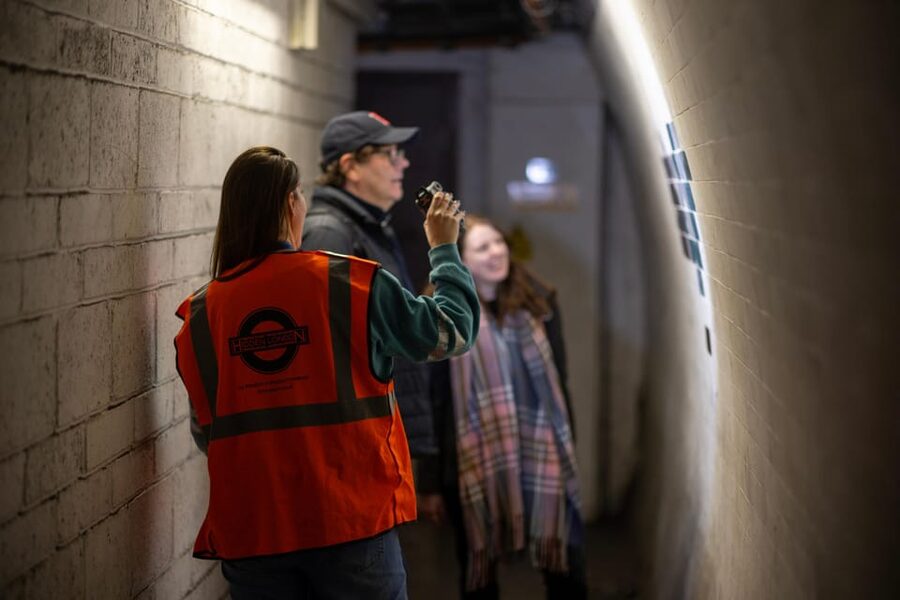
You can walk into parts of London Underground that most people never see. This Hidden London tour guides you through Holborn station’s secret, disused spaces, including the long-closed Aldwych branch.
I especially like seeing the Aldwych branch platforms that have been closed for decades, and hearing real, first-hand stories about how these rooms were used, from wartime shelter to other odd jobs. The main drawback is simple: there’s a lot of walking on uneven ground, in low light, with stairs and no elevators.
You’ll meet at Gate Street and Kingsway, step behind concealed doors, and get an unexpected view of the Piccadilly line while you explore areas that haven’t been open to the public in nearly 30 years. The guides are strong at turning places you’d otherwise walk past into a clear timeline of how London Underground evolved.
Key points before you go
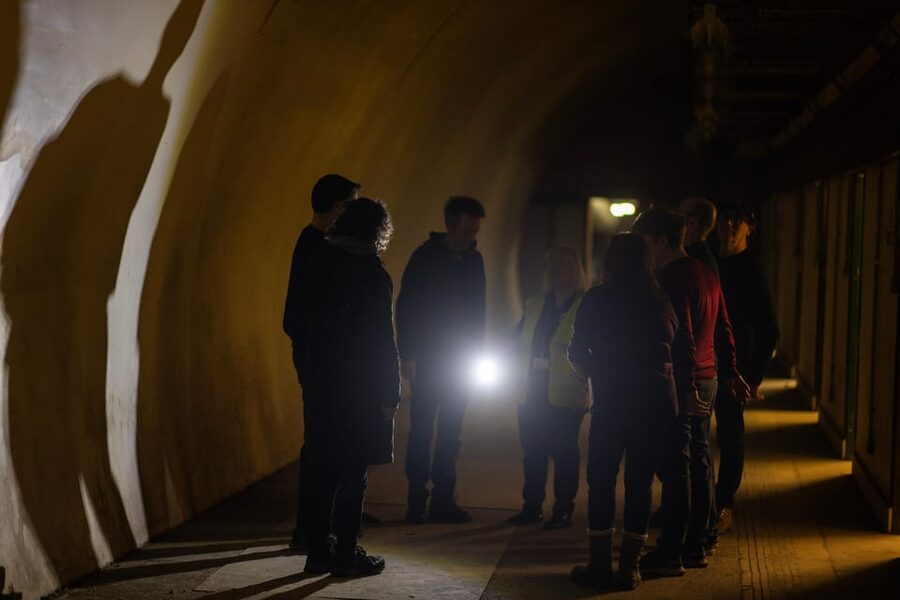
- Secret Holborn access: Behind concealed doors, into areas not seen by the public in nearly 30 years
- Aldwych branch platforms: Two closed platforms, with vintage poster details and an original signalling cabin
- Piccadilly line views: You get an unexpected look while staying inside the hidden parts
- Proper storytelling: First-hand style accounts about working and using the station over time
- Practical value for the price: 85 minutes of exclusive access tied to real infrastructure, not generic sightseeing
Holborn Station starts on Gate Street and Kingsway
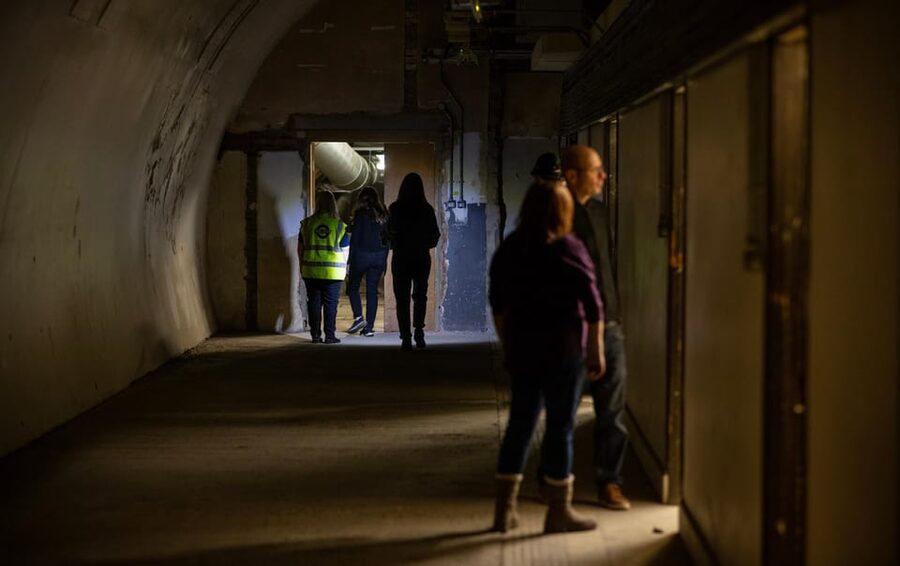
This tour is built around one spot: Holborn station, in the middle of London’s daily commute zone. You start at the corner of Gate Street and Kingsway, WC2B 6AA, with the what3words location listed as ///towers.rift.forest. The tour ends back at the same meeting point, so you can plan your next stop without a tricky transfer.
Because the experience runs for 85 minutes, it works well as a “London in-between” activity. Slot it into a day where you want something more unusual than museums with display cases. It is also a walking tour, so you can’t treat it like a quick peek. I’d plan to wear shoes you trust and bring a bottle of water, since water is specifically recommended and there’s no food allowed on the tour.
One thing to keep in mind: the tour involves low lighting and stairs, with uneven ground in some areas. If you know you get uncomfortable in dim, stair-heavy spaces, this is the point to think twice.
You can also read our reviews of more tours and experiences in London.

The moment you step behind concealed doors
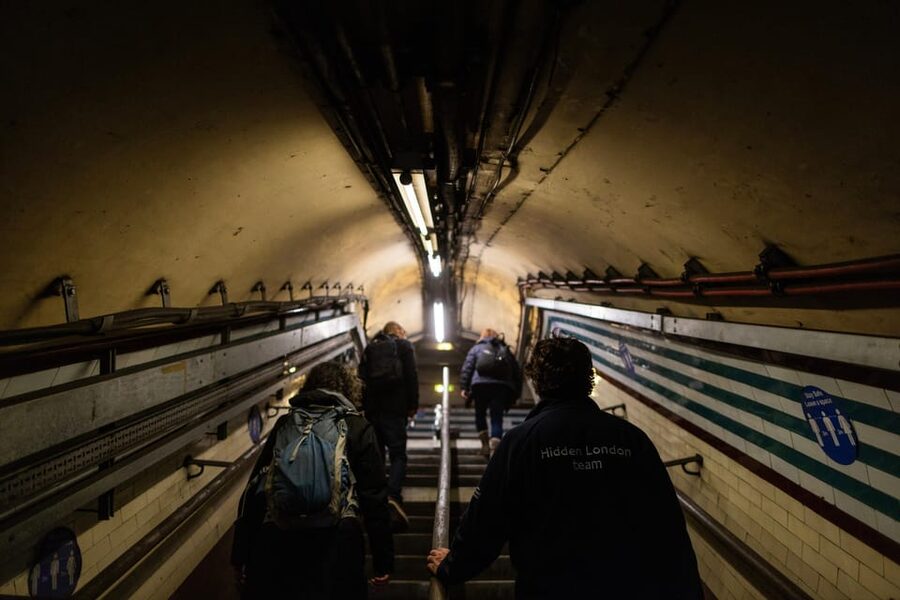
Once the group is together, you follow your guide into Holborn station’s hidden side. The big draw here is access. You’re not just looking at a platform from the public corridor. You’re going into expansive disused areas behind concealed doors, including spaces that have not been open to the public for close to 30 years.
This is where I think the tour earns its ticket price. A normal station visit gives you motion and signage. Here, you slow down and see structure, surfaces, and details that explain how the Underground was built and rebuilt. You’ll also hear how those spaces were used in surprising ways after their original purpose.
Another highlight is the added layer of perspective. Along the way, you get an unexpected view of the Piccadilly line. It’s a good reminder that this is still a living transport system, not just a set of abandoned rooms.
Drawback to note: if you’re expecting wide open areas and bright lighting, you may feel like the tour is working against that. Low lighting is part of the setup, so come with a mindset for exploring older infrastructure rather than taking easy, bright photos.
Spotting Leslie Green details and old signalling features
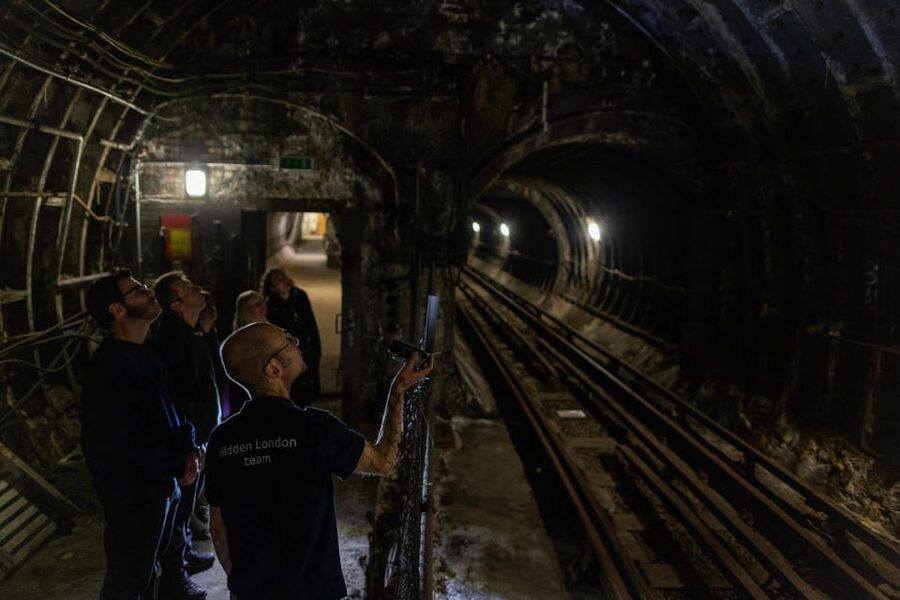
As you move through the disused spaces, you’re shown what to look for, and that’s key. The tour points out the original Leslie Green Edwardian design elements, which is one of those details that’s invisible to most people walking past the entrance.
You’ll also see vintage poster material and an early 20th century signalling cabin. That cabin matters because it gives you a real sense of what “signalling” meant before the modern era of systems and screens. It turns what can be a vague term into a physical room with purpose.
What I like about this kind of access is that it’s not just spooky. It’s technical in a human way. You start understanding why layouts changed and how modernization affects what you can reuse later.
Just be aware: this is not a smooth, elevator-friendly route. The tour includes stairs and uneven ground, and there are no elevators. Comfortable shoes are not optional. If you have any issues with mobility or balance, skip this one and choose an alternative Underground experience that stays fully accessible.
Aldwych branch: the two closed platforms after decades away
The tour’s signature reveal is the former Aldwych branch. You get to explore two closed platforms from the Aldwych branch line, and that’s exactly the kind of rarity you can’t replicate on your own.
These platforms have the “you’re really here” factor. The tour includes vintage poster details, letting you see what the space looked like when it was part of the working station network. You also get the original signalling elements connected to this branch, so you’re not just viewing empty space, you’re seeing equipment and design that made those trains run.
The Aldwych branch is also where the time jumps feel most dramatic. You’re standing on platforms that have been out of public use for decades, then listening to how they were adapted for later needs. The contrast can feel almost cinematic, but it’s grounded in real infrastructure.
One practical consideration: because these are disused areas, they can feel less “visitor friendly.” Expect low light and tighter movement than you might get in a typical museum corridor.
From the Blitz to scientific labs and a model rail club
The best tours don’t just show you places, they give you reasons the places mattered. This one does. As you walk through the disused spaces, you relive twists and turns of the 20th century with stories about how the station and Aldwych branch were reused.
You’ll hear about the spaces serving different roles over time, including:
- being used as scientific laboratories
- providing shelter for London Transport staff during wartime
- housing a model rail club
The wartime angle includes a human element too. The tour shares how staff members may have felt working there during the height of the Blitz. That’s a strong thread, because it connects the physical layout to what it meant for people on the ground.
I also like that the tour doesn’t stop at one era. It ties the past to later changes and then to today’s work. That keeps it from turning into a ghost story. Instead, it becomes an explanation of how London Underground continually upgrades itself, even when stations look fixed from the outside.




1930s modernization and how British Museum station got affected
A major theme you’ll learn is the big modernization program of the 1930s. The tour explains how that program led to changes in the Underground network, including the closure of nearby British Museum station.
This piece is more than trivia. It helps you connect what you see above ground to what was happening underground. Stations don’t exist in isolation. When line strategy shifts, platforms get repurposed, access changes, and some locations stop making sense.
If you’re the type of traveler who likes to understand why London feels layered, this is one of the tour’s most satisfying segments. You walk in with a mental map of “Holborn is an interchange,” and you leave with a clearer understanding of how the system reshaped itself across decades.
And you’ll get a forward-looking note too. The station is still playing a key role today as part of a massive upgrading project of the signalling system. So the tour quietly reinforces a modern lesson: even the most historic transport spaces are still being engineered.
Price and value for an 85-minute guided walk
At $60.61 per person for about 85 minutes, this isn’t a budget activity. But I think it can represent good value for the right traveler because you’re paying for two things that are hard to access anywhere else.
First, it’s exclusive physical access. The tour takes you into disused areas that haven’t been open to the public in nearly 30 years. That’s not something you can stumble into casually at Holborn.
Second, it’s guided context. This isn’t a self-guided “look and guess” walk. You get a live English guide and real stories tied to the station’s evolution, including scientific labs, wartime shelter, and how the 1930s modernization affected other nearby stations.
If your goal is to get a deeper sense of London’s transport world, this tour holds up. If your goal is only photos and casual walking, you might feel the price more sharply, especially because low lighting, stairs, and uneven areas shape the experience.
Comfort, safety, and who should avoid this tour
Let’s be blunt because it matters. This tour is not built for everyone.
It involves:
- a lot of walking
- uneven ground
- low lighting
- stairs
- no elevators
It’s also not suitable for:
- children under 10
- people with mobility impairments
- people with claustrophobia
There’s also a child-to-adult limit: up to four children aged 10 to 15 per adult. So families should plan their group ratio in advance.
What to bring is straightforward: passport or ID card, comfortable shoes, and water. What not to bring is equally important: no food and drinks, no luggage or large bags, and no open-toed shoes.
A practical tip: if you’re the kind of person who normally brings a big day bag, use a smaller pack. Keeping your load light makes it easier to move through older spaces and reduces stress when the group is pacing.
Should you book the Holborn hidden platforms tour?
Book it if you want an Underground story you can physically stand inside. This is ideal for transport nerds, architecture fans, and anyone who likes London in layers, not just landmarks.
Pass or consider another option if you need step-free access, hate stairs, get nervous in dim spaces, or you’re prone to claustrophobia. This tour’s value is tied to disused infrastructure, and that comes with the tradeoffs listed above.
If you’re comfortable walking, follow instructions, and like guided storytelling with real infrastructure details, I’d say this is one of the more memorable “London-only” experiences you can fit into a day. You’ll leave with a new way of looking at Holborn, and you’ll probably notice things you never noticed during your first commute through that station.
FAQ
Where is the meeting point for this Holborn hidden tube tour?
The meeting point is on the corner of Gate Street and Kingsway, WC2B 6AA. The what3words location is ///towers.rift.forest.
How long is the tour?
The tour duration is 85 minutes.
What time does the tour start?
Starting times vary. You’ll need to check availability to see the specific start times.
Is pickup and drop-off included?
No. Pickup and drop-off are not included.
What language is the tour guide?
The tour is guided in English.
Do I need to bring anything?
You should bring a passport or ID card, comfortable shoes, and water.
Is food allowed during the tour?
No. Food and drinks are not allowed.
Are luggage or large bags allowed?
No. Luggage or large bags are not allowed.
Is the tour suitable for children?
It is not suitable for children under 10. For children aged 10 to 15, there is a maximum of four children allowed per adult.
Is this tour accessible for people with mobility impairments?
No. It is not suitable for people with mobility impairments, and there are no elevators. The tour includes stairs, uneven ground, and low lighting.
More Tours in London



More Tour Reviews in London
Not for you? Here's more nearby things to do in London we have reviewed









More London City Tours worth a look.
 ★ 4.6The London Eye Entry TicketTickets from $3935,875 guest reviews
 ★ 4.7From London: Harry Potter Warner Bros Studio TourTickets from $11726,588 guest reviews
Westminster to Greenwich River Thames CruiseTickets from $2222,836 guest reviews
Magical London: Harry Potter Guided Walking TourTickets from $2022,044 guest reviews
 ★ 4.6Madame Tussauds LondonTickets from $3620,915 guest reviews
 ★ 4.5Stonehenge, Windsor Castle, and Bath from LondonTickets from $11118,662 guest reviews
 ★ 4.7Warner Bros. Studio Tour with TransfersTickets from $14417,586 guest reviews
 ★ 4.7Tower Bridge Entry TicketTickets from $2115,560 guest reviews