
Two hours, eight million stories, one expert guide. This private British Museum tour is a smart way to make the collection click, with iconic stops like the Rosetta Stone plus time in the Great Court. I like that the tour is built around real objects, not just a lecture, so you get the feeling of how discoveries, trade, and power shaped what you see today.
One thing to consider: 2 hours is focused, not comprehensive. You’ll leave having seen the big highlights and key context, but you still won’t cover the full museum, so it helps to know what you want most before you go.
Key highlights to look forward to
- Private group format (up to 8): You can ask questions and keep the pace comfortable.
- Iconic objects in a single tour: Rosetta Stone, Parthenon Marbles, Hoa Hakananai’a, and more.
- British Empire context: You’ll get the backstory for how the museum’s collection took shape.
- Great Court time: The largest covered square in Europe is a strong moment, even if you’re not a mega-museum person.
- Objects across time and continents: From Ancient Egypt to the Vikings, the scope is huge, and the guide helps you see the connections.
Making the British Museum feel manageable in two hours
The British Museum can overwhelm you fast. You walk in, and suddenly you’re facing a building full of human history that stretches across two million years. What makes this tour work is that you do not try to see everything. Instead, you get a guided route through the museum’s most recognizable anchors and the stories behind them.
I especially like that the tour is organized around why each artifact matters. The Rosetta Stone is not treated like a stand-alone trophy. You learn what it helped unlock, and that makes the rest of the ancient Egypt galleries feel less random. Same deal with the Parthenon Marbles, the Viking-era Lewis Chessmen, and the Anglo-Saxon Sutton Hoo treasures. The guide turns “famous objects” into meaningful chapters.
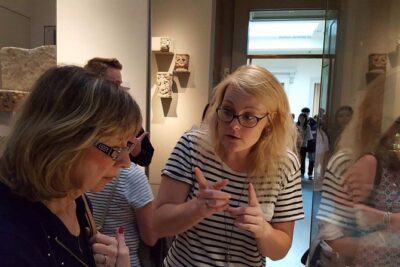
Another plus is the private setup for small groups. When you can ask questions without feeling rushed, museums become more personal. Expect an easy back-and-forth style rather than a strict one-way talk.
You can also read our reviews of more guided tours in London


Finding the Edward VII entrance at Montague Place
Your tour starts at the rear entrance of the British Museum in Montague Place, the Edward VII entrance. This matters because the front doors can be busy and confusing, and rear entrances help keep your group from getting lost in pedestrian flow.
The guide will contact you via WhatsApp or message with confirmation of where to meet and a description of what they look like. That is a helpful detail when you’re arriving close to the same time as lots of other visitors.
Practical tip: wear comfortable shoes. You’ll be on your feet for most of the two hours, moving between galleries. If you show up with stiff footwear, the tour still works, but you’ll feel it by the end.
Rosetta Stone and Parthenon Marbles, the fastest way to understand the museum
If you want proof that the British Museum is a place of real turning points, start with the objects that changed how people read or understood the past.
The Rosetta Stone
The Rosetta Stone is presented here as the key to deciphering ancient Egyptian hieroglyphs. That is a big deal, because it explains why the object became world-famous. It’s not just that it looks impressive. It’s that it helped make a language legible again.
On a private tour, you can also ask the kinds of questions that usually pop into your head in front of the display. Like, why this artifact, why it survived, and how scholars used it. This is where having a guide who is comfortable answering questions makes the experience better.
The Parthenon Marbles
Then you shift to Ancient Greece with the Parthenon Marbles. What I like about this stop is that it connects art to ideas and power. These are not just sculptures. They are tied to the Greek world and to how later generations interpreted it, including the museum story that brings them into view.
If you care about how museums frame art and artifacts, this pairing with the Rosetta Stone helps. One object tells you how language was decoded, and the other shows you how culture was carried forward through objects and collecting.
You can also read our reviews of more private tours in London





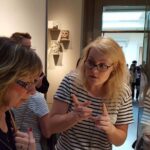
Exploring faraway worlds with Hoa Hakananai’a and the museum’s global reach
The British Museum is not only about nearby European history. One of the tour’s most interesting moves is including the Easter Island statue, Hoa Hakananai’a. You’re going from Greece or Egypt-style galleries to a remote Pacific context, and the contrast is exactly what makes a guided highlights tour feel “bigger” than a standard sightseeing loop.
Hoa Hakananai’a is described as mysterious, and the guide’s job is to give you the right kind of context without pretending to have every answer. That balance is important. Some museum stories are clean and well-documented. Others are more about discovery, interpretation, and the limits of what we can know.
The same global approach shows up again with Viking objects like the Lewis Chessmen. Even if you do not play chess, they’re fascinating because they look like art you can touch and because they link everyday life to high-skill craftsmanship in the 12th century.
This is the kind of tour that helps you see the museum’s “big idea.” It is trying to show connected human history across time and geography, not just a pile of separate cultures.
How the British Empire shaped what the museum holds
One of the biggest reasons to book a guided tour here is that you get explicit discussion of the British Empire and its impact on the museum’s collection. You will hear how the museum’s collection was created, and how the objects arrived through discovery, exploration, and the politics of the era.
This is not just an uncomfortable history lesson. It is practical for understanding the displays you’re looking at. Knowing the imperial context helps you interpret why some regions are represented the way they are, and why certain objects became central in a British museum setting.
You might also want to pay attention to how the guide connects the artifacts to the museum’s mission as a first public national museum. That framing matters because it explains how these objects became public culture rather than private collections.
I find this section especially valuable if you’ve ever visited a major museum and felt you were only getting half the story. When you understand the collecting background, the galleries feel more honest, even when the subject is complicated.
Lewis Chessmen and Sutton Hoo: when craftsmanship meets royal power
Two of the tour’s standout inclusions bring you to the Viking and Anglo-Saxon worlds in a way that feels different from typical “ancient history” viewing.
Lewis Chessmen
The Lewis Chessmen are described as intricately carved Viking-era chess pieces from the 12th century. That description is a great preview because it hints at what you’ll notice when you look closely. These aren’t generic “Viking stuff.” They are detailed objects that show careful design and skill.
On a private tour, you can slow down just enough to see what a casual walk-through might miss. Ask how they were made, what they tell us about leisure or status, and why these pieces survived. The guide should be able to connect the object to a broader sense of daily life and social world.
Sutton Hoo ship burial
Then the tour moves to the Sutton Hoo Ship Burial, which is presented as a stunning Anglo-Saxon royal treasure hoard. This is one of those stops that feels like a movie scene, because it represents a major find that changed what people think they know about early England.
The key value here is interpretation. You’re not just seeing objects behind glass. You’re learning the story of discovery and what those finds mean for understanding who held power and what that power looked like materially.
If you care about how archaeology turns into history, this is where the tour earns its keep. It helps you connect “found objects” to “found understanding.”
The Great Court and the Reading Room feeling you get nearby
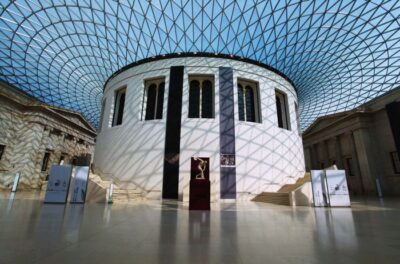
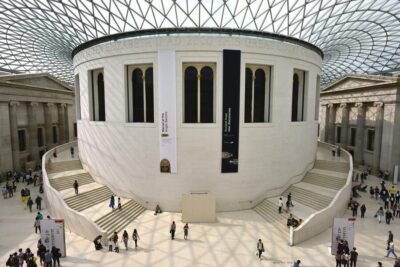
By the end, you should have that “okay, I get it” feeling. Part of why comes from ending in the Great Court, described as the largest covered square in Europe. This space does something galleries cannot: it gives you breathing room and a strong sense of the museum’s scale.
Even if you’re mainly there for artifacts, the Great Court can reset your eyes. It turns the museum from a maze into a place with geometry and rhythm. You see the building as a system that’s meant for public viewing and learning.
The tour also ties in the museum’s research past, including mention of the original British Museum Reading Room. You may not spend long there, but even a quick reference to how the museum worked as a research area in earlier times helps you interpret the modern experience. It’s not just a collection display. It’s a knowledge machine.
Price and value: $263 per group up to 8
At $263 per group for up to 8 people, this tour is priced like a practical small-group experience, not a per-person luxury add-on. The value depends on how many people are in your party and what you want from the visit.
If you’re coming with family or friends, the math gets friendly fast. You’re paying for a private expert guide plus the tour includes highlights and exclusive access as part of the experience. That can make a big difference in a museum like this, where self-guided wandering can turn into random gallery drift.
Two hours is also a real value factor. You’re not paying for a long full-day commitment, and you’re still getting a guided flow through the most famous artifacts plus key context. If you know you have limited time in London, this is a solid way to avoid wasting hours trying to figure out where to start.
The one trade-off is focus. You are not buying an all-museum pass. You are buying a best-of route with interpretation.
Who this tour suits best
This British Museum private tour is a great match if you want:
- A high-impact overview without the stress of planning your own route
- An expert guide who can answer questions in English
- A focused hit list of major objects, including Rosetta Stone, Parthenon Marbles, Hoa Hakananai’a, Lewis Chessmen, and Sutton Hoo
- A better understanding of how the museum’s collection reflects the British Empire’s role
It can also work well for visitors who do not want to spend an entire day in a huge building. If you love museums but hate getting lost, this format is built for you.
Should you book this British Museum private guided tour?
I’d book it if you want a confident, story-driven visit and you only have about two hours. The tour’s strength is not just that it lists famous artifacts. It explains what they mean, including the British Empire context that shaped the collection. And the private group format helps you ask questions instead of just taking photos and moving on.
Skip it or rethink it if you’re hoping to see every corner of the museum. This is a highlights and context tour, not a complete museum survey. If your dream is an all-day deep catalog of lesser-known items, you’ll want more time.
If you’re an average museum-goer who still wants real substance, this is a smart way to spend your London time. You’ll come out with clearer connections between civilizations, a better sense of how objects end up in museums, and a few unforgettable “stop-you-in-your-tracks” artifacts.
FAQ
How long is the London British Museum private guided tour?
The tour lasts 2 hours.
How much does the tour cost and how big is the group?
It costs $263 per group, and the group size is up to 8 people.
Where do we meet for the tour?
You meet at the Edward VII entrance, the rear entrance for the British Museum in Montague Place, London.
What time period and scope does the museum cover during the tour?
The museum covers two million years of history across six continents, and the tour focuses on key highlights from places including Ancient Egypt, the Romans, the Saxons, and the Vikings.
What are some of the main artefacts you will see?
The tour includes viewing the Rosetta Stone, the Easter Island statue (Hoa Hakananai’a), the Parthenon Marbles, the Lewis Chessmen, the Sutton Hoo Ship Burial, and more.
Is the tour wheelchair accessible?
Yes, the tour is listed as wheelchair accessible.
What should I bring and what is not allowed?
Wear comfortable shoes. Flash photography is not allowed. You also cannot bring luggage or large bags, and backpacks are not allowed.
Is English the only guide language, and is cancellation flexible?
The live tour guide is in English. Free cancellation is available up to 24 hours in advance for a full refund, and you can reserve now and pay later.
More Guided Tours in London


More Tours in London



More Tour Reviews in London


Not for you? Here's more nearby things to do in London we have reviewed










More British Museum Tours worth a look.
 ★ 4.3British Museum Guided TourTickets from $231,182 guest reviews
 ★ 5.0British Museum London Guided Tour Semi-Private 8ppl MaxTickets from $108984 guest reviews
 ★ 4.1Tour of the British MuseumTickets from $14678 guest reviews
 ★ 4.5British Museum Audio Tour & Priority Entrance TicketTickets from $9631 guest reviews
 ★ 5.0The British Museum London – Exclusive Guided Museum TourTickets from $108555 guest reviews
 ★ 4.2Afternoon Tea at the British MuseumTickets from $58511 guest reviews
 ★ 4.0British Museum Guided TourTickets from $18470 guest reviews
★ 4.5British Museum Guided TourTickets from $39267 guest reviews
Continue by place or experience