

REVIEW · BRITISH MUSEUM TOURS
London: British Museum Guided Tour
Ancient worlds make more sense with a guide. I like the small group setup that keeps things moving at a comfortable pace, and I love how guides can customize the route to your interests. One watch-out: some galleries can be closed on the day, which may reduce what you get to see.
Expect a focused pass through major civilizations, with Mesopotamia doing the heavy lifting and time for questions as you go. Depending on the guide and what’s open, you may also get context around headline objects such as the Rosetta Stone and the Parthenon sculptures (often called the Elgin Marbles), plus closer looks at intricate carved details like those from the Rosalila Temple pieces.
Key highlights worth planning around
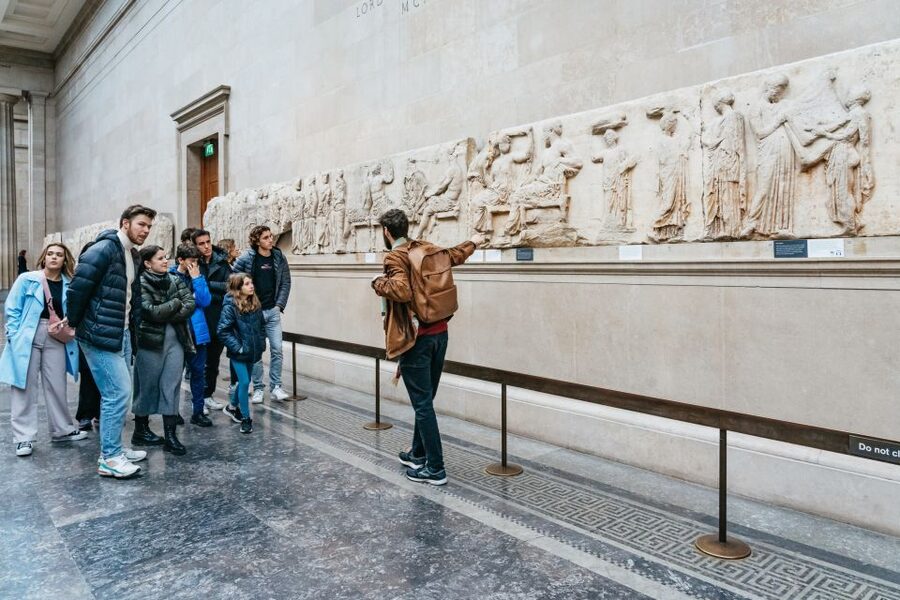
- Small group of up to 10: you can actually ask questions and redirect the route.
- Mesopotamia as the anchor theme: a clear thread through early states and big cultural shifts.
- Big-name objects with real context: not just dates and labels, but how they mattered.
- Guide flexibility: you might see a route adjusted on the spot, even for couples.
- Included museum entry: your $90 covers access plus a guide for 2 hours.
Why this tour can feel easier than going solo
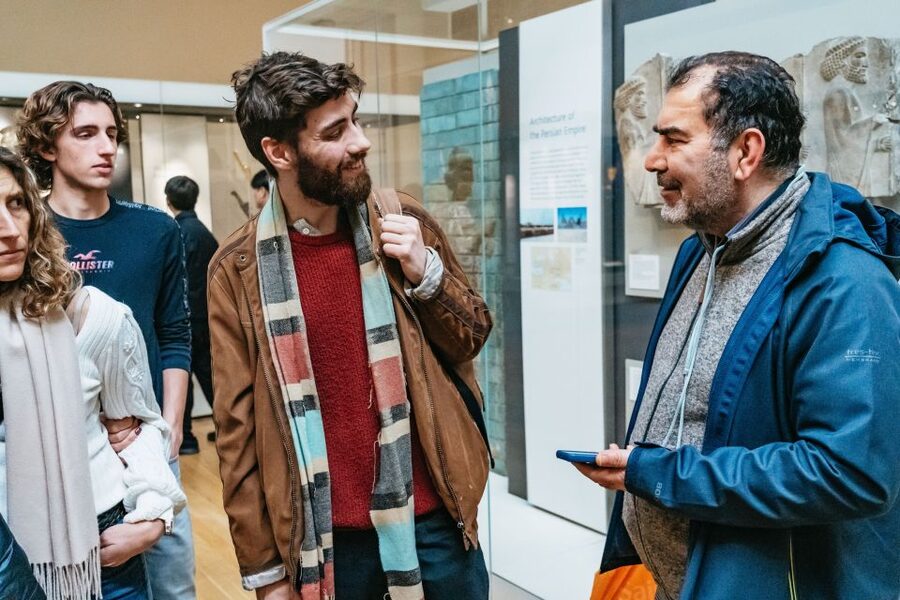
The British Museum is enormous, and without a plan it’s easy to wander, read a few signs, then feel like you’ve seen nothing but stone cases and tired feet. This 2-hour format helps because you’re not trying to process everything at once. You follow a guide’s order of operations, so the museum stops feeling like a maze.
Two things make this tour work for most people. First, the small group size keeps the experience conversational. Second, the guides aim to make sense of the “why,” not just the “what.” If you like history that connects across time, this tour leans into that: Mesopotamia leads into other cultures, so you start seeing relationships instead of isolated snapshots.
The main downside is also simple: if parts of the museum are closed during your visit, the guide has less to work with. That doesn’t ruin the experience, but it can change which highlights you reach.
You can also read our reviews of more guided tours in London


Meeting point and timing, plus how to show up ready
You meet the guide in front of Starbucks, just across the museum entry. That detail matters because the museum entrance area can look busy, and you want to find the person who is holding the tour spot for your group right away.
The tour lasts 2 hours, and that’s a sweet spot for a museum like this. It’s long enough to get context and walk between key galleries, but short enough that you can still enjoy the museum afterward on your own. If you’re the type who always plans a “one main thing” visit first, this fits perfectly.
A couple practical notes that come straight from what’s included and what’s not:
- Food and drinks are not included, so plan to grab something before or after.
- Hotel pickup and drop-off are not included, so you’ll want to factor in your own transport time.
- The tour is live and in English, so you can ask questions without language barriers.
- Pets are not allowed, so leave furry friends at home.
If your schedule is tight, it also helps that the booking offers free cancellation up to 24 hours in advance for a full refund, and you can reserve and pay later to keep plans flexible.
The Mesopotamia focus: how the “cradle of civilization” gets explained
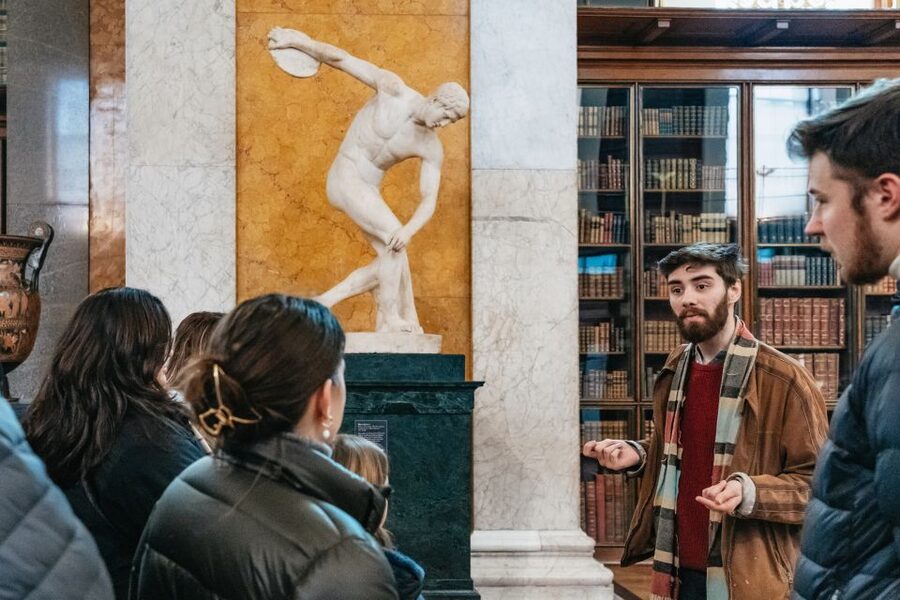
Mesopotamia is often treated like a chapter title, but here it’s used like a guide rail. The idea is that once you understand early city life, writing, and the way power organized land and people, a lot of other artifacts start to feel more meaningful.
In a guided setting, you’re not just looking at objects. You’re learning how to read them. Your guide points you toward what to notice, for example:
- Materials and craftsmanship, and what that says about resources and trade
- Symbols and imagery, and how they communicate authority or belief
- The practical side of artifacts, like why they were made and who would have used them
This is where the tour feels most valuable for first-time museum goers. When someone explains how Mesopotamian objects connect to the bigger story of governance, religion, and daily life, the galleries stop being “random ancient stuff” and start being evidence.
It also sets you up well for Egypt and Greece because you begin to recognize recurring human themes. Different cultures, different worlds, but similar needs: legitimacy, memory, and communication.
From Rosetta Stone to Elgin Marbles: what the guide helps you see
One of the reasons this tour is worth considering even if you’ve been to the British Museum before is the way an expert steers your attention. The British Museum has famous objects, but fame can flatten them. A guide helps you restore the “so what?”
Depending on what’s open, you’ll get context around headline pieces such as:
- The Rosetta Stone, which is the gateway for understanding how key languages were compared
- The Parthenon sculptures, often called the Elgin Marbles, where meaning lives not only in myth, but in the politics of preservation and representation
- Intricate carved details linked to the Rosalila Temple, where careful attention to craftsmanship tells you how artistry and belief were built together
Even if you do not leave with every date memorized, you should leave with better instincts. That’s the real goal. You learn how to approach big objects calmly, and you learn what questions to ask while you look.
A practical note about “what you’ll see”
Your guide chooses the route based on what’s available in real time. That’s partly why the small-group setup matters: you can pivot. One day you might spend a little longer where the story is strongest. Another day, if sections are closed, the guide may shift to other nearby galleries to keep the theme coherent.
You can also read our reviews of more museum experiences in London





How the Q&A style changes your pace and your focus
This tour isn’t set up like a nonstop lecture. It’s built for discussion. The guide encourages questions, and you can steer toward what you personally want more of.
That matters because everyone has a different “favorite ancient thing.” Some people show up for Egypt. Others want the classic Greek narrative. Others care more about writing and power. A good guide can reshape the order so it works for your group, instead of forcing you through a rigid checklist.
Names that came up in guide experiences include Wesley, Vincent, and Diana. The standout pattern across these names is responsiveness: routes can be adjusted to your interests, and the guide can communicate in advance when needed. If you’re traveling as a couple, that flexibility is especially useful, since the “balance” of what you do and don’t want to see becomes clearer.
In a museum with thousands of objects, small course corrections are everything. With the Q&A style, you don’t waste time reading labels without direction. You ask, look again, and suddenly the object makes sense in your own mental framework.
Value for money: is $90 for 2 hours worth it?
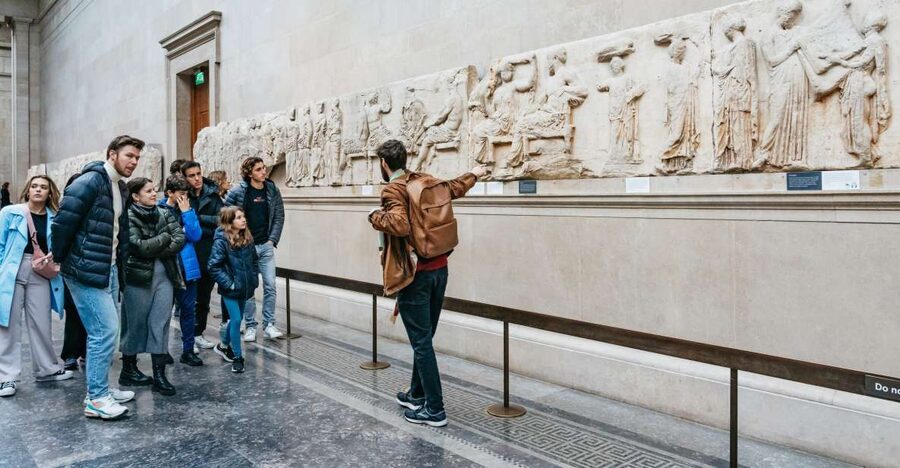
Let’s talk value in plain terms. You’re paying $90 per person for:
- Museum entry
- A live tour guide for 2 hours
You’re not paying for food, and you’re not paying for transport like hotel pickup. So the value comes from interpretation, not convenience.
Here’s why it often feels like a fair deal: the British Museum is a high-demand place. If you’re the kind of person who gets overwhelmed, a guided route can save you from wandering aimlessly for most of the time. It also helps you get more from the famous objects than you would on your own, because you’re learning what to look for before you start staring.
If you’re traveling with a group of friends and you all want totally different things, a guided tour might feel limiting. But if you can work with a guide’s theme, the experience becomes more efficient. You get a guided narrative arc centered on Mesopotamia, plus connections to other civilizations.
Who will feel the best value
- First-time British Museum visitors who want structure
- People who like learning through conversation
- Couples and small groups who want a paced highlight route
- Anyone who wants to understand famous objects without turning the visit into a homework session
When parts of the museum are closed, here’s how to handle it
You might hear that “some galleries were closed,” and that’s the main reason this tour can land as a 4 out of 5 for some people instead of 5 out of 5. The fix is psychological and logistical.
Psychologically, accept that a 2-hour route is a selection. Even on a perfect day, you will not see everything. If closures happen, the guide just has to swap targets. That can still be a great tour, just with a different mix.
Logistically, keep your expectations flexible. If your personal must-see items are the Rosetta Stone or the Parthenon sculptures, it helps to know that your guide can shift, but they still want to keep the story coherent. If something is closed, you’ll likely trade one “headline” moment for another nearby interpretation.
The best approach is to treat this tour like an ordering system. You’re getting the museum’s big ideas in a useful sequence, not a promise to see every named object.
Who this tour suits best, and who might not love it
This is a strong fit if you want a guided thread through the museum. The format is also ideal for people who enjoy being able to ask questions and adjust the route. The small group of up to 10 helps protect that interactive feel.
It’s less ideal if:
- You prefer total freedom and want to roam at your own speed without discussion
- You’re extremely focused on a single tiny niche and you don’t want your route redirected
- You’re bringing someone who needs an extremely quiet, private experience, since the tour includes conversation
If you’re deciding between “guided first” or “solo first,” I’d choose guided first. You’ll understand what matters before you go exploring again.
Should you book the London British Museum guided tour?
I think you should book this tour if you want a guided, conversation-friendly way to make the British Museum manageable. The tour’s value is in context and direction, not just checking famous exhibits off a list. Mesopotamia gives the visit a theme, and the guide’s ability to answer questions keeps you engaged the whole way.
Skip it or reconsider if your schedule allows only one short stop and you already feel confident navigating on your own. In that case, you might prefer a self-guided plan with a short list and no back-and-forth.
If you do book, show up at the meeting point in front of Starbucks across the museum entry, wear comfortable walking shoes, and come with two or three things you actually want to understand. That way, your guide can steer the route toward what you care about, and you get full value from the 2-hour experience.
FAQ
How long is the British Museum guided tour?
The tour runs for 2 hours.
Where do I meet the guide?
The guide meets you in front of Starbucks, just across the museum entry.
What group size is this tour?
It is a small group limited to 10 participants.
Is the tour guide English-speaking?
Yes, the live tour guide speaks English.
What is included in the $90 price?
Museum entry and a tour guide are included. Food and drinks are not included, and hotel pickup and drop-off are not included.
Are pets allowed on this tour?
No, pets are not allowed.
More Guided Tours in London


More Tours in London




More Tour Reviews in London


Not for you? Here's more nearby things to do in London we have reviewed










More British Museum Tours worth a look.
 ★ 4.3British Museum Guided TourTickets from $231,182 guest reviews
 ★ 5.0British Museum London Guided Tour Semi-Private 8ppl MaxTickets from $108984 guest reviews
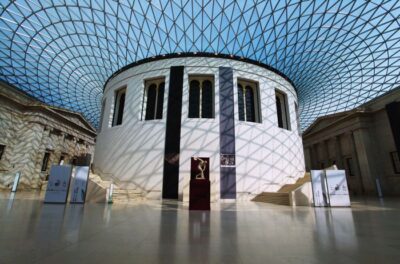 ★ 4.1Tour of the British MuseumTickets from $14678 guest reviews
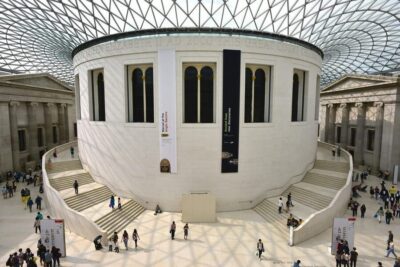 ★ 4.5British Museum Audio Tour & Priority Entrance TicketTickets from $9631 guest reviews
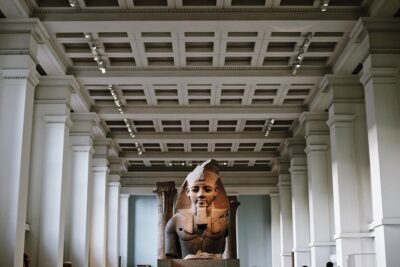 ★ 5.0The British Museum London – Exclusive Guided Museum TourTickets from $108555 guest reviews
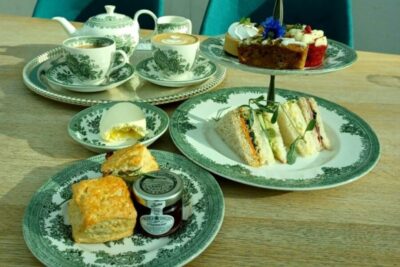 ★ 4.2Afternoon Tea at the British MuseumTickets from $58511 guest reviews
 ★ 4.0British Museum Guided TourTickets from $18470 guest reviews
★ 4.5British Museum Guided TourTickets from $39267 guest reviews
★ 4.0British Museum Guided TourTickets from $18470 guest reviews
★ 4.5British Museum Guided TourTickets from $39267 guest reviews
Continue by place or experience