
REVIEW · LONDON CITY TOURS
Hidden Tube Tour – Piccadilly Circus: The Heart of London
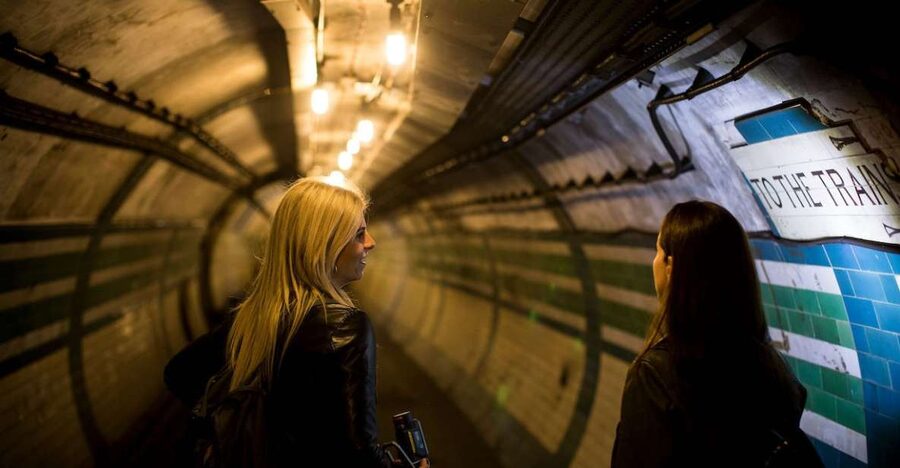
Piccadilly Circus has secret rooms under your feet. This Hidden Tube tour sends you behind closed doors at Piccadilly Circus station, with Edwardian design features and stories of wartime shelterers. It is one of the few chances you get to experience the London Underground as an operating system and a survival tool, not just a commute.
I like that the focus stays practical and human: how people used these spaces, and what engineers built to keep trains and passengers moving. One consideration: this is a stair-heavy walk with low lighting and uneven ground, and it is not a good fit for claustrophobia or mobility issues.
Key things that make this Hidden Tube tour worth your time
- Edwardian design details you can see close up, in parts of the station closed to normal foot traffic
- Wartime shelter stories tied directly to what these tunnels and rooms were used for
- Passageways and lift shafts that stayed off-limits since 1929
- Disused passenger tunnels closed to the public since 1929
- London Transport Museum guidance, with historical expertise drawn from the museum’s archive
Why Piccadilly Circus Station Has a Second Underground World
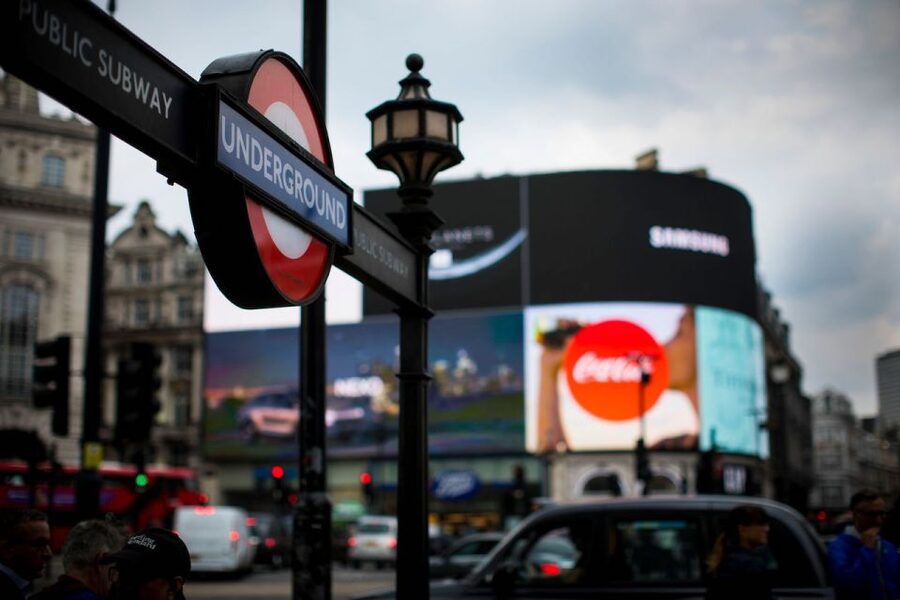
Piccadilly Circus station sits right under one of London’s most photographed landmarks, yet the experience starts to feel like you are stepping into a different city underground. The tour is built around Piccadilly Circus station itself, which opened in 1906 to serve the Bakerloo and Piccadilly lines. Then, between 1925 and 1928, it was heavily modernised to handle passenger demand, and the station became an engineering showpiece.
What I find compelling is how the tour connects design with real life. You are not just looking at old stone and iron. You are walking through space shaped by needs that changed over time: passenger flow, wartime use, and the Underground’s constant adaptation.
If you already like Tube stations for their architecture, this adds a layer you usually cannot access. You get to see original Edwardian design features and hear why the station was rebuilt and re-used in later decades.
You can also read our reviews of more tours and experiences in London.
Finding the meeting point at Exit 4, next to the Criterion Restaurant
The meeting point is straightforward once you know where to look. Meet at the bottom of the stairs of Exit 4 of Piccadilly Circus Underground station. Exit 4 is at the corner of Shaftesbury Avenue and Coventry Street, next to the Criterion Restaurant.
Plan to arrive a few minutes early. This tour ends back at the same meeting spot, so you will not need to figure out any complicated end-of-tour navigation. Also, bring a passport or ID card, since that is required.
Since it is an underground tour with uneven ground and low lighting, I treat “arrive early” as part of the comfort plan, not just good manners.
The 75-minute route, what you will do during the tour
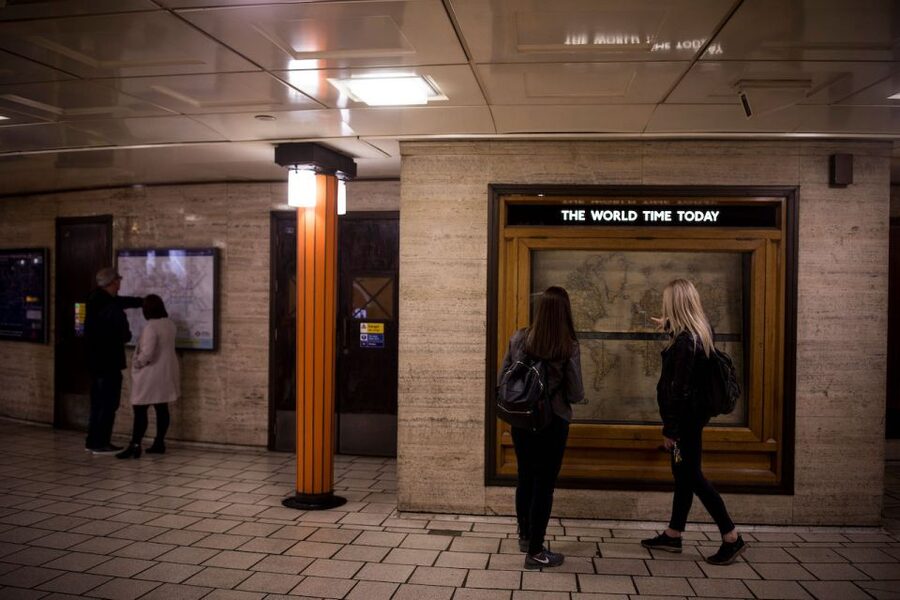
The tour runs 75 minutes, and it is guided live in English. From start to finish, it is a walking tour that takes you behind secret doors and into station areas closed to the traveling public for decades.
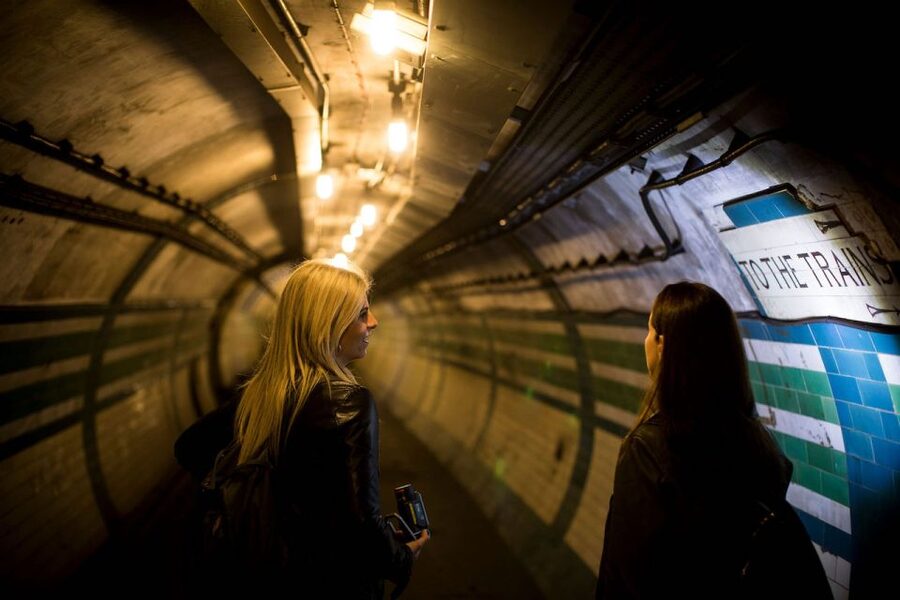
You should expect the flow to feel like controlled branching paths: you move from one restricted space to another while the guide explains what you are seeing. The key idea is access. You will enter passageways and lift shafts that have been closed to the public since 1929, then progress into disused passenger tunnels that also have not been open since 1929.
The practical takeaway is pacing. Ninety percent of your success depends on your comfort with stairs and enclosed, dim areas. The tour involves a lot of walking, and there is no step-free route with an elevator.
Edwardian design features you can actually see, not just imagine
Piccadilly Circus station has an Edwardian layer that most visitors never get to connect with. During this tour, you are guided to original Edwardian design features and remnants of the earlier station layout beneath the famous landmark.
What makes this special is the “see it in 3D” effect. In photos, older Underground design can look flat and decorative. Underground, it reads like engineering. You can spot where the original thinking prioritized movement, structure, and passenger processing, long before the Tube became the system we think of today.
You will also learn how the station was modernised later, between 1925 and 1928. That context matters, because it helps you understand why certain parts were kept, changed, or shut off. In other words, you are not just viewing the past, you are seeing the Underground’s upgrades in physical form.
Wartime shelter stories, refuge, and top-secret storage
One of the most memorable parts of the tour is also the most human. You will hear fascinating stories of wartime shelterers who took refuge in the station. The Underground was built for trains, but in wartime it also became a place of safety, and those lived experiences changed how people related to station space.
The tour also includes stories connected to top-secret storage of priceless artefacts. That may sound cinematic, but the point is grounded. Underground spaces offer stable protection, and stations could be repurposed in ways that helped the city survive.
Why I think this works so well for you: it turns the architecture into a witness. Instead of just asking what the station looked like, you start asking what it did for people when conditions got dangerous.




The disused passenger tunnels, closed to the public since 1929
This is the core “Hidden Tube” payoff: access to passenger tunnels that have been closed to the traveling public since 1929. You will explore those disused spaces as part of the guided route.
Even if you know a little Tube history, this part gives you a feeling for how the Underground evolves. Lines get reorganised, stations get expanded, routes change. When a tunnel is closed, it is not just a signboard update. The station’s living map gets redrawn.
You are also dealing with the physical reality of older infrastructure. Tunnels tend to compress space and affect your perception of distance. Add low lighting and uneven ground, and it becomes less like a museum visit and more like walking inside a functioning artifact.
That is exactly why it ranks high with people who love practical history. You do not just learn facts, you understand why those spaces were eventually moved out of regular passenger service.
Passageways and lift shafts that stayed closed since 1929
Along the way, you will also step into passageways and lift shafts closed to the public since 1929. This is the detail that makes the tour feel engineered, not just scenic.
Lift shafts and service passageways reveal how a busy station runs behind the scenes. They show you where the work happens that passengers never see, even at the busiest times of the day.
It is also a strong reminder that “station” is more than one platform level. It is a layered system. The tour helps you connect the layers, while still keeping you on a guided path that fits within the 75-minute time window.
Price and value: $60.61 for museum-led access you cannot DIY
At $60.61 per person for a 75-minute guided tour, this is not a budget activity. But it is also not overpriced for what you are getting.
Here is the value math that matters for you:
- You get museum-level historical guidance from London Transport Museum
- You get access to parts of the station closed since 1929, including tunnels, passageways, and lift shafts
- You get a structured route that is not something most people can replicate on their own
In other words, you are paying for controlled entry into restricted spaces plus interpretation. A typical walking tour might teach you what to look for above ground. This one gets you into the parts you usually cannot reach.
If you like flexibility, the booking options are set up for that style too, with free cancellation up to 24 hours in advance and a reserve now, pay later approach.
Who should book, and who should think twice before you go underground
This tour is a great fit if you:
- like Tube architecture and station engineering
- enjoy stories that connect infrastructure to real events, like wartime shelter
- want an experience tied to London Transport Museum expertise, delivered live in English
- can handle a walking route with stairs and uneven ground
It is not a good fit if you:
- have claustrophobia, since the tour involves low lighting and enclosed areas
- need step-free access, because it is not step free and there is no elevator
- have mobility impairments that make stairs and uneven surfaces hard
Kids are included, with limits: it is not suitable for children under 10. There is also a maximum of four children aged 10 to 15 years allowed per adult. If you are travelling with a family, that ratio can affect what time slots or group setups feel comfortable.
Practical tips: what to wear, what to bring, and what to leave behind
The tour rules are short, but they matter. Wear sturdy footwear. Open-toed shoes are not allowed. You will be moving through low-light areas and across uneven ground, so comfort beats style here.
Bring your passport or ID card. There is no cloakroom, so do not plan to rely on storing extras on site. The tour also does not allow food and drinks, and it does not allow luggage or large bags.
My simple packing advice: travel light. If you can keep it small enough to carry without becoming a hassle, you will feel calmer during the stairs and the tunnel sections.
Should you book the Hidden Tube Tour at Piccadilly Circus?
If your idea of a great London day includes off-limits access and stories grounded in how the Tube actually works, I think you will enjoy this. The combination of Edwardian design features, wartime shelter stories, and disused tunnels closed since 1929 is a rare set of ingredients in one 75-minute package.
Book it if you can handle stairs, low lighting, and the lack of step-free access. Skip it if you are claustrophobic or if uneven ground and stair walking would be a problem for your group.
FAQ
How long is the Hidden Tube Tour – Piccadilly Circus?
The tour lasts 75 minutes.
Where do I meet for the tour?
Meet at the bottom of the stairs of Exit 4 of Piccadilly Circus Underground station, next to the Criterion Restaurant at the corner of Shaftesbury Avenue and Coventry Street.
What do I need to bring with me?
You need a passport or ID card.
Is the tour suitable for claustrophobia?
No. The tour involves low lighting and enclosed areas, so it is not suitable for guests with claustrophobia.
Is the tour step-free, and is there an elevator?
No. The tour is not step free, and it does not include an elevator. It involves walking up and down flights of stairs.
Are open-toed shoes allowed?
No. Open-toed shoes are not allowed.
Can I bring luggage, large bags, food, or drinks?
No. The tour does not allow luggage or large bags, and it does not allow food or drinks.
What are the rules for children?
The tour is not suitable for children under 10. There is a maximum of four children aged 10 to 15 years allowed per adult.
More Tours in London

More Tour Reviews in London
Not for you? Here's more nearby things to do in London we have reviewed










More London City Tours worth a look.
 ★ 4.6The London Eye Entry TicketTickets from $3935,875 guest reviews
 ★ 4.7From London: Harry Potter Warner Bros Studio TourTickets from $11726,588 guest reviews
Westminster to Greenwich River Thames CruiseTickets from $2222,836 guest reviews
Magical London: Harry Potter Guided Walking TourTickets from $2022,044 guest reviews
★ 4.7From London: Harry Potter Warner Bros Studio TourTickets from $11726,588 guest reviews
Westminster to Greenwich River Thames CruiseTickets from $2222,836 guest reviews
Magical London: Harry Potter Guided Walking TourTickets from $2022,044 guest reviews
 ★ 4.6Madame Tussauds LondonTickets from $3620,915 guest reviews
 ★ 4.5Stonehenge, Windsor Castle, and Bath from LondonTickets from $11118,662 guest reviews
 ★ 4.7Warner Bros. Studio Tour with TransfersTickets from $14417,586 guest reviews
 ★ 4.7Tower Bridge Entry TicketTickets from $2115,560 guest reviews