
REVIEW · LONDON CITY TOURS
East End London Instagrammable Street Art and Graffiti Tour
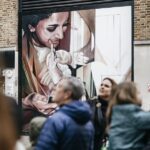
Street art in London is best on foot. This East End graffiti tour mixes big wall murals, tiny sticker work, and real stories behind the spray can wars.
I really like how the guide points out specific artists and tricks you can use to photograph each piece the right way. I also like the hands-on add-on, a chance to make your own street art during the tour.
One thing to plan for: some stops are off the main street, including narrow back areas, so you should be comfortable walking and looking closely, even when the setting feels a bit tucked away.
Key things to know before you go
- Photo-first guidance: you get help finding angles, distances, and the right place to stand.
- Famous names, plus context: you’ll see works by artists like Banksy alongside lesser-known local favorites.
- Stickers, stencils, and murals: the variety matters, from door-sized pieces to whole-building walls.
- Off-street surprises: several stops are in small yards and side streets, so expect some turning and short detours.
- A hands-on finish: the tour includes an opportunity to create your own street art.
Price, timing, and why this tour feels like value
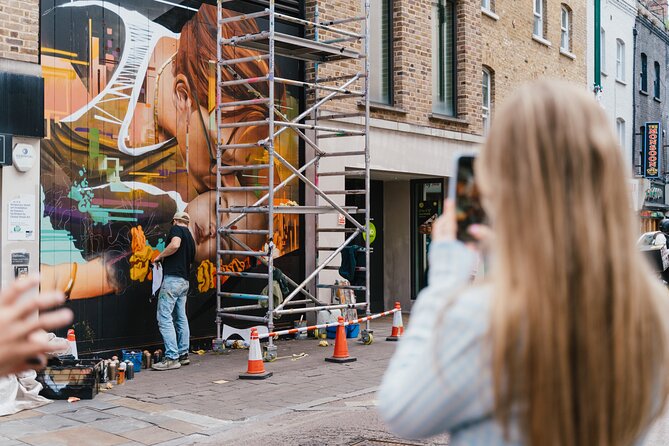
At $49 per person for about 2 hours, this tour is priced like a city specialty, not a bargain bus ride. The good news is what you actually get for that money. You’re paying for a local guide, curated stops across the East End, and the extra pay-off at the end where you can make your own piece.
It’s also a small group experience, with a maximum of 20 travelers. That matters for street art, because you want time to look, step aside, and ask questions without feeling rushed. You’ll also get a mobile ticket, which is just simpler on travel days when your phone is already doing everything.
One more quiet detail: the tour is often booked ahead, with an average of 91 days in advance. If you’re traveling in a busy season or on a weekend, I’d treat a good time slot as something to lock in early.
Start at Whitechapel, finish near Liverpool Street
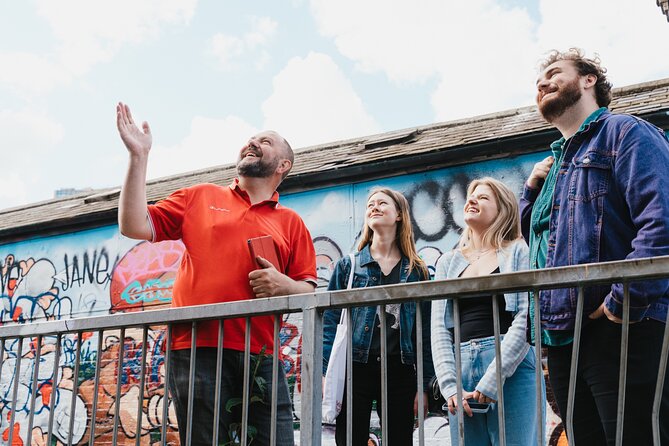
Logistics are straightforward. The tour starts at 80 Whitechapel High St, London E1 7QX, with a 11:00 am start time. You’ll finish within walking distance of Liverpool Street Station at EC2M 7QA, and the exact end point can shift depending on the street art being shown.
This setup is handy for planning the rest of your day. You can do the tour, then connect to trains, the Tube, or other East End adventures without a big backtrack.
Also, it’s a walking tour, and most people can join, with the added note that service animals are allowed. Since multiple stops involve looking up and moving a little off the main sidewalk, wear shoes you don’t mind getting walked in.
More London tours and experiences for the shortlist
What makes East End street art “Instagrammable” without feeling staged
People call this style Instagrammable, but the more useful truth is simpler: the best pieces are made for close viewing. The guide helps you slow down and notice what your eye might skip.
You’ll see work at several scales:
- Huge murals across building sides
- Door-sized pieces where you need to step forward
- Sticker work that turns a yard into a scavenger hunt
- Big bold lettering meant to be read from far away
- Stencils and wheat-paste style layers that look like they belong to different time periods
And you’ll learn how to spot the “why” behind the art, not only the “what.” The tour also weaves in the graffiti wars story, which is one of those ideas that sounds dramatic until you see how it shaped styles, materials, and local rivalries.
Stop by stop: the East End pieces that reward your feet
Heneage Street: Phlegm and FanakaPan in nearly hidden space
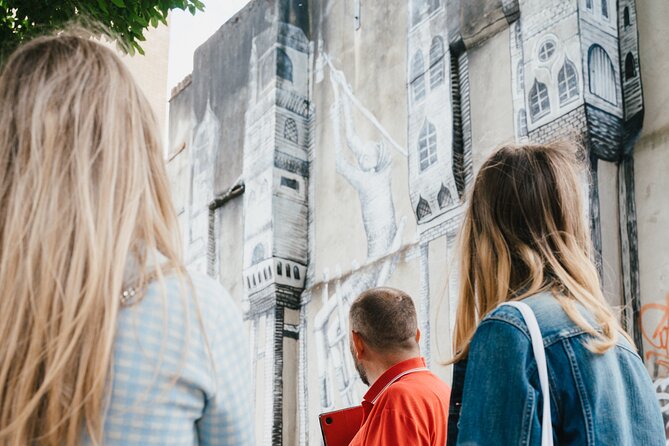
Your first big wow is at Heneage Street, where art sits in small backyards and almost feels like you found it by accident. One whole building wall is filled with work by Phlegm. His signature slim, long creatures appear walking on stilts, and you can literally see how they tower over tags from other artists.
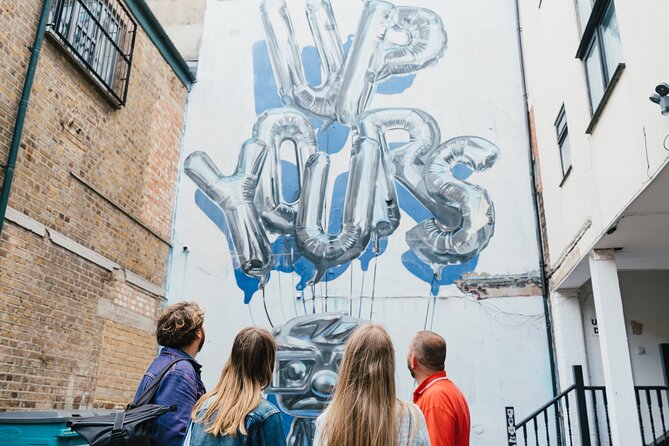
Across the way, in an even more tucked-away spot, is FanakaPan. He’s known for his silver helium balloons, and this stop matters because it trains you to look for the details that make his work unmistakable once you’ve seen it.
Practical tip: take a minute to look up before you start photographing. The scale is part of the joke, and the best shots come from stepping back.
Brick Lane: doors, angles, and technical skills
Next up is Brick Lane, where the guide uses a smart photo strategy: different points of view reveal different parts of the same piece.
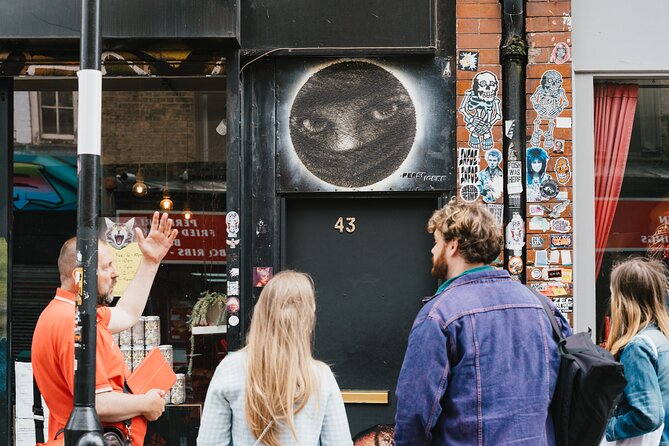
You’ll start at a distance to look at works by Dan Kitchener and Perspicere. Their works are on doors, so the art is not massive in format, but it pulls you in because you have to move closer and study technique. This is exactly the kind of art that looks flat from far away, then becomes impressive when you’re standing right there.
Drawback here is simple: Brick Lane is busy. If you’re slow about photography, you may feel slightly rushed by foot traffic. I’d keep moving with the group, then do your own closer look during the guide’s pause.





The Seven Stars: sticker art, and a chance to add your own mark
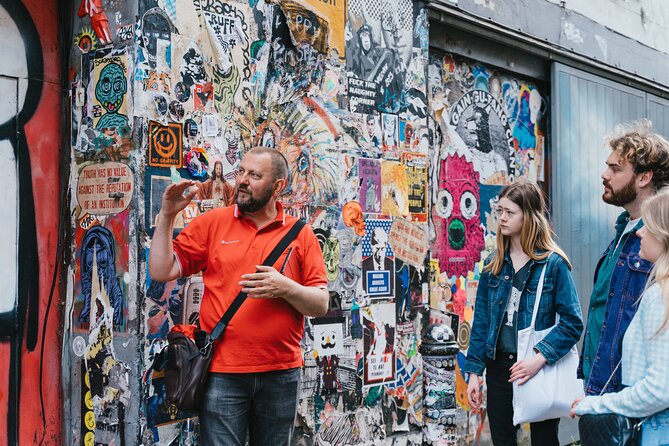
At The Seven Stars, you turn from the street to a narrow yard setting that can feel a bit intimidating at first. Once you’re there, it makes sense. The focus is stickers, and they’re everywhere.
The tour frames it as a playful challenge: you become the eighth star and add a little art of your own. Even if sticker culture isn’t your main interest, this stop changes your idea of what counts as “street art.” It’s not just murals. It’s small, fast, and collective.
Princelet Street: Stik and resilience in a community landmark
On Princelet Street, the guide points out a piece that has stayed important to local residents. This one is by Stik and is dedicated to the Muslim community, tied to Shoreditch’s history of refugees and immigrants making the area home.
The mural has been defaced at times, but it gets repainted again. That repeated return is part of the message: resilience, not one-time spectacle. If you like street art that carries weight, not just style, this is a strong stop.
Hanbury Street: ROA’s bird and the upside-down man
Back near Brick Lane, you’ll notice a huge bird on a side street, but the guide is steering you toward a whole cluster of layers.
On Hanbury Street, you’ll find stickers, black and white slogans by Wrdsmth, and smaller colorful pieces that can change often. Then you get the two big classics: a bird by ROA and a man upside down by Martin Ron.
What makes this stop stick in your head is the “ancient” aspect in graffiti terms. The guide says these works have been around for about 20 years, which is rare in a world where pieces can get painted over quickly. When you look at the upside-down figure, you also get the skill angle: the man’s pose is integrated into the building features, so it looks impossibly natural.
Dray Walk: broccoli takes over, and Broccoli Lane becomes a thing
At Dray Walk, you’ll spot broccoli. Some are realistic, many are colorful, and here you’ll see one attached to the wall. This trend has been going for years, and the guide notes that the street even shifted its identity, with part of it known as Broccoli Lane.
The artist linked to starting the trend is Adrian Boswell, who now has his own gallery and sells broccoli in frames. This is one of those street art moments that feels silly first, then clever once you realize how branding, character, and local fame can come from a wall.
Allen’s Gardens: a graffiti park with changing walls
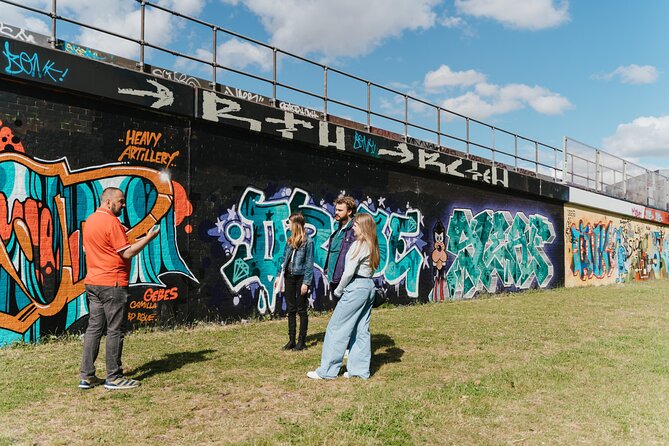
At Allen’s Gardens, you step away from the sidewalk and into a graffiti park surrounded by walls covered in layered work. The key detail is timing: some pieces change every few days. So the tour’s visit date matters for what you’ll see.
Most of the art here is by writers who paint letters. Reading isn’t the point. In fact, the guide emphasizes that the letters are hard to read on purpose, almost impossible at times. That challenge becomes part of the appreciation. You’re looking at color structure, rhythm, and style, even when you can’t decode the text.
Practical tip: bring your phone camera mode settings down to basics. With so many details, your best results often come from steady hands and simple framing.
Buxton Street: collaborations and looking up
From the gardens you move to Buxton Street for another quick hit. The tour frames this as a place where walls are sometimes collaborations of two or more artists.
The guide tells you to look up for a number 5. That’s the kind of instruction that turns you into a better street art viewer. Instead of “scan everything,” you look for one anchor feature and then you broaden out.
Ebor Street: painted adverts and Ben Eine’s readable letters
At Ebor Street, the area shifts from rough and vintage-feeling to more trendy and modern, but the graffiti energy stays. You’ll see large-format advert-style paintings by graffiti artists, plus smaller works like Neon’s pink portraits that seem to fall like a mist and land in the right spots to form expressive faces.
Then you go right back into another style contrast at the same street: Ben Eine. His work uses big, bold letters that are easy to read from a far distance. The style stays consistent, but the fonts vary from piece to piece, sometimes ornate and curved, sometimes sharp and modern, sometimes more square.
This is a great stop if you want instant results from your photos. You don’t have to squint or get lucky with framing. The letters do the work.
Rivington Street: Banksy, Otto Schade, and Thierry Noir
No East London street art tour feels complete without Banksy. At Rivington Street, the guide takes you to a secret place to see some older Banksy works alongside other standout art.
You’ll recognize Banksy pieces because, as the guide explains, they are covered in a glass panel. That detail is a discussion starter. The tour welcomes debate about art market trends, glass preservation, and what it means when street art becomes curated.
After that, you return outdoors for an Otto Schade work: you’ll spot half of a soldier at first, then you’ll understand it once you stand on the corner to view the full piece. Schade’s soldiers also appear made out of ribbons. They might look empty inside, but the guide says they have life and energy, with stencil technique taken to a new level.
Then you keep rolling into color with Thierry Noir, a French artist known for colorful heads brightening walls for decades. He’s best known for groundbreaking work tied to the Berlin Wall in the 1980s, and the tour shows you that his style traveled with him.
If you want street art that feels like mood-lift, this section delivers.
art’otel London Hoxton: a Banksy that moved indoors and back out again
At art’otel London Hoxton, the guide points to an unusual street art twist. A Banksy piece, painted long ago, was removed from its original location and then reinstated so people can still see it on the street.
This is a good stop for thinking about ownership and preservation, without getting too academic. It’s still street art in the sense that it’s in public and meant to be encountered, but it’s also in the sense that it’s being protected.
Hewett Street: Shakespeare nearby, and Romeo and Juliet in graffiti form
At Hewett Street, you may run into William Shakespeare in the most literal way possible. This is tied to the Curtain Theatre grounds. The guide points out Shakespeare quietly sitting on a bench that marks the theatre area.
Then comes the payoff for fans of story worlds: you also spot a stunning graffiti of Romeo and Juliet at the same location, tied to where people first heard the immortal love story. If you thought street art was only modern rebellion, this stop proves it can connect to classic literature too.
New Inn Broadway and Shoreditch High Street: graffiti wallpaper and the graffiti wars wrap-up
At New Inn Broadway, you see a big building covered by many artists. Different color pallets, different styles, even a small policeman, all blended into a single graffiti wallpaper effect. This is one of those “look at the whole wall” moments, because the piece works best when you stop trying to interpret each section and start seeing it like one combined composition.
Finally, on Shoreditch High Street, you hear one last story about the graffiti wars. The tour frames it as almost serious, and it’s also tied to the idea that conflict and competition produced some of the wonderful art that people still seek out today.
The real value: you’ll learn how to look, not just where to stand
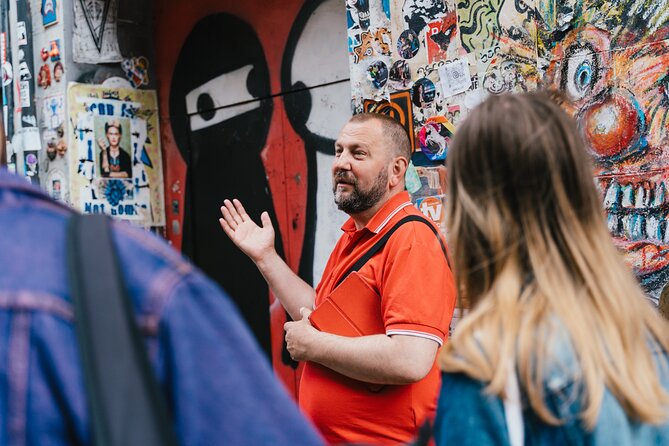
The biggest benefit of this tour is that it teaches you a street art skill set. You start to see layers:
- The artist style and how it repeats across works
- The way scale changes impact
- The way certain mediums like stickers and stencils create different textures
- The way time passes and pieces change, get covered, or get repainted
Even if you only remember a few names, you’ll be better at noticing what matters when you’re walking through the East End afterward.
Also, the tour doesn’t only hype fame. It gives you a spread of styles and tells you why they matter. That makes the art feel less like a checklist and more like a living neighborhood conversation.
Making your own street art: why that part matters
Most people come for photos. But the included chance to create your own street art masterpiece is what makes this tour feel complete.
You’re not expected to be an artist before you arrive. You’re given a guided moment to try the process. Even without details about materials in the info provided, you can count on at least one hands-on segment built into the experience. That’s a smart way to turn passive viewing into something you carry home.
Who should book this tour, and who might want another option
This tour is a strong match if you:
- Love street art and want names and context, not just random murals
- Like photography, especially when a guide helps you find angles and stand-off distances
- Enjoy exploring off the sidewalk, including backyards and side streets
- Want a fun mix of famous work and local-style pieces
It may be less ideal if you want a sit-down, low-walking experience. This is a walk and look tour. You’ll spend your time moving between stops, standing near walls, and taking in art that rewards close inspection.
Should you book this East End street art tour?
Yes, if you’re excited by street art styles, and you want a guide to help you see more than you would on your own. For $49, you get a focused route, a small group, and the useful added value of making your own piece. Plus, the mix of Banksy, well-known letter artists like Ben Eine, and longer-running works like ROA and Martin Ron makes it feel like more than a photo sprint.
If you’re the type who likes to wander and discover on your own without structure, you might prefer self-guided exploration. But if you’d rather walk in with a plan and leave with a better eye, this one is a solid bet for an East End day.
FAQ
How long is the East End London Instagrammable Street Art and Graffiti Tour?
The tour lasts about 2 hours.
Where does the tour start and what time does it begin?
It starts at 80 Whitechapel High St, London E1 7QX, UK at 11:00 am.
Where does the tour end?
It ends near Liverpool Street Station in London EC2M 7QA. The exact end point can change depending on the street art shown.
What does the tour cost?
The price is $49.00 per person.
Is there anything included besides the walking tour?
Yes. You get a walking tour led by a local London guide, plus an opportunity to make your own street art.
Is cancellation free?
Cancellation is free. You can cancel up to 24 hours in advance for a full refund. If you cancel less than 24 hours before the start time, the amount you paid will not be refunded.
More Street Art in London

More Tours in London



More Tour Reviews in London
Not for you? Here's more nearby things to do in London we have reviewed




More London City Tours worth a look.
 ★ 4.6The London Eye Entry TicketTickets from $3935,875 guest reviews
 ★ 4.7From London: Harry Potter Warner Bros Studio TourTickets from $11726,588 guest reviews
Westminster to Greenwich River Thames CruiseTickets from $2222,836 guest reviews
Magical London: Harry Potter Guided Walking TourTickets from $2022,044 guest reviews
★ 4.7From London: Harry Potter Warner Bros Studio TourTickets from $11726,588 guest reviews
Westminster to Greenwich River Thames CruiseTickets from $2222,836 guest reviews
Magical London: Harry Potter Guided Walking TourTickets from $2022,044 guest reviews
 ★ 4.6Madame Tussauds LondonTickets from $3620,915 guest reviews
 ★ 4.5Stonehenge, Windsor Castle, and Bath from LondonTickets from $11118,662 guest reviews
 ★ 4.7Warner Bros. Studio Tour with TransfersTickets from $14417,586 guest reviews
 ★ 4.7Tower Bridge Entry TicketTickets from $2115,560 guest reviews
Continue by place or experience