
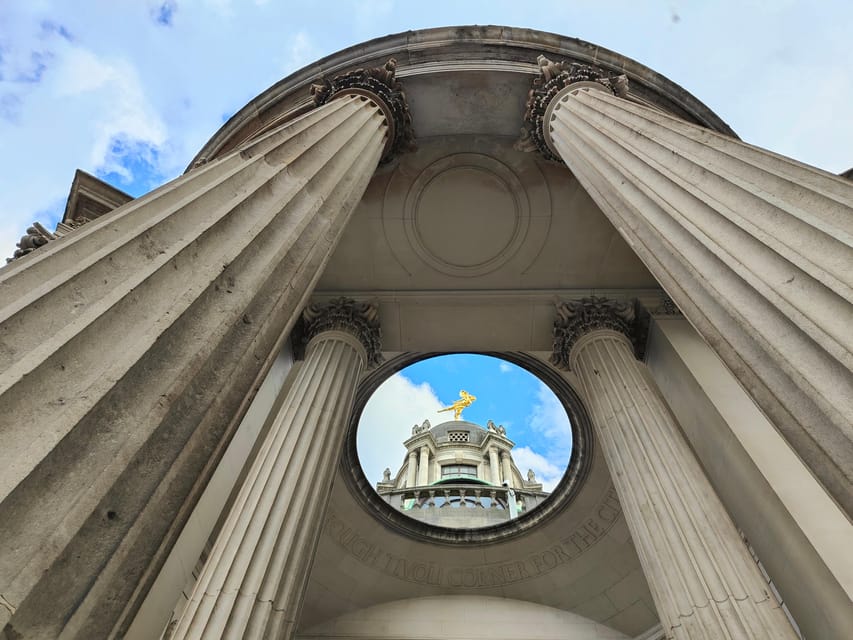
REVIEW · LONDON CITY TOURS
City of London Historical Walking Tour
The City runs on old arguments. On this City of London walk, the square mile turns into a timeline you can actually follow, from Celtic roots through Romans, Saxons, Vikings, and Normans, then right into the 1600s. The dragon theme keeps coming back, like a logo you start noticing everywhere once you learn what it means.
I especially love how the guide connects civic stubbornness to real political outcomes, including the City’s defiance against monarchy and its influence on England’s democracy and legal foundations like the Magna Carta. I also love the pace and size: a small group limited to 8, led live by Arjun, makes it easier to ask questions and stay tuned instead of tuning out.
One drawback to plan for: this is not a big, mainstream sights loop. You will be walking through institutions and historical corners rather than chasing the usual tourist checklist, and no food is served during the 2.5 hours.
Key points before you go
- Celtic to Roman to Norman, with Vikings thrown in where they matter to the story
- Monarchy showdown, showing how the City protected rights instead of just obeying kings
- Magna Carta and the corporation behind the power, where a civic body helped shape an empire
- The green dragon emblem, and why it became part of London’s identity
- A hard stop at 17th century trouble, with plague, fire, and revolution in the final act
- Arjun plus a group of 8, a combo that keeps history from feeling like a lecture
Finding the start at Barbie Green and getting oriented fast
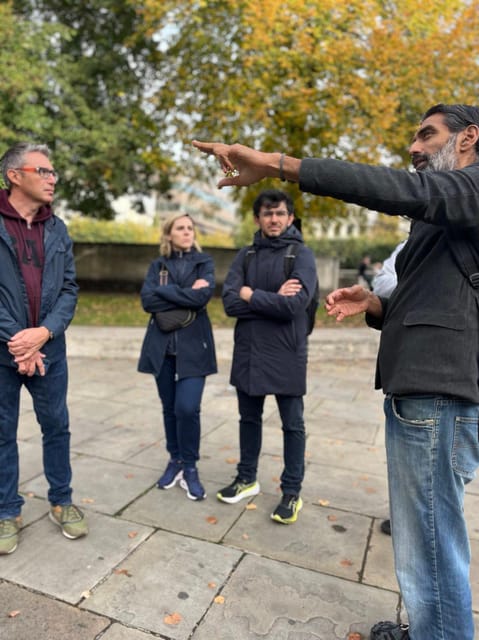
I like starting tours at places that feel like they belong to regular London life, and Barbie Green does that. The meeting point is at the Barbie Green restaurant, opposite the ruins, so you are not hunting down a museum entrance in the rain.
Look for the guide with longish hair and a beard, plus a felt image of a green dragon on the backpack. That little detail actually helps a lot on busy days, and it makes the meetup simple even if you arrive a minute late and the square is already buzzing.
From there, you are not just walking from one photo stop to the next. You are moving through a story of identity, because the City of London was always a separate power center from nearby Westminster. That distinction matters, and the tour keeps bringing it up in plain language so it sticks.
You can also read our reviews of more walking tours in London


From Celtic roots to Norman power, how the square mile changed
This tour is built around the idea that the City of London was never a single story. You trace how it evolved from Celtic roots through Roman, Saxon, and Norman eras, with additional stops and themes that also touch Viking influence.
What I like is that it is not history as a list of dates. The guide connects each era to how the city functioned and why it attracted different kinds of people. That lens helps you understand why the square mile kept reinventing itself rather than fading into the background.
You also get frequent short guided pauses along the way. These are the moments where the story shifts gears, so you do not feel like you are trudging for 2.5 hours straight. Expect the route to include multiple interpretations of what you are seeing, not just one big lecture at the start.
And even on a gray, low-visibility day, the walking style works. The guide’s storytelling keeps the focus on meaning, not on perfect weather or bright skylines.
Defying monarchy and shaping democracy around the Magna Carta
If you care about how laws actually get made, this is the part you will remember. The tour explains how the City of London resisted royal authority and why it became known as the envy of kings.
The message is simple: the City wasn’t just wealthy. It was organized, intentional, and stubborn about its rights. That civic attitude is what links the ancient origins of the square mile to the legal foundations people still study today.
You also visit the theme of the birthplace of the Magna Carta, and the guide ties it to a surprising idea: it is often described as if it was only about kings, but here you see a different force at work. The story emphasizes how a corporation-like civic body helped drive power and influence over time.
This is a good stop for anyone who thinks democracy is a smooth, inevitable progression. The tour pushes back on that. Rights were defended, and the process was messy, local, and fought for in real places.
Salters’ Hall and the civic power behind everyday London
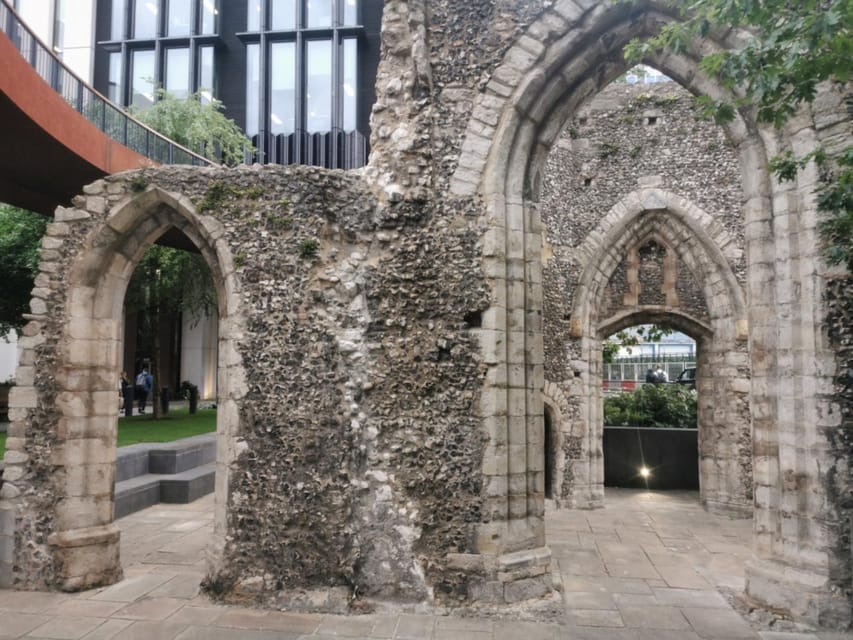
One of the strengths of this tour is that it treats civic buildings like characters in a drama. You pause at Salters’ Hall, and the guide uses that type of landmark to show how the City was built on organization and institutions, not just on kings and battles.
I like this approach because it changes how you look at the modern City. You start noticing that London’s financial and administrative identity has deep roots. Even if you are not an expert, the guide helps you place what you see into the larger theme of who held authority and how.
From there, the walk continues with more short guided moments that connect the historical eras to the City’s self-image as a place that guards privileges. It is the same theme across different time periods: the City may change rulers and cultures, but it keeps its core habit of defending its own interests.
If you want a tour that feels like a guided argument, in a good way, this is it. The guide keeps returning to the idea of independence, and you can feel the theme getting stronger as you move through the square mile.
Guildhall and Royal Exchange stops, where commerce meets governance
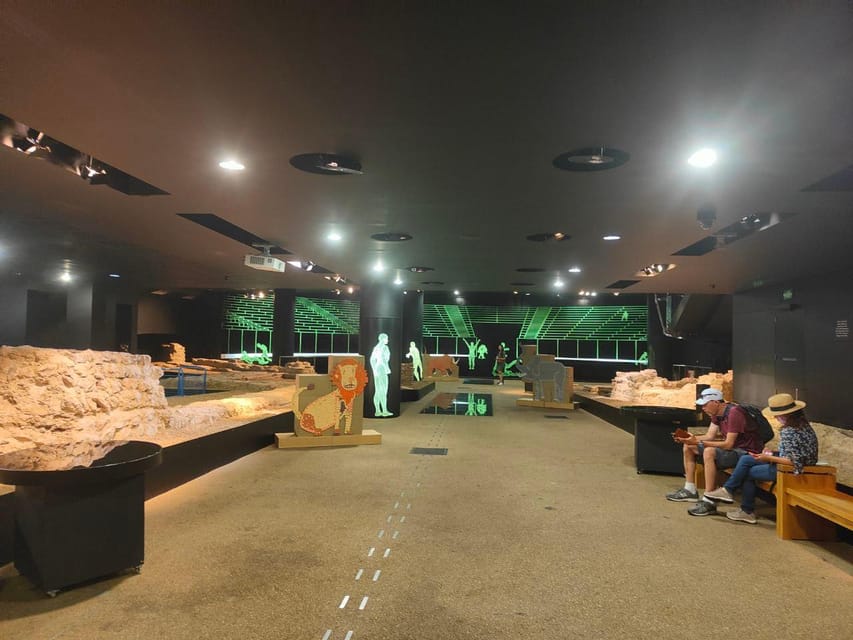
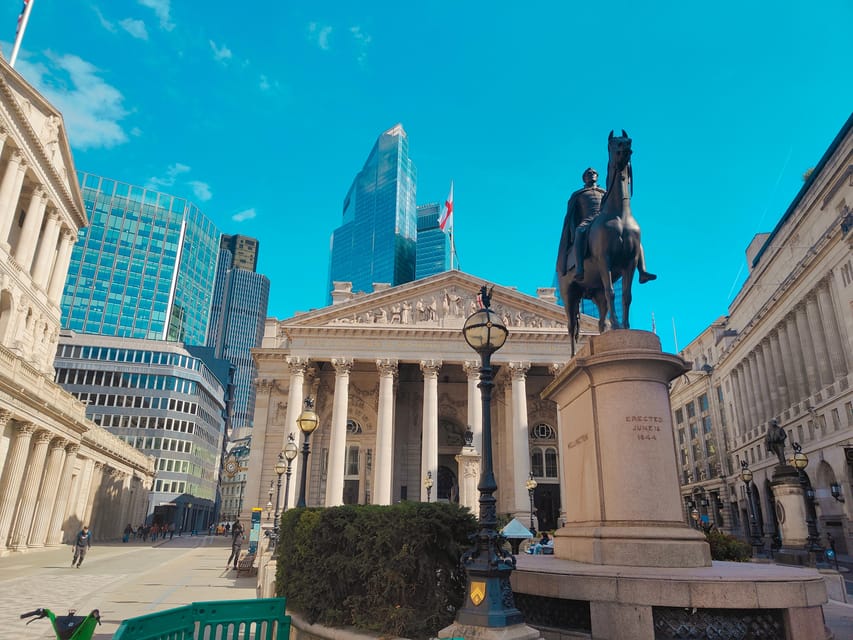
Two of the most interesting pauses come at Guildhall, London and the Royal Exchange. These stops fit the tour’s big claim that the City’s power grew from organized civic life and trade, not just from royal favor.
At these points, the guide connects the medieval and early modern world to the later rise of global influence. The tour’s phrasing about how a corporation was born and later helped create an empire might sound bold, but it gives you a lens for thinking about London as a business engine as much as a political center.
Here is what you can expect in practice: the guide points out how the City’s identity is different from the rest of London, then shows why that difference mattered for centuries. It is not just trivia. It is the logic of how the square mile kept shaping what England became.
I also appreciate that the tour avoids making it all doom and rebellion. You get the practical side too, like how institutions organize people and decisions. That makes the history feel grounded instead of theatrical.
You can also read our reviews of more city tours in London





Mansion House, the dragon emblem, and why London keeps its symbols
The Mansion House stop helps reinforce the tour’s theme that the City’s authority is visible in built form. You are not only learning about battles. You are learning about representation, leadership, and who gets to speak for the city.
Then comes the emblem piece, the dragon, which is the sort of detail you normally pass without noticing. The guide explains why it became tied to London’s identity, and that context changes the way you read the City’s visual language.
After plague, fire, and revolution in the 17th century, the tour frames the dragon as part of a survival story. The City did not just survive. It claimed its rights and privileges for generations, turning symbols into reminders that protection and authority can be rebuilt.
If you like tours that teach you how to look at a city like a text, this is one of the best moments. You will start mentally labeling where identity lives, not just where buildings sit.
Ending at Bank of England, with the 1600s still echoing
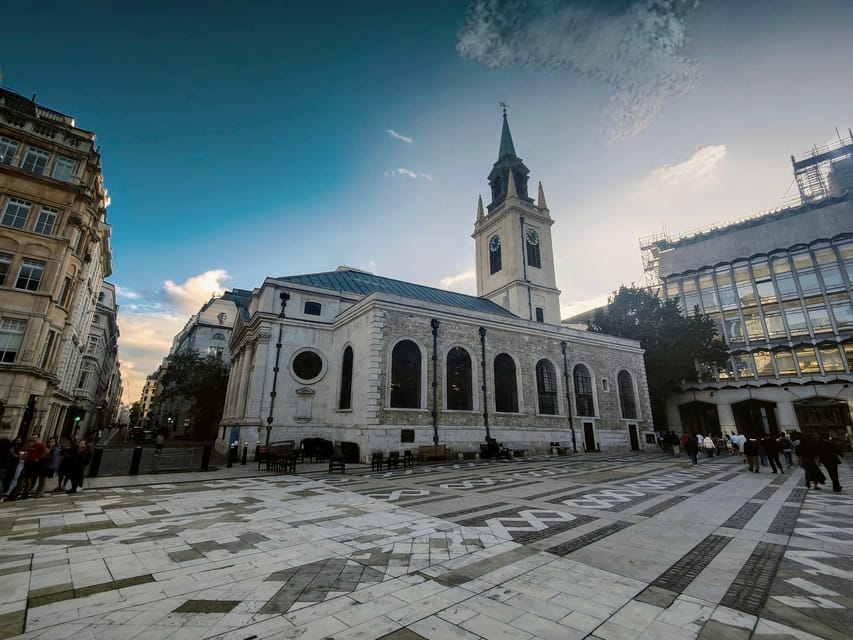
The walk ends at the Bank of England, which is a strong final note because it brings the story into the modern City economy. By the time you reach it, you have already been through the arc: origins, resistance to monarchy, legal foundations like the Magna Carta, the rise of corporate civic power, then the shock of 1600s upheaval.
The tour’s ending is intentionally dramatic. It closes near the end of a turbulent century, with plague, fire, and revolution as the backdrop. From there, you get the idea of resilience, with the City rising and protecting its place.
I like endings like this because they give your brain a place to land. You are not walking away from the square mile feeling like you only learned facts. You are walking away with a story about power, law, and identity, and how those things keep returning in different forms.
If you want a last-minute tip: wear comfy shoes. You will be moving continuously for the full 2.5 hours, and the whole experience depends on maintaining that walking rhythm.
Price and value: $30 for 2.5 hours in a group of 8
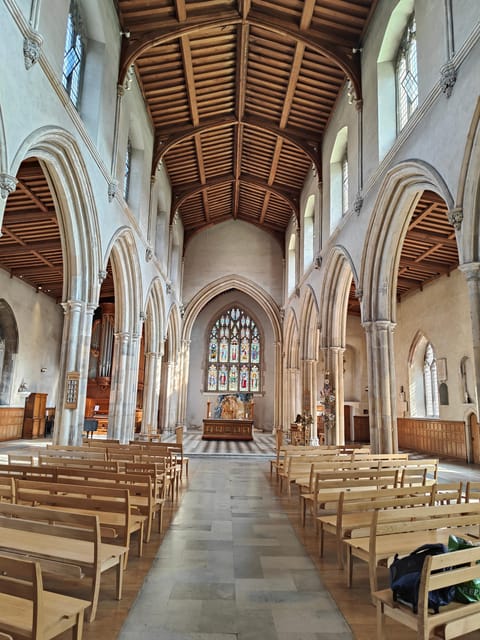
At $30 per person for about 2.5 hours, this tour prices itself in a sensible range for a guided, live walking experience. What makes it feel like good value is the small group limit of 8 participants, plus a live guide and a post-tour PDF overview of the locations and themes.
The tour also includes multilingual support if you arrange it in advance. That matters because it lets you keep the story clear without guessing at explanations.
One thing you should factor in: there is no food served. That is not a dealbreaker, but it does change your planning. If you are doing this earlier in the day, grab something beforehand so the history run does not steal your energy.
Also, this walk is in English, and the tour guide is clearly the engine of the experience. If you enjoy listening to a storyteller who can connect eras without losing you, you will likely feel the time fly.
Who this walking tour is best for
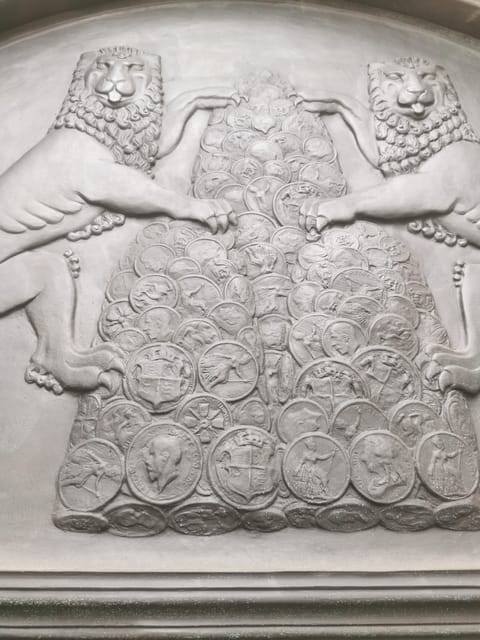
This is a great fit if you:
- Want to understand the City of London as its own power center, not just an extension of Westminster
- Like legal and political history, especially the Magna Carta connection
- Enjoy civic symbols, like the dragon emblem, and how they shape identity
- Prefer smaller groups where you can actually interact
It may be less ideal if you mainly want iconic mainstream sightseeing. This is not centered on big headline monuments. It is centered on how the square mile worked, resisted control, organized itself, and left a paper trail of laws and institutions you can still feel.
If you are short on time in London but want something that feels specific and different from the usual loop, this can be a smart choice. The structure is tight, and it focuses on the story you came to hear.
Should you book this City of London historical walking tour?
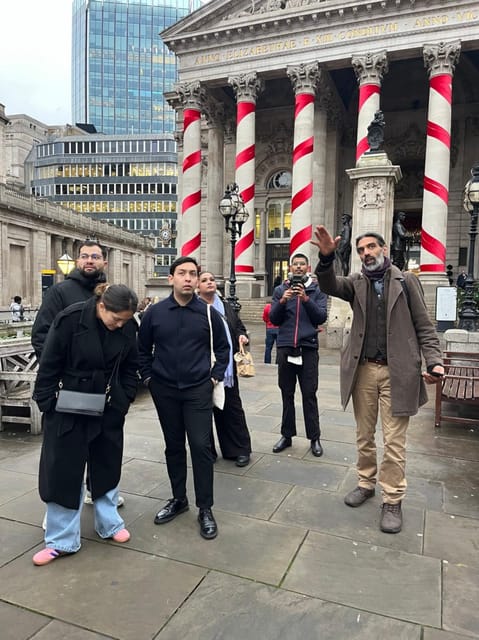
I would book it if you want a guided walk that helps you read the City like a living timeline. The combination of small group size, a guide named Arjun, and the focus on how the City’s rights and institutions shaped England makes it more than a casual stroll.
Skip it if your perfect London day is all about the most famous landmarks, with minimal walking and maximal sightseeing photos. Also plan for no food during the tour, and give yourself time to enjoy the story after, not just to rush back to the next stop.
If you like history with a point of view, and you are curious why London’s square mile behaves like it has its own rules, this tour has a clear answer to that question.
FAQ
What is the duration of the City of London Historical Walking Tour?
The tour lasts about 2.5 hours.
How much does the tour cost?
The price is listed as $30 per person.
Where do I meet the guide?
You meet at Barbie Green restaurant, opposite the ruins.
What time is the tour?
There are different starting times. You will need to check availability to see the exact start time options.
Is the tour wheelchair accessible?
Yes, it is listed as wheelchair accessible.
How big is the group?
It is a small group limited to 8 participants.
What language is the tour guide speaking?
The live tour guide is English. Multilingual options may be available if you tell the provider your language in advance.
Is food included during the tour?
No. Unfortunately, no food is served on this tour.
What do I receive besides the guided walk?
You get a post tour PDF that includes an overview of the tour locations and themes.
What are the cancellation and payment options?
Free cancellation is available up to 24 hours in advance for a full refund. There is also a reserve now & pay later option, so you can book without paying today.
More Walking Tours in London



More Tours in London





More Tour Reviews in London


Not for you? Here's more nearby things to do in London we have reviewed










More London City Tours worth a look.
 ★ 4.6The London Eye Entry TicketTickets from $3935,875 guest reviews
 ★ 4.7From London: Harry Potter Warner Bros Studio TourTickets from $11726,588 guest reviews
Westminster to Greenwich River Thames CruiseTickets from $2222,836 guest reviews
Magical London: Harry Potter Guided Walking TourTickets from $2022,044 guest reviews
★ 4.7From London: Harry Potter Warner Bros Studio TourTickets from $11726,588 guest reviews
Westminster to Greenwich River Thames CruiseTickets from $2222,836 guest reviews
Magical London: Harry Potter Guided Walking TourTickets from $2022,044 guest reviews
 ★ 4.6Madame Tussauds LondonTickets from $3620,915 guest reviews
 ★ 4.5Stonehenge, Windsor Castle, and Bath from LondonTickets from $11118,662 guest reviews
 ★ 4.7Warner Bros. Studio Tour with TransfersTickets from $14417,586 guest reviews
 ★ 4.7Tower Bridge Entry TicketTickets from $2115,560 guest reviews
Continue by place or experience