
REVIEW · BRITISH MUSEUM TOURS
British Museum Private Tour: Ancient Daemons and Timeless Beauty
One museum can feel like ten. A private, theme-led British Museum tour turns the chaos into a story you can follow. You get fast track entry plus an art specialist storyteller in English.
My two favorite parts are the way the guide connects objects into a single thread, and the fact you are not wandering at random through a building of serious scale. The route can be tailored to your interests, and you even have a chance to squeeze in extra time if the schedule allows.
One consideration: this is a 2 to 3 hour experience, so you will need to pick what you want most. If you try to see everything, you will still feel rushed, even with a guide.
Key Highlights You’ll Actually Feel During the Tour
- Private small group time for up to 6 guests, priced per group (up to 8), so questions do not get lost.
- Fast track entry that helps you get into the museum without wasting your prime hours in lines.
- A theme-based route that links civilizations, symbols, and styles so you get the meaning, not just the object.
- Stop-by-stop focus on headline works like Rosetta Stone, Parthenon Marbles, and Egyptian mummies.
- Guides including Richard and Yulia (also seen as Yulywa or Yuliya) are described as flexible and personable.
Why a Private, Story-First British Museum Tour Feels Easier
The British Museum is huge, and that is the whole problem. When you arrive on your own, you end up doing the museum version of power walking, hoping you bump into the things you cared about before your feet quit.
In this private format, you start with a plan. Not a rigid checklist, but a story route. The guide is an art specialist storyteller, so you are not just looking at artifacts, you are learning how to read what you are seeing. That matters because many of these objects come from different cultures and time periods. A good guide helps your brain switch gears without losing the thread.
You also gain something you cannot buy with a guidebook: momentum. Instead of deciding what to do next, you follow the guide from one major stop to the next. It turns a chaotic museum day into a sequence with clear payoffs.
The private group size is another quiet win. With a smaller group, you can ask real questions, even if your question is basic like how to tell what you are looking at. That keeps everyone moving, not waiting for the slowest person to catch up.
You can also read our reviews of more private tours in London



Entering The Museum With Fast Track Help
You do not spend your morning negotiating ticket lines. This tour includes fast track entry and a mobile ticket, so you can get to the galleries sooner. That may sound minor, but at the British Museum, those early minutes add up.
The start point is Montague Place, Montague Pl, London, and the tour ends back at the meeting point. That simple loop matters, because you are not trying to coordinate transit after you have already spent two to three hours walking on floors that were not built for dragging a group across London.
Also, admission is handled for you, since the tour lists admission ticket free. Practically, that means you do not need to do a separate ticket hunt before meeting your guide.
Stop 1: Rosetta Stone and the Art of Reading Symbols
The opening stop sets the tone: you begin with an object tied to understanding language and meaning. You will get to see the Rosetta Stone, and the guide frames it as a gateway to forgotten languages.
Here is what I like about starting this way. It teaches you how to look. Even if you do not know anything about the item, the guide gives you a way to interpret it. You are not just staring at carvings. You are watching history become legible through the act of deciphering.
If you are someone who likes puzzles and clues, this stop is a fast mental win. If you are more into art, it still works because the guide treats the object like an artwork with visual structure, not a random famous rock.
What to watch for on your end: pay attention to how the guide explains what you are seeing. That explanation becomes a tool you will reuse at later stops when the museum throws harder cultural references at you.
Parthenon Marbles: When One City Becomes a Whole Idea
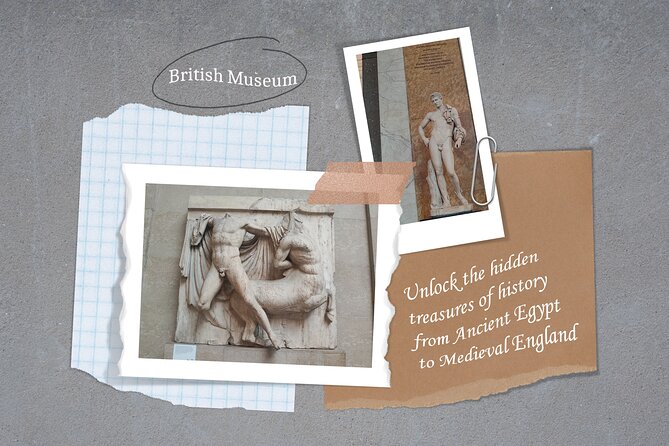
Next up are the Parthenon Marbles. The guide helps you recall the glory of past empires while you look closely at what these works represent.
This is a strong pivot moment. The tour moves you from language into empire and civic identity, which changes how you interpret sculpture. You start asking different questions, like what kind of power a culture wanted to show and how art served that message.
The benefit of having a guide here is time. On your own, it is easy to see these major works and still feel lost, because you might not know what questions to ask. A storyteller guide basically hands you those questions.
One practical note: Parthenon-related displays can be crowded depending on your time of day. Your private group approach helps, because you are not trying to match everyone’s pace in a public flow. You can pause for the parts that matter to you.
Egyptian Mummies: The Quiet Part of the Tour
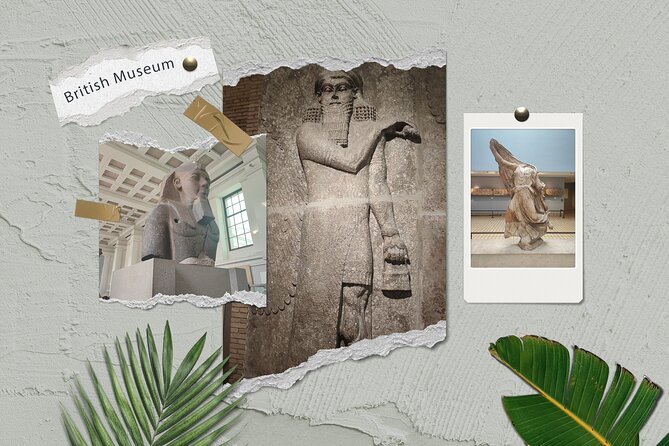
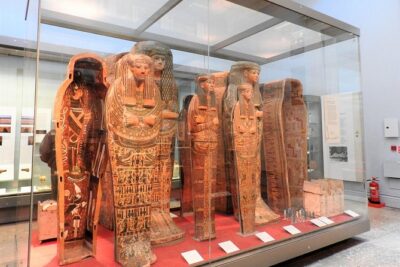
Then you slow down with Egyptian mummies. The tour frames this area as a place to contemplate life and death, with mummies resting in silence.
This stop is not about facts overload. It is about mood and interpretation. With a guide, you are less likely to treat it like a scary sideshow and more likely to understand why the symbolism matters.
What I appreciate is that this is a natural rhythm break. You are moving through high-profile art objects, then you hit a section where meaning is emotional, not just aesthetic. That contrast helps the whole tour feel coherent instead of like a random highlight reel.
If you are traveling with kids or teens, this part can land very well, but you will want to keep it age-appropriate. A skilled guide should be able to steer the story in a way that keeps attention without getting too heavy.
You can also read our reviews of more museum experiences in London





Sutton Hoo: A Last Voyage Story You Can Follow
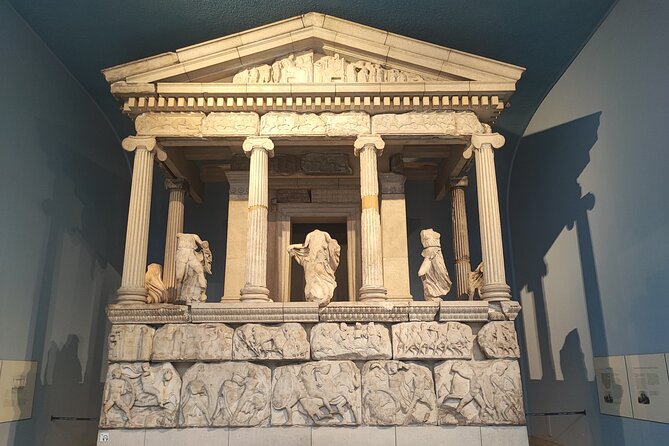
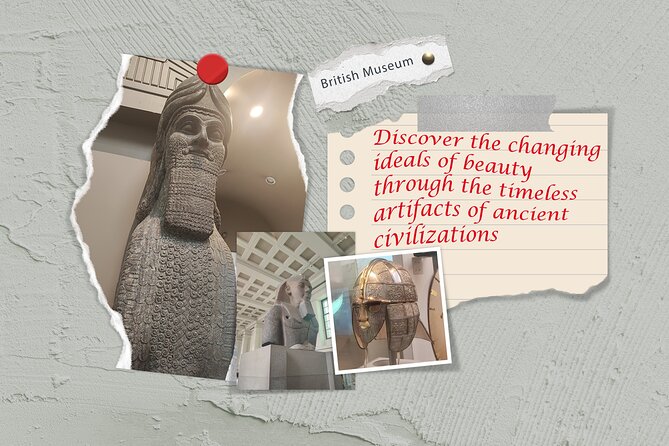
The tour continues with the mystery of the last voyage of an Anglo-Saxon warrior at Sutton Hoo.
This is where the theme-based approach really shows. The British Museum can feel like separate rooms of unrelated eras unless someone connects them. Here, the guide keeps you oriented by treating artifacts like evidence in a narrative.
Even if Sutton Hoo is new to you, you get a storyline you can hold onto. That is the main value: you leave with memory anchors. You do not just remember a name. You remember what it meant in the story the guide built.
A small drawback to keep in mind: this is a museum. You may not be able to linger as long as you want at each stop. The tour is timed, roughly 2 hours guided with a total window around 2 to 3 hours. So if one object is your absolute must-see, tell the guide early so you can prioritize.
Lewis Chessmen: Strategy and Wit on a Small Stage
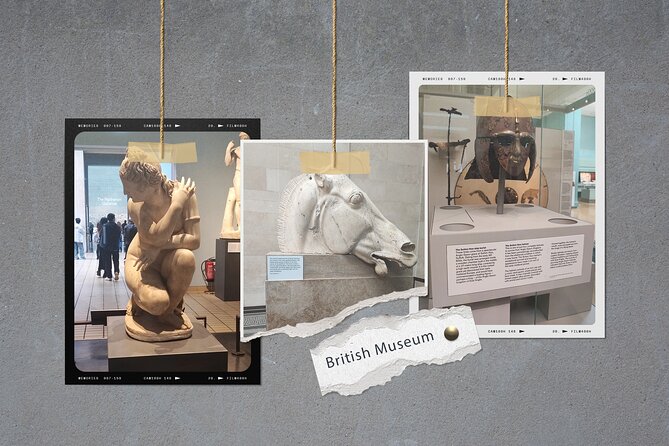
Next comes the Lewis chessmen, framed through tales of strategy and wit.
This is one of those moments where the tour can win you over even if you think you are not a chess person. The guide turns the objects into characters in a story about gameplay, intelligence, and craft.
And it is also a great example of why private is worth it. In open museum exploring, you might walk past this kind of exhibit because it does not look as instantly monumental as the biggest statues. With a guide, you know why it matters and what to look for.
If your group enjoys details, this is a good stop to ask questions. A guide can point out the kinds of things you might miss if you are only half paying attention because you are trying to keep up with the crowd.
Shiva Nataraja: Creation and Destruction With an Art Lens
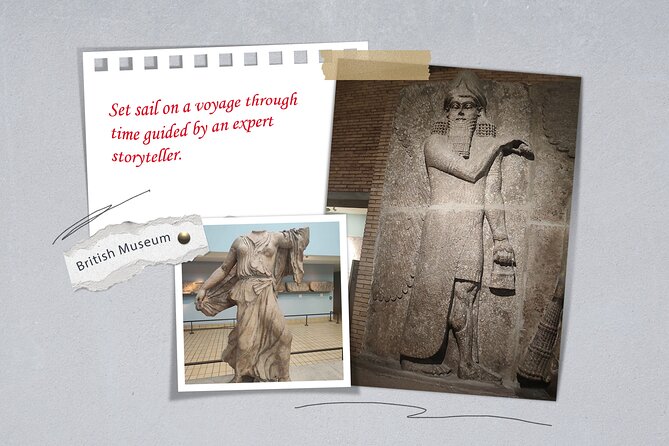
Then the tour shifts into a cosmic frame with Shiva Nataraja, described as a cosmic dance of creation and destruction.
The value here is interpretation. When you see a complex religious figure, you can either feel overwhelmed or you can learn a way to approach it. A good art-focused guide helps you look at the form and movement as part of a meaning system.
This stop can also be a highlight for people who travel for spirituality and symbolism, not just Western art. The guide keeps the tone accessible and makes the object feel like it has a voice.
How to get the most out of it: do not rush. Even if you only have a few minutes in that gallery, give your eyes time to follow the shapes the way the guide suggests. That is how you actually absorb a visual idea.
Ancient Sculpture and Beauty Standards: Learning to See Changes Over Time
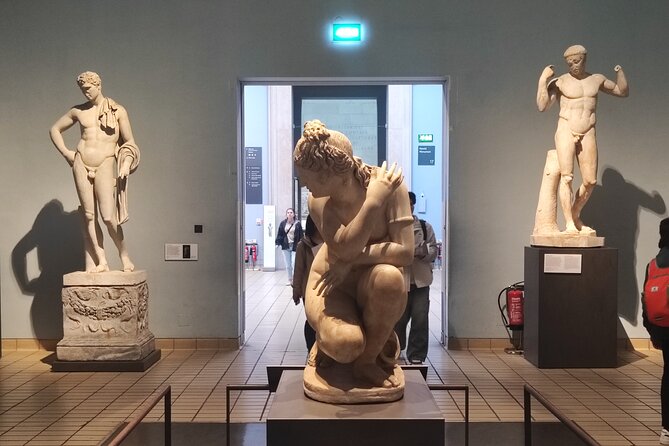
The tour also includes ancient sculptures and the evolution of beauty standards.
This is a subtle but powerful angle. Instead of treating sculpture as one long static chain, the guide treats it like changing taste, changing ideals, changing messages across time. You start noticing proportions, expressions, and style choices as clues.
On your own, that kind of comparison can be hard because you might not have time to return and compare. In this tour, you are getting a guided way to compare so the museum becomes a lesson you can carry home.
If you are the type who likes art history, this is where you get the feeling of progress. You might still be standing in one building, but your brain gets that sense of timeline.
Small Group Comfort, Guide Flexibility, and Real-Time Tailoring
This tour is private, meaning only your group participates. That alone changes the vibe. There is less waiting, less standing still, and more back-and-forth.
From the guidance style described in the experience, the tour can be tailored to what matters most to you. That is the practical part. If your group is more into languages, start leaning into Rosetta Stone. If you care about ancient warfare and burial stories, emphasize Sutton Hoo. If your group is here for dramatic sculpture, put your questions there.
One more thing I like, based on how guides are described: flexibility with pacing. If you are running late, good guides adjust. If the group is enjoying a stop, you might gain extra time. In one case, an extra half hour was provided at no extra charge. You should not count on that, but it is worth asking if your schedule is tight.
Timing, Footwear, and How to Avoid Museum Burnout
Even with a guide, you are walking. You are also moving from gallery to gallery, which means your energy matters more than your willpower.
I recommend wearing comfortable shoes and keeping water handy, even though snacks and drinks are not included. Plan a quick bathroom stop before you meet if you can. At this kind of museum, small delays create big ripple effects in a short tour.
Also, decide your priorities before you arrive. The tour covers many headline objects, but it cannot cover everything in the museum. If you treat it like a buffet, you will leave happier than if you treat it like a sprint to the whole restaurant menu.
If you have mobility limitations, the tour notes say most travelers can participate. Still, it is a museum full of indoor walking. I would plan for stairs and uneven crowd flow in popular galleries.
Who This Tour Suits Best
This is a great fit if you want a guided route with a theme that connects artifacts across cultures. It is also a strong choice if you are overwhelmed by museum size and need someone to pick the best sequence.
It is especially good for:
- First-timers who want the major highlights, plus meaning
- Groups that can benefit from questions and custom pacing
- Families who want a guide to translate big ideas into human stories
It might be less ideal if:
- You prefer totally independent browsing with no structure at all
- You want to spend a long time inside one exhibit only
- You are looking for food included, since snacks and drinks are not part of the package
Price and Value: What $203.65 Per Group Really Buys
The price is listed as $203.65 per group, up to 8. The tour itself also describes groups up to 6 guests. Either way, you are paying for a private guide and fast track entry, not just access to the museum.
The biggest value piece is interpretation. The British Museum is famous, but fame does not automatically equal understanding. When you pay for a guide who can connect objects into a story, you reduce the mental work of figuring out what you are seeing and why it matters.
Admission ticket free is another value anchor. You are not adding an extra line item for entry, which makes budgeting easier.
If you are traveling solo, private pricing usually feels steep compared with group tours. But if you are a pair or small group, the cost spreads, and your day becomes more efficient. You get fewer wrong turns and more time on objects you care about.
Should You Book This British Museum Private Tour?
If you want a museum visit that feels organized, story-led, and easy to follow, I’d book it. The combination of fast track entry, a guide who uses an art specialist storytelling approach, and the focused stops like Rosetta Stone, Parthenon Marbles, Egyptian mummies, Sutton Hoo, Lewis chessmen, and Shiva Nataraja is exactly what makes this experience worth your time.
If you are the type who loves drifting for hours with no plan, you might prefer self-guided exploring. But if you are trying to get real meaning out of the British Museum in a short window, this private format is a smart way to do it.
FAQ
How long is the British Museum private tour?
It runs about 2 to 3 hours total. The guided portion is listed as about 2 hours.
What is included in the tour?
Included features are a guided museum tour, fast track entry, and admission ticket free. You also receive a mobile ticket, and the experience is described as being in a friendly, professional environment.
Is the tour private?
Yes. It is a private tour/activity, and only your group participates.
How many people can be in the group?
The highlights describe groups up to 6 guests. The price is listed per group up to 8.
What language is the tour offered in?
The tour is offered in English.
Where does the tour start and end?
The meeting point is Montague Place, Montague Pl, London, UK. The activity ends back at the meeting point.
Are snacks or drinks included?
No. Snacks and drinks are not included.
Do I need to buy an admission ticket separately?
The experience lists admission ticket free, so you should not need to buy it separately for this tour.
What is the cancellation policy?
Free cancellation is available up to 24 hours in advance for a full refund. If you cancel less than 24 hours before the start time, the amount paid is not refunded.
More Private Tours in London


More Tours in London




More Tour Reviews in London


Not for you? Here's more nearby things to do in London we have reviewed










More British Museum Tours worth a look.
 ★ 4.3British Museum Guided TourTickets from $231,182 guest reviews
 ★ 5.0British Museum London Guided Tour Semi-Private 8ppl MaxTickets from $108984 guest reviews
 ★ 4.1Tour of the British MuseumTickets from $14678 guest reviews
 ★ 4.5British Museum Audio Tour & Priority Entrance TicketTickets from $9631 guest reviews
 ★ 5.0The British Museum London – Exclusive Guided Museum TourTickets from $108555 guest reviews
 ★ 4.2Afternoon Tea at the British MuseumTickets from $58511 guest reviews
 ★ 4.0British Museum Guided TourTickets from $18470 guest reviews
★ 4.5British Museum Guided TourTickets from $39267 guest reviews
Continue by place or experience