
REVIEW · LONDON BLACK CAB TOURS
Black Taxi Tour Of London
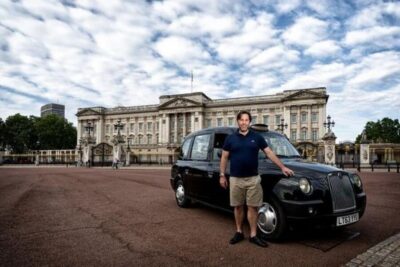
Four hours, one black cab, total control. This private custom taxi tour lets you shape the day, from classic Westminster views to offbeat requests, guided by drivers like Morris, Bryan, and Tony. I especially like the glazed roof and big windows, so you can see and photograph sights without neck strain.
I also love the value of a flat fare for up to six, which can work out far cheaper per person than booking separate guides. One catch: the tour starts around 10:00 AM, and free pickup is only within 5 miles of Trafalgar Square, so your lodging location can change the math.
Key highlights worth planning around
- Black cab comfort with panoramic viewing: big windows and a glazed roof help you spot details as you roll past landmarks.
- True customization in a tight time window: tell the guide what you care about, then adjust stops as you go.
- A single price for up to six people: families and small groups get the best value.
- Prime Westminster plus City contrasts: you get government power, then quickly pivot to churches and river history.
- Accessible-friendly vehicle experience: guides can help with mobility needs, and you’ll still get good sightlines from inside the cab.
Why this private black cab format feels different than a bus tour
London is easy to overplan. You queue, you rush, you dodge crowds, and then you realize you didn’t actually see much. A private black cab solves a lot of that with one simple idea: you move when your group needs to move.
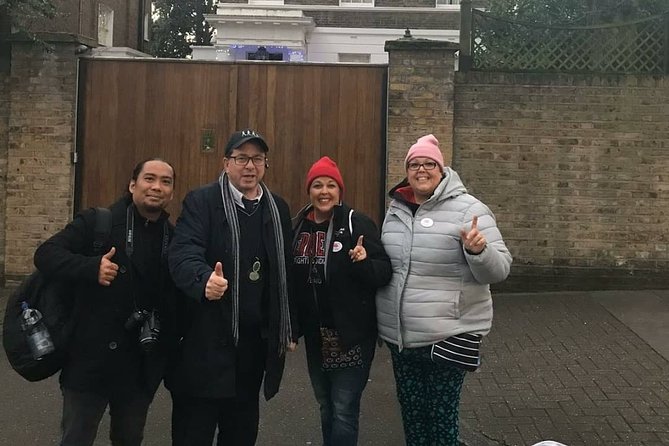
I like that this tour is custom. You can ask for stops, steer away from the stuff you’ve already seen, or just let the driver build a sensible route. In real terms, that means you are not stuck with someone else’s script. Guides such as Morris are known for focusing on what each person cares about, including family-friendly pacing.
And yes, the taxi itself matters. The vehicle is designed for viewing, with large windows and a glazed roof. That changes the whole feel of a landmarks tour. You can watch the street-level details slide by, keep your phone steady, and spend less time craning for angles.
You can also read our reviews of more tours and experiences in London.
Price and group value: when $603 per group makes sense
The price is $603.08 per group, up to 6 people, for about 4 hours. That sounds steep until you do the per-person math and compare it to the cost of multiple tickets, separate private transport, or buying time in a crowded bus line.
Here’s the practical way to think about it:
- If you’re 2 people, you’re paying for privacy, convenience, and a driver who can tailor your route.
- If you’re 4 to 6 people, the flat fare becomes a real bargain because the cost spreads evenly.
- For families, it often ends up cheaper than trying to manage multiple entrances and timed tickets while herding kids through Westminster.
Also consider what’s included: pickup and drop-off within 5 miles of Trafalgar Square, plus pickup and drop-off from hotel or Airbnb. That reduces your day’s logistical stress, which is where “value” often hides.
The trade-off is that it is still a half-day in London. If your must-dos include lots of inside museum time, you’ll need to prioritize, because this tour is built for seeing a lot of key areas with your guide, not for long ticketed visits.
Getting started at Embankment Place and how pickup works
The tour’s meeting point is Embankment Place, London WC2N. You end back at the same spot. If you’re staying near central sights, that helps keep your day simple.
You can also request pickup and drop-off from your hotel or Airbnb, as long as you are within a 5-mile radius of Trafalgar Square for the free pickup option. Pickup is also offered from airports and ports, but surcharges and parking charges may apply depending on where you need to be collected.
Starting time is around 10:00 AM, with general starting time guidance listed as 9:00 AM to 11:00 AM. If your schedule forces an unusual start, you’ll want to contact the provider in advance, because the key is aligning your route to your group’s energy level.
If you like the idea of “show up, ride, learn,” this is one of the smoother ways to kick off a London trip. You’ll also have a mobile ticket, so you’re not stuck hunting for paper.
Apsley House and Wellington Arch: power, symbols, and statues
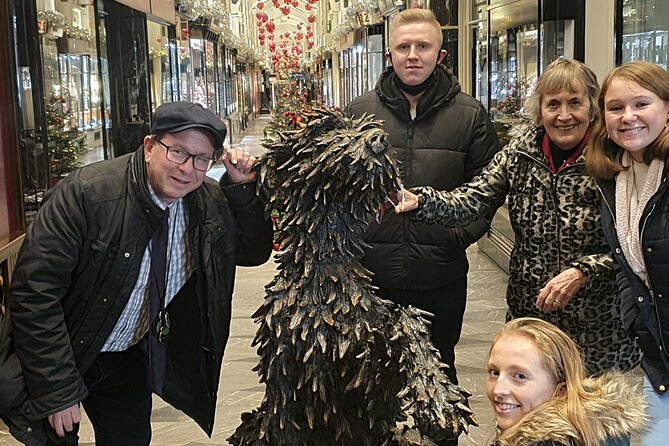
Your tour begins with Apsley House, the home of the Duke of Wellington. The building dates back to 1825 and sits at the address known as Number One London. Even if you only view it from outside, it’s a strong start because it’s tied to one of Britain’s most important military reputations.
Right across the way is Wellington Arch. This spot has a layered story. The arch was moved slightly to act as an outer gate for Buckingham Palace, and the area still carries that sense of ceremonial planning. Over time, statues changed locations too, including the placement of a major equestrian sculpture on top of the arch in 1912.
What I like about starting here is that it teaches you how London landmarks are not just pretty facades. They are political signals. The quadriga theme you hear about, with Nike the Goddess of Victory riding the chariot, is the kind of detail that makes the city feel like it has a brain behind it.
Practical tip: since you are in a cab, you don’t need to sprint between viewpoints. You can take a photo, ask one question, then roll to the next stop without losing momentum.
Westminster Hall and the Houses of Parliament: the long rebuild story
Next you shift into the heart of government. The tour focuses on the area around the Palace of Westminster and explains how the site keeps being rebuilt.
Here’s the big idea you’ll hear: the first record of a royal palace on this site goes back to the 11th century, and it survived as a major power base long before the modern Parliament buildings. Fires and destruction repeatedly changed what stood there, including major rebuilding after a destruction in the 1500s and again in 1834.
What remains lucky for visitors is that not everything vanished. You’ll hear that Westminster Hall still dates to 1097, and that there are surviving parts like the Crypt and Jewel Tower. Then, from 1834 to 1870, the Parliament buildings were rebuilt by architects Augustus Pugin and Charles Barry, resulting in the House of Commons and House of Lords you think of today.
From a practical viewpoint, this is a smart stop for a private tour because it compresses a complicated timeline into a drive-by context. You get the meaning of what you’re looking at without getting lost in dates.
Possible drawback: if you want deep museum-style interpretation inside the buildings, this kind of taxi tour will likely feel more “overview from the street.” The upside is you’ll still leave with clarity on what you’re seeing.



Big Ben (Elizabeth Tower) and Downing Street: icons you can place on a map
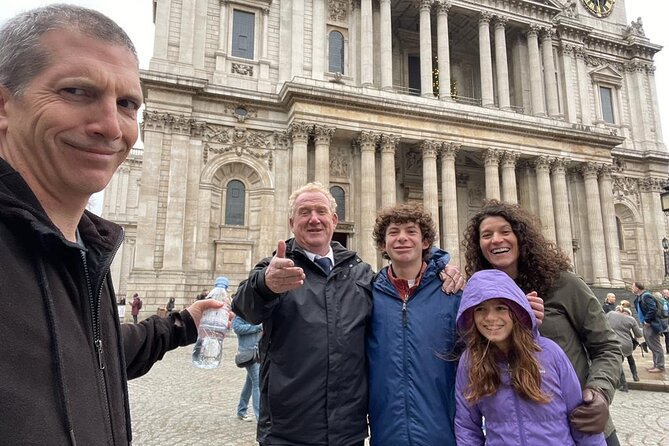
Two quick but high-impact landmarks come next.
First is the clock tower people call Big Ben. You’ll learn the difference between the nickname and what it actually refers to, since Big Ben gets used for the bell, the clock, and the tower all at once. The official name is Elizabeth Tower, renamed in 2012 to commemorate Queen Elizabeth II’s Diamond Jubilee. The design is Gothic Revival, credited to Augustus Pugin, and the tower opened in 1859.
Then you move to Downing Street. The Prime Minister lives at Number 10, and the Chancellor of the Exchequer at Number 11. The street itself was built in 1680 by Sir George Downing and sits between Whitehall and the corridor toward Trafalgar Square.
What makes these stops work in a half-day is that they connect the dots. After Apsley and Wellington Arch, you’re already thinking about symbols. Big Ben and Downing Street turn that theme into modern governance and political identity.
From your side of the window, you’ll want to keep it simple: ask your guide to point out where the names and roles connect to the buildings. That one step usually makes the area click instantly.
Westminster Abbey, then Thames bridges: the sweep from coronations to river engineering
Westminster Abbey is the religious anchor of this route. It is formally known as the Collegiate Church of Saint Peter and is mainly Gothic in design. You’ll also hear how big a deal it is historically: it’s the place where every coronation has taken place since William the Conqueror, plus sixteen royal weddings have happened there. Many British monarchs are also buried here.
The guide portion that I like best is the explanation of what you can see. You’ll learn that the towers visible today were added in the 18th century by Nicholas Hawksmoor, and that the abbey’s story includes multiple rebuilding phases, including changes in the era of King Henry III and rebuilding in 1517.
Then you pivot to the river. The tour covers London’s bridges as living history, not just photo backdrops. You’ll hear that London’s earliest bridge history goes back to Roman-era wooden crossings, and that the first stone London Bridge was built between 1176 and 1209. It was once the longest inhabited bridge in Europe, with shops, houses, restaurants, and a chapel.
You’ll also hear that today’s London Bridge is the third stone bridge on the site. That little fact makes the skyline feel deeper.
Next up is Tower Bridge, built between 1886 and 1894. It’s a combined bascule and suspension bridge, and people often call it the Wonder Bridge. If you enjoy engineering details, ask your guide to explain the bascule and how it works, because the explanation helps you see the shape as something functional.
Finally, there’s Albert Bridge between Chelsea and Battersea. The tour notes its lighting as a standout sight, and it’s been used in films. There’s also a military detail tied to its past instability, including the sign telling troops to break step.
Practical note: with a taxi tour, you get a lot of viewpoints fast. The trade-off is you won’t get the same time for slow wandering and inside stops as you would on a full walking tour.
Victoria Embankment and St Paul’s Dome: London’s skyline lesson

From Westminster and the bridges, you roll along the Victoria Embankment, which runs along the north bank of the Thames from the Palace of Westminster to Blackfriars Bridge in the City.
You’ll hear about what this stretch was designed to do and what memorials line it. The Battle of Britain memorials are called out, along with retired vessels such as the H.M.S President, plus public gardens including the Victoria Embankment Gardens. The big engineering name here is Joseph Bazalgette, who directed construction between 1865 and 1870, and his work influenced the Thames by narrowing parts of the river.
This stop works well because it connects history to city design. You stop thinking of the river as scenery, and you start seeing it as an engineered system the city depends on.
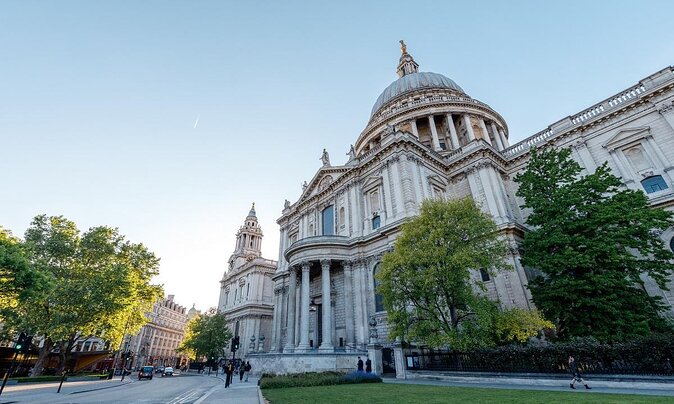
Then you end with St Paul’s Cathedral. The tour covers the site’s long timeline, starting with a record back to 604 AD under Bishop Mellitus. There have been four cathedrals on this spot, and the current one was built between 1675 and 1710, with Christopher Wren as the key architect. You’ll also hear that Wren is buried under the Dome.
The guide explains how the earlier St Paul’s was destroyed in the Great Fire of London in 1666, and then how the current cathedral rose in English Baroque style. If you want scale, the Dome is 365 feet high and weighs about 65,000 tons. It was among the tallest buildings in the world from 1710 to 1967. Built on Ludgate Hill, it became the Anglican Cathedral and seat of the Bishop of London.
If you time it right, this is also where your photos look best because you can frame the Dome against the city from a comfortable seated position.
How to make your custom tour feel effortless (not stressful)
The best private tours have one thing in common: the guide has enough info to steer well. So before you roll, tell your driver your priorities in plain language.
I recommend you share:
- What you want most, Westminster views, royal power, churches, architecture, or river history
- Whether you want photos often, or fewer stops with more time at each
- Any mobility needs and what walking length feels manageable
This tour format is built for that kind of input. In the past, guides like Morris have shaped the day around interests like the Beatles and around family needs, including kids. Other guides, including Dave, have handled slower walking by using the cab as a “reset button,” which is exactly what you want in real life.
Also, use the taxi time for questions while you travel. Ask about the building features you can see, and ask about what the city looked like before it rebuilt itself. You’ll learn a lot faster when you’re standing still for a photo and listening at the same time.
One more practical tip: if your group wants a lot of landmarks, don’t ask for all of them to be “must see inside.” Instead, aim for meaning and context. That’s the best way to keep the day fun.
Who should book this tour, and who should consider something else
Book this if you’re:
- Short on time and want a fast, coherent London overview
- Traveling with kids, multigenerational family members, or anyone who prefers minimal walking
- Staying near central London and can use the free pickup within 5 miles of Trafalgar Square
- A group of 3 to 6 people who can split the flat fare and get good value
Consider a different option if you:
- Need lots of inside access at specific attractions, and you want to spend hours inside multiple buildings
- Have a schedule that conflicts with the typical 10:00 AM start time
The good news is that the tour is designed to be flexible in how it hits key areas, and that helps you stay in control even when London crowds and weather do their usual chaos.
Should you book this Black Taxi Tour of London?
If your goal is to get your bearings fast and understand what you’re looking at, this tour is a strong choice. The combination of a private driver, big-window cab comfort, and a route focused on Westminster, the Thames, and St Paul’s makes it ideal for a first or second day in London.
It is especially worth it when your group is large enough to make the flat fare feel fair. If you’re booking for just one or two people and you’re also far from Trafalgar Square, the cost per person goes up, so you’ll want to be confident you’ll use the customization and pickup benefits.
If you like learning on the move, you’ll probably enjoy this one. If you want deep inside visits all day, then you might pair this with a longer neighborhood walk on a different day and keep this as your orientation day.
More Tours in London


More Tour Reviews in London
Not for you? Here's more nearby things to do in London we have reviewed







More London Black Cab Tours worth a look.
 ★ 5.0The Premier Classic London: Private 4-Hour Tour in a Black CabTickets from $5532,737 guest reviews
 ★ 5.0Private Tour: Black Taxi Tour of LondonTickets from $3061,153 guest reviews
 ★ 5.0London Sightseeing Private Black Cab Tour with Hotel Pick UpTickets from $441917 guest reviews
 ★ 5.0The Ultimate 6-hour Private Tour of London in an Iconic Black CabTickets from $830533 guest reviews
 ★ 5.0Black Taxi Tour of London: Classic Sightseeing Bespoke & FunTickets from $637371 guest reviews
 ★ 4.5Harry Potter Black Taxi Private Tour of London with Hotel PickupTickets from $482287 guest reviews
 ★ 4.9Sightseeing Black Cab Tour with Hotel PickupTickets from $429209 guest reviews
 ★ 5.0Private London Highlights Tour in a Black Cab: 2, 4, or 6 HoursTickets from $415203 guest reviews
Continue by place or experience