
Freddie’s London feels close enough to touch. This 2.5-hour walk through South Kensington and nearby streets turns famous names into real addresses, with stories that link the early years, the breakthrough, and the heartbreak. Two things I particularly like are the way you get Garden Lodge context, and how the tour uses exact local stops to explain why these songs and performances happened.
I also like that the guide’s focus is not just dates, it is the human path from market stalls to stadiums. One possible drawback is simple: it is still a walking tour, so comfortable shoes matter, especially if you want to linger for photos.
Key tour highlights at a glance
- Small-group experience (up to 12 people) that feels personal rather than rushed
- Imperial College and Brian May’s student years in the story, not as trivia
- Beit Quadrangle at Imperial College, tied to Queen’s first London gig in 1970
- Royal Albert Hall moments, including Freddie as the star at Fashion Aid
- Kensington Market and the BIBA area, where you connect Queen lore to street-level scenes
- Garden Lodge, where Freddie’s London story ends with emotion and clarity
Walking Queen and Freddie Mercury’s London, stop by stop
If you love Queen, this tour gives you something better than a list of landmarks. It gives you cause and effect. You see where people lived, where they worked, and where the band’s early life overlaps with big career turning points. And instead of treating it like a museum route, the pacing keeps it readable, with frequent short guided moments along the way.
The route is built around one geographic idea: Kensington and South Kensington were the “real life” stage for Freddie Mercury and the band’s early world. That matters because London can feel like layers on layers. Here, you get a guided thread that pulls you through those layers without losing the plot.
You should also know the tone from the start. The guide openly frames the Garden Lodge segment as emotional. So if you want a purely light, pop-culture walk, keep that in mind. If you are okay with sentiment, you’ll probably find it more meaningful than you expected.
You can also read our reviews of more tours and experiences in London.
Starting at Daquise Cafe, then settling into a smart 2.5-hour rhythm
The meeting point is outside Daquise Cafe, which is a convenient setup because you can start by getting your bearings quickly and doing the usual pre-walk checks. From there, the tour moves through South Kensington on foot, with short, guided stops built in throughout.
This matters for two reasons. First, it helps you enjoy the neighborhoods while you learn, instead of sprinting from one photo spot to the next. Second, short guided moments let you reset your brain, especially when the stories shift from career milestones to personal life.
Also, the tour runs for about 2.5 hours. That is long enough to feel like you covered real ground, but short enough that you are not stuck on a full-day walking marathon. Still, you’ll be outside, walking, and stopping often, so plan around weather and bring comfortable shoes.
Imperial College and Brian May’s era, beyond the big-name myth
One of the most satisfying parts of this tour is how it treats Brian May’s Imperial College connection as part of a bigger scene. You get the student-years angle and the idea that talent grows in real places, with real schedules, not only in studio magic.
The stop at Imperial College includes both a story-driven moment and the setting itself. That is where Beit Quadrangle comes in, tied to Queen’s first London concert in 1970. This is the kind of detail that makes you look at a building differently. Instead of thinking of it as a campus on a map, you start picturing the first time the band brought their sound to London audiences.
Practical tip: when you arrive near the stops, give yourself a minute to look around before you listen. Imperial College and the surrounding streets can be easy to skim quickly. A quick scan first helps you anchor the story in a place your brain can recall later.
Beit Quadrangle, the first London gig in 1970
Beit Quadrangle is one of those spots where context turns the space into a scene. The tour connects the location directly to Queen’s first London performance in 1970, which is a key early marker. Even if you know the band’s timeline, hearing it tied to a specific campus space makes it feel more real.
What I like here is how the tour uses one fact as a launching point for multiple threads. You are not just getting the year and the venue. You’re being guided to understand how a band transitions from early local momentum into London visibility.
If you’re a die-hard fan, this is exactly the type of stop you’ll appreciate. If you’re a newer fan, it becomes a quick history lesson without turning into a classroom.
Royal Albert Hall and Fashion Aid, where Freddie owned the stage
Next up is the Royal Albert Hall area. The tour does not treat the hall like a distant landmark you only see in photos. It connects the space to Freddie Mercury’s star moment at Fashion Aid, which gives you a different angle on the Royal Albert Hall story than the usual concerts and famous names.
This is a smart move because Fashion Aid was more than a performance. It was a high-profile event that helped place Queen’s presence in a wider public spotlight. The hall becomes a storytelling tool, not just a backdrop.
As you pass and approach, you get time to look around and reframe the neighborhood. London landmarks often feel intimidating because they are too famous. Here, you get the opposite effect. The guide’s framing makes the space easier to picture as part of Freddie’s journey.

Kensington Market, market stalls, and the David Bowie footnote
Kensington Market is where the tour becomes especially satisfying if you enjoy the “small beginnings” angle. The stories place Freddie and Roger in the market-stall world, emphasizing that the early days were not glamorous, they were practical. That contrast is part of the appeal.
Then you get a fun, very specific detail: Freddie once measured David Bowie’s feet. That kind of detail is not there for trivia points alone. It helps the story feel human and local, like you could bump into someone who just came from a shop next door.
This is also a strong reminder that Queen’s rise had roots in ordinary London life. If you’re tired of generic celebrity tours that only show “big buildings,” this is where the tour earns its keep.
Photo tip: at market-area streets, take your shots before you stop listening. Mid-sentence photos can happen, but your attention will be better if you grab one or two visuals early and then focus on the guide.
BIBA, Mary’s work, and Freddie’s everyday visits
The tour shifts into the BIBA clothes shop location, tied to Mary’s work and the story of Freddie regularly visiting. This stop is valuable because it connects romance and routine to a specific brand and street environment. It’s not just “they met” or “they were together.” It is where their relationship moved into day-to-day London.
For many Queen fans, Mary’s role is a key part of understanding Freddie outside the stage persona. This tour gives you that angle without turning it into gossip. It keeps the focus on place, routine, and how love lived alongside ambition.
If you like details that feel oddly relatable, you’ll enjoy this section. The idea that Freddie kept returning to a shop because it mattered helps you see him as a person navigating real human moments.
The apartment where Freddie and Mary first lived together
From the BIBA connection, the tour goes to the apartment where Freddie and Mary first lived together. Again, it’s one of those stops where the building itself is not the point. The story is.
This is where the tour’s emotional balance shows. It does not only celebrate music. It also shows how a person’s private life unfolds in the middle of public success and public attention.
You might find yourself slowing down here, partly because the story carries weight and partly because you are standing in a real residential London context. It feels different from major venues like the Royal Albert Hall, and that contrast helps the whole trip land.
Live Aid 1985, and how Queen took control of the moment
Then comes Live Aid 1985, framed as the story of how Queen conquered it. This part matters because Live Aid is often remembered as a TV moment and a famous broadcast. The tour helps you understand it as a career pressure test that Queen handled with both performance and presence.
I like that the tour treats Live Aid as a story with momentum. You get why the event mattered, and how Queen’s style and confidence turned a huge global stage into something they could genuinely shape. If you only know Live Aid through clips, this will give you a fuller sense of what it meant in the band’s trajectory.
Even if you already know the headline facts, the way the tour connects Live Aid back to the band’s earlier “real London” world makes the success feel less random. You start to see how the earlier work, the early London visibility, and the personality of the band built toward that moment.
Garden Lodge, Freddie Mercury’s London home and the ending
Garden Lodge is the emotional high point. The tour presents Freddie’s country home in London as more than a celebrity residence. It is framed as the place where his later life played out, including stories of legendary parties, and then the tragic untimely death.
This is where you should mentally prepare for a shift in tone. You’ll hear the mixture of private life, public myth, joy, and loss. If you are the kind of fan who likes to keep the music close but also understands the person behind it, this stop tends to land hard in the best way.
Practical suggestion: bring your camera, but keep it respectful. This is not only about collecting photos. It is about taking in a place tied to a real human story.
Walking value, group size, and why this tour works for Queen fans
At $26 per person for a 2.5-hour guided walk, the value is strongest if you care about context. This is not a “drive-by photo stops only” experience. The price buys you a guided storyline that stitches together Imperial College, Royal Albert Hall, Kensington Market, the BIBA area, and Garden Lodge into one continuous narrative.
The small group format, up to 12 people, is a big part of that value. You get a more personal feel. You also avoid the awkward situation where you can’t hear the guide because the group is too big or moves too fast.
It’s also the kind of tour that can satisfy super fans. Many fans already know songs and dates. What they often want next is the extra layer: the addresses, the street-level connections, the specific moments like the Fashion Aid star turn, and the Live Aid framing.
From the tour tone and the guide style, you can expect humor and passion too. That blend matters because the story includes both big wins and heavy loss. If the guide treats both with care and keeps the pace friendly, the whole walk feels more like a conversation than a lecture.
Who should book this Queen and Freddie Mercury walk
This tour is best if you fit one of these types:
- You are a Queen fan who wants London’s locations connected to real stories, not only famous names
- You like music history that includes daily life, romance, and the early years
- You enjoy walking tours but prefer a manageable route with frequent guided stops
- You want a group experience that still feels personal, with room to ask questions
It may be less ideal if you want almost no walking, or if emotional topics hit you hard and you’d rather keep things light.
Should you book the London: Freddie Mercury and Queen Tour?
Yes, I’d book it if your goal is to see Queen and Freddie Mercury’s London as a connected story across neighborhoods. The strongest reason is the combination of specific locations and the way the guide ties them to meaningful career beats, from Imperial College to Live Aid, then to Garden Lodge.
I’d think twice only if you dread walking or want purely upbeat sightseeing. But if you can handle a thoughtful, emotional ending, this tour gives you a high return on time, because it turns a few hours of London pavement into a clear narrative you’ll remember long after you leave.
FAQ
How long is the tour?
The tour duration is 2.5 hours.
Where does the tour meet?
The meeting point is outside Daquise Cafe.
What does it cost?
The price is $26 per person.
Is this a small group tour?
Yes. The group is capped at a maximum of 12 people for a more personal experience.
What locations will we see?
You will visit key Queen-related spots around Kensington and South Kensington, including Imperial College, Beit Quadrangle, the Royal Albert Hall area, Kensington Market, the BIBA clothes shop location, and Freddie Mercury’s home, Garden Lodge.
Will there be walking?
Yes. Wear comfortable shoes, since the tour involves walking between stops.
Is the tour wheelchair accessible?
The tour is listed as wheelchair accessible.
What language is the tour guide?
The tour guide provides the experience in English.
Is the tour suitable for all ages?
It is not suitable for babies under 1 year, and it is not suitable for people over 95 years.
More Tours in London
More Tour Reviews in London
Not for you? Here's more nearby things to do in London we have reviewed


More London City Tours worth a look.
 ★ 4.6The London Eye Entry TicketTickets from $3935,875 guest reviews
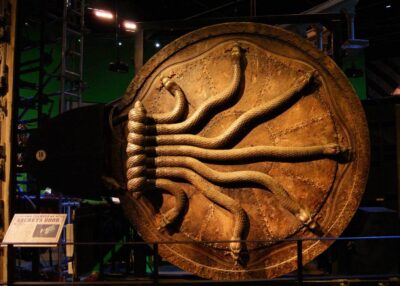 ★ 4.7From London: Harry Potter Warner Bros Studio TourTickets from $11726,588 guest reviews
Westminster to Greenwich River Thames CruiseTickets from $2222,836 guest reviews
Magical London: Harry Potter Guided Walking TourTickets from $2022,044 guest reviews
★ 4.7From London: Harry Potter Warner Bros Studio TourTickets from $11726,588 guest reviews
Westminster to Greenwich River Thames CruiseTickets from $2222,836 guest reviews
Magical London: Harry Potter Guided Walking TourTickets from $2022,044 guest reviews
 ★ 4.6Madame Tussauds LondonTickets from $3620,915 guest reviews
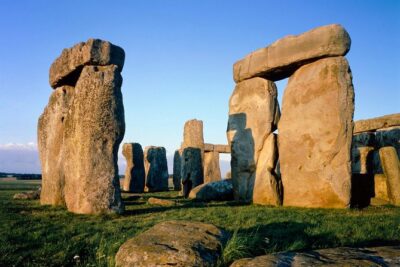 ★ 4.5Stonehenge, Windsor Castle, and Bath from LondonTickets from $11118,662 guest reviews
 ★ 4.7Warner Bros. Studio Tour with TransfersTickets from $14417,586 guest reviews
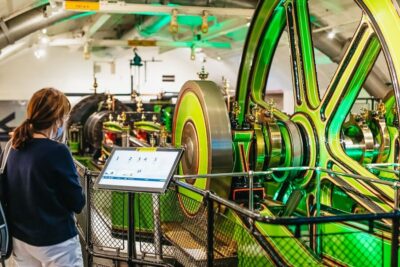 ★ 4.7Tower Bridge Entry TicketTickets from $2115,560 guest reviews