
REVIEW · LONDON CITY TOURS
London: David Bowie Walking Tour
Bowie left footprints, and you can walk them. I like the Brixton to Soho route, because it turns London street corners into a clear timeline for the man behind Ziggy.
The Ziggy Stardust photo stops and the stories tied to off the radar studio spots are the kind of details you rarely catch on your own. One downside to note up front: it is not suitable for mobility impairments, since you are out on foot for the full 2.5 hours.
For about US$22, you get a live English guide and a focused, two neighborhood sweep that is great value if you want more than song titles and postcard landmarks.
Key moments on the David Bowie walk
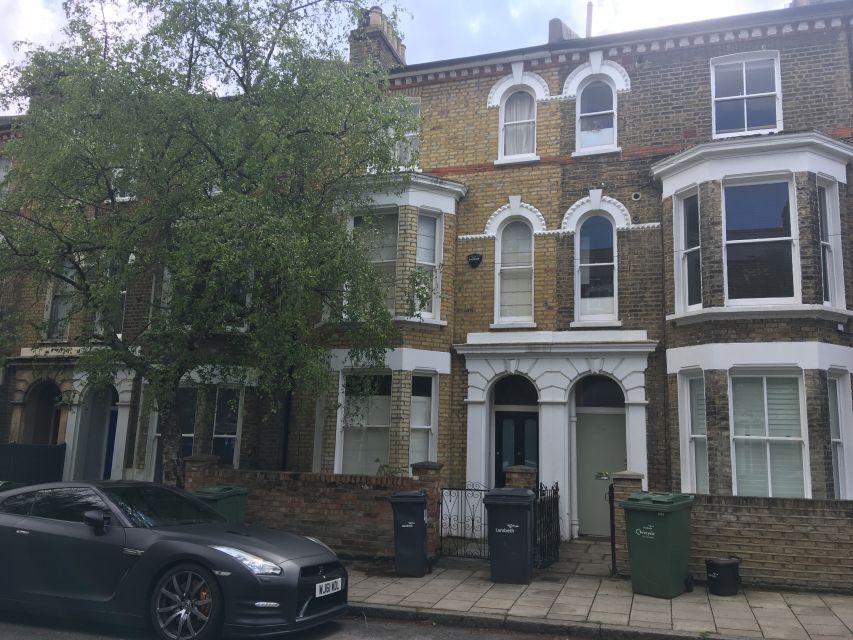
- Brixton to Soho timeline, from early childhood roots to teenage ambition
- Ziggy Stardust album cover photo spot, plus a matching telephone box reference
- Inconspicuous studio locations, the places where Bowie worked behind the scenes
- Major headlines stop, including where Bowie announced I’m gay
- Fan mourning location, where thousands gathered after his passing
- Soho fashion and performance streets, including stops around Carnaby Street
Start at the Bowie memorial, then let Brixton set the tone
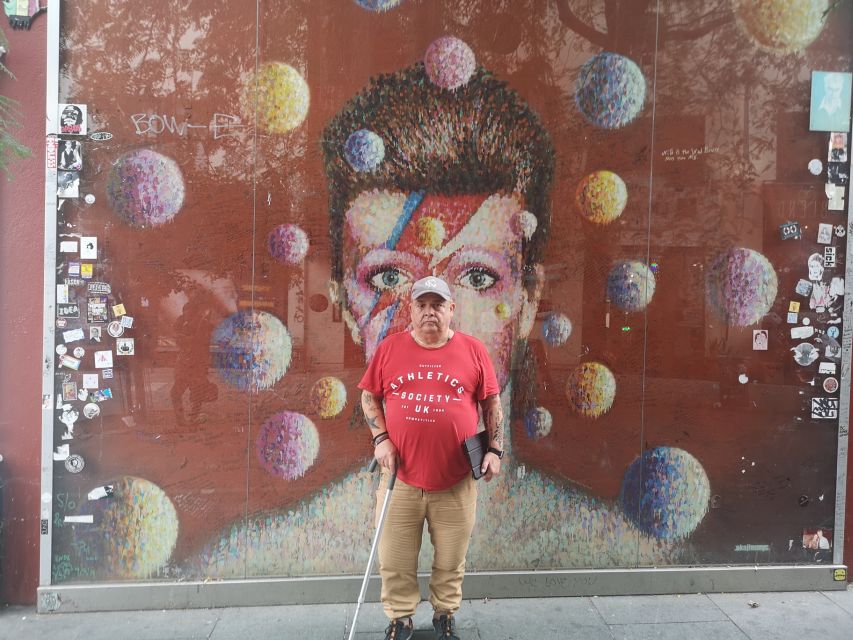
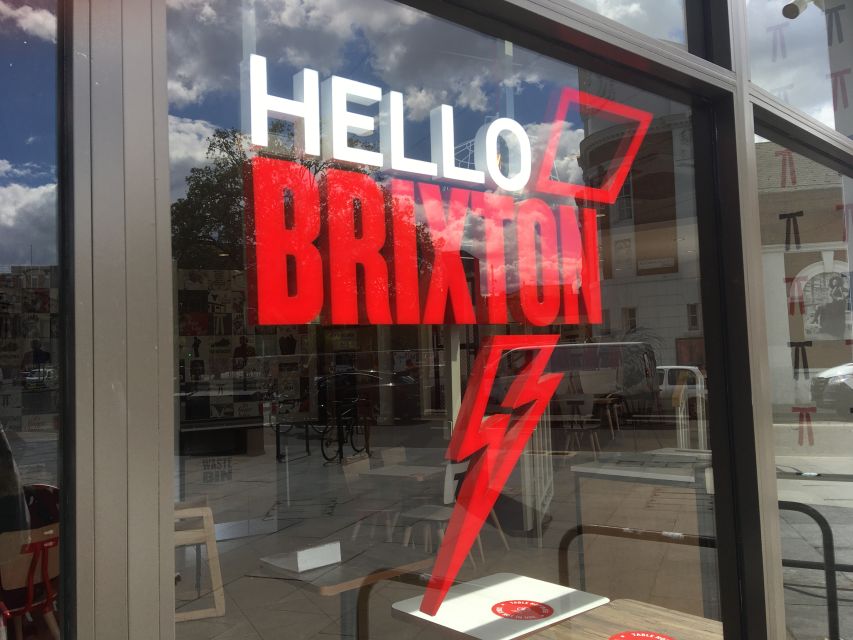
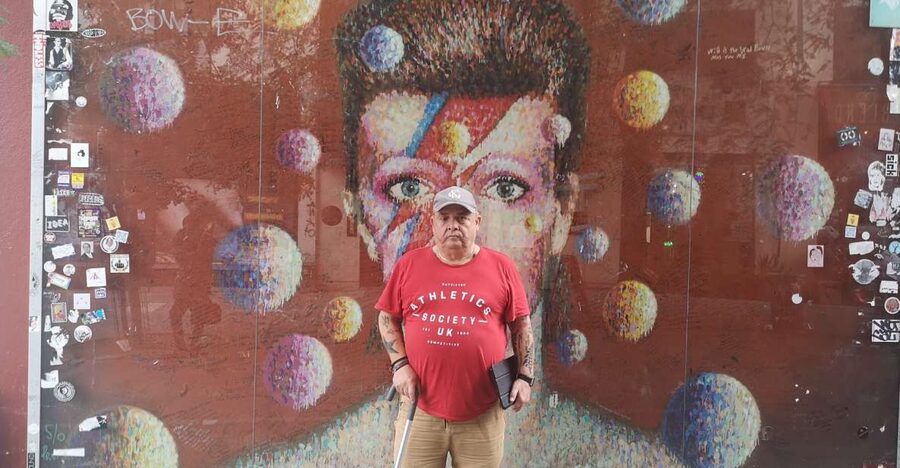
The tour starts where it makes sense, at the David Bowie memorial in Tunstall Road, directly opposite the exit of Brixton Underground Station. Arrive about 10 minutes early so you can meet your guide without stress, and so you are ready for a walking pace that actually works.
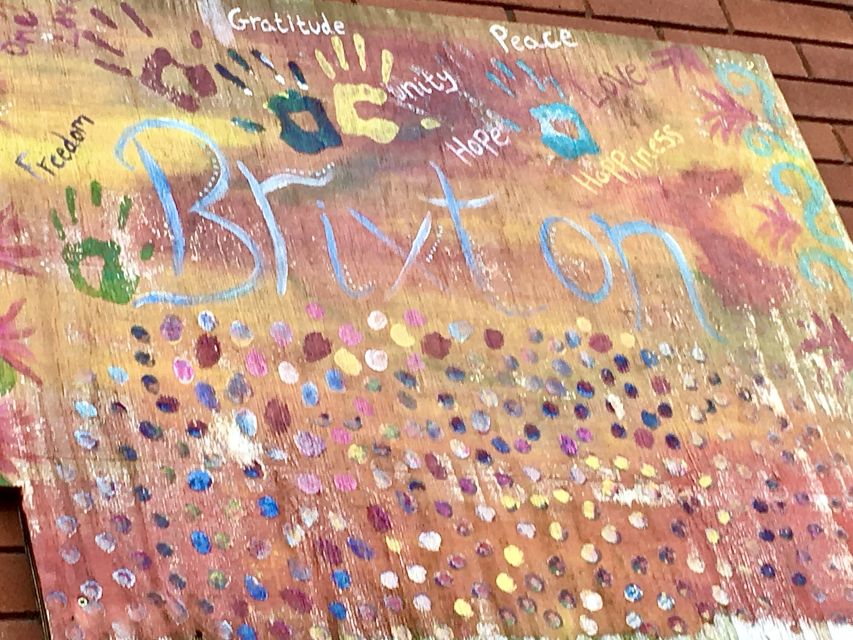
Brixton is where you get the grounding. You start with the idea that Bowie did not pop out of nowhere, he grew up in a real place, with real streets, and enough personality to turn daily life into material. The stops here are tuned to early impressions, including the house where he was born and his first school. Even if you only know Bowie through radio hits, these early points help you understand where the voice came from, and why he kept reinventing himself instead of staying one thing.
I also like how the tour uses local texture to keep the story anchored. There is a fun Brixton detail built into the neighborhood feel, including the Brixton money reference featuring Bowie on the £10 note. It is a quick touch, but it makes the area feel connected to his legacy, not just labeled as Bowie themed.
You can also read our reviews of more walking tours in London



The early years: childhood stops you can actually picture
This portion is the payoff for people who love origin stories, but it is not done in a textbook way. You are walking past specific places tied to his start, and your guide keeps pulling the thread forward to explain how that early environment shaped the later London pivot.
At a practical level, this part is also a gentle warm up. You are not sprinting between far flung sites. You are in walking distance, and the guide’s job is to make the context clear as you go: where Brixton fit into Bowie’s formation, and how his imagination started to stretch beyond it. If you have ever felt like music biographies jump too fast, this section slows things down so you can connect the dots.
If you prefer to read about artists at your own pace, you might find this part a bit more story heavy than photo heavy. That said, the benefit is you get a foundation before the tour turns into the glossier Soho years.
A short tube ride to Soho, where the dream gets louder
After Brixton, you take a brief tube ride to Soho. The change in neighborhoods is part of the experience, because it mirrors Bowie’s shift from roots to ambition. In Soho, the tour focuses on teenage Bowie and the work that put him close to the music industry even before he owned the spotlight.
You get the feel for that early hustle, including the detail about him packing boxes for music publishers, plus the bigger dream running underneath it all. As you walk through Soho, you pass music venues where he performed, and the tour leans into the “how it felt” angle rather than just listing addresses.
This is also where the route becomes more visually cinematic. You are moving through streets tied to performance and fashion, with stops that connect Bowie’s public style to the actual neighborhoods that shaped London style in that era. If you like blending music history with city wandering, this is the stretch that usually wins people over fast.
Carnaby Street fashion stops and the Ziggy look
Carnaby Street is a key stop, because it connects Bowie to a specific London vibe. The tour uses the area’s fashion district reputation to frame Bowie’s visual reinvention. You will hear how his outfits became part of his message, not just costumes.
One of the best things here is that you do not need to be a hardcore fashion historian to get it. Your guide translates the look into something you can remember, linking it to where Bowie was in his career and what he was trying to signal. And as you walk, you can spot the contrast between modern street life and the fashion energy that made that era famous.
Then come the famous photo moments. You get a chance to stand in the same spot as Bowie on the album cover The Rise and Fall of Ziggy Stardust and the Spiders from Mars. If you like photos, it is satisfying to match the framing. It also gives you a mental anchor, because it pulls the story away from abstract “Bowie lived here” claims and turns it into something you can literally line up with.
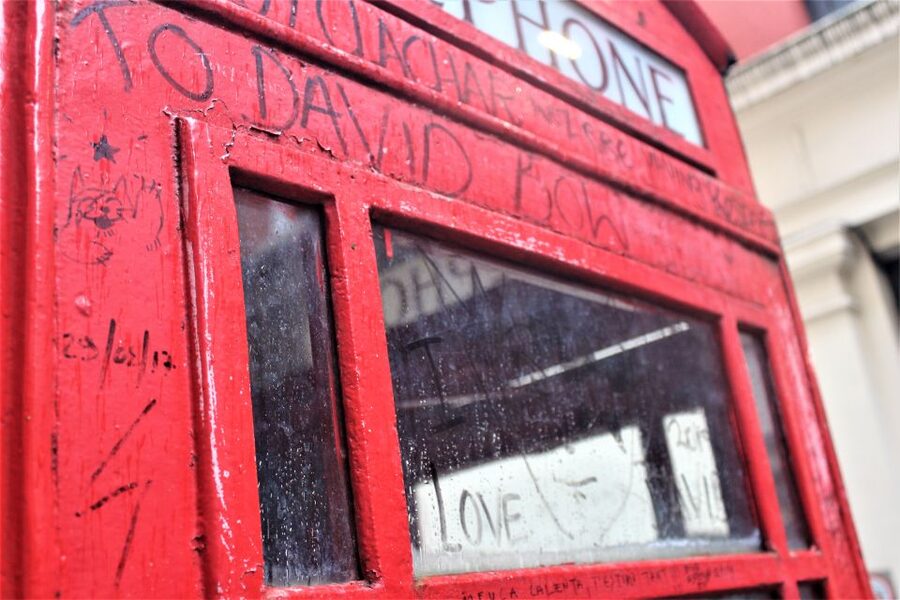
You also look out for a telephone box reference from the back cover imagery. Again, it is not just for selfies. The goal is to help you notice the details you might otherwise miss when you are walking fast.
Pubs, street corners, and the everyday Bowie vibe
Soho also brings in the more human side: the pubs and streets Bowie used to frequent. The tour stops outside pubs associated with him, and this is where the story can feel less like a museum label and more like street life.
A practical note: these are places where London sidewalks can get crowded. On busier days, you will want comfortable shoes and a little patience. Your guide handles the flow, but you still have to work with the city. If you are the type who likes slow, sit down coffee breaks, you may feel the walk is a bit brisk during peak foot traffic.
Still, the pub stops tend to land well because they help you picture Bowie not as a distant icon, but as a person moving through regular London moments.





Inconspicuous recording studios and how the behind-the-scenes story works
One of the tour highlights is passing by the inconspicuous recording studios used by Bowie. These places are not always dramatic on the outside. That is exactly why this stop matters.
When you learn that Bowie worked in spaces that look almost ordinary, it changes your perspective. It shifts the story from myth to craft. You start thinking about the work, the sessions, the experimentation, and the way Bowie’s genius came from daily momentum, not only from grand public moments.
Your guide ties in Bowie’s classic songs as you move through these spots, giving you a soundtrack for the story. That combination helps you remember, because your brain links the place to specific eras and themes.
If you are expecting famous building facades, keep your expectations grounded. The value here is in the context your guide gives you, not in a big cinematic exterior.
The headlines stop: where I’m gay made news

This is one of the tour’s more emotionally charged segments. You find out where Bowie announced I’m gay and made headlines. It is a powerful moment to hear framed in the place where the public reaction would have landed in real time.
What I like about this part is that it is not handled like trivia trivia. It fits into the bigger Bowie theme: he pushed boundaries, not for shock alone, but to force the world to look at identity with less denial and more honesty.
If you have loved Bowie for years, you will likely appreciate the reminder of how much courage and consequence there was behind the headline. If you are newer to Bowie, this stop helps you understand why his influence went beyond music.
The campervan rumor and the fan myth-making loop
You also discover where Bowie allegedly lived in a campervan. That word, allegedly, matters because the tour is dealing with the kind of myth making that happens around celebrities. Still, the point of including it is useful: Bowie’s life includes story fragments people keep repeating, because they capture the spirit of restlessness and reinvention.
I find these “legend” stops helpful because they show how fandom works. People collect details, repeat them, and turn them into meaning. And your guide helps you make sense of it without treating every rumor as gospel.
Where thousands mourned: remembering Bowie in public space
Another standout highlight is seeing where thousands of fans congregated to mourn Bowie’s passing. This part adds gravity to the walk, and it is not only about spotting where people gathered, it is about understanding how Bowie’s impact showed up at street level.
Even if you did not experience that moment firsthand, standing near the location helps you feel how widespread the connection was. Bowie did not just influence music taste. He built loyalty that lasted, even after his final chapter closed.
This stop can feel quiet compared with the photo moments. It is a reminder to slow down and take it in.
Meeting point, pace, and what to wear for 2.5 hours on foot
The tour runs for 2.5 hours and is guided in English by a live guide. That duration is long enough to feel like a real outing, but short enough that you are not stuck for an entire day without breaks.
Because it is a walking route through busy areas, comfortable shoes are not optional. You will also want comfortable clothes, especially if you go during warmer or colder months. If the weather is changeable, plan on layers.
It is not suitable for people with mobility impairments, so if that applies to you, I would look for an alternative option that offers a different format.
How the guides shape the experience, and what you’ll get from them
A big reason this tour works is the guide quality. The tour’s reputation shows up in the way different guides are described as personable, attentive, and able to keep the group engaged without turning it into a lecture.
You might have a guide like Jess, who is described as personable, fun, and focused on keeping the tour entertaining. Or Tim, who is described as excellent and attentive to the group. Jenny and Catherine also show up as strong, with Catherine praised for handling navigation in busy street conditions, like during a bank holiday crowd. Rob is noted as very well informed and friendly in interaction.
That matters, because Bowie history can get tangled fast. A good guide keeps the story moving. They also help you connect the dots between neighborhoods, songs, and headlines so it feels like a coherent walk rather than a collection of disconnected stops.
Is this Bowie walking tour worth US$22?
US$22 for a 2.5-hour guided walk is a fair price when you factor in what you actually get: a guided route across two major neighborhoods, multiple specific photo and story stops, and expert narration that gives meaning to places that might look ordinary.
If you try to do this on your own, you might miss some of the off the radar details, especially around studio locations and the more nuanced headline moments. A guide saves you time and gives you a cleaner timeline.
That said, if you are the type who only wants big landmark sightseeing, you might feel a walking tour is less efficient. But if you want story, context, and a route you can photograph while learning, this is solid value.
Also, the guides make the difference between “history walk” and “I actually want to keep listening.” Based on what different guides are praised for, that is the tour’s strongest selling point.
Who should book this David Bowie tour?
This walk is a great match if:
- You love Bowie’s music and want a London story that connects songs to streets
- You enjoy photo stops tied to album imagery, like the Ziggy cover spot
- You want a guided format so you are not piecing history together on the fly
It is less ideal if:
- You need an accessible route, since it is not suitable for mobility impairments
- You hate walking in crowded city areas
- You only want famous exterior monuments, because several stops are intentionally inconspicuous
Should you book this London David Bowie Walking Tour?
I’d book it if you want a guided, story driven way to see Bowie’s London in just 2.5 hours. The route structure works, the photo points make it fun, and the inclusion of headline moments like I’m gay, plus the quieter remembrance location, gives the walk emotional range, not just trivia.
Skip it if you want full accessibility options or if you are only after landmark sightseeing. For everyone else, it is a strong, practical Bowie experience that turns the map into meaning fast.
FAQ
How long is the London David Bowie Walking Tour?
It lasts 2.5 hours.
Where do I meet the guide?
Meet your guide 10 minutes before the start in front of the David Bowie memorial in Tunstall Road, directly opposite the exit of Brixton Underground Station.
What is the price per person?
The price is US$22 per person.
Is the tour guided in English?
Yes, the tour has a live English guide.
What should I bring?
Bring comfortable shoes and comfortable clothes.
Is this tour suitable for people with mobility impairments?
No, it is not suitable for people with mobility impairments.
More Walking Tours in London


More Tours in London



More Tour Reviews in London
Not for you? Here's more nearby things to do in London we have reviewed










More London City Tours worth a look.
 ★ 4.6The London Eye Entry TicketTickets from $3935,875 guest reviews
 ★ 4.7From London: Harry Potter Warner Bros Studio TourTickets from $11726,588 guest reviews
Westminster to Greenwich River Thames CruiseTickets from $2222,836 guest reviews
Magical London: Harry Potter Guided Walking TourTickets from $2022,044 guest reviews
★ 4.7From London: Harry Potter Warner Bros Studio TourTickets from $11726,588 guest reviews
Westminster to Greenwich River Thames CruiseTickets from $2222,836 guest reviews
Magical London: Harry Potter Guided Walking TourTickets from $2022,044 guest reviews
 ★ 4.6Madame Tussauds LondonTickets from $3620,915 guest reviews
 ★ 4.5Stonehenge, Windsor Castle, and Bath from LondonTickets from $11118,662 guest reviews
 ★ 4.7Warner Bros. Studio Tour with TransfersTickets from $14417,586 guest reviews
 ★ 4.7Tower Bridge Entry TicketTickets from $2115,560 guest reviews