
REVIEW · BRITISH MUSEUM TOURS
London: British Museum Highlights Tour: How Beauty Was Born
Five centuries of beauty in two hours.
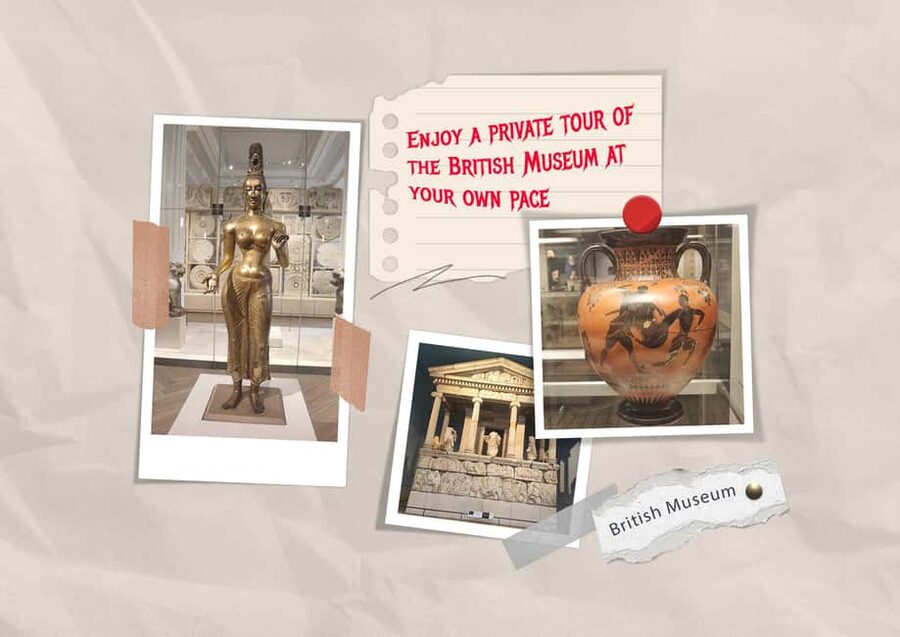
At the British Museum, this semi-private tour uses famous objects to trace how ideas of beauty changed over millennia. You’ll move through major civilizations and art themes in one smooth small-group format, guided by an expert storyteller.
I especially love how the tour turns one iconic artifact into a clear story you can remember, starting with the ROSETTA STONE and the breakthrough that made hieroglyphs understandable. I also like the way the PARTHENON MARBLES show how Greek art and ideas about proportion shaped what many cultures later treated as beautiful.
One thing to consider: expect a moderate amount of walking, and the tour is not suitable for wheelchair users or people with mobility impairments.
Key highlights you will feel right away
- Fast-track entry via express security, so you spend more of your time inside galleries
- Semi-private group size, up to 8 guests, which makes questions and pace feel human
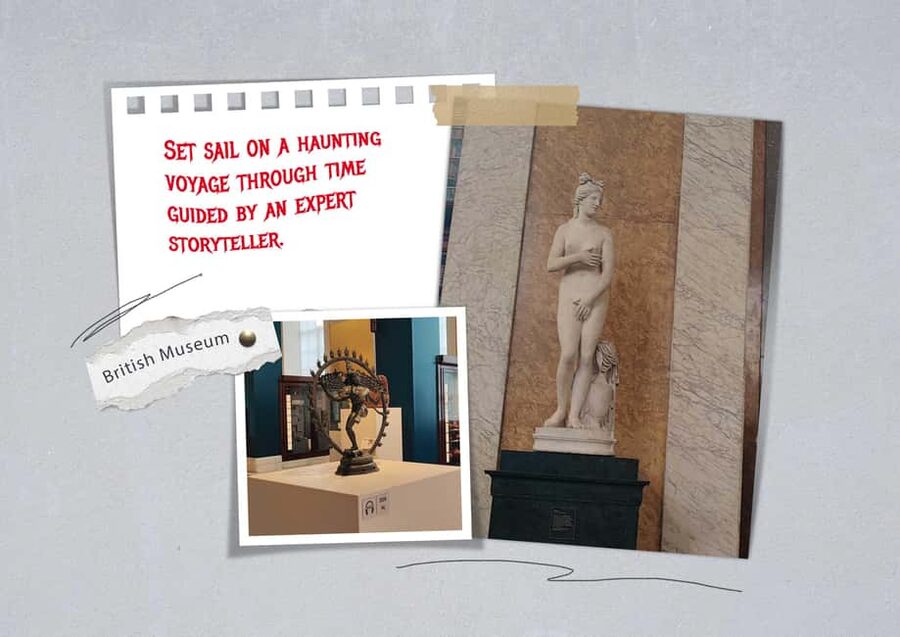
- Beauty as the thread, tied directly to objects like the Parthenon Marbles and Egyptian mummies
- Photography is allowed without flash, so you can capture details without disrupting others
- A guide who handles entry problems calmly, based on real-world feedback from past visitors
Meeting at Edward VII’s Entrance with a clear starting plan
I like tours that help you get oriented fast, and this one starts with a simple, practical meet-up. You’ll gather at the group entrance to the British Museum, Edward VII’s Entrance, and your guide will be holding a sign that says My London Guide.
This matters because the British Museum is big, and wandering without a plan can eat up your best time. With a clear meeting point, you can arrive, find your guide, and head inside without that last-minute scramble.
Also, the tour is designed as a quick hit, about 2 hours, so you want to minimize friction at the start. If you’ve ever lost track of time in a museum, you’ll appreciate how this tour keeps you moving with purpose, not stress.
You can also read our reviews of more museum experiences in London



Two hours of highlights, not a museum marathon
This is not a slow, open-ended museum day. It’s built as a guided highlights tour with an expert storyteller, kept to about 2 hours.
That short format is a big value if you want meaning, not just sight-seeing. You get a theme (how beauty ideas evolved), and the guide uses specific objects to show how that theme played out across time. Instead of trying to read every label yourself, you get the story threads stitched together in plain language.
The semi-private size, maximum 8 guests, also changes the experience. You’re less likely to feel like you’re standing behind a crowd, and it’s easier to ask quick questions if something clicks for you.
One more practical note: it’s described as moderate walking, so plan on comfortable shoes. Bring water and keep your daylight energy for the galleries.
Rosetta Stone, language, and the surprising beauty of understanding
The tour starts with a powerful idea: beauty is not only about looks, it’s also about communication, knowledge, and the way societies share meaning.
That’s where the ROSETTA STONE comes in. The guide uses it as a turning point story, connecting the artifact to the major breakthrough that made hieroglyphs readable. In other words, it’s not just an object you look at. It’s an object that changes what we can understand, which changes how we interpret whole cultures.
Why this matters to you: if you’ve ever seen museum artifacts and felt that your brain goes blank after the first five minutes, this kind of explanation helps your eyes work better. You start seeing relationships instead of isolated displays.
Also, the theme of the tour is about how beauty ideas were shaped over time. A “lost language” moment is a clever way to widen the definition of beauty. It suggests that beauty can include clarity, structure, and the human desire to make sense of the world.
Parthenon Marbles and how Greek ideals still shape modern taste
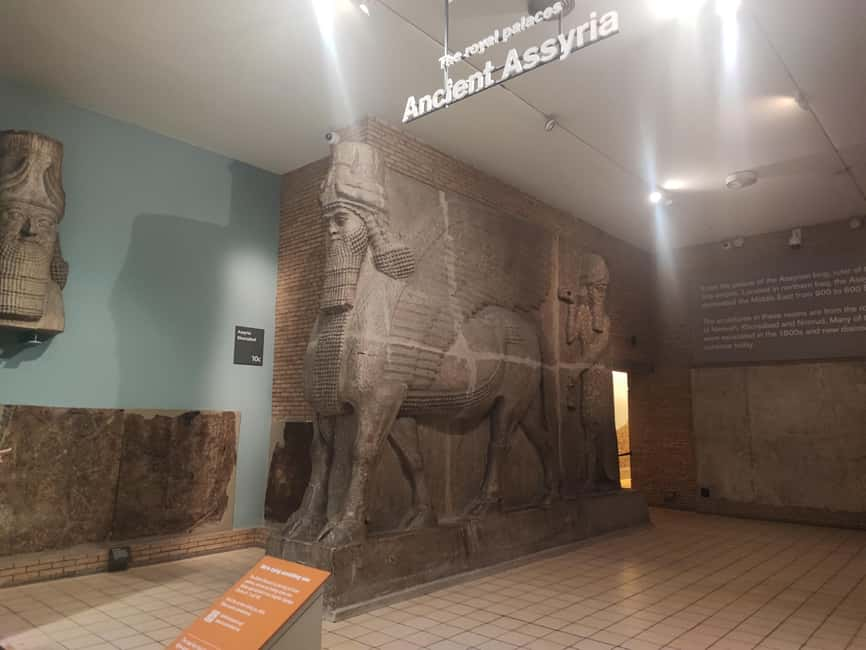
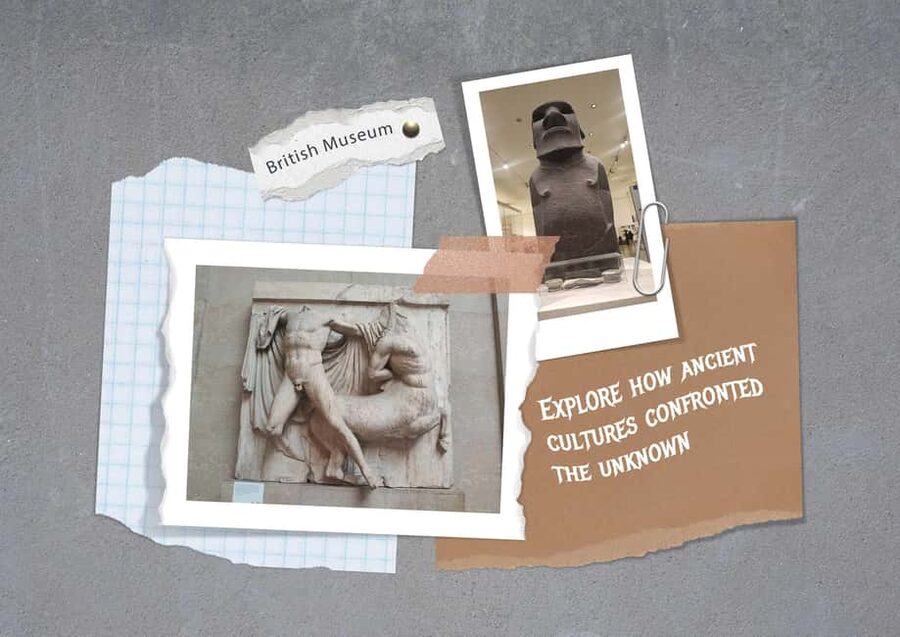
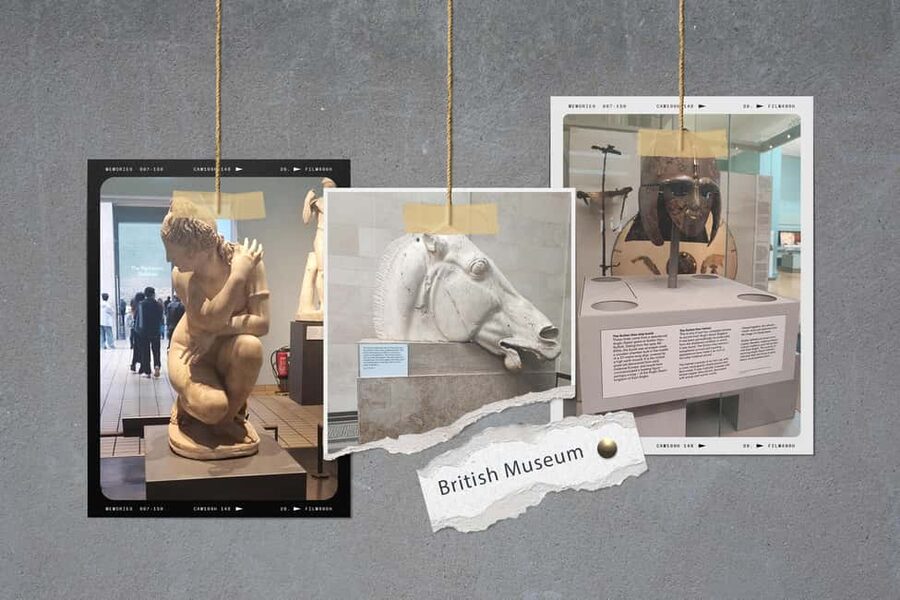
Next comes one of the most famous sections of the British Museum’s collection, the PARTHENON MARBLES. The tour frames them as more than sculpture. It treats them as evidence of how ancient Greece influenced later standards for beauty in art and culture.
If you like art history but hate vague generalities, this stop is designed to feel concrete. The guide links what you see to the broader question: what did Greek art emphasize, and why did those ideas spread?
Think of it this way. When societies repeat certain visual ideals, those ideals become “normal.” Over time, they stop feeling like choices and start feeling like rules. The Parthenon Marbles help you notice that process, so you can look at later art and architecture with new eyes.
Is there a drawback? This part may move quickly, because the tour has to cover multiple themes in a short window. If you want extra time staring at details, take a minute before or after the tour to linger. The guided story gives you the context, but you’ll still want your own time to absorb the visual power.
Egyptian mummies, life and death, and why the body mattered
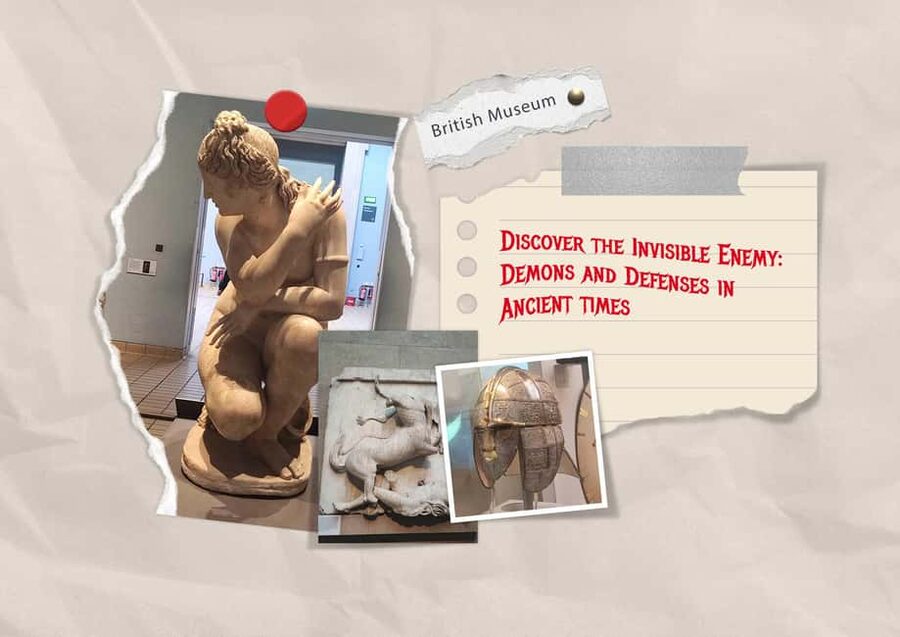
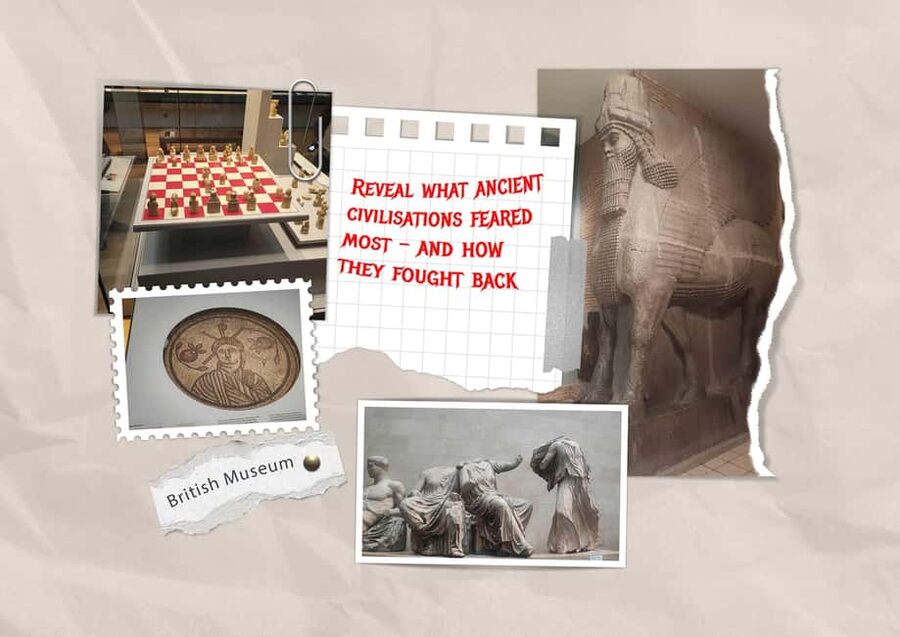
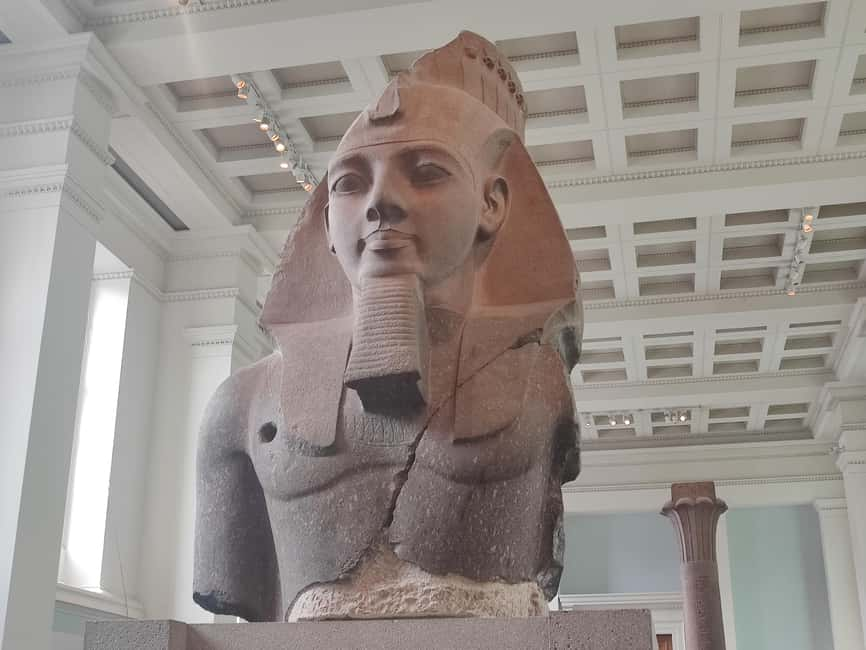
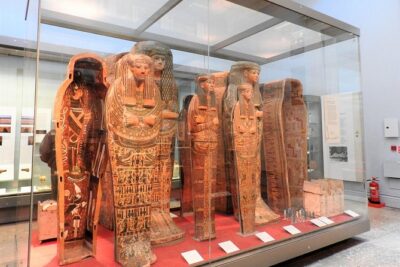
Then the tour shifts to Egypt with EGYPTIAN MUMMIES, placing you in the emotional center of ancient beliefs. The theme described is the dance of life and death, which is exactly what makes mummy-related displays more than just “old bodies in cases.”
Egyptian traditions treated the body, the spirit, and the future as connected. That link is what you’re meant to contemplate here. You’re not only observing preserved remains, you’re seeing how a civilization expressed its deepest hopes and fears through art and ritual.
Why I think this stop works for most people: it’s relatable. Everyone understands mortality. The difference is how different societies responded to it. By the time you get here, the tour has already set up the big question about evolving ideas. Egypt becomes one of the clearest examples of how beliefs shape aesthetics, symbols, and even what counts as beautiful.
Practical point: Egyptian displays can be visually intense, so if you’re sensitive to dramatic themes, just know you’re heading into that emotional territory. The guide keeps things understandable and tied back to the beauty theme, not just shock value.


Love and Fate in ancestors’ art: stories that still tug at us
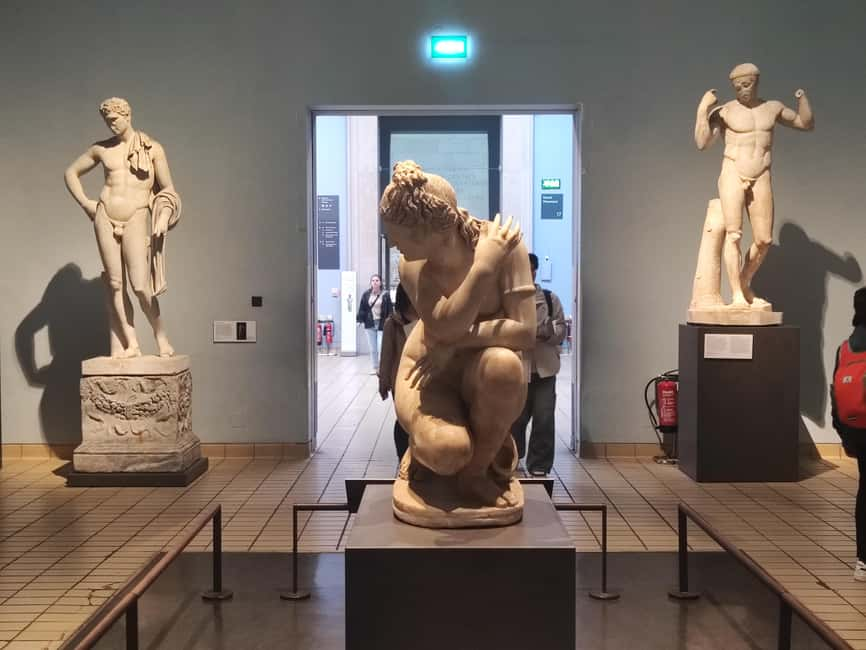
The tour also includes LOVE AND FATE as a theme in ancient art. This is one of the best ways to keep a museum tour from turning into a list of famous names. Love and fate are universal. You might not know the historical context, but you likely recognize the emotional engine.
The guide’s approach focuses on what these stories did for audiences, and how earlier artists presented timeless narratives. Even if the objects feel distant at first glance, the emotions are familiar. That can make you look longer, because you’re not just reading labels, you’re following a story.
What I love about this part: it connects beauty to meaning. Beauty is not only surface design. It can be the way artists frame relationships, highlight conflict, or shape a scene so the viewer feels the stakes.
If you enjoy myth, drama, and storytelling, this stop will land well. If you prefer purely visual descriptions, you might still appreciate it, because it helps you see composition and symbolism with purpose.
Medieval comic books and Jesus stories you might not expect
One of the tour’s most distinctive elements is the stop described as JESUS CHRIST in medieval comic books. The tour frames it as a secret childhood angle, with stories that exist beyond the traditional accounts.
This is a great reminder that religion, like art, is also a living field. Over centuries, communities added stories, reshaped narratives, and passed along belief through the formats people actually used. Medieval illustrated storytelling is one of those formats.
You’ll likely leave this part thinking about “alternative narratives” in a broader sense. Not just fiction for entertainment, but how cultures teach values and imagine the human side of important figures.
A small caution: if you came here for strictly archaeology and classical art, this theme shift may feel playful or surprising. That said, it’s still connected to the tour’s core question about how beauty and ideas evolved. It’s also a useful change of pace after the heavier symbolism of earlier stops.
Price and value at about $33.67 for two focused hours
At $33.67 per person for a 2-hour guided tour, the big question is value. The British Museum has free entry, so why pay for this?
Because what you buy here is time and interpretation. You’re not paying for the building. You’re paying for an expert storyteller to guide you through a tight route with a theme you can follow. That saves you from guessing which objects matter and how they connect.
You also get practical help: fast track entry with an express security check, which can be a real relief in London. Even a short tour can feel “long” if you lose it to lines and waiting.
Finally, the semi-private group size helps with value. Up to 8 guests means the tour doesn’t feel like a noisy bus lecture. You can stay focused on the objects and the story instead of battling for attention.
If you are the kind of traveler who wants to read every label, you could do it on your own. But if you want meaning fast, this price often feels fair.
Photography, bags, shoes, and small rules that matter
Museums have rules. This tour has a few that you’ll want to plan around so your start stays smooth.
You should bring comfortable shoes and water, plus your camera. Backpacks and large bags are not allowed inside the museum, so plan to travel light. Also, flash photography is not allowed. Photography without flash is allowed, so you can still capture details for later.
Food and drinks are not permitted inside the exhibition halls. So if you’re tempted to pack a snack, save it for outside the galleries.
One more key detail: the tour is in English, and it’s described as not suitable for people with mobility impairments and wheelchair users. If that affects you, you may want to look for a different format or a route designed for reduced walking.
Who this tour is best for, and who might want to skip
This tour is a strong match if you want a guided museum experience with a clear theme. You’ll probably enjoy it if you like art history but also want stories that connect objects across civilizations, not just facts in isolation.
It’s also great for first-timers to the British Museum, because the guide helps you see how pieces connect. In a museum this size, that “connection feeling” is the difference between a quick glance and a memorable visit.
I’d be cautious if you want a quiet, self-paced museum visit. This is structured. It moves through multiple stops over about two hours, and the moderate walking is part of the deal.
Should you book the How Beauty Was Born British Museum Highlights Tour?
If you like your museum time with story, structure, and manageable walking, I’d book it. The best reason is how the tour uses specific objects like ROSETTA STONE and PARTHENON MARBLES to answer a real question, how ideas of beauty evolved. You’re not just looking at artifacts, you’re learning how beauty standards get built.
Also, the small group setup and the feedback about the guide handling entry issues calmly are exactly what you hope for in London. You get a guided experience that stays professional when small problems happen.
If you need wheelchair access or reduced mobility options, skip this one. Otherwise, it’s a solid value way to turn a famous museum into a focused, satisfying two-hour story.
FAQ
Where do I meet the guide?
You meet at the British Museum group entrance at Edward VII’s Entrance. The guide will be holding a sign that says My London Guide.
How long is the tour?
The tour lasts about 2 hours.
What is the group size?
It is a semi-private tour with a maximum of 8 participants.
Is the tour offered in English?
Yes, the live tour guide speaks English.
Is there fast track entry?
Yes. You get fast track entry and skip the line through an express security check.
Can I take photos during the tour?
Yes, photography is allowed without flash.
Are backpacks allowed inside the museum?
No. Large bags and backpacks are not allowed inside the museum.
Are food and drinks included?
No. Food and drinks are not included, and food and drinks are not permitted inside the exhibition halls.
Is the tour suitable for wheelchair users?
No. The tour is listed as not suitable for wheelchair users and not suitable for people with mobility impairments.
What should I bring?
Bring comfortable shoes, a camera, and water.
More Museum Experiences in London


More Tours in London


More Tour Reviews in London
Not for you? Here's more nearby things to do in London we have reviewed










More British Museum Tours worth a look.
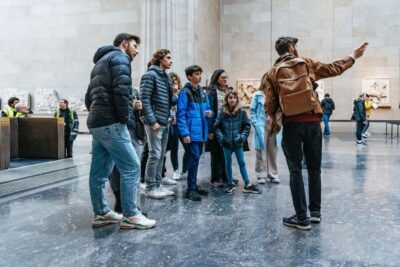 ★ 4.3British Museum Guided TourTickets from $231,182 guest reviews
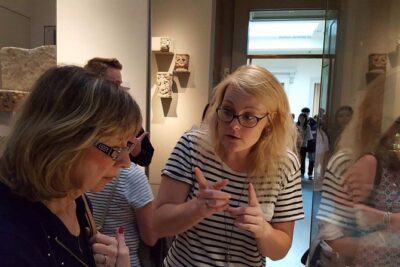 ★ 5.0British Museum London Guided Tour Semi-Private 8ppl MaxTickets from $108984 guest reviews
 ★ 4.1Tour of the British MuseumTickets from $14678 guest reviews
 ★ 4.5British Museum Audio Tour & Priority Entrance TicketTickets from $9631 guest reviews
 ★ 5.0The British Museum London – Exclusive Guided Museum TourTickets from $108555 guest reviews
 ★ 4.2Afternoon Tea at the British MuseumTickets from $58511 guest reviews
 ★ 4.0British Museum Guided TourTickets from $18470 guest reviews
★ 4.5British Museum Guided TourTickets from $39267 guest reviews
Continue by place or experience