
REVIEW · PRIVATE
Visit the Birthplace of The Rolling Stones – Private Tour
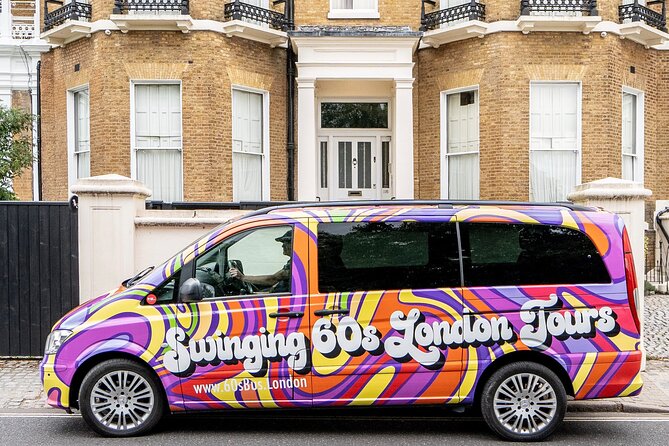
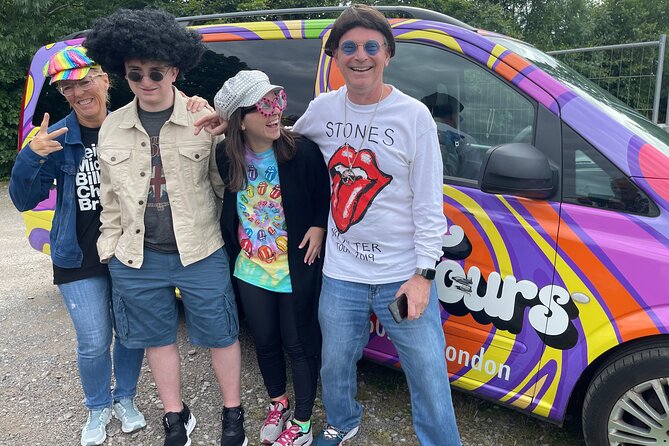
The streets behind the songs are close by. This is a private, 3-hour Rolling Stones tour that strings together real-world locations with stories and trivia, all while you ride comfortably in an air-conditioned minivan. I love how the guide turns quick street stops into clear, fun context, and I also like that you get a fully personal route just for your group. One thing to note, it is mostly outside viewing and short stops, so it is not the kind of tour where you linger in buildings.
You start in the Earl’s Court area and end in Richmond, which means you get Rolling Stones history plus an easy handoff to one of London’s nicest neighborhoods. The pacing is tight in the best way: you see more than you would on foot, and the drive time helps the guide keep the story moving. Expect a lot of street-level “look right here” moments, not a slow crawl.
Booking this style of tour makes sense if you want value in time, not just name-dropping. It is priced per group up to 6, so splitting costs can make it feel quite reasonable for a private guided afternoon. Also, plan ahead, it is often booked around 93 days in advance.
Key things to know before you go
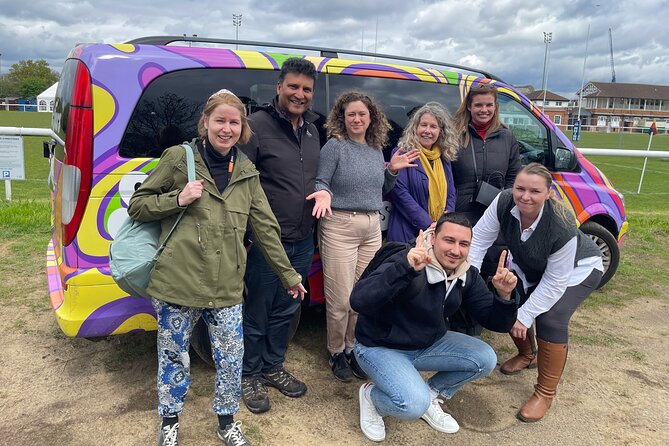
- Private group up to 6: no blending in with strangers, your guide stays focused on your questions.
- Air-conditioned minivan: comfort matters on a London day, especially when you are hopscotching across neighborhoods.
- Short, well-chosen exterior stops: you see famous addresses and music-related sites without wasting time.
- Richmond-focused ending: your finish at Richmond Station sets you up for dinner and a post-tour stroll.
- Mobile ticket: easy to keep track of while you move around London.
Price and value, in plain numbers
This tour costs $575.86 per group for up to 6 people, running about 3 hours. The simple math: if you fill all 6 seats, you are effectively around $96 per person. If you book for fewer people, the per-person cost climbs, but you still get the same private guide and vehicle.
Where the value really shows is in what you are buying. You are paying for (1) a professional guide, (2) a comfortable vehicle, and (3) access to a route that connects several Stones-linked areas in one afternoon. If you tried to do this alone by public transit, you would spend a lot more time figuring out logistics, and you would lose the story thread the guide provides.
Also, some stops are quick and marked as ticket-free, which keeps the experience smooth. A couple locations note admission tickets not included, so keep that in mind if you are planning to enter anything beyond street viewing.
You can also read our reviews of more private tours in London
Meeting point and route flow, Earl’s Court to Richmond
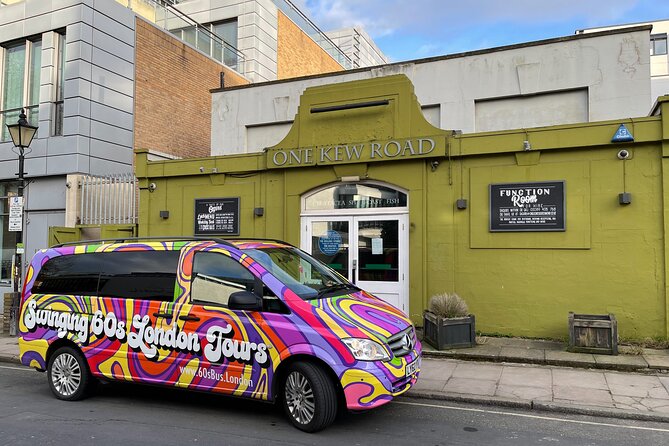
The tour starts at Earl’s Court Police Box232, Earls Ct Rd, London SW5 9RD, with a start time of 1:00 pm. Your tour ends at Richmond Station.
I like this setup because it is practical. Richmond Station has fast, frequent train and tube options back to much of London and even Windsor, so you are not stuck hunting for a ride afterward. It is also a nice excuse to extend your day. Right after the tour, consider walking along the river or heading to Richmond Park, which is known for roaming deer and plenty of history.
One more practical point: the end of the tour is in Richmond, not back where you started. That is great for the day plan, but it does mean you should map your next stop around Richmond Station rather than expecting to return to Earl’s Court.
The ride matters: air-conditioned comfort and guided momentum
You travel in an air-conditioned minivan, and you keep moving through London rather than getting bogged down at each stop. That comfort is not just a nice-to-have. It makes the difference between a tour that feels like an effort and one that feels like a well-run afternoon.
The guide drives the story forward. Between stops, you get Rolling Stones stories and trivia designed to connect the dots: auditions, shared flats, songwriting, recording sessions, and the club and residency scene. It is the kind of narration that helps you understand why each address matters, even if you have only a casual familiarity with the band.
And since it is private, you can usually ask follow-up questions without feeling rushed. This is especially helpful at the short stops, where you only get a few minutes to take photos and look around.
Your stop-by-stop itinerary, what you’ll see and why it’s worth it
Pre-Stop Story: Wetherby Pub and the flat tied to the band’s name
Before the first numbered stop, you pass the Wetherby Pub area connected to Bill Wyman’s audition and where the band rehearsed. Then the tour moves to a spot outside the flat where they were given their name.
Even if you are not a hardcore detail person, I like this opening because it sets the tone. It is not all glam or stadium energy. It starts with the practical, real beginnings, the places tied to trying out, rehearsing, and getting the identity that stuck.

Stop 1: 102 Edith Grove, the shared flat and the Beatles connection
102 Edith Grove is a quick 5-minute stop outside a flat Brian, Mick, and Keith shared between 1962 and 1963. You also learn about the moment they invited The Beatles there after meeting them in Richmond. Admission is marked as free here.
This is one of those locations that feels small until the guide puts it in context. The value is in the timing, the fact that it links two huge early scenes, and the way the story helps you picture what London life might have looked like for young musicians in that era.
Practical tip: since the stop is short, bring your phone ready and be fast with photos. You will want to capture the building exterior quickly and then listen.
Stop 2: Cheyne Walk, a quick look at Mick and Keith’s 1968 addresses
Next is Cheyne Walk, a 2-minute stop described around the houses Mick and Keith purchased in 1968 in one of London’s more distinguished streets. Admission tickets are not included.
Because this is brief, you should treat it as a look-and-learn moment. The draw here is seeing a specific kind of neighborhood the band ended up tied to, not just the “music venues” side of the story.
Consideration: since admission is not included and the stop is very short, you should not plan on much more than street viewing and photos.
Swinging London beat: Chelsea-area sites tied to fashion and music
After Cheyne Walk, the route hits the beating heart of Swinging London, described as the home of the Chelsea Drugstore location plus legendary fashion and music venues. This portion is part of the driving story thread, with brief time carved out for the context-rich stops.
This section matters because it broadens the Stones story beyond guitars and studios. The guide frames the band in the wider London scene, where music and style feed each other and where fame grows through visibility.
Stop 3: The Half Moon, Putney, Stones at a private party (2000)
The Half Moon, Putney is a 10-minute stop tied to a performance at a private party as recently as 2000. Admission is free.
I like that this stop shows the Stones story as long-running, not trapped in the early 1960s. You are looking at a music venue connection that stretches forward, which helps you understand how the band’s world keeps moving across decades.
Practical tip: in a 10-minute window, your best use of time is listening first, then taking a couple of quick exterior shots. You will not want to rush while the guide is explaining the significance.
Stop 4: Olympic Studios, recorded albums and the earlier Baker Street link
One of the most music-nerdy parts of the route is Olympic Studios – Cinema, a 10-minute stop at Olympic. The tour notes that the Stones recorded 6 consecutive albums there between 1966 and 1972, with Chris Kimsey and Glyn Johns. It also connects their first hit, Come On (released in 1963), to Olympic’s previous location off Baker Street.
This is where you get to the “how the songs were made” side, at least in location form. Even without going inside, the guide’s details help you place key studio names and key production names into a real map.
Consideration: the stop is still only about 10 minutes, so treat it as a stop for context rather than a full studio visit. If you are hoping for a deep production walkthrough inside rooms, this probably will not be that.
Stop 5: All Bar One Richmond, Crawdaddy Club history and Decca Records
All Bar One Richmond is a 10-minute stop. It was previously the Station Hotel, home to the original Crawdaddy Club. This is also where the Stones secured their first residency on Sunday 24 February 1963, where they first met The Beatles, and where they signed for Decca Records. Admission is free.
If you want the “earliest breakthrough energy,” this is it. The value here is the clustering of major milestones in one place. It is not just a venue stop; it is tied to residency, first meetings, and a label signing, all in the same area.
Practical tip: because it is free and longer than some stops, use the full time to look around and listen. This stop tends to be one of the anchors for the whole afternoon.
Stop 6: Terrace Gardens, Richmond Hill, homes and songwriting ties
Terrace Gardens – Richmond Hill is a 5-minute stop with ticket status marked as not included. Here you see the area tied to Mick and Jerry living in the early 1990s, with Ronnie Wood living there from 1971. The tour also links It’s Only Rock And Roll But I Like It to being written here in 1973. It adds that Rupert Murdoch is Mick’s new husband and that Pete Townsend owns the house currently up for sale.
This is a fascinating angle because it shifts from public venues to private life, then back again to songwriting. It also gives you the feeling of how the band’s story lives in ordinary residential streets.
Consideration: with a 5-minute stop and tickets not included, you are seeing from the outside. Keep expectations aligned: you are not touring homes, you are learning what happened around them and why this spot gets name-checked.
Stop 7: Ormond Road, Sandover Hall and performances from 1962 to 1963
Ormond Road is another 5-minute stop tied to the Sandover Hall location in Richmond where the Stones performed between 1962 and 1963. Admission is free.
This is a useful stop because it fills in the early live-performance layer. The itinerary is clearly built to show you more than just a single famous venue. It traces a chain of places where the band was active in the early years.
Because the time is short, keep it simple: listen to the guide’s context, then take your photo and move on.
Stop 8: Crawdaddy Club, the second location and the festival connection
The final stop is Crawdaddy Club, the 10-minute stop. This is the second location of the Crawdaddy Club in 1963. The tour notes that The Yardbirds replaced The Stones as the resident band. It also ties the area to Harold Pendleton’s National Jazz and Blues Festival running from 1961 to 1965, which later moved to Reading, now described as the longest-running pop festival in the world.
This stop is a strong closer because it connects the Stones to the larger ecosystem around them: resident bands, festivals, and what happens when scenes shift. You get the sense that early music history is not a straight line. It is overlapping schedules, changing bands, and new crowds.
Practical tip: since this is the last stop, it is a great moment to ask your guide for quick recommendations for what to do next in Richmond. Even without extra stops, that guidance can make the finish feel like part of the tour.
How to plan your afternoon after the tour ends in Richmond
You finish at Richmond Station, which makes it easy to keep going. If you want an easy win, do one of the classic Richmond add-ons the route nudges you toward: a walk along the river or time in Richmond Park with its roaming deer and history.
In practical terms, plan your next stop within walking distance of Richmond Station. Because the tour ends there, you will have the least friction if you keep your post-tour plans simple.
Also, since the tour is only about 3 hours total, you still have plenty of time left for dinner. Richmond has a comfortable, local feel compared with some parts of central London, and that contrast can make the Stones theme feel even more fun, like you are sliding from music mythology back into real city life.
Who this tour is best for
This is a smart fit if you:
- Love music history tied to real places, not just biographies
- Want a private guide who can keep the story moving at your pace
- Prefer short stops with clear context rather than long museum time
- Are comfortable doing a few quick exterior photo moments and then moving on
It is also a great choice for groups of mixed interest. Even if someone is not deeply versed in the Stones, the tour’s “streets and scenes” format helps most people follow along, because the guide connects the addresses to scenes you can visualize.
If you are expecting a heavy inside-access tour, you might feel the limitation. Several stops are explicitly brief, and some admission is not included. This is a street-level experience first.
Should you book this private Stones tour?
I would book it if you want a well-run, time-efficient way to see Rolling Stones-related London without planning every hop yourself. The biggest reasons are the private group setup, the air-conditioned minivan, and the way the route chains together key locations, from early beginnings and club history to studio recording connections and later-life ties in Richmond.
It also helps that the pricing is per group up to 6. If you can fill the group, you get a lot of guided value for the cost, and you avoid the usual “pay for a taxi, still feel rushed” trap.
One final piece of advice: since it is commonly reserved far in advance, try locking in your date early. If you care about a specific afternoon, you will have an easier time getting it.
FAQ
How long is the Birthplace of The Rolling Stones Private Tour?
The tour lasts about 3 hours.
What is the group size limit for this private tour?
It is priced for a private group of up to 6 people.
Where does the tour start?
The meeting point is Earl’s Court Police Box232, Earls Ct Rd, London SW5 9RD.
Where does the tour end?
The tour ends at Richmond Station.
What time does the tour start?
The start time is 1:00 pm.
What’s included in the price?
Included are all taxes, fees, and handling charges, a professional guide, and an air-conditioned vehicle. You also get a mobile ticket.
What is not included?
Public transportation is not included (listed at £5.00 per person), and snacks are not included. Some stops also specify admission ticket not included.
Is the tour offered in English?
Yes, it is offered in English.
What is the minimum age?
The minimum age is 9 years.
What is the cancellation policy?
You can cancel for free up to 24 hours in advance for a full refund. If you cancel less than 24 hours before the experience start time, the amount you paid is not refunded.
More Private Tours in London

More Tours in London

More Tour Reviews in London
Not for you? Here's more nearby things to do in London we have reviewed



More Private worth a look.
 ★ 5.0The Premier Classic London: Private 4-Hour Tour in a Black CabTickets from $5532,737 guest reviews
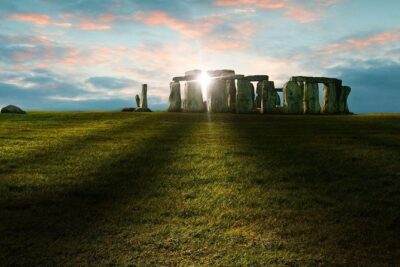 ★ 5.0Stonehenge Inner Circle Private Tour from London with Bath VisitTickets from $1881,909 guest reviews
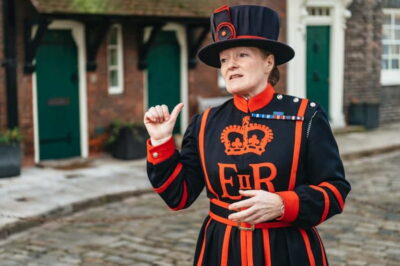 ★ 4.4Tower of London Entry & Beefeater Private AudienceTickets from $661,441 guest reviews
 ★ 5.0Private Tour: Black Taxi Tour of LondonTickets from $3061,153 guest reviews
 ★ 3.5Private London Arrival Transfer – Airport to Hotel / AccommodationTickets from $861,085 guest reviews
 ★ 5.0British Museum London Guided Tour Semi-Private 8ppl MaxTickets from $108984 guest reviews
 ★ 5.0London Sightseeing Private Black Cab Tour with Hotel Pick UpTickets from $441917 guest reviews
 ★ 4.5VIP Tower of London and Crown Jewels Tour with Private Beefeater Meet & GreetTickets from $155849 guest reviews