
REVIEW · LONDON CITY TOURS
London in the Swinging 60s – Private Tour
Swinging 60s, in 90 minutes. This private London tour strings together the most famous streets of the era, with a guide who makes the stories click, not just recite names. I especially like the tight stop-by-stop pacing, plus the fact that you end at the Troubadour, a venue that still feels like the real deal. One catch to plan for: most stops are quick photo pauses with no guarantees you will get inside any buildings.
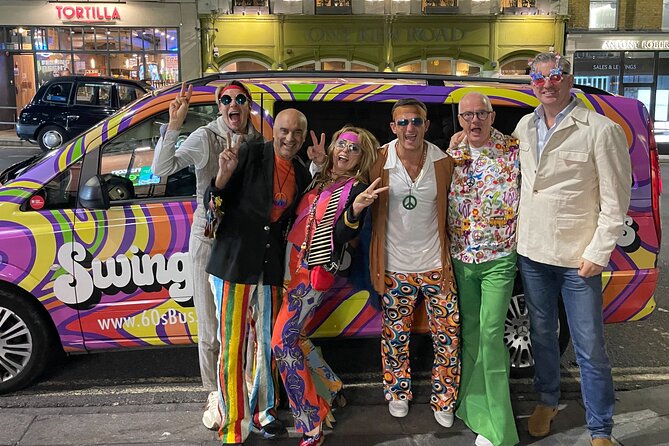
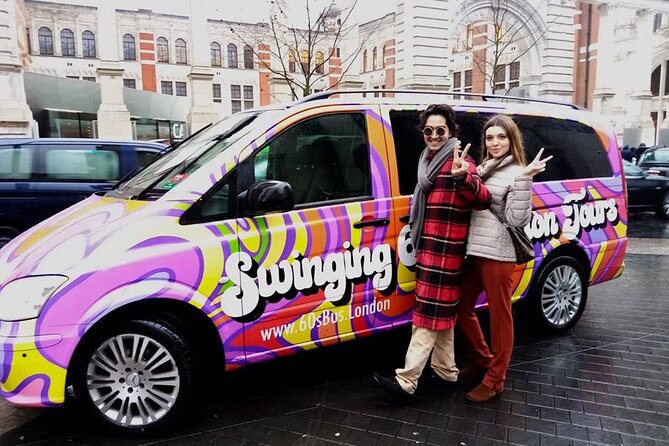
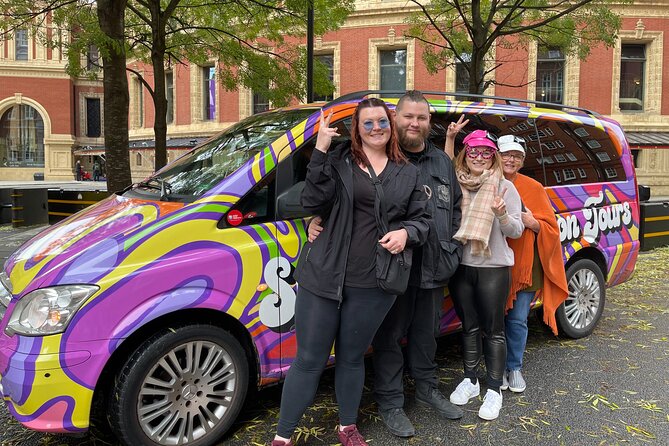
You start in Sloane Square and roll through Chelsea, the Kings Road area, and nearby music hotspots before finishing at Troubadour, where your time is actually inside. The “psychedelic minibus” vibe is fun, and the small group setup means you are not lost in a crowd. If you want long, slow museum time, this is not that kind of trip, but it is a great way to get your bearings fast for 60s London.
Key points before you go
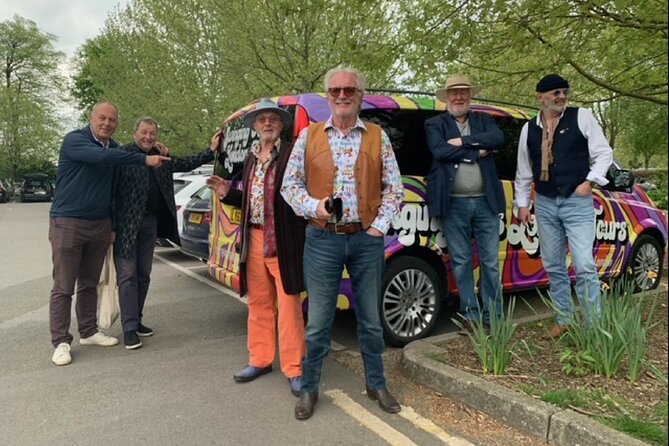
- Private group feel with a small maximum group size, so questions are welcome.
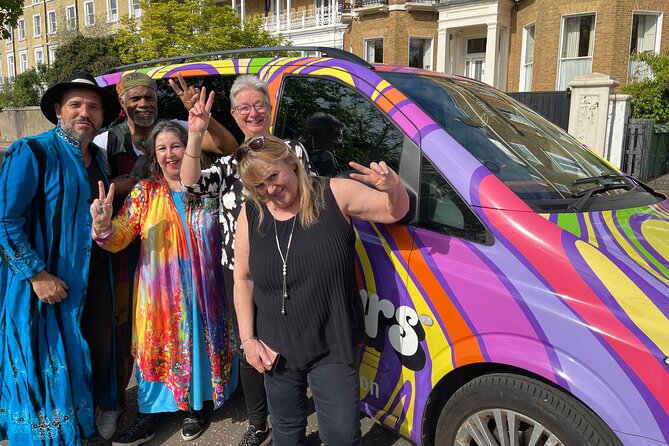
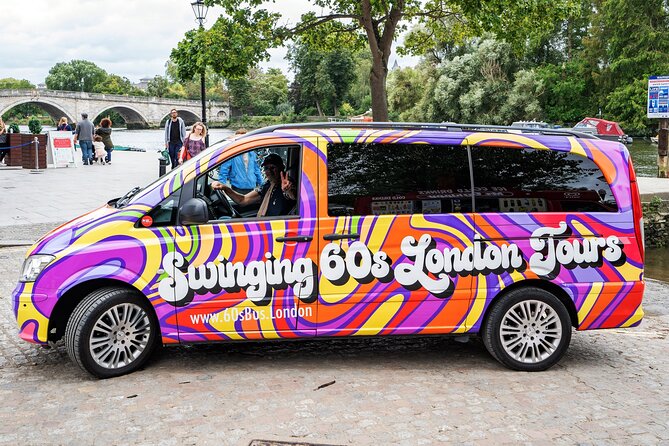
- Psychedelic minibus ride that keeps you moving between iconic areas without wasting your day.
- Beatles and Stones tie-ins built into very specific street corners and landmarks.
- Clapton stops that connect neighborhoods to Cream era and later recordings.
- Troubadour entry is included, giving you one meaningful indoor stop.
Swinging 60s, the practical way: why this tour works
London’s 60s can feel like a blur of posters, songs, and names you already know. This tour gives you something better: where it all happened, and why those places mattered in real life.
The format is simple. You meet near Sloane Square, then you hop into a psychedelic minibus and bounce around a cluster of neighborhoods that really shaped the era. Stops are short, but the guide ties them together with details about music, fashion, and the people who lived there.
Two things make it work for most travelers. First, the pacing is built for sightseeing, not sitting. Second, the guide experience comes through, especially if you are a fan of the Beatles, Rolling Stones, or 60s rock in general. If you are going with teens or mixed ages, that mix of streets and stories is usually easier than a straight history lecture.
You can also read our reviews of more private tours in London

The psychedelic minibus and small group setup
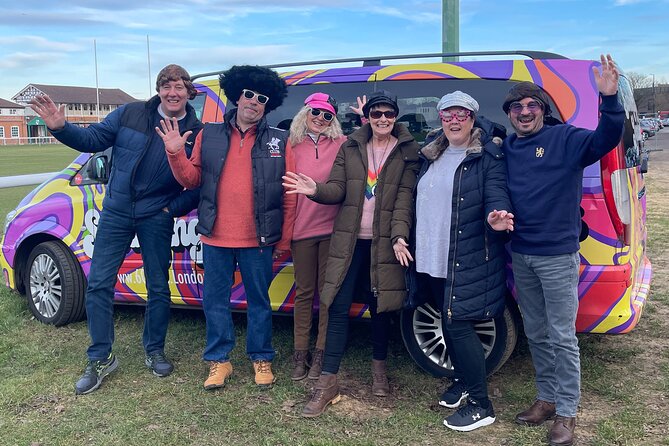
This is a small-group experience, with a maximum group size listed as eight, and pricing set for your group up to six. That matters more than it sounds. In a big bus tour, you might catch only part of what the guide says. Here, you are more likely to hear the stories, and the guide can shape comments around your interests.
Also, minibus touring is a good match for this part of London. Many of these sites are on residential streets or along stretches where walking from one to the next could eat up time. The bus keeps your day focused, and you still get out for brief looks and photos.
One small practical note: because many stops are short and admission is not included at most of them, you should show up with the mindset of “see, learn, move on,” not “expect entrances at every stop.”
Sloane Square start: the Beatles’ early London base
Your first stop is Sloane Square, and the focus is the hotel the Beatles used as their early London base in the early 1960s. Even if you have read about it before, seeing the setting at street level helps you understand how central this area was.
Why I like this start: it gives you an immediate anchor. You are not starting with vague vibes. You start with a specific location tied to the Beatles’ early time in London, then the tour builds outward into the broader Swinging London scene.
How long are you here? About two minutes, and admission is not included. Translation: you are getting the “right here, this mattered” context, plus a quick photo and move on.
Kings Road and Chelsea: the Swinging London center of gravity
The tour then heads to the beating heart of the era, centered around the Kings Road and Chelsea. This is where fashion and music were rubbing shoulders in the public imagination. It is also where the story feels most visible just by looking at the street character and the vibe of the area.
This segment is less about one single famous doorstep and more about orientation. The guide helps connect the neighborhood to what you know from the 60s: style shifts, record culture, and the social buzz that made London feel like it was changing weekly.
If you love the “what did it feel like” side of the decade, this is a key moment. If you prefer only landmark after landmark, you might wish for longer stops here, but it is still a useful spine for the rest of the tour.
The Pheasantry: Clapton era and Cream-era nostalgia
Next up is The Pheasantry, where the stop focuses on Eric Clapton’s old flat during his days with Cream. Even without long time on the sidewalk, this is the kind of detail that makes a tour feel personal. Instead of just saying Clapton lived somewhere in London, you get a specific neighborhood link to a specific phase of his career.
Admission is not included, and time is about one minute. So, again, you are not getting a long look around. You are getting the story, then you keep rolling.
Still, these quick stops are exactly how the guide makes the decade feel mapped. You start to recognize how the same names you hear on albums connect to the same geographic cluster.


Old Church Street: Clapton later, plus a big recording story
Old Church Street is a longer stop at about five minutes. It connects two ideas in one place. The guide points out Eric Clapton’s current London abode, and then it ties the street to a seminal recording studio that many 60s artists favored, including Pink Floyd, Cat Stevens, and The Who.
Why this is valuable: recording studios are where creative history got made, not just performed. You are seeing the kind of place where songs were shaped for release, which makes the music side feel more grounded.
No admission is included here, so do not plan on entering. But five minutes is enough for a good street-level look and a better sense of the setting.
Cheyne Walk, Flood Street, and Edith Grove: Thames views plus band origin lore
Now the tour shifts into the more scenic and story-heavy segment.
Cheyne Walk is on the banks of the River Thames and focuses on the homes of music legends in an exclusive stretch. Time is about three minutes. It is brief, but it gives you a sense of why certain artists were drawn to these neighborhoods, both for lifestyle and for proximity to London’s creative scene.
Then you hit Flood Street, where the guide points out the studio where The Beatles’ famous Sgt Pepper’s Lonely Hearts Club Band album photos were taken in 1967. Time is about two minutes, and admission is free. This is one of those stops that fans often feel in their stomach because the album imagery is so iconic. Seeing where the photos were made is a different level of connection than just knowing the fact.
Finally, Edith Grove gets you the origin story angle. The guide highlights that in 1962, Jagger, Richards, and Jones lived here, and that’s where the Rolling Stones were named. Time is about two minutes, and the stop is free. Short stop, big payoff. You walk away with a concrete “this street corner is part of the band’s beginning” moment.
A quick consideration here: if you are not a Beatles or Stones fan, some of the emotional punch may be lower. Still, the clustering of major artists makes the whole tour feel coherent.
Troubadour stop: the one place you actually step into music
The final stop is Troubadour, one of London’s most important music venues. This is the stop where your time expands to about 15 minutes, and admission is included.
The guide frames Troubadour as a shrine-like venue that feels largely unchanged from when major acts like Paul Simon, Bob Dylan, and Jimi Hendrix played and chilled out in the 1960s. That line matters, because it is the closest thing on this itinerary to a living time capsule.
Why I think this ending works: after street-level storytelling, you get to land somewhere that still hosts music. Even if you are not able to see anything specific during your visit, being at a legendary venue shifts the tour from “sightseeing trivia” to “music culture you can feel.”
Price and value: is $397.75 per group fair?
The price is listed as $397.75 per group for up to six people, and the tour runs about 1 hour 30 minutes. That sounds high if you compare it to a standard bus ticket. But private, guided, minibus-based tours are usually priced around the group, not per head.
Here is the simple value math:
- If you fill the group of six, it works out to roughly $66 per person.
- If you only have four people, it is closer to $100 per person.
What you get for the money that standard group tours often skip:
- A professional guide (with guide named Paul in many praised accounts) who connects the dots across music, fashion, and specific locations.
- A minibus route that saves time between nearby neighborhoods.
- Troubadour admission included, so you are not paying extra for the one meaningful indoor stop.
One more practical value point: because stops are short, you are not stuck with a long schedule where you might get bored. For fans, it is efficient. For families, it is usually easier to keep everyone engaged than a longer, heavier history walk.
Who should book this Swinging London tour
I’d book this if you fit one or more of these:
- You love 60s rock and want the place names tied to real artists.
- You want an efficient intro to Swinging London without spending the whole day on transit.
- You are traveling with mixed ages, including music fans in their teens or grandparents who enjoy nostalgia.
It may not be the best fit if:
- You want lots of museum time or long indoor visits. Most stops are quick street pauses.
- You want a super academic lecture style. This tour is story-driven and location-driven.
Tips to get the most from your 90 minutes
I’d go into it with a small bit of preparation. Pick two artists you care most about, like Beatles and Rolling Stones, or Clapton and Pink Floyd. When the guide jumps between streets, you’ll get more out of it because you can mentally “bookmark” what you care about.
Also, plan for frequent quick exits, since the itinerary is built on short stops like two minutes here, three minutes there. Comfortable walking shoes help, even if you are mostly riding.
And if you want photos, be ready. Several stops are timed to the minute, so if you hesitate too long, you may feel rushed.
Finally, use your guide’s voice as the main attraction. This kind of tour works best when you listen for the story connections, not just for the street signs.
Should you book? My honest call
Book it if you want a fun, efficient Swinging 60s London experience with a guide who can make the era feel specific. The best reason is the combination of street-level landmarks and an ending at Troubadour with admission included.
Think twice if you are hoping for a slow-paced, indoor-heavy tour. This is a “see the key places, learn the key stories, then move” outing.
If you can match your interests to the major themes, Beatles, Stones, Clapton, and 60s studios, it hits its sweet spot.
FAQ
Where does the tour start?
It starts at The Royal Court Theatre, 50-51 Sloane Square, London SW1W 8AS, UK.
What time does the tour begin?
The start time is 11:00 am.
How long is the London in the Swinging 60s private tour?
It runs about 1 hour 30 minutes.
Is this tour private?
Yes, it is a private tour/activity, meaning only your group participates.
How many people are in the group?
The experience is listed as small-group with a maximum of eight people, and the price is per group for up to six.
Is admission included for the Troubadour?
Yes, admission for the Troubadour stop is included.
Are tickets or admission included at the other stops?
Admission is not included for several stops, while some stops are listed as free admission.
What is the minimum age?
The minimum age is 9 years.
Are alcoholic drinks included?
No, alcoholic beverages are not included. Coffee and/or tea are also not included.
Can I cancel and get a full refund?
Yes. You can cancel up to 24 hours in advance for a full refund.
More Private Tours in London

More Tours in London

More Tour Reviews in London
Not for you? Here's more nearby things to do in London we have reviewed



More London City Tours worth a look.
 ★ 4.6The London Eye Entry TicketTickets from $3935,875 guest reviews
 ★ 4.7From London: Harry Potter Warner Bros Studio TourTickets from $11726,588 guest reviews
Westminster to Greenwich River Thames CruiseTickets from $2222,836 guest reviews
Magical London: Harry Potter Guided Walking TourTickets from $2022,044 guest reviews
★ 4.7From London: Harry Potter Warner Bros Studio TourTickets from $11726,588 guest reviews
Westminster to Greenwich River Thames CruiseTickets from $2222,836 guest reviews
Magical London: Harry Potter Guided Walking TourTickets from $2022,044 guest reviews
 ★ 4.6Madame Tussauds LondonTickets from $3620,915 guest reviews
 ★ 4.5Stonehenge, Windsor Castle, and Bath from LondonTickets from $11118,662 guest reviews
 ★ 4.7Warner Bros. Studio Tour with TransfersTickets from $14417,586 guest reviews
 ★ 4.7Tower Bridge Entry TicketTickets from $2115,560 guest reviews