
REVIEW · GREENWICH TOURS
Royal Observatory Greenwich & Prime Meridian Entry Ticket London
Time has a front row seat here. At the Royal Observatory Greenwich, you get a rare mix of hands-on geography and big ideas about how we measure the day. I like the simple wow factor of posing on the Prime Meridian line, plus the chance to follow a self-paced audio guide through the observatory’s key rooms, clocks, and exhibits. One thing to plan for, though, is the climb and stairs up the hill in Greenwich, plus some parts may not be fully accessible.
You’ll also be ticking off a UNESCO World Heritage area on Maritime Greenwich, right in the same neighborhood as the National Maritime Museum and the Queen’s House (both free and walkable). This is a smart way to spend a couple of hours if you want something more interesting than just sightseeing, and you do not mind walking outdoors for portions of the route.
Key takeaways before you go
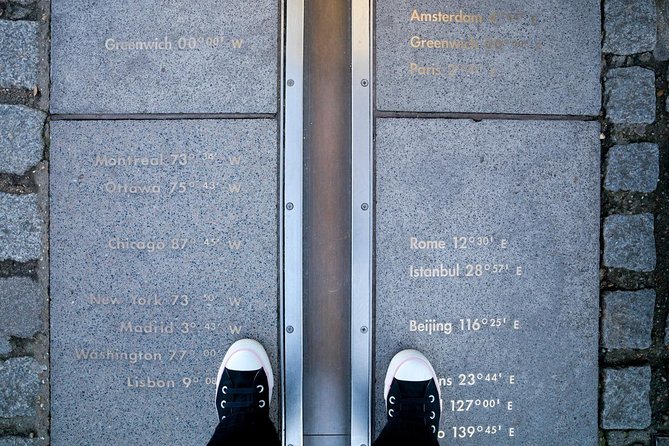
- Prime Meridian photo moment in the Meridian Courtyard, with one foot in each hemisphere (east and west of the line)
- Audio guide route that explains observatory work on time and astronomy at your pace, in multiple languages
- Harrison’s clocks and longitude story, including the inventions that helped change how people navigated and timed their lives
- Iconic Time Ball on top of Flamsteed House, a public time signal that still operates today
- Great Equatorial Telescope inside the onion dome, a major early window onto the universe
- Maritime Greenwich add-ons nearby, including free stops at the National Maritime Museum and Queen’s House
Entering Greenwich: where the views start before the exhibits
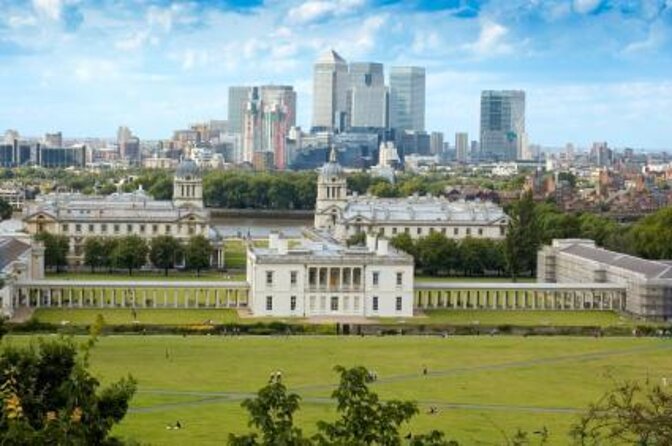
Royal Observatory Greenwich sits up on a hill in Greenwich Royal Park. That means your visit starts with a walk that gets you outside and moving. I actually like this because it forces you to see Greenwich from the right angle, with wide views across Greenwich Royal Park, toward the City of London, and out to the River Thames.
Once you arrive, you will get set up with the audio guide and start your route. Since the experience is self-directed, you can pause as often as you want. This is helpful if you have kids, or if you are the type who stops to read every label.
A practical tip: wear shoes you can trust on uneven paths. A steep hill shows up in people’s feedback for a reason.
More London tours and experiences for the shortlist

Meridian Courtyard: the east-west line moment you will remember
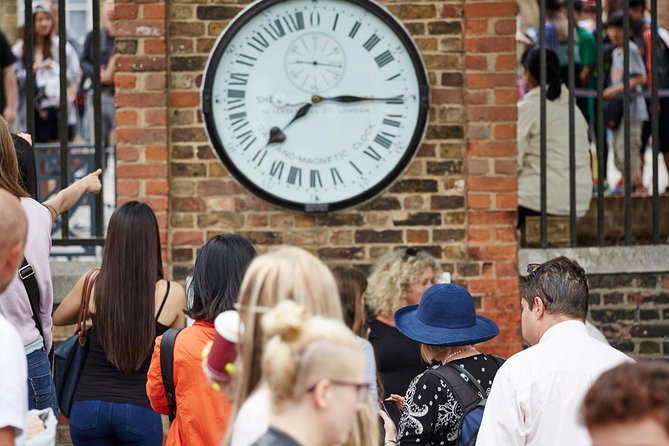
The first big stop is the Meridian Courtyard, where you stand astride the Prime Meridian line. It is one of those places that makes time feel physical. You are not just looking at a map or reading a sign. You are literally standing at the reference point that helped anchor Greenwich Mean Time (GMT), the basis for how the world organized time.
This is also the best place for photos, because the courtyard setup is made for the whole east versus west idea. Take a couple shots, then do a quick scan of what is around you before you move on. It helps you connect the geography to the story you will hear next.
If you want a smoother photo experience, I suggest you do it earlier in your visit. This area can get busy as the day goes on, and line waiting steals time from the rest of the route.
Flamsteed House: clocks, inventors, and the logic behind GMT
Next comes Flamsteed House, where you walk through the footsteps of the Astronomers Royal. This part matters because it takes the Prime Meridian from a symbol to a working system. Time did not just happen. People built it, tested it, and argued about it until it could be trusted.
Inside, the route centers on the history of timekeeping and the scientists tied to the observatory. You will see Harrison’s clocks and the inventions that changed the world. Harrison is a core name here for a reason: the story connects precise time to real-world navigation and travel, not just astronomy trivia.
You will also learn about discoveries linked to major figures associated with the observatory across different eras, including Newton, Halley, Bradley, Maunder, Airy, and even Einstein. Hearing those names in the context of time and measurement makes the exhibits feel more connected than a pile of facts.
One thing I like: the pacing. The audio guide tends to steer you from one milestone to the next, so you feel like you are following a path rather than wandering randomly.
Octagon Room and the Sir Christopher Wren connection
The Octagon Room is where the observatory story turns architectural. The room was designed by Sir Christopher Wren, and it is one of the best preserved Wren interiors in London. Even if you are not an architecture person, you will probably notice how intact and purposeful it feels.
This stop is valuable because it reminds you the observatory is not only about instruments. It is about buildings and spaces built for serious work, observations, and long-term measurement. The structure of the experience helps you see why the observatory became such a big deal historically.
If you are short on time, do not skip the Octagon Room. It gives you a sense of place in a way that photographs alone cannot.
Harrison, longitude, and what you learn without being an expert
You do not need a science degree to enjoy the time and astronomy angle here. The audio guide framing makes measurement of time feel manageable, even if it is a big subject.
The key is that the exhibits are arranged around practical breakthroughs. When you learn about Harrison’s clocks, the story clicks into place. You start to understand why a reliable clock mattered, why longitude was hard, and how improved timekeeping made travel and mapping less guesswork.
I also appreciate the way the experience connects astronomy to everyday life. Timekeeping is not just for observatories. It affects ships, maps, schedules, and the way the world synced up.
If you enjoy explanations and stories with names, you will likely have fun spotting patterns across the scientist timeline the audio guide presents.


The Time Ball: an old public signal that still works
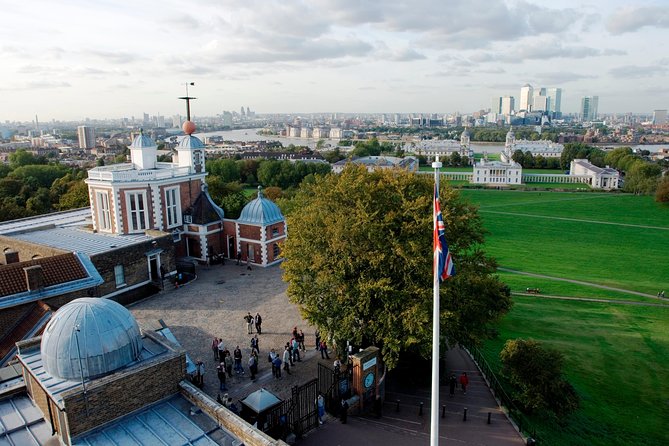
One of the most memorable outdoors moments is the bright red Time Ball on top of Flamsteed House. It is one of the earliest public time signals, first used in 1833, and it still operates today.
Standing near this kind of mechanism gives you a strange feeling in a good way. It is old technology with a purpose that still sounds modern. Public time signals were needed because people could not rely on personal devices to synchronize themselves to the same standard.
If you time your visit well, you may catch it in action. Even if you miss the exact moment, seeing the Time Ball setup helps you understand why observatories mattered to the wider public.
Great Equatorial Telescope: the big dome part

Then you reach the Great Equatorial Telescope, housed in a huge, iconic onion dome. This is the kind of thing that looks cinematic when you see it in person.
The dome represents a major leap in what astronomers could do. The telescope gave new views of the universe over 100 years ago. In other words, it is not just a display label. It is a window into how observation power grew.
This stop works best if you take an extra minute to slow down. Look up at the dome, imagine the equipment, and let the audio guide connect the telescope to the broader goal of accurate measurement and better viewing.
Views and walking logistics: how to make the hill work for you

You will walk outdoors and you will climb. A lot. That is the main drawback that shows up again and again in real-world feedback, and it is worth respecting.
If you are on a tight schedule or have mobility limits, I would plan your route with extra time. Some parts are described as not fully accessible, and at least one visitor found the observatory hill challenging and not wheelchair friendly due to stairs and limited lift access. If you need assistance, it is smart to contact the attraction ahead so you can confirm what is workable for your situation.
For most people, the views are the payoff. From the top, Greenwich feels big and open. You get London and the river in the same frame, which is a big part of why the visit feels more than museum hours.
Pair it with Maritime Greenwich: free stops that extend your day
The Royal Observatory is located within the UNESCO World Heritage Site of Maritime Greenwich. The good news is you do not have to stop at just one building.
National Maritime Museum and the Queen’s House are both within short walking distance and are free to visit. That is a strong value bonus if you want more context about Britain’s maritime past, navigation, and the broader world the observatory supported.
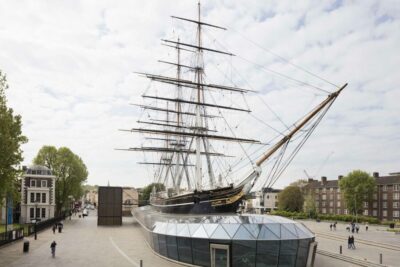
Cutty Sark is also a must-see nearby, and it is now an award-winning museum and visitor experience. It is not included in the ticket package described here, but it is close enough that you can build it into your day without fighting the city.
If you like a plan, I recommend you treat the Royal Observatory as your anchor, then spend extra time wandering and choosing between these nearby options based on your interests.
Price and value: what you actually get for about $33.90
At $33.90 per person for admission, this ticket is best viewed as paying for access to a focused, high-impact experience. You are not buying a long day of separate attractions on multiple floors. You are buying a two-ish hour visit that hits the core themes of Greenwich and timekeeping.
The value gets better because the included audio guide is free to download and is available in multiple languages, and you also gain easy access to two free nearby sites (the National Maritime Museum and Queen’s House).
So even if you only add one or two of those walkable free stops, your day stretches further than the two-hour observatory window. That is a big reason this ticket tends to feel fair to people who plan their timing.
Who should book this Royal Observatory visit
This is a great match if you want:
- A memorable photo spot that ties directly to a real global system, not just a statue
- An educational route you can control with your pace, thanks to the audio guide
- A mix of science, instruments, and famous names connected to timekeeping and astronomy
- A couple of hours that feel meaningful in a UNESCO area
It may be less ideal if:
- You need a fully step-free experience. The hill and stairs can be hard, and parts are not fully accessible.
- You want a traditional guided tour only. This experience centers on the audio route, not a live guide for every moment.
Should you book this Prime Meridian ticket?
Yes, if you are planning a Greenwich day and you like seeing how big ideas were built in real places. The Prime Meridian courtyard photo, the Time Ball, Harrison’s clocks, and the Great Equatorial Telescope are a strong set of highlights for the time you spend.
If you are visiting with limited mobility, I would book only after checking accessibility details directly with the attraction and deciding whether the hill and stairs will work for your party. If walking is manageable for you, this is one of the most satisfying ways to understand why GMT exists and why Greenwich became the place where time got standardized.
If you want the best experience, build in a little extra time so you can handle the climb without rushing, and do the Prime Meridian photo early before crowds build up.
More Tickets in London

More Tour Reviews in London
Not for you? Here's more nearby things to do in London we have reviewed










More Greenwich Tours worth a look.
 ★ 4.5Westminster to Greenwich Sightseeing Thames Cruise in LondonTickets from $222,969 guest reviews
 ★ 4.5Leeds Castle, Canterbury, Dover & Greenwich Boat rideTickets from $147604 guest reviews
 ★ 4.5‘Cutty Sark’ Entrance TicketTickets from $32373 guest reviews
 ★ 4.0Leeds Castle, Canterbury, Dover & Greenwich Cruise from LondonTickets from $143369 guest reviews
 ★ 4.7Entrance Ticket to the Cutty SarkTickets from $26324 guest reviews
 ★ 4.5Royal Museums Greenwich Day PassTickets from $40309 guest reviews
 ★ 4.4Leeds Castle, Canterbury, Dover, Greenwich & Free Snack PackTickets from $160277 guest reviews
Continue by place or experience