
REVIEW · LONDON CITY TOURS
Private Tour: Night Photography Tour in London
London at night is a different city. This private night photography tour is built for getting great shots with far less guesswork, guided by a fine art photographer. I like that you start at the South Bank where the views line up naturally, and I also like that your instruction is camera-specific, not generic. One thing to consider is that you will want to bring the right basics, like a charged battery and ideally a tripod, since night photography rewards slow shutter work.
The vibe is practical, calm, and hands-on. The strongest part for me is the way the guide works with your camera settings step by step, then helps you choose angles that actually make sense in the dark. The potential drawback is timing: with only about 3 hours, you will need to commit to the stops and experiment quickly rather than linger forever at one perfect corner.
Key Things That Make This Night Photo Tour Worth Your Time
- Lou’s teaching style is patient and hands-on, with real help adjusting camera settings for your specific gear
- South Bank to Westminster routing keeps iconic subjects within easy walking distance at night
- Slow shutter and long exposure practice is built into multiple stops, so you shoot, then immediately learn how to improve
- Reflections on the Thames get special attention, including longer exposure ideas for smoother water
- Action in low light shows up at Royal Festival Hall, not just static skylines
- Private format means the coaching can be tailored to your skill level and what you want from the night
Why London Night Photos Feel Easier Here Than On Your Own
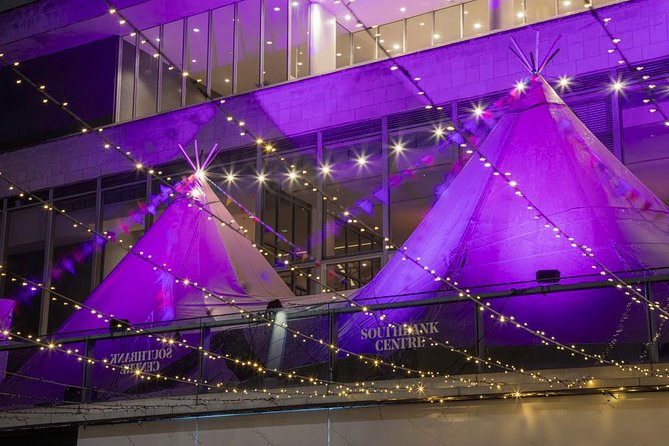
London’s night lighting is gorgeous, but your biggest enemy is usually not darkness. It is uncertainty. Where do you stand? What settings should you use? How do you frame the shot so it does not look like a blurry souvenir?
This tour tackles that head-on. You are guided to photogenic viewpoints along the river, and you learn how to use light and color in your images instead of just pointing your camera and hoping. You also get feedback after shooting, which is the shortcut most people miss when they try to learn at the same pace as the city.
And yes, it is also fun. You get to wander through classic landmarks at a slower, more cinematic tempo, with the extra confidence of someone steering you away from dead ends.
You can also read our reviews of more private tours in London
Meeting at Waterloo Pier, Then Getting Camera Coaching That Matches Your Gear
You meet at the London Eye Waterloo Pier area (London SW11A 1AE). The tour ends near Westminster Tube Station (Bridge St, London SW1A 2JR), so you are not stuck backtracking in the dark.
Right at the start, the guiding philosophy is simple: you bring your camera, and you get instruction that fits it. The photographer is experienced with teaching and knows a multitude of cameras, which matters because night settings can behave differently from model to model. If you are using a compact camera or a DSLR, the goal is still the same: make slow exposures and night scenes look intentional.
You should expect a leisurely walking pace, and you should expect time spent actually shooting, not just moving from one photo spot to another. That balance is what makes the private format feel worth it.
South Bank and London Eye: Skyline Shots With Slow Exposures You Can Replicate
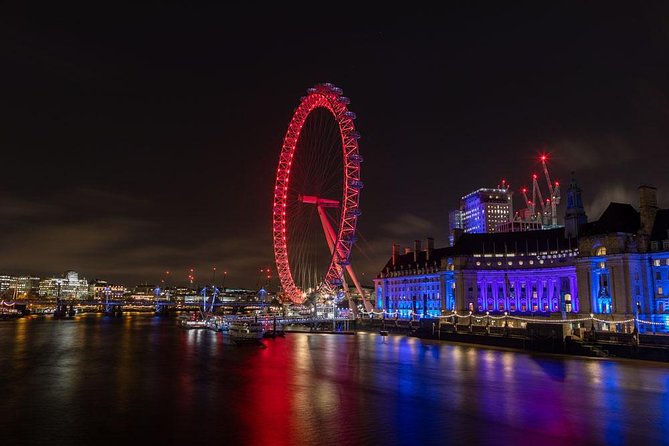
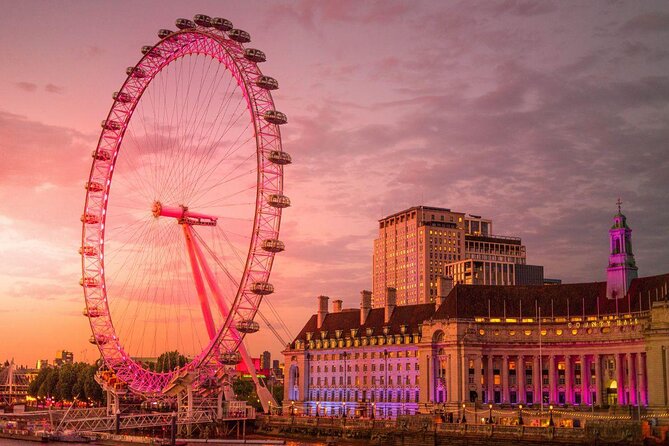
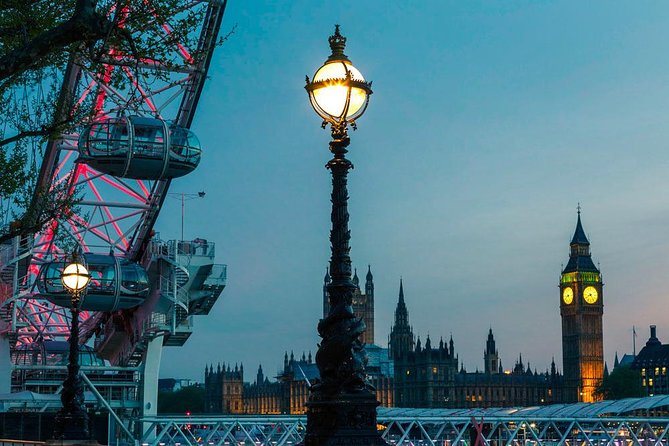
The first stop is South Bank, and it sets the tone for the whole evening. This is where you capture the feel of London after dark, with a clear line of sight to major icons. The big draw here is composition with landmarks like Big Ben, the Houses of Parliament, and the London Eye all playing in the same frame.
You also get direct night photography instruction while you shoot. The focus is on how to create high-quality night photos with a professional fine art photographer working with you in real time. The lesson includes how to handle luminous areas in the scene, and how to position your camera so the skyline does not turn into a washed-out blob.
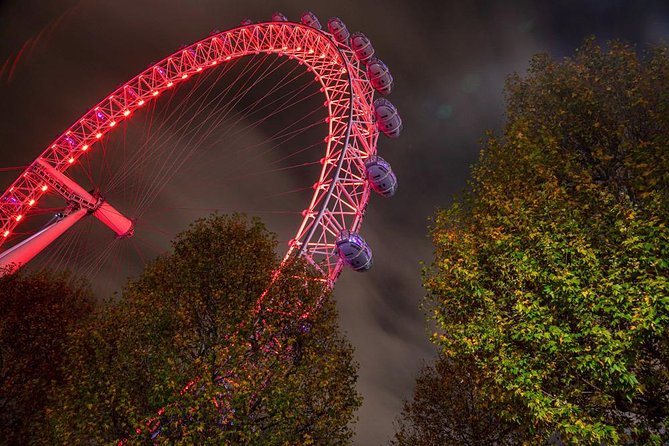
Then you move to the London Eye. A key moment here is learning how to capture the London Eye as it rotates. You practice slow exposures so the motion becomes part of the photo rather than a mistake. You also experiment with different exposure times to change the result, which is one of those skills that upgrades your photography far beyond this one landmark.
If the timing lines up with warmer months, there is also a mention of using the blue hour and twilight for low-light photography. That matters because twilight gives you a more textured sky than full midnight darkness, and it usually makes light trails and reflections look more dimensional.
Thames Views and Jubilee Bridges: Reflections, Color, and Framing From Elevated Angles
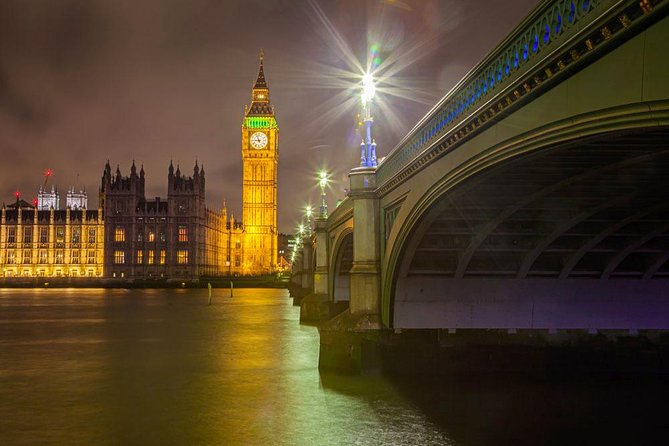
Next you head along the river toward Jubilee Bridge, where the tour leans into how night scenes reflect back at you. At the Thames River stop, you focus on views of the skyline toward Westminster. You also photograph places along the route, including the Royal Festival Hall, the National Theatre, and the British Film Institute as they light up at night.
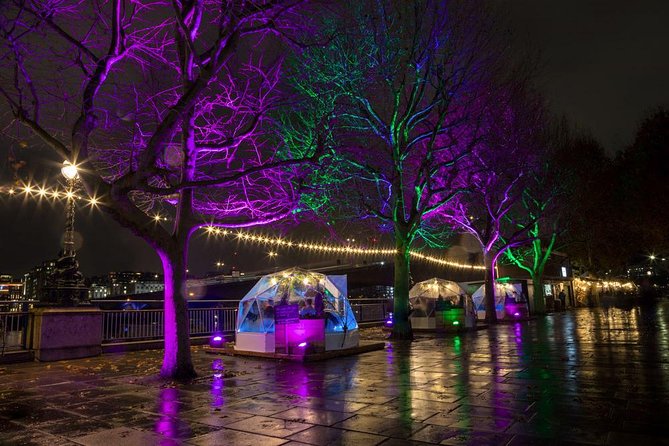
The instruction here is practical: how to capture colorful reflections and use long exposures to create smoother, glass-like surfaces on the water. That is one of the biggest differences between a beginner night photo and a photo that feels crafted. Water is forgiving if you understand exposure time, and frustrating if you do not.
Then comes the Golden Jubilee Bridges viewpoints. From an elevated angle, you learn framing and composition, and you capture wide views that can include Westminster, the Houses of Parliament, the London Eye, Big Ben, and St Paul’s Cathedral. This stop is good for making sure you do not only shoot close-up landmark details, but also learn how to plan the photo like a graphic design layout in the dark.
Royal Festival Hall: Turning Low Light Into Action Shots
A common night photography trap is photographing only buildings. This tour pushes you to photograph movement too.
At Royal Festival Hall, you focus on the action in the nearby skateboarding area. You get instruction on freezing action and creating atmospheric slow exposures. That might sound contradictory, but it is actually the core of night photography: you are balancing shutter speed, motion, and available light.
Freezing action is about shorter shutter speeds, while atmospheric slow exposures lean toward longer shutter times to turn motion into trails. Practicing both gives you options for future city nights. Even if you never shoot sports again, you will still benefit from learning how to control motion in low light.
You can also read our reviews of more evening experiences in London
Big Ben and Houses of Parliament: Mood, Atmosphere, and River-Level Framing
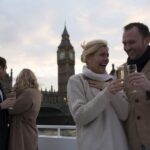
Now you get closer to the emotional heart of London at night. At Big Ben, you photograph from across the river, with the Houses of Parliament in the same view. The instruction centers on creating mood and atmosphere while framing and composing the scene.
This is where small choices matter. If you keep the framing tight, the shot can feel bold. If you leave room in the frame, it can feel cinematic. The photographer helps you find the approach that works with the lighting you are dealing with, not the lighting you imagined.
At Houses of Parliament, you focus on how to capture compositions that honor the landmark’s history while still reflecting modern London at night. The goal is not just a sharp monument photo. It is an image that communicates the place, and the night lighting is a key part of that story.
Also, this is one of those stretches where your camera settings choices will either pay off or betray you. You will feel it immediately when lights blow out or when details get lost in shadows.
Westminster Bridge and Victoria Embankment: Light Trails Plus the London Eye Circle
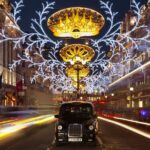
At Westminster Bridge, you experiment with slow shutter speeds to capture flowing night trails from moving traffic. This is a classic technique, but it is also one that benefits from coaching. When you get the shutter time right, you get smooth light ribbons instead of chaotic streaks.
The tour’s pacing keeps you moving, but you still get a chance to try adjustments. This stop is a real skill builder because it teaches you how to make motion look intentional.
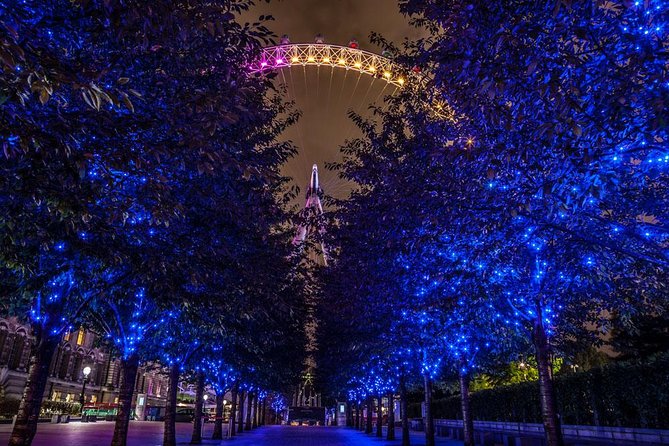
Then you end at Victoria Embankment, where you photograph the London Eye from across the river and capture the full circular landmark experience. You learn how to use light, capture color, and use slow exposures to suggest movement. You also focus on framing and composition in that atmospheric river setting, plus how to capture colorful reflections in the water.
If you want one final payoff shot that feels like London, this is usually the stop. It combines the landmark, the river, and the reflection, which is basically night photography’s greatest hits in one place.
Gear Tips That Actually Affect Your Results (Not Just Theory)
Night photos are picky. Even if your composition is great, your gear choices can limit the outcome. This tour makes that clear in the planning you do before you start.
Bring your own camera and make sure you have a fully charged battery. If you have one, bring a spare battery because you will be shooting for multiple stops. Pack extra memory cards too, because night experiments mean more frames, more tries, and more photos that you will not delete right away.
A tripod is recommended for night photography. If you do not want to haul one, you can contact the provider after booking to arrange tripod hire. Having a tripod improves sharpness and gives you the stability needed for longer exposures, especially for skyline shots and light trail scenes.
Good news: the tour is suitable for all types of cameras, from compact to DSLR, and it fits all skill levels. If you are a beginner, you will likely spend more time learning camera basics. If you are intermediate, you will probably enjoy the chance to refine technique and move faster between setups.
What the Included Photo Review Usually Means for You
One thing I really like about this style of night tour is the photo review component. Shooting in the dark is only half the skill. You also need feedback on what to do differently next time.
The tour includes review of your photographs and how to develop your photography skills. That feedback loop is valuable because you can take notes that apply to your own future outings. Instead of leaving with a hard drive full of questionable frames, you leave with direction.
Price and Value: $337.60 for a Tailored Private Night Lesson
At $337.60 per person for about 3 hours, this is not a budget group stroll. You are paying for private, camera-specific coaching plus a professional fine art photographer who knows different cameras and has teaching experience.
So what is the value math?
- If you want to learn night photography quickly and you plan to keep using these skills, the instruction time is worth real money.
- If you try to self-teach, you usually pay in time, missed shots, and frustration. This tour compresses that learning curve into a single evening.
- If you have a specific goal, like skyline motion shots with the London Eye or light trails from Westminster Bridge, the guided routing saves you energy and gets you to spots that line up well.
It is also booked far in advance on average, which suggests people treat it like a must-do evening, not an optional add-on. If you are flexible on timing and want a reliable photo result, plan ahead.
Who This Night Photography Tour Fits Best
This tour fits best if you:
- want help getting high-quality night photos without getting lost
- want instruction that matches your camera type, not a one-size-fits-all talk
- enjoy shooting skylines, reflections, and landmark compositions
- want calm, patient coaching, especially if you are still learning your settings
- like the idea of combining classic landmark photos with an action-focused stop at Royal Festival Hall
It is a great pick for beginners who want more than auto mode, and it is also a strong pick for intermediate photographers who want structured practice with slow shutter and long exposure techniques.
If you hate walking or you want a slow, sit-and-stare sunset style experience, you might find the pace a bit active. This is a photography workshop in motion, not a relaxed bench session.
Should You Book This London Night Photography Tour?
I think you should book if you want to come home with images that look planned, not just captured. The routing along the river is built for night photography, and the private coaching by Lou helps you understand settings and composition while you are actually shooting.
Book it if you are serious about learning. The photo review, the camera-specific teaching, and the repeated practice with slow exposures and long exposures give you a skill you can reuse in any city at night.
Skip it only if you are not interested in learning camera settings, or if you are unwilling to bring a charged battery and get set up for tripod work. Night photography rewards preparation, and this tour is designed around that reality.
If that sounds like your kind of evening, this is a smart way to spend a London night with purpose.
FAQ
How long is the private night photography tour?
The tour is listed as about 3 hours.
Where does the tour start and where does it end?
It starts at London Eye Waterloo Pier, London SW1A 1AE and ends near Westminster Tube Station at Bridge St, London SW1A 2JR.
Is there an admission fee for the stops?
Admission is listed as free for the stops included on the walk.
What should I bring for the tour?
Bring your own camera and a fully charged battery and or spare battery. Extra memory cards are also recommended for the photos you will take. A tripod is recommended for night photography, and tripod hire may be available if you contact the provider after booking.
Do they teach for different camera types and skill levels?
Yes. The tour is suitable for all types of cameras, from compact to DSLR, and it is suitable for all skill levels.
Is the tour available in bad weather?
The tour operates in all weather conditions, so dress appropriately.
Is free cancellation available?
Yes, you can cancel up to 24 hours in advance for a full refund. If you cancel less than 24 hours before the start time, the amount paid is not refunded.
More Private Tours in London

More Tours in London

More Tour Reviews in London

Not for you? Here's more nearby things to do in London we have reviewed
More London City Tours worth a look.
 ★ 4.6The London Eye Entry TicketTickets from $3935,875 guest reviews
 ★ 4.7From London: Harry Potter Warner Bros Studio TourTickets from $11726,588 guest reviews
Westminster to Greenwich River Thames CruiseTickets from $2222,836 guest reviews
Magical London: Harry Potter Guided Walking TourTickets from $2022,044 guest reviews
★ 4.7From London: Harry Potter Warner Bros Studio TourTickets from $11726,588 guest reviews
Westminster to Greenwich River Thames CruiseTickets from $2222,836 guest reviews
Magical London: Harry Potter Guided Walking TourTickets from $2022,044 guest reviews
 ★ 4.6Madame Tussauds LondonTickets from $3620,915 guest reviews
 ★ 4.5Stonehenge, Windsor Castle, and Bath from LondonTickets from $11118,662 guest reviews
 ★ 4.7Warner Bros. Studio Tour with TransfersTickets from $14417,586 guest reviews
 ★ 4.7Tower Bridge Entry TicketTickets from $2115,560 guest reviews
Continue by place or experience