
REVIEW · LONDON CITY TOURS
Private Spy Walking Tour of London
London has a secret side, and it walks.
This private spy tour strings together real cases, real spy organizations, and real London landmarks into one tight 3-hour story. I like that it hits both Cold War intrigue and the modern alphabet-soup world of MI6, MI5, and GCHQ, so you are not stuck only in Bond trivia.
I especially like the guide-led pacing and the human feel. In past runs, guides like Eian and Michael were praised for being personable, not rushing, and helping the group get oriented at the end. I also like the mix of photo-friendly stops and big-picture government locations, so you get context plus places that you can actually picture later.
One drawback to consider: the route is mostly outdoors and you are on your feet for about three hours with several short photo stops. If you prefer long museum-style viewing, this is more about the walking story than sitting with exhibits, and you should plan for moderate fitness.
Key things to know before you go
- Waterloo Bridge, Georgi Markov, and a ricin assassination story that changed how people talk about Cold War tradecraft
- The Savoy Hotel angle, including a connection to the James Bond creator and a surprising spy link to the Trafalgar Square Christmas Tree tradition
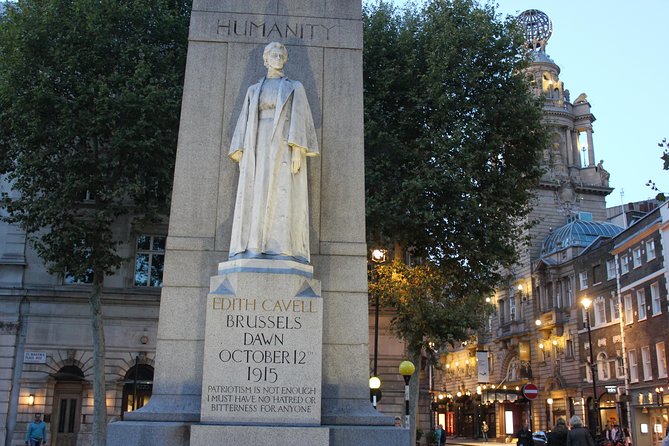
- Edith Cavell’s case at her memorial, where a wartime spying claim gets revisited with newly declassified documents
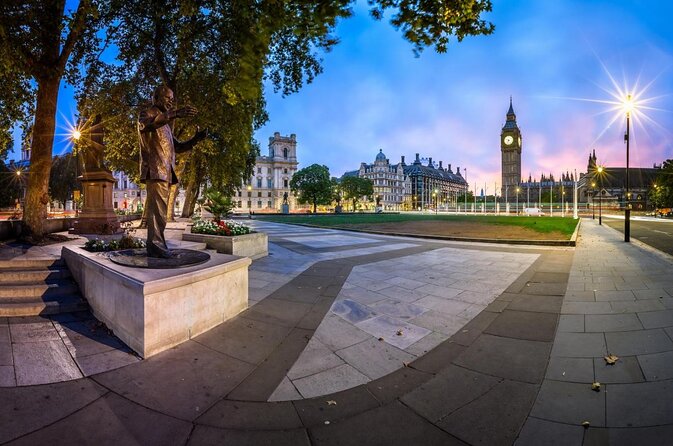
- Whitehall and Parliament Square, built around how UK oversight, international allies, and major wartime leadership shaped espionage
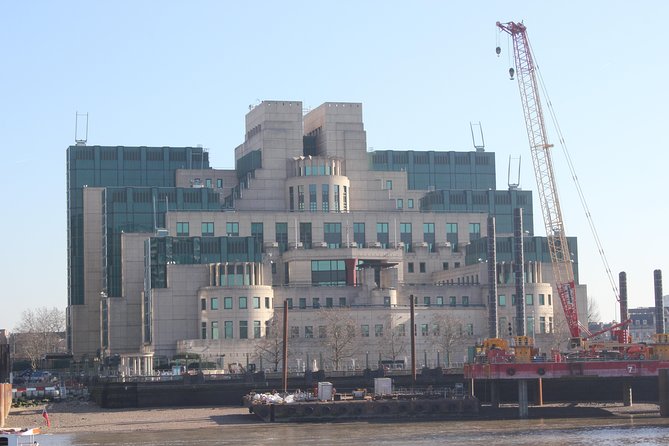
- Riverside Walk Gardens for MI6 context, with notes on how MI6 and its headquarters show up in James Bond films and TV like Sherlock
- Private group feel up to 15 people, with a mobile ticket and a guide who can keep the pace sane
The best part of this private spy walking tour: a story that actually connects
A spy tour can turn into a grab bag, one stop after another with no thread. This one keeps a running logic: how espionage evolved, how governments organized it, and how some of the most famous spy ideas started as real operations.
What makes it work is the blend of levels. You get street-level moments, like a landmark tied to an assassination attempt. You also get institutional moments, like government buildings and oversight in action. And because it stays centered on London, the setting keeps pulling you forward.
This is a tour for both types of spy fans. If you are a James Bond watcher, you will recognize patterns and pop-culture echoes. If you prefer the real stuff, you get names, organizations, and cases that go beyond the movie version.
You can also read our reviews of more walking tours in London



Starting at Somerset House: set your bearings before the plot thickens
The tour begins at WatchHouse Somerset House East Wing, Somerset House (WC2R 1LA). Starting here matters because Somerset House sits right in the central London rhythm, so you can connect easily from other sights.
Also, the vibe at the start is practical. You get the spy theme before you hit the first major Cold War landmark, and the guide has time to set expectations for the route and the kinds of stories you will hear. That helps when you are juggling multiple short stops without losing the bigger thread.
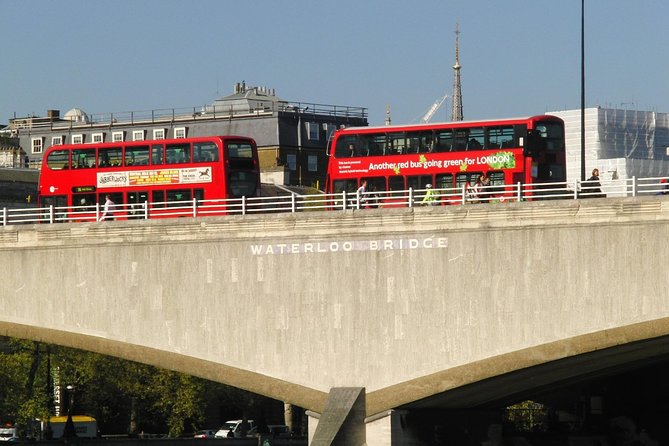
Waterloo Bridge and the Georgi Markov assassination case
The first stop is Waterloo Bridge, where the tour tackles one of the best-known Cold War assassinations: Georgi Markov. The story centers on a poisoned pellet, fired using a needle-tipped umbrella, tied to Russian intelligence tradecraft.
This stop is short, about 10 minutes, so you are not getting a long lecture. Instead, you get the key idea quickly: espionage is not only secret meetings and coded letters. It is also the scary, technical side of operations, designed to look ordinary while causing extraordinary harm.
Why it is worth your time: it teaches you how spy thinking blends chemistry, concealment, and plausible deniability. Even if you forget all the details later, you will remember the feel of the case, because the location puts you in the real London setting instead of an abstract story.
The Savoy Hotel: where Bond-style fiction meets wartime reality
Next comes The Savoy, a grand hotel that the tour uses as a gateway to multiple spy connections. You will hear about ties related to the James Bond creator’s real-life intelligence work. You will also get a story connecting espionage to the tradition of placing a Christmas Tree in Trafalgar Square.
It is about 10 minutes here, so again you are not touring suites. You are collecting clues. The value is how the guide connects the dots between well-known cultural symbols and the world that produced them.
Possible downside: if you are hoping for a full interior look at the building, this is more of an outside landmark stop. You get context and stories, not a hotel guest experience.
Edith Cavell Memorial: spying accusations that get re-examined
The third stop is the Edith Cavell Memorial. The tour looks at her role as a nurse in occupied Belgium during World War I and the story of her execution by German forces on charges of spying. The British government is said to have denied the spying claim, and later newly declassified documents suggest a different version of events.
This is one of those stops that does more than entertain. It pushes you to think about wartime information, how accusations spread, and how narratives can shift when documents are released.
Why this matters on a spy tour: it grounds espionage in the reality that intelligence is not always clean. It is often contested, politically framed, and shaped by what authorities want the public to believe.
You can also read our reviews of more private tours in London



The High Commission of Canada stop and early postwar intelligence warnings
After Cavell, you move to the High Commission of Canada in the United Kingdom. Here the focus is on a Canadian MI6 spy who warned the British government about the possibility of another war with Germany as early as 1919.
This stop is brief, around 5 minutes, which means you will likely get a tight summary rather than a case file reading. But it adds an important layer to the tour’s timeline. It shows espionage did not stop after the guns went quiet. Intelligence work kept running, looking for the next threat while governments reorganized.
If you like spy stories that feel like they connect world events, this quick stop is a good jolt of perspective.
Old Admiralty Building: codebreaking, a dead-body plan, and why music shows up
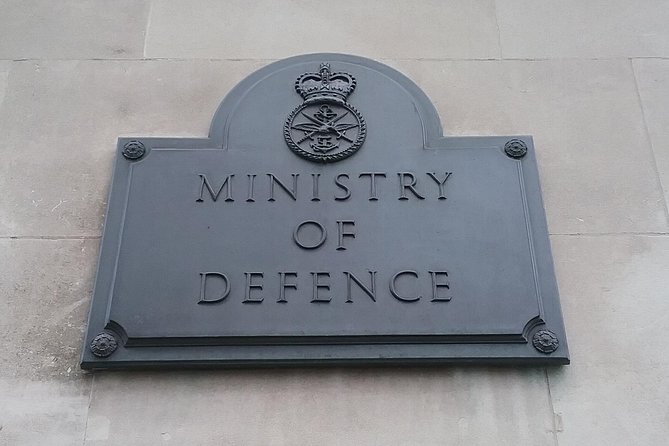
The Old Admiralty Building stop runs about 10 minutes and focuses on the Directorate of Naval Intelligence, which was based here during both world wars.
The tour explains how this organization mattered for the establishment of two British secret services and how intelligence deciphered in this space helped bring America into World War One. You also hear about a plan involving a dead body meant to fool the Germans, plus how that idea went on to inspire a best-reviewed British musical.
This is a great stop for two reasons:
1) It shows how intelligence work can reshape national outcomes, not just spy careers.
2) It reminds you that real operations inspire culture. When a story is strong enough to become theater, it usually means the underlying plot had real stakes.
Practical note: if you are the kind of person who likes to take photos for later, you will probably want to keep your camera ready. You are moving fast, and the story is the main attraction.
Whitehall: where government architecture meets spying since the early 1900s
Whitehall is one of the tour’s big stops, roughly 30 minutes. Here the discussion connects spying to the British Government since the early 20th century, including ties to Downing Street and the Admiralty.
The tour also covers the Secret Service’s early leadership and the police role tasked with stopping foreign spies in the First and Second World Wars. In other words, you are not only hearing about secret agents. You are hearing about the systems that tried to catch them.
Why this feels like a turning point: Whitehall helps you understand that espionage is not separate from government. It is built into government functions, policing, and decision-making.
Possible drawback: 30 minutes is longer than some of the earlier stops, so if your legs are already feeling it, this is the place to take a breather and keep water handy.
Parliament Square: Churchill, oversight, allies, and a spy’s grave in Westminster Abbey
From Whitehall, the tour heads to Parliament Square for about 30 minutes in total time at the area, plus you will board a famous London double-decker bus afterward toward Mi6.
Parliament Square becomes your discussion hub. You will hear how Winston Churchill changed the role and reality of espionage through decisive leadership in the Second World War. You will also talk about how the UK provides parliamentary oversight of spy organizations and how the UK works with international allies. The tour then circles back to a personal angle, explaining how a spy ended up buried in Westminster Abbey.
What I like about this stop is the balance. It includes the action side of espionage, but it also emphasizes governance. When you finish the tour, you are left with a clearer picture of who controls intelligence, not just who works it.
Riverside Walk Gardens and the MI6 explanation you can actually use
Riverside Walk Gardens is where you get your photo time. It is also a learning stop that focuses on the Security Intelligence Service, MI6, including how it works and how it relates to MI5 and Government Communications Headquarters (GCHQ).
This is also where pop culture becomes useful. You will learn about how MI6 and its headquarters have been used in James Bond films and TV shows such as Sherlock. The point is not to replace real history with fandom. The point is to help you recognize why certain images became iconic, and what details are more than just set dressing.
After Riverside Walk Gardens, the route crosses Vauxhall Bridge. The plan then includes a train hop to Waterloo, followed by a short walk to the finish area. The tour officially finishes at Vauxhall Bridge.
How long is the tour, and what that means for your pace
The tour runs about 3 hours. The stop lengths are mostly short, often 5 to 10 minutes, with Whitehall as the longer anchor and Parliament Square giving you time for the broader oversight and leadership themes.
That pacing is a feature, not a flaw. Spy history moves quickly, and the guide’s job is to keep you from drowning in details you may not retain. If you like tight, story-based learning, this works well.
If you want the slow travel style where every stop becomes a mini-adventure, you may wish it lasted longer. But because this is private and can fit a group’s speed, you can usually find a comfortable rhythm.
Price value: $245.48 per group up to 15 people
The price is $245.48 per group, with a maximum group size of 15. That pricing can be a steal or a splurge depending on how many people you have.
- If you come close to the full group size, the per-person cost drops to a very manageable level for a private guide.
- If you are only a small group, you are paying more per person, but you still get the private format, meaning you get fewer scheduling headaches and a more flexible route pace.
I think this is best viewed as a group experience. If you can bring friends or family, you turn the cost into something closer to a normal paid attraction plus a guide who connects the dots across London’s spy-related sites.
Who should book this tour, and who might want to skip it
This works best if you:
- love spy history, but also like a story that connects to James Bond and TV references
- want a guided route through major London locations without doing homework first
- prefer private, small-group attention rather than a large bus tour
- enjoy short stops paired with clear context
You might skip it if you:
- want museum-style depth at each location
- hate walking and would rather sit for most of your sightseeing
- are expecting indoor access to buildings, because most stops are landmark-based
Should you book this Private Spy Walking Tour of London?
If your idea of a great London day is learning while walking, this is a strong pick. The tour’s real advantage is the way it ties together assassinations, wartime controversies, government oversight, and modern intelligence organizations into one coherent arc.
Book it if you want a guide-led narrative across Waterloo Bridge, The Savoy, the Edith Cavell Memorial, Whitehall, Parliament Square, and the MI6-focused finale at Riverside Walk Gardens. If you are the type who likes your history to feel like a live thriller, you are going to enjoy how fast the story moves and how much it helps you connect London landmarks to the spy world.
FAQ
How long is the Private Spy Walking Tour of London?
It lasts about 3 hours.
Is this a private tour, and how big is the group?
Yes, it is a private tour. Only your group participates, with a maximum of up to 15 people.
Where do we meet, and where does the tour finish?
The tour starts at WatchHouse Somerset House East Wing, Somerset House, London WC2R 1LA, UK. It finishes at Vauxhall Bridge.
What language is the tour offered in?
The tour is offered in English.
What is included in the tour price?
A guide is included, and you get a mobile ticket.
Is public transportation included?
No. You will need to pay for travel on the TFL network using services like Apple or Android pay, an oyster card, or a contactless card.
Is the tour stroller-friendly and are service animals allowed?
Yes. The experience is stroller-friendly and service animals are welcome.
Can I cancel for a full refund?
Yes, you can cancel for free up to 24 hours in advance for a full refund. If you cancel less than 24 hours before the start time, the amount paid is not refunded.
More Walking Tours in London
More Tours in London


More Tour Reviews in London


Not for you? Here's more nearby things to do in London we have reviewed



More London City Tours worth a look.
 ★ 4.6The London Eye Entry TicketTickets from $3935,875 guest reviews
 ★ 4.7From London: Harry Potter Warner Bros Studio TourTickets from $11726,588 guest reviews
Westminster to Greenwich River Thames CruiseTickets from $2222,836 guest reviews
Magical London: Harry Potter Guided Walking TourTickets from $2022,044 guest reviews
 ★ 4.6Madame Tussauds LondonTickets from $3620,915 guest reviews
 ★ 4.5Stonehenge, Windsor Castle, and Bath from LondonTickets from $11118,662 guest reviews
 ★ 4.7Warner Bros. Studio Tour with TransfersTickets from $14417,586 guest reviews
 ★ 4.7Tower Bridge Entry TicketTickets from $2115,560 guest reviews