
REVIEW · GREENWICH TOURS
Greenwich Highlights Private Half Day Tour
Prime Meridian daydreams meet a real ship. This Greenwich Highlights Private Half Day Tour strings together maritime power, navigation science, and a few royal curveballs in just 3.5 hours. I like that you get a live private guide focused on telling the why behind what you see, not just the what.
Two stops make this one stand out for me: standing on the line of the Prime Meridian, and getting up close to Cutty Sark, the surviving teaclipper that reopened after a major restoration. One consideration, though, is that it is a guided walking tour with a moderate pace, so you should be comfortable with regular walking and some stairs inside museums.
Key points to know before you go
- Prime Meridian access: You will stand by the line for zero degrees longitude and connect it to Greenwich Mean Time.
- John Harrison’s problem-solving: The Observatory clocks are tied to the longitude challenge for sailors.
- Cutty Sark up close: A restored clipper ship brings the Age of Sail to life, end of the sail era included.
- All admissions included: Museum entry fees are covered, which makes the private price feel more reasonable.
- End at Greenwich Market: After the formal visits, you can keep your momentum with food and browsing.
Setting off in Greenwich, with the Thames as your compass
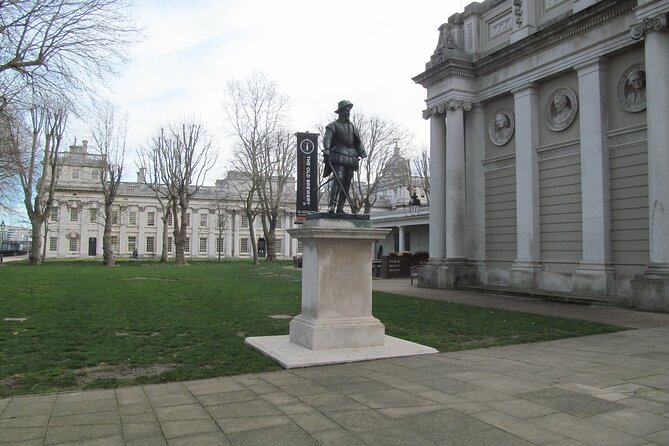
Greenwich has a way of rewarding you fast, because so many landmarks cluster in a walkable corridor. The tour starts at the Sir Walter Raleigh statue just outside the riverside entrance to the Greenwich Tourism Information Centre, across from Greenwich Pier. That location matters because it helps you get your bearings quickly, even if this is your first time in the area.
The plan runs daily from 10:00 a.m. to 1:30 p.m., and it is designed as a concentrated half-day. You are not trying to see everything in London, you are focusing on the Greenwich that explains Britain at sea and the science that kept ships on track. With a private group, your guide can also slow down when something grabs you, or speed up when you are comfortable moving between sights.
The walking is not extreme, but it is steady. I’d call it “moderate fitness required,” which usually means you should expect pavement, some inclines, and museum staircases. Wear shoes you already trust, and if you are traveling with knee issues, plan to take breaks when your guide offers them.
You can also read our reviews of more private tours in London

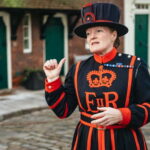
Old Royal Naval College and the Wren connection
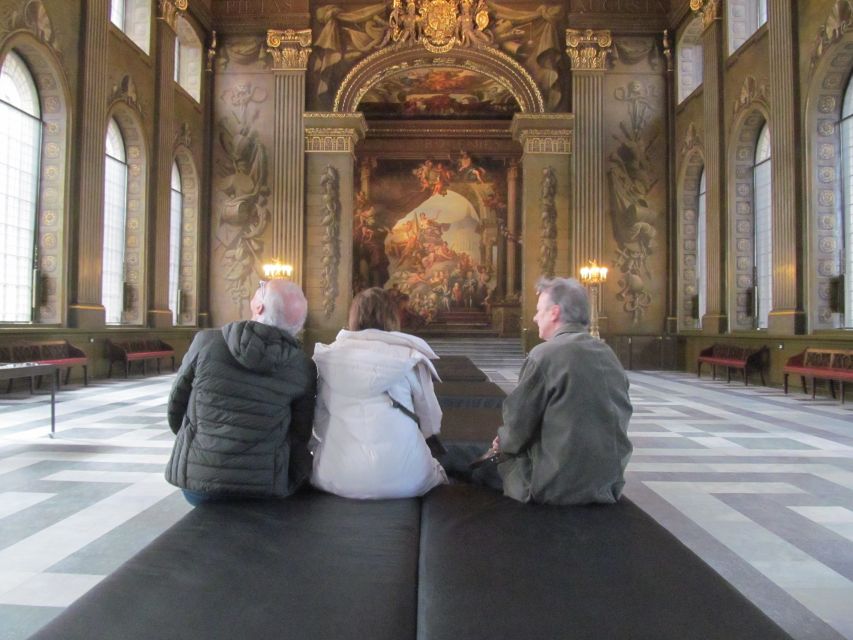
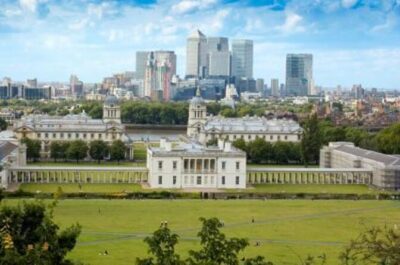
After you start near the river, you walk toward the nearby Old Royal Naval College. This is where the tour quietly sets its theme: maritime training, empire-era infrastructure, and how the British Navy shaped careers for centuries.
One detail I appreciate is the connection to Sir Christopher Wren. Knowing that the site is linked to his design gives you context beyond the brick-and-stone look. It helps you understand why this place feels official and monumental, not just historic.
You will also learn that the Royal Navy had its training college here until the Millennium. That matters because it turns the setting from a museum-only memory into a living institution that kept changing right up to modern times. Even if you are not a big naval-nerd, it gives the rest of the tour more meaning, because you see how training and technology fed each other.
Royal Observatory and the Prime Meridian, plus Harrison’s clocks
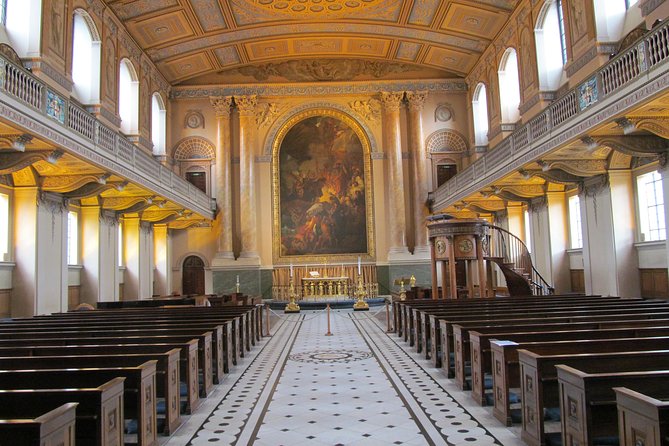
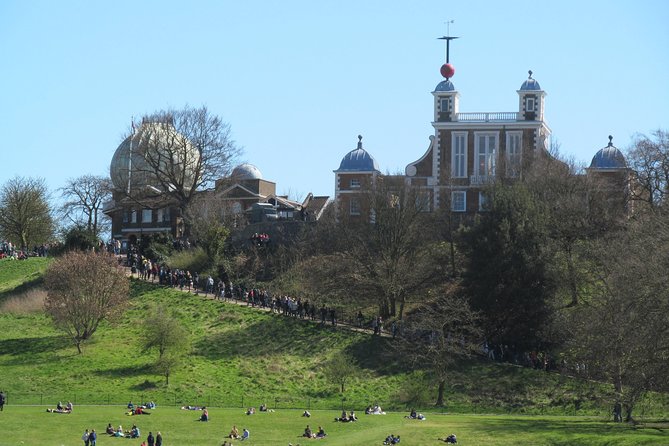
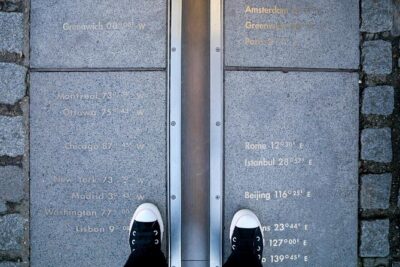
This is the moment most people remember. You walk up to the Greenwich Royal Observatory, home of the Prime Meridian and the line dividing East and West (zero degrees longitude). Standing there helps the concept click in a way that reading alone never does. It is a simple visual reference, but it underpins a huge swath of navigation and timekeeping.
The Observatory museum also features the unique time pieces of John Harrison. The guide is there to connect the clocks to the longitude problem. In practical terms, it was not enough to know where you were by latitude. Sailors needed a way to figure out longitude reliably, and accurate timekeeping was the key.
If you like science stories with a human payoff, this stop is worth your full attention. It turns a famous name into a practical breakthrough: a piece of tech you can almost visualize as it solves a real-world problem. And because this is a private tour, you can ask your guide what to look for in the displays and how the different concepts connect.
National Maritime Museum, the tea break, and what the walls teach
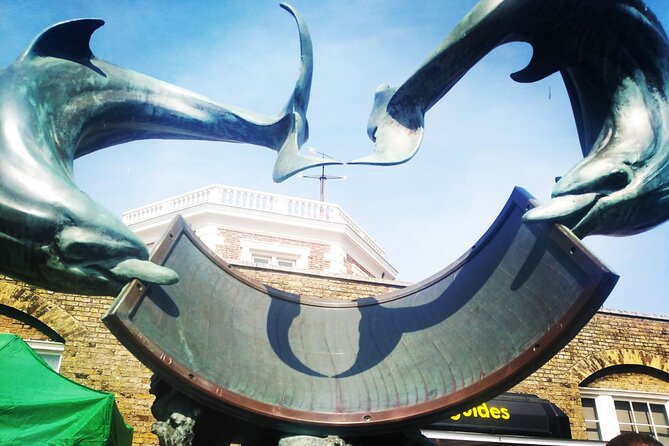
From the Observatory, you head down to the National Maritime Museum, described as the world’s largest maritime museum. That size can be intimidating on your own, but in a guided half-day format, it becomes manageable. Your guide selects the most important angles, so you are not wandering for hours trying to decide where to start.
This is where you get grounded in Britain’s seafaring past and naval power. The museum does that through objects, storytelling, and the sheer density of maritime material. For me, the key value is interpretive. Even if you know the general timeline, a good guide helps you connect the artifacts to the skills and decisions that made ships travel safely and efficiently.
A small comfort is built into the flow: you have an opportunity to rest your feet and enjoy a tea or coffee here. That break is not just about snacks, it helps you reset so you can handle the next portion of the tour without feeling rushed.
Cutty Sark: the teaclipper you can actually walk around

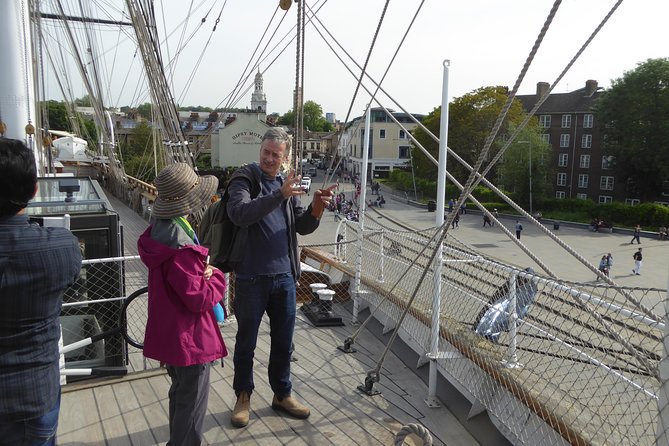
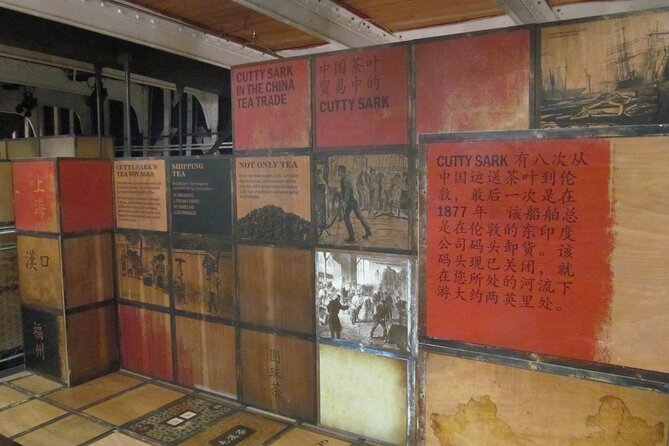
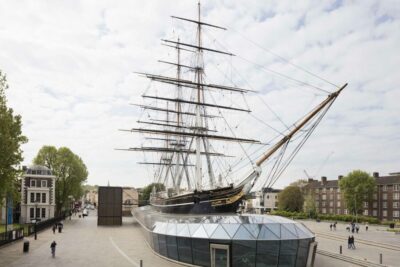
Then comes the highlight that feels different from a museum visit. You will board the world-famous clipper ship Cutty Sark. In its day, at the very end of the Age of Sail, it was known as the fastest ship on water. That reputation alone is a good reason to care, but the stronger reason is how the ship is presented now.
Cutty Sark was newly restored for a reported 50 million pounds, and it reopened to the public on May 1st, 2012. When you see a restoration project on that scale, you understand that you are not just looking at a relic. You are looking at a carefully preserved piece of maritime engineering that was brought back for visitors.
If you like atmosphere, this is your payoff. Even with the science stops earlier, Cutty Sark brings the human side of shipping into focus, because you can sense scale and form in a way that photos never do. And since this is private, your guide can point out the parts that matter most for understanding why clippers moved faster than earlier designs.


Queen’s House and the Elizabethan Armada portrait
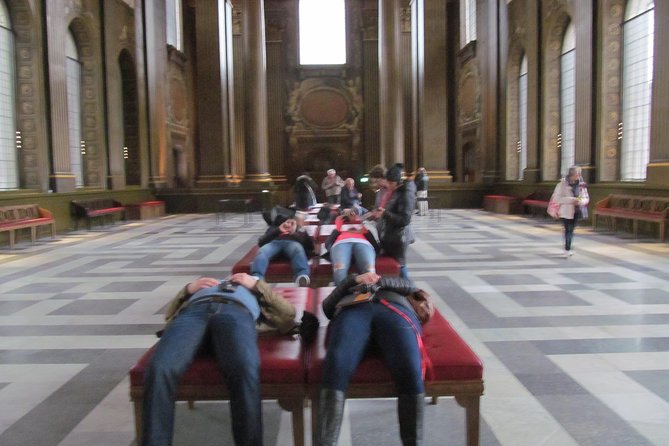
The tour also includes Queen’s House, which is the art museum of Greenwich. This stop is important because it broadens the story beyond ships and clocks. Maritime ambition did not live in a vacuum. It was tied to politics, wealth, and national identity.
You will see Elizabeth’s Armada portrait, one of the tour highlights. That detail matters because it anchors the maritime narrative in the imagery and leadership of the era. You are not only learning how navigation worked, you are also seeing how nations justified and communicated their stakes.
Art museums can feel like a detour on a half-day schedule, but Queen’s House works here because the theme is consistent. Your guide can bridge what you saw at the Observatory and the Maritime Museum to the way power was pictured and promoted in royal art.
Greenwich Market: finish strong with street food and browsing
The tour ends at Greenwich Market, a place you can use immediately while the rest of the day is still ahead of you. The market is known for art galleries, antiques, and street food. In other words, it gives you a natural next step after the structured part of the visit.
This ending is practical. You do not have to think about what to do next, you can just flow into food, snacks, and shopping at your own pace. If you are traveling with people who do not want another museum room, Greenwich Market helps balance the group.
Guides matter more than you think in a private tour
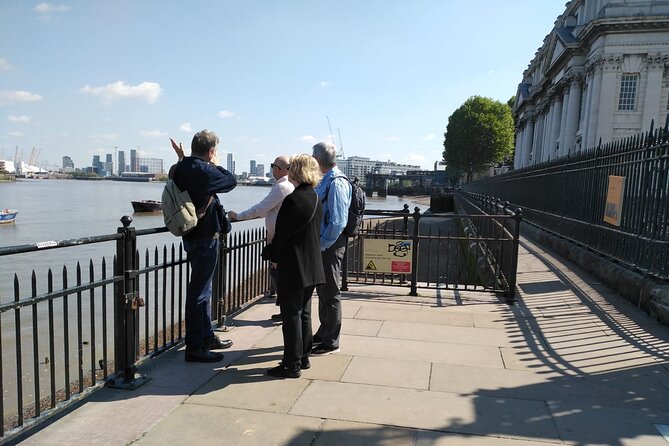
Because this is a private group, the guide is not background noise. They shape how quickly the big ideas click. The names that come up include Nathan, Victoria, and Steven, and the shared theme is story-focused guiding that connects events to the objects in front of you.
That storytelling can be especially helpful at the Observatory and aboard Cutty Sark, where it is easy to look at exhibits without knowing what question to ask. With a strong guide, you leave thinking in cause-and-effect: timekeeping leads to safer navigation, navigation supports trade and empire, and all of that shows up in museums and portraits.
One caution based on real-world timing: live guides can sometimes run late. In at least one documented case, a guide arrived about 20 minutes late. That does not mean it will happen to you, but it is smart to keep your schedule flexible and be ready to contact the provider if something feels off right at start time.
Price and value: what you get for a premium private half-day
The listed price is $398 per person, and there is also a note of £245 per person for a couple, with pricing reduced when you add more people. That can look confusing at first, so here is how I would judge value instead of just the number.
You are paying for:
- A private guide for 3.5 hours
- Admissions included for the major sites
- A route that ties together the Prime Meridian, maritime science, the National Maritime Museum, Cutty Sark, and Queen’s House
If you tried to DIY this, you would still spend money on entry tickets, and you would lose the logic that strings the theme together. You would also likely spend extra time figuring out priorities, which is exactly what you do not want when you only have a half-day.
Is it expensive? Yes, private tours almost always are. But the value improves when you treat it as a focused education experience, not just a checklist. If you are traveling as a couple or small group and you care about understanding what you are seeing, the math tends to work better.
How to plan your 3.5 hours without feeling rushed
This tour is short enough that small decisions matter. You want to show up ready to walk and look, not to stop for long breaks you could have taken elsewhere.
A few practical tips:
- Plan your day around a 10:00 a.m. start if possible, so you do not run into crowds or connection stress.
- Bring water and wear comfortable shoes, because you are moving between the river area, the Observatory hill, museum floors, and the ship.
- If you get cold easily, bring a light layer. You may spend time outdoors on the way between stops.
- Use the tea or coffee moment at the National Maritime Museum as your reset button, not as a full meal.
And for getting there: Greenwich is easy to reach by cruise boat, rail, or the DLR. That flexibility is a big plus because it gives you options depending on where you are staying.
Who this tour fits best
I would put this in the “best for curiosity” category. You will probably enjoy it most if you like:
- Science stories you can point to, like the Prime Meridian and Harrison’s timekeeping
- Maritime content that goes beyond names and dates
- A clear route that mixes museums with an actual ship visit
- A guide who can translate big themes into human-scale explanations
It is also a strong family option in a specific way. Children 5 and under go free, and since this tour is only 3.5 hours, it is not as demanding as a full day of walking. Still, the moderate walking pace means you should think about your kids’ stamina and your own comfort with stair-heavy museum spaces.
Should you book Greenwich Highlights Private Half Day Tour?
Book it if you want a compact Greenwich experience with the key intellectual connections already laid out for you. The combination of the Prime Meridian, John Harrison’s clocks, the National Maritime Museum, Cutty Sark, and Queen’s House gives you a story arc in one morning.
Skip it or reconsider if:
- You do not like guided walking tours and prefer to roam on your own
- Your group has low tolerance for stepping in and out of museums and climbing stairs
- You are very budget-first and would rather DIY the sights and accept some trial and error
If you are on the fence, here is the quick test: if you would enjoy someone turning Greenwich into a clear explanation of time, navigation, and seafaring power, this private format is exactly the kind of half-day that pays off.
FAQ
How long is the Greenwich Highlights private half day tour?
The tour runs for 3.5 hours.
What is the meeting point?
The tour meets at the Sir Walter Raleigh statue just outside the northern entrance to the Greenwich Tourist Information Centre, across from Greenwich Pier.
Does the tour include admission tickets?
Yes, all admissions fees are included.
Is transportation or food included?
Transportation and food are not included. There is an opportunity to rest and have tea or coffee during the National Maritime Museum portion.
When does the tour run?
It runs daily from 10:00 a.m. to 1:30 p.m.
Are children charged for the tour?
Children 5 and under go free.
More Private Tours in London


More Tours in London


More Tour Reviews in London
Not for you? Here's more nearby things to do in London we have reviewed







More Greenwich Tours worth a look.
 ★ 4.5Westminster to Greenwich Sightseeing Thames Cruise in LondonTickets from $222,969 guest reviews
 ★ 4.5Leeds Castle, Canterbury, Dover & Greenwich Boat rideTickets from $147604 guest reviews
 ★ 4.5‘Cutty Sark’ Entrance TicketTickets from $32373 guest reviews
 ★ 4.0Leeds Castle, Canterbury, Dover & Greenwich Cruise from LondonTickets from $143369 guest reviews
 ★ 4.0Royal Observatory Greenwich & Prime Meridian Entry Ticket LondonTickets from $33367 guest reviews
 ★ 4.7Entrance Ticket to the Cutty SarkTickets from $26324 guest reviews
 ★ 4.5Royal Museums Greenwich Day PassTickets from $40309 guest reviews
Continue by place or experience