
REVIEW · LONDON CITY TOURS
London Crimes And Punishment Private Walking Tour
London has a darker paper trail. This private 3 hour walking tour strings together crime and punishment sites across the city, from grim medieval streets to modern landmarks, with your guide turning each stop into a story you can actually follow on foot. I like that it is not just a list of names, it is a walk you can picture, from East End gangland backstreets to courtrooms and former prisons.
Two things I really like: the private format means you can move at your pace and linger where something grabs you, and the guide support feels personal, with the kind of storytelling detail that makes even familiar streets feel new. One consideration, though: the theme is dark, and there are several stops tied to executions, murders, and harsh punishment, so it is not a light, fluffy sightseeing loop.
Key Points You Should Know Before You Go
- Private tour for your group with room to slow down and ask questions
- Hotel pickup and drop-off are offered to help you start and finish with less stress
- Plenty of short stops, usually 5 to 15 minutes, so wear shoes you can walk in
- Some admissions are included, most are not, so check what you plan to enter
- The itinerary covers major strands of London’s crime story, Jack the Ripper, the Krays, courts, prisons, and punishment
- The guide, including Stephen Liddell in recent reviews, is praised for careful attention and story detail without turning into a fact dump
A Private Crime and Punishment Walk That Feels Like a Story on Rails
This kind of tour works best when it is not crammed into a big group. With a private setup, you get to pace it to your brain, not the schedule of 30 people. You can also ask your guide to pause on a detail that catches your eye, then pick back up without the awkward rush.
At about $247.73 per person for roughly 3 hours, you are paying mainly for the human part: a dedicated guide, plus pickup and drop-off. That makes it good value if you care about context, and if you do not want to spend your sightseeing time piecing everything together yourself. It is also a smarter spend if you like walking, because the stops are close enough to string together without turning the afternoon into long transit time.
The tone is dark, but the tour is also pretty grounded. You are not just chasing spooky vibes. You are tracing how London built systems for punishment, how neighborhoods changed, and how the city remembered its violence in pubs, churches, courts, and even bridges.
You can also read our reviews of more walking tours in London


Whitechapel Bell Foundry and the Blind Beggar Pub, Where Fear Takes a Local Form
You start at 277 Whitechapel Road and kick off in Whitechapel, a place that has seen generations of hardship and lawlessness, and still keeps its street identity. The first major stop is Whitechapel Bell Foundry. This is a hands-on kind of landmark in the middle of a story that stretches beyond crime. You will learn how famous bells came to be made there, and how Big Ben got its name. It is a strong opener because it connects to London’s identity, not just its worst headlines.
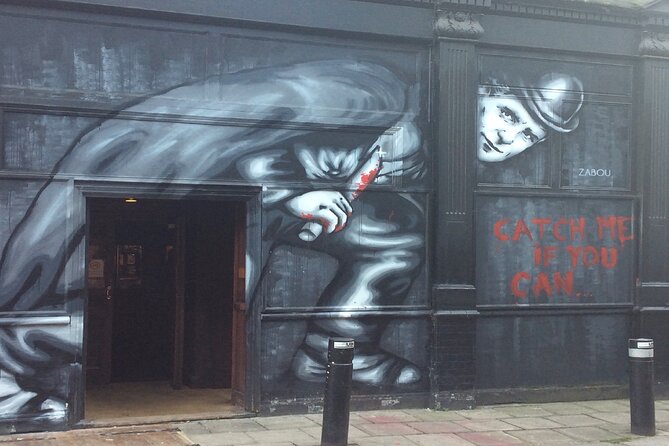
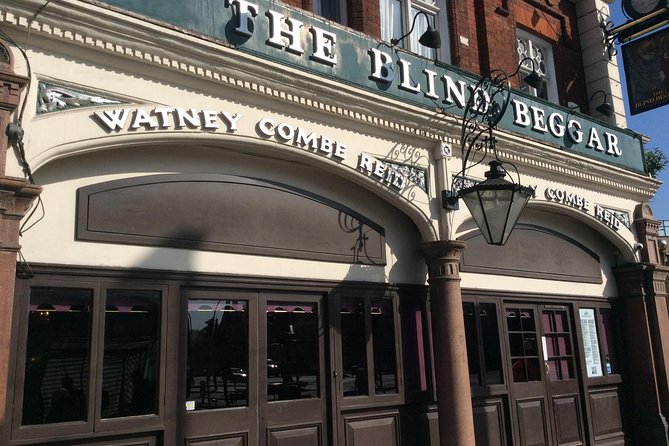
Then you move to The Blind Beggar Public House in Whitechapel, tied to the infamous Krays gangland shooting from the 1960s. This is where pubs matter. In London, they often are more than drink stops. They are community rooms, rumor hubs, meeting points, and in some eras, battlegrounds. Even if you only spend about 10 minutes there, your guide frames why a place like this becomes part of a city’s criminal mythology.
My advice: treat these early stops as your orientation. Once you understand why this neighborhood’s corners matter, the rest of the tour clicks faster.
Ten Bells, The White Hart, and Brick Lane, Following Jack the Ripper Footsteps on Purpose
Next comes the Jack the Ripper thread, and the tour keeps it walkable. The Ten Bells is one of the most linked pubs with the case, and it is positioned so your guide can talk through the street logic, including the idea of the street where he lived and moved. Expect a short stop, around 5 minutes, but that is enough time to hear the story framing and then continue while it is fresh.
Right after, you visit The White Hart, another pub associated with the Ripper. This stop is also tied to a potential Ripper killing, which keeps the tour from feeling like pure museum theater. It is grounded in the street feel, and your guide’s job is to help you picture how someone could vanish into the city’s everyday movement.
Then you get Brick Lane, including a look at what life was like in Victorian times when Jack was about. Today Brick Lane is trendy, but the tour nudges you to see the past beneath the curry restaurants and crowds. Even with about 15 minutes here, the contrast does something useful: it shows how London layers time, and how “new” can cover old survival strategies.
Finally in this cluster, you stop at Brick Lane Jamme Masjid. The building’s past is part of the story: it was a synagogue during the Ripper era, and earlier it served as a Protestant church for French refugees. That is a big point, because it changes the lens. This is not just crime tourism. It is the history of who lived here, and what institutions did when survival mattered.
Pye Corner, Spitalfields Churches, and the Jewish Poor, How Poverty and Fear Coexisted
From Brick Lane you head toward Golden Boy of Pye Corner, a small statue in a quiet street. The question your guide answers is simple and fun: why is there a golden statue of a young, rather chubby boy? It comes down to the Great Fire of London, and it is a quick stop that pays off because it breaks the heaviness with a clear piece of symbolism.
Next is Christ Church Spitalfields, a stone-built church tied to Victorian life. Your guide links it to nearby busy places like the market and brewery, but also to the idea that this area bordered some of London’s harshest streets. A 10 minute stop sounds short, but churches like this often have the power to anchor a neighborhood story in real architecture.
You then see Soup Kitchen for the Jewish Poor, described as one of the first and one of the last Jewish soup kitchens in the East End. This matters because it adds a different angle to the “crime and punishment” theme. Before you picture courts and executions, you understand that many people were pulled into trouble by hunger and desperation.
After that, you hit Old Spitalfields Market. This is where the tour turns slightly practical. The stop is short, around 5 minutes, but you are in a space that is now used for browsing and shopping under the old Victorian roof. The tour data says admission is included for this stop, so this is one of the more straightforward add-ons to expect.
Smithfield Market, William Wallace, Peasants’ Revolt, and Bartholomew’s Graveyard
Next up is Smithfield Market, long tied to London’s meat trade. Your guide frames it in the old reality of food production, including how ethically different it was in earlier centuries. This stop is around 10 minutes, and it feels like a reality check. It is not a “pretty” stop, but it helps explain how punishment and power worked in a world where people had fewer protections and fewer choices.
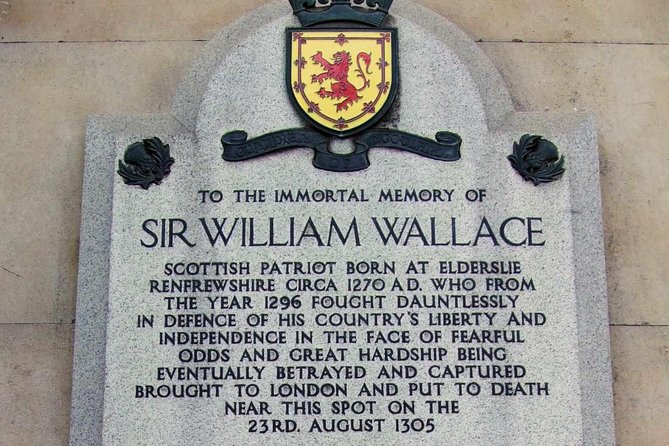
Then you visit the William Wallace Memorial, tied to the execution style of hanging, drawing, and quartering. The tour treats this as a physical marker of punishment, the kind of grim site where a city’s political message becomes body and spectacle.
You follow with the Peasants’ Revolt Plaque. Even with a 5 minute stop, it can land well because it connects medieval unrest to later changes in Western political life, at least as your guide explains it. It is one of those “small marker, big idea” moments.
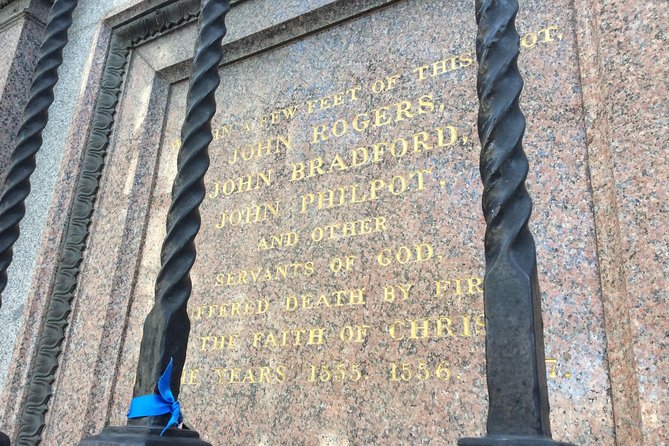
Another quick but meaningful stop is Church of St. Bartholomew the Great with a focus on its graveyard. If you like stopping at cemeteries even when you are in a hurry, this is one. The tour aims to show “secrets within,” which likely means names, tombs, and the kind of layered stories your guide can connect to the area.
You can also read our reviews of more private tours in London





St. Paul’s Cathedral, The Viaduct Tavern Cells, Holy Sepulchre, and Old Bailey Courtroom Reality
At St. Paul’s Cathedral, you see it from the outside and hear how it miraculously avoided destruction in World War II. This stop is short, about 5 minutes, but it is a smart pivot. It tells you London did not just survive medieval grime and gangland violence. It survived modern devastation too.
Then comes a stop with real mood: The Viaduct Tavern, near sites tied to centuries of executions. The tour description also highlights the cellars beneath and the idea of holding cells where condemned men spent their last night. Even as an outside oriented stop, the story is specific enough to make it feel eerie, not vague.
After that, you visit Holy Sepulchre London, another church stop with a history your guide describes as often gruesome. This is part of what I like about this tour: it does not skip the places where punishment rituals sat inside everyday buildings.
Then you reach Old Bailey, described as one of the oldest courts in the Western world and still the place where serious criminals are tried. This is where the tour stops feeling like folklore and starts feeling like a living institution. Your guide can point out why court buildings carry fear even when the law is framed as orderly.
Greyfriars Ruins, London Bridge’s Warning Spike, and the Thames Side of Punishment
You then head to Christchurch Greyfriars Church Garden, a small garden and ruin that memorializes the Blitz in World War II. It is a quiet pause from the crime thread while still keeping the theme of punishment, survival, and destruction.
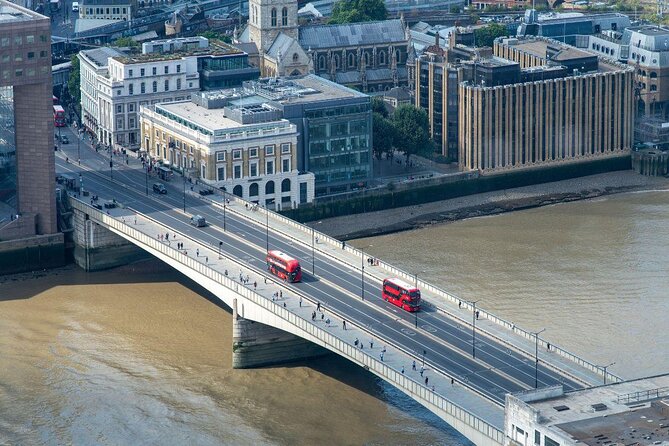
Next you visit London Bridge and its modern incarnation, including a ceremonial spike linked to the display of executed heads as a warning. Whether you find it shocking or historically fascinating, this is one of those city moments that makes you understand why people stayed in line. It is warning turned into architecture.
Right after, you see the National Firefighters Memorial, honoring those who died protecting London during bombing and fire events of the Blitz. This stop may feel different, but it fits. The same city that punished criminals also had people sacrificing themselves to stop catastrophe.
Then you move to Millennium Bridge, where your guide points out the bridge’s reputation for suicide attempts and also references a controversial detail about who it was designed for. This stop is short, but it can be heavy. I recommend you let your guide set the tone and avoid turning away if you are someone who processes information best by facing it head on.
Shakespeare’s Globe, The Clink, Winchester Palace, and How Entertainment Sits Near Cruelty
Next you visit Shakespeare’s Globe. The tour notes that while it is now a top place for plays, the area in Shakespeare’s time was described as rougher, even comparable to the Amsterdam of its day in both directions. The point here is not to argue about comparisons. It is to show how performance and survival lived near each other.
Then comes The Clink Prison Museum, but importantly, the tour says you do not go into the museum itself. You see the outside and learn why this prison area was so bad. That approach is practical. You still get the atmosphere and story without needing extra ticket time.
After that you see Winchester Palace, mostly destroyed in a great London fire, and tied to a bishop and his alleged terrible ways. This is another stop where your guide uses a fragment, a remaining clue, to tell a bigger story about power and discipline.
Borough Market, Marshalsea Prison, Crossbones Cemetery, and the Dickens Connection That Stays With You
You finish by moving into Borough Market, described as the heart of Dickensian London and connected to settings like Oliver Twist. The stop is about 10 minutes and is free. I like this placement near the end because it helps you switch from punishment spectacle to social reality. Markets are where people negotiated life, hunger, wages, and survival.
Then you end at Marshalsea Prison South Wall, tied to Charles Dickens and described as a debtors prison with a strong Dickens impact. This stop has admission included. Marshalsea is a fitting finale because it shifts from “criminal justice” as spectacle to punishment as economic control. Around 10 minutes here gives you enough time to understand why Dickens was so furious about it.
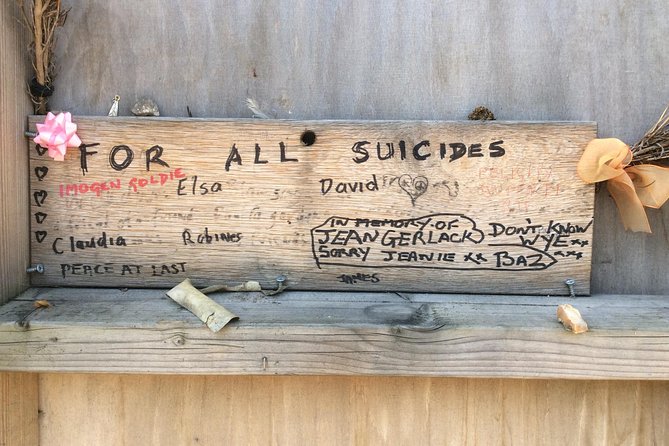
From there, you visit Crossbones Graveyard and Garden of Remembrance, described as almost unknown even to Londoners and linked to criminals, prostitutes, plague victims, and suicides. It is 15 minutes and free. This stop is the tour’s final emotional weight. It helps you see how death records hold stories the living wanted to forget.
You then visit Red Cross Cottages and Garden, tied to early attempts to improve welfare in poverty stricken London. This is a hopeful counterpoint, and it is free and short, about 5 minutes.
The last stop is noted as Ye Olde England Tours, where the tour ends.
Price and Logistics, What You Are Actually Paying For
Let’s make the money piece practical. At around $247.73 per person for about 3 hours, you are buying:
- A private guide and a custom pace
- Hotel pickup and drop-off (described as on foot and London Underground)
- A walk that covers a lot of sites you would otherwise need to map and piece together
What you are not fully buying is admission everywhere. Many stops are marked as not included, so you should expect that most viewing is from outside or relies on quick context rather than deep ticket time. The tour does include admission for at least Old Spitalfields Market and Marshalsea Prison South Wall, which helps balance the cost.
Your best move: wear comfortable shoes and dress for weather. The tour runs in all weather conditions, and because many stops are brief, you do not want rain gear that makes you slow.
Should You Book This London Crime and Punishment Tour?
Book it if you want a high story-to-walk ratio and you like understanding how neighborhoods worked, not just collecting photos. It is especially a good fit if you enjoy East End settings, Jack the Ripper context, and the way London’s courts and punishment spaces still shape the city.
Also, if your main goal is a great guide, this tour has a strong track record. Recent reviews praise Stephen Liddell for care and attention to detail and for balancing story with facts in a way that does not turn into dry lecturing.
Skip it if you want a light, family-friendly stroll with zero dark content. And if you hate churches, cemeteries, and execution sites, you may find the subject matter too intense for your taste.
FAQ
Where does the tour start and end?
The tour starts at 277 Whitechapel Rd, London E1 1BY, UK and ends at Borough High St, London SE1 1JX, UK.
What time does the tour start?
The start time is 9:30 am.
How long is the London Crimes and Punishment Private Walking Tour?
The duration is approximately 3 hours.
Is this a private tour?
Yes. It is a private tour/activity and only your group will participate.
Is hotel pickup and drop-off included?
Yes. Hotel pickup and drop-off are offered, on foot or London Underground.
Are admission tickets included?
Admission is listed as not included for many stops, with admission included for at least Old Spitalfields Market and Marshalsea Prison South Wall.
Does the tour run in bad weather?
Yes. It operates in all weather conditions, so dress appropriately.
What should my walking fitness level be?
You should have a moderate physical fitness level.
Can I cancel for a full refund?
Yes. Free cancellation is available up to 24 hours in advance for a full refund.
Is transportation to and from attractions included?
No. Transportation to/from attractions is not included, though pickup and drop-off are offered.
More Walking Tours in London


More Tours in London



More Tour Reviews in London


Not for you? Here's more nearby things to do in London we have reviewed





More London City Tours worth a look.
 ★ 4.6The London Eye Entry TicketTickets from $3935,875 guest reviews
 ★ 4.7From London: Harry Potter Warner Bros Studio TourTickets from $11726,588 guest reviews
Westminster to Greenwich River Thames CruiseTickets from $2222,836 guest reviews
Magical London: Harry Potter Guided Walking TourTickets from $2022,044 guest reviews
 ★ 4.6Madame Tussauds LondonTickets from $3620,915 guest reviews
 ★ 4.5Stonehenge, Windsor Castle, and Bath from LondonTickets from $11118,662 guest reviews
 ★ 4.7Warner Bros. Studio Tour with TransfersTickets from $14417,586 guest reviews
 ★ 4.7Tower Bridge Entry TicketTickets from $2115,560 guest reviews