
REVIEW · LONDON CITY TOURS
St James’ & Mayfair – Private Tour of London’s Royal & Aristocratic Villages
Royal London in one walk.
St James and Mayfair feel like two different eras, and this private tour ties them together with a foot-first route that gets you close to palaces, parks, and famous shops without the grind of big crowds. I like that it is small-group by design, so the pace stays human and questions are welcome, not shushed. It also leans into the details, from rooflines and arcades to the stories under the ground that most people never notice.
I especially love the contrast between Fortnum and Mason, where the store’s centuries-old origin story shows up in the smallest details, and Burlington Arcade, with its long run of retailers and the famous beadles that kept order from the beginning. One thing to think about first: you are walking for about 5.5 to 6 hours and covering roughly 3 miles, so you will want comfortable shoes and a steady pace.
5 key things you will notice on this tour
- Small-group attention: up to five people, so you actually hear the guide over street noise.
- Classic London shopping with stories: Fortnum and Mason plus Jermyn Street, with origins that go back centuries.
- Royal parks and ceremonial buildings: Green Park, St James’s Park, and Horse Guards at Whitehall, all linked by easy walking.
- Architecture plus urban legends: places like Berkeley Square and Mount Street Gardens come with explanations you will remember.
- Free stop highlights: the listed highlights on the route are marked as admission ticket free.
You can also read our reviews of more private tours in London

Why St James and Mayfair Works So Well on Foot
This half-day format is built for London at street level. You do not just see famous buildings from far away, you walk past them, cut through the in-between spaces, and learn how these neighborhoods actually functioned for centuries. That matters because St James and Mayfair are not one theme. They swing from aristocratic hangouts and polished shopping to royal ceremony and official buildings, often within blocks.
The tour also has a practical advantage: it uses walking time efficiently. You get frequent “pause and look” moments, not long stretches of staring at the same kind of facade. Every stop is short, which keeps momentum high while still giving you time to absorb what you are seeing.
And there is a real human touch here. The guide, Sandy, is described as generous with sharing and clearly enjoys the history. You also get what is rare on tours like this, restaurant tips that help you turn the afternoon into something useful after the last stop.
Fortnum and Mason, From Market Stall Origins to Roofline Details
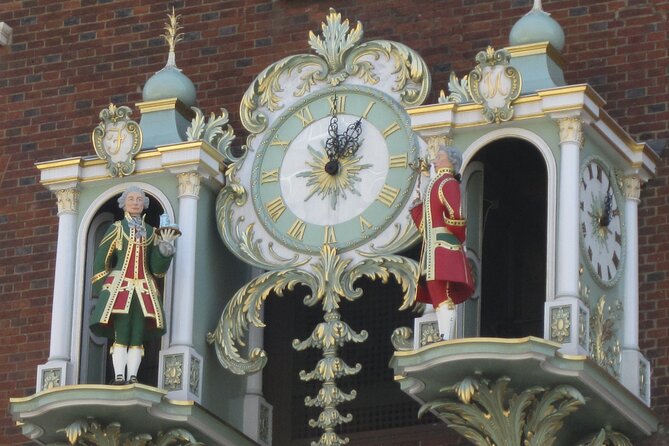
Fortnum and Mason is the kind of place that can feel intimidating if you only glance in the window. On this tour, you start on the ground floor so you can get the layout and the “why it is famous” quickly. The focus is not on trying to buy everything. It is on understanding what the store invented and why people keep coming back.
You will also spend time looking up. One of the neat parts is the mention of intriguing structures on the roof. That roof detail is one of those London touches that rewards the slower look, the kind you miss when you rush from landmark to landmark.
What to watch for while you are there:
- The store’s long origin story, including how it began as something far simpler than a luxury department store.
- Any architectural or decorative features that stand out once you know the context.
- The general vibe of how old retail traditions show up in modern displays.
Possible drawback: Fortnum and Mason is a big, active store, so if you hate enclosed, high-end spaces, you might find it a little more intense than the outdoor stops later on. Still, the stop is designed to be manageable, around ten minutes, so it never turns into a shopping marathon.
Royal Academy of Arts, Burlington’s Building and a Rotating Creative Calendar
Next comes the Royal Academy of Arts, tied to its origins in the mid-1660s. The building was built by the Earl of Burlington, and the tour frames it as a place that does not stay still. Even if the shell feels historic, it has had many architects work on it over time, so the building you see today reflects layers of change.
The key practical point here is what the Royal Academy does now. It runs programming that people actually plan around, especially the summer exhibitions that act like a fixture on London’s social calendar. This stop works well because it connects a “when was it built” question with the “what is happening there right now” question.
What you will likely enjoy:
- How the building’s origins connect to later changes.
- The sense of continuity, old bricks still used for cultural life.
- A quick orientation toward how this part of London schedules art seasons.
Possible drawback: the stop is brief, about five minutes. If you want a deep look inside or a close read of the exhibits, this is not that kind of stop. It is a fast, story-packed orientation before you move on.
Burlington Arcade, 200 Years of Retail and the Beadles on Duty
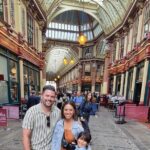
Burlington Arcade is a short walk from the more open streets, and that is part of its charm. It is sheltered, refined, and it lets you slow down without getting stuck in a crowd. The tour highlights how special the arcade is for its age. It just celebrated 200 years, built by George Cavendish, one of the Earls of Burlington.
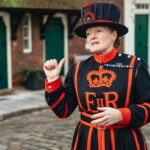
Inside, you will window-shop your way through the arcade’s current lineup of retailers, with the tour noting there are around 45 shops operating there today. The detail that makes this stop memorable is the presence of the beadles. These attendants have guarded the arcade since day one, and the tour uses that to explain how the space was designed to feel controlled, safe, and exclusive from the start.
What to do while you are walking:
- Pick one shop facade and notice how the arcade’s layout guides you through it.
- Look for cues that show the space is meant to feel curated, not random.
Possible drawback: if you are not into shops, you might find this one lighter on “wow, sights” and heavier on “architecture and retail culture.” Still, the beadles and 200-year continuity make it worth it.





Berkeley Square, Annabels, and the Fictional Nightingale
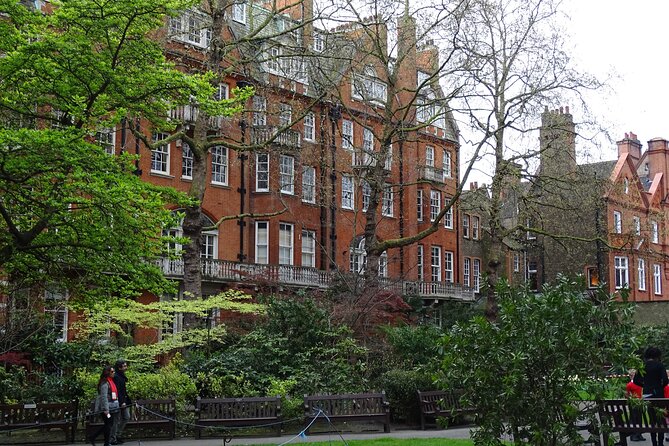
Berkeley Square is quick, around ten minutes, but it is packed with intriguing ideas. It is famous for its nightingales, though the tour makes the point that those birds are probably fictional. That is very London: legends get built into street life, and tourists remember the legend even when the facts are less poetic.
The square is historically interesting too. You will hear about a forgotten river flowing beneath it, which is one of those details that changes how you imagine the ground under your feet. Plane trees line the space, and the edges are lined with grade 1 listed buildings, including one tied to Annabel’s nightclub.
Why that context matters: when you know a square once held a different kind of landscape, your eyes stop treating it like an empty postcard. You start seeing it like a place with layers.
Possible drawback: it is a square in the middle of a neighborhood that stays active, so there can be background noise. The upside is that the stop is short, and you can get the main stories without lingering too long.
Mount Street Gardens, Peaceful Shade and a Very Unsettling Secret
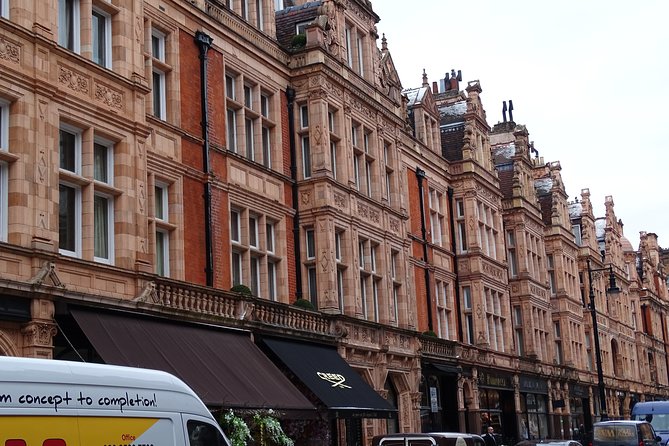
After Berkeley Square, you head to Mount Street Gardens, an oasis you can feel immediately. It is only minutes from a busy shopping area, which makes the shift in atmosphere dramatic. The garden time is brief, about ten minutes, but it is meant to feel like a reset.
The tour focuses on what lies beneath the ground and includes a reference to a gruesome secret held by a building on the edge of the gardens. Even without going into lurid detail, that kind of story reminds you that London’s quiet places often sit on complicated pasts.
What to do here:
- Take two minutes and just let your brain slow down. It makes the stories land.
- Look at the edges of the garden as much as the center, since the tour’s “what’s next to us” theme matters.
Possible drawback: because the stop is short and it is designed as a break, if you want lots of time for photos or a longer walk in the gardens, you will finish quickly.
Shepherd Market, From a Leafy Retreat to Mayfair’s Past Side
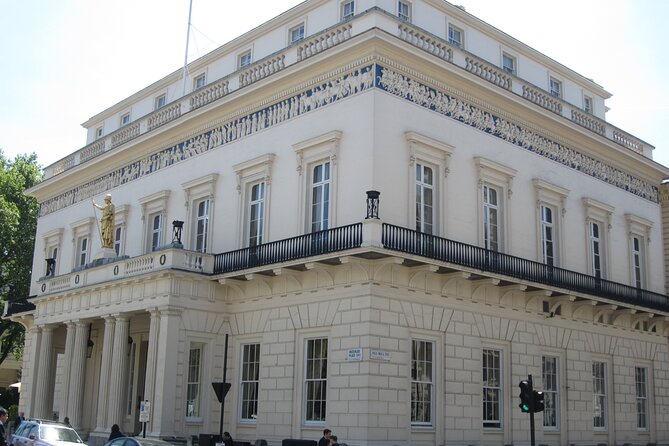
Shepherd Market today feels leafy and calm. The tour gives you a sharp contrast by explaining that it used to sit at the center of Mayfair’s red light district, where the aristocracy treated the area as entertainment.
This is also where the tour adds a political twist, mentioning that it was tied to the downfall of an MP, with the tour promising you will learn which one. That kind of story does two things at once: it makes the small space feel bigger, and it explains how power and scandal move through the city.
Possible drawback: if you strongly prefer tours that stay very family-friendly in tone, you might want to mentally brace for the subject matter hinted at here. The tour is still framed as history and urban change, not sensationalism.
Green Park to St James’s Park, Royal Legend and Pelicans That Actually Stayed
As you move from Mayfair north to St James’s south, the guide uses Green Park as a line in the sand. You switch from aristocrats to royals, and the park becomes a storytelling platform.
You will hear the legend behind the name Green Park, and you will also get a rundown of royal dynasties that tie into this portion of London. The time here is short, around ten minutes, so expect the park to feel like a story stop rather than a full nature break.
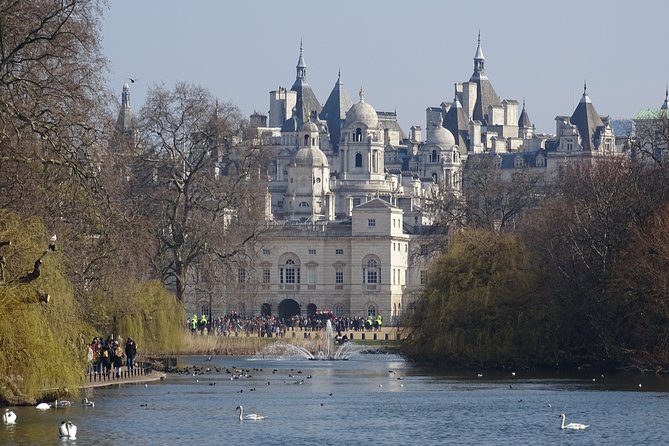
Then you move to St James’s Park, one of the royal parks in the capital, and it becomes more visual. The tour emphasizes its ornamental lake and the wildlife that gathers there. The pelicans are a highlight. The tour explains that a pair of pelicans were gifted to Charles II in 1664 by a Russian ambassador, and that pelicans have been present on the water ever since.
That detail is the kind that makes you look differently while you are standing in the park. Instead of treating it like scenery, you watch for the animals as part of a longer chain of tradition.
Possible drawback: park wildlife is not guaranteed. If you show up during a lull, you might not see pelicans right away. That said, the story alone makes the stop useful, and you are still in a great walking pause.
St James’s Palace and Buckingham Palace, When Ceremony Is Part of the Day
This section is the heart of the royal theme, and it is also where the tour’s “short but meaningful” pacing really helps.
St James’s Palace, Henry VIII, and the Changing of the Guard
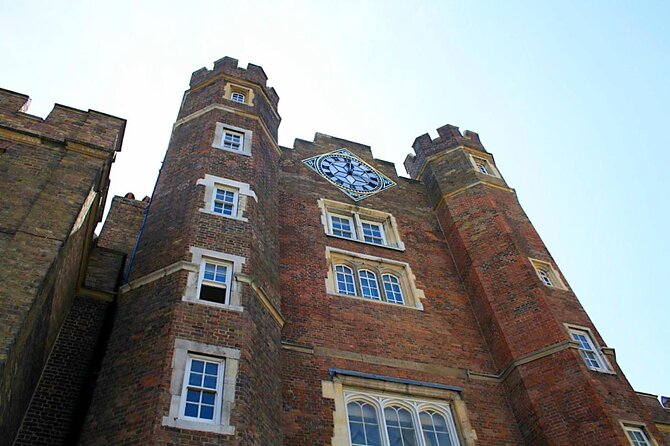
St James’s Palace is built by Henry VIII on the site of what used to be a women’s leper hospital. The tour explains the palace plans tied to Anne Boleyn and Henry’s promised son, and what happened when that promise did not turn out as expected. It then reframes the palace as a hunting lodge, showing how royal buildings often served changing purposes over time.
The practical payoff is what happens when the Changing of the Guard is scheduled. On those days, the tour sets you up to catch pageantry at its best.
Possible drawback: ceremonies depend on schedule. The tour notes that if it is scheduled on your day, you will have that moment. If not, you still get the palace stories and context, just without the same level of performance.
Buckingham Palace, the Balcony Focus
Buckingham Palace is the iconic name everyone recognizes, but this tour keeps it story-driven. You will hear it described as the office of the monarchy. It also shares a note about how late Queen Elizabeth II used it on weekdays, and that Charles III has yet to decide his London home there.
The highlight here is the balcony. The tour explains how it has been central to many celebrations, including the late queen’s 50th, 60th, and 70th jubilees, plus William and Kate’s wedding celebrations.
Possible drawback: you are not promised an inside visit. This kind of tour experience is about what you can see from the outside and how you interpret it from street level.
Horse Guards Parade at Whitehall, Then St James’s Square and Jermyn Street
After Buckingham, the tour shifts to official ceremony space near Whitehall, then finishes with polished neighborhood shopping.
Horse Guards Parade, Jousting Roots and Modern Pageantry
Horse Guards Parade started as Henry VIII’s tiltyard for jousting. Today, it is best known for changing ceremonies like the Changing of the Guard and Trooping the Colour. The tour also brings in a modern Olympics link, mentioning that Horse Guards Parade held a gigantic sandpit during the 2012 London Olympics, and it teases a question about which sport it was for.
This stop is about mixing eras. It shows you how the same area can host elite ceremony, then major public events, then return to ceremonial tradition.
St James’s Square, Henry Jermyn’s Reward and English Civil War Aftermath
St James’s Square is pretty, but it also has a built-in story engine. It was built by Henry Jermyn as a reward for loyalty to Charles II during the English Civil War. The tour notes it was a place to live in the 17th and early 1800s, and points to surviving remnants of that past, including Nancy Astor’s former home and a church by Sir Christopher Wren on the square’s edge.
Jermyn Street, Ending With Old-School Shopping Details
Finally, you end with a walk along Jermyn Street, one of London’s most historic and sophisticated shopping streets. The tour’s ending is designed to feel rewarding, not abrupt. You will hear about a cheese shop that used to be a market stall and a perfumery dating back to the 1700s.
This last section is excellent for practical travelers. By the end, you are in a mindset to pop into shops for gifts, snacks, or browsing, armed with the “why this is here” context.
Price and Value, What $279 Gets Your Group
At $279 per group, up to five people, this tour can be a good value if you treat it as a shared experience rather than an individual activity. Split among a full group, the cost per person drops noticeably compared with tours that price per head.
A big reason it can feel like good value is how the time is used. You get a professional local guide, plus a private setup designed for small group conversation. And many of the stops are marked as admission ticket free, which helps you avoid “surprise costs” once you are walking.
You also gain something you cannot always buy with museums: context. Fortnum and Mason stops being just a store when you understand its origin story. Berkeley Square stops being just a landmark when you hear about the river under it. St James’s Palace and Buckingham stop being just photos when you know the events tied to the balcony and the guard ceremonies.
Who Should Book This Tour, and Who Might Skip It
This is ideal if you:
- Want a private, small-group walk through two signature neighborhoods.
- Love royal and aristocratic stories tied to real places, not generic talking points.
- Prefer street-level exploring, with frequent “look here” moments.
- Want a guide like Sandy who not only shares history but also offers restaurant suggestions so your day keeps paying off after the tour.
You might reconsider if:
- You cannot comfortably walk for 5.5 to 6 hours.
- You have serious walking difficulties or back problems, since the tour is not recommended for those conditions.
- You dislike enclosed spaces, since Fortnum and Mason and Burlington Arcade are indoor or semi-indoor shopping environments.
- You are expecting a lot of interior access. This tour is built around exterior viewpoints and short stops, with emphasis on interpretation rather than long museum time.
Should You Book St James and Mayfair?
If you want a smart way to see London’s royal and aristocratic side in one organized, human-paced afternoon, I think this is a strong booking. The walking distance is manageable for most travelers who plan for it, the guide support feels personal, and the route gives you variety, not just palace photos.
Book it if your travel style is part sightseeing, part story hunting, and you like learning why places look the way they do. If you are the type who wants hours inside buildings, or you cannot do sustained walking, choose a different format and save this one for another trip.
FAQ
How much does the St James and Mayfair private tour cost?
The price is $279 per group, up to 5 people.
How long is the tour?
It runs about 5 to 6 hours, and it can be about 5.5 to 6 hours depending on your walking pace and how many questions you ask.
What group size is this tour?
It is a private tour with only your group, with a preference for small groups of up to five family or friends.
Where do we meet, and what time does it start?
Meet at Le Deli Robuchon Piccadilly, 82 Piccadilly, London W1J 8JA. The start time is 10:00 am.
Where does the tour end?
The tour ends at Berkeley Square (the end point can be a bit flexible depending on where you go next).
Is food included in the tour price?
Food and drinks are not included. If you want a lunch stop, it can be included for an extra cost.
Are the main stops ticketed?
The tour’s listed highlights are marked as admission ticket free at each stop.
How much walking is involved?
You will cover roughly 3 miles total.
What should I wear or bring for weather?
Wear comfortable shoes and weather-appropriate clothing. The tour goes ahead rain or shine, so bringing waterproofs and an umbrella can be helpful.
More Private Tours in London


More Tours in London



More Tour Reviews in London
Not for you? Here's more nearby things to do in London we have reviewed









More London City Tours worth a look.
 ★ 4.6The London Eye Entry TicketTickets from $3935,875 guest reviews
 ★ 4.7From London: Harry Potter Warner Bros Studio TourTickets from $11726,588 guest reviews
Westminster to Greenwich River Thames CruiseTickets from $2222,836 guest reviews
Magical London: Harry Potter Guided Walking TourTickets from $2022,044 guest reviews
 ★ 4.6Madame Tussauds LondonTickets from $3620,915 guest reviews
 ★ 4.5Stonehenge, Windsor Castle, and Bath from LondonTickets from $11118,662 guest reviews
 ★ 4.7Warner Bros. Studio Tour with TransfersTickets from $14417,586 guest reviews
 ★ 4.7Tower Bridge Entry TicketTickets from $2115,560 guest reviews