
REVIEW · JACK THE RIPPER TOURS
Jack the Ripper and Victorian London Beyond the Shadows
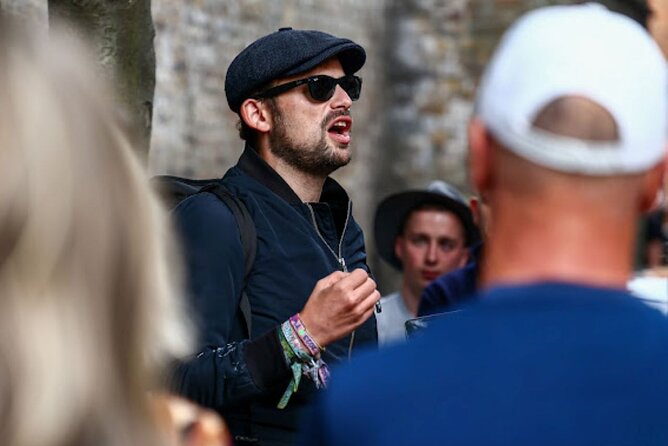
Two and a half hours, all on foot. I love the way Nick keeps the story grounded in facts and respectful detail, and I also like the strong focus on the victims’ lives, not just the mystery. You get real context for Victorian London, which makes the whole case feel human, not theatrical.
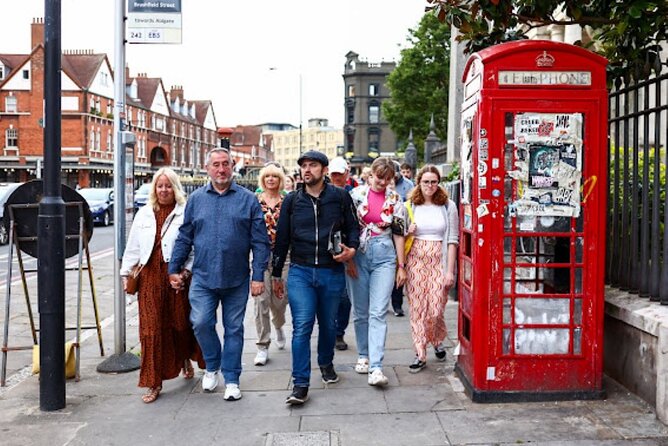
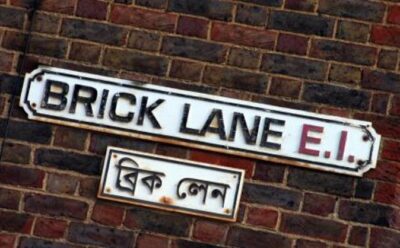
The route moves through places people still recognize today, from Brick Lane to Spitalfields Market, then into the darker streets tied to the murders. It’s led with a local East End feel, and the story is paced like a clear investigation, with you always knowing where you are and why it matters.
One thing to plan for: it’s a nighttime walking tour, so you’ll cover several streets in about 2.5 hours. If you don’t do well on foot in the evening, comfortable shoes are not optional.
Key points worth knowing before you go
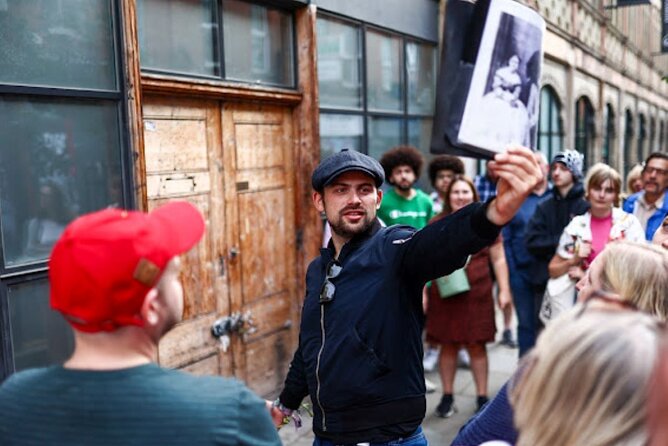
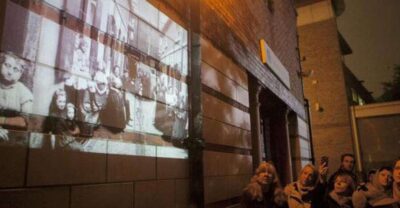
- Trained historian Nick leads the tour and uses an iPad with real photographs to support the story.
- Victim-first storytelling keeps the emphasis on the women and the pressures of life in the East End.
- Chronological route through East End landmarks, so you can follow the case without getting lost.
- Ten Bells pub stop connects the Ripper story to a place that’s appeared in documentaries and films.
- Goulston Street ties together murders and 1888 riots, including Elizabeth Stride and Catherine Edowes on 30 September 1888.
- Small-group feel with a maximum of 40 people, plus the chance for questions and interaction.
Where Jack the Ripper lives in street form
Jack the Ripper is famous for clues, theories, and arguments. This tour uses a different approach. Instead of treating the case like a puzzle box, it puts you in the East End’s daily reality during Victorian times, then shows you how the neighborhood changed over the years into what you see now. That shift helps you understand why the murders were so shocking to people at the time.
What I like most is the tone. The guide’s approach is factual and sympathetic, and he keeps pulling the story back to survival and hardship, especially for women. That matters, because when a case turns into folklore, the people inside it get flattened into a headline. Here, you keep getting their names, their circumstances, and the strain of the streets around them.
You can also read our reviews of more tours and experiences in London.
Start at Braham Street, then get your bearings fast
The tour begins in the evening at 7:30 pm, starting at Braham Street (Braham St, London E1, UK). The end point is Spitalfields Market, 65 Brushfield St, London E1 6AA. You’ll be walking the whole time, so this is not the kind of outing where you can casually wander off and still catch up.
Because it’s a 2.5-hour walk, I’d plan around a steady pace. You’ll be stopping often enough for context and photos, but you should still expect a decent amount of time on your feet. In a neighborhood like this, it really helps to arrive a few minutes early, check the exact meeting spot, and then settle in.
The tour also uses a mobile ticket, which is a small convenience that actually helps at night. Fewer steps to manage, less stress when you’re trying to meet a guide in a busy area.
Brick Lane: the East End’s daily life behind the headlines
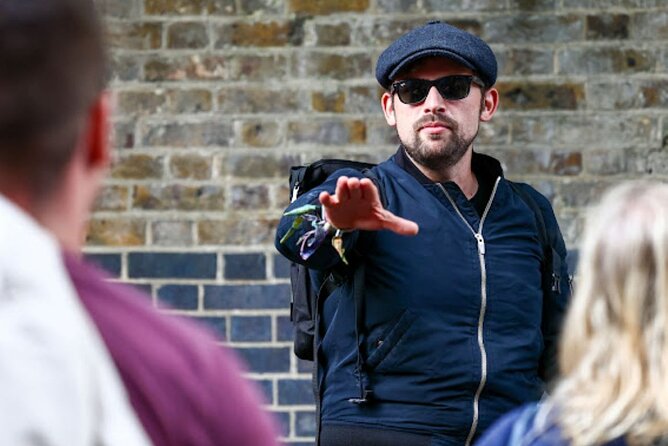
One stop takes you to Brick Lane, where the story connects social pressure to street life in 1888. This is where the tour does an important job: it reminds you that the East End was not a spooky set built for a mystery. It was crowded, working-class, and full of people trying to get through the day.
You’ll hear about the socio-economic struggles that shaped what survival looked like for many residents, and you’ll get cultural context for how the area developed over time. That “then and now” framing is useful. When you walk Brick Lane with that backdrop in mind, you notice details you might otherwise skip, like how layered the neighborhood feels.
Is it dark all the time? Not exactly. The point is contrast. You’re walking through a real part of London that still has energy, but the guide keeps turning the focus back to why these streets could be brutal in Victorian days.
Practical note: even if Brick Lane is lively in general, the tour keeps it purposeful. You’re there to understand the people, the pressures, and the setting that surrounded the case.
Spitalfields Market: why this neighborhood changed and why it still matters
Another major stop is Spitalfields Market at the end of the tour. Along the way, you’ll also visit it during the walk, and you’ll get a sense of how locals and visitors use the space for food, clothes, and even music.
This part is more than a break in the story. It’s a reminder that the East End’s story didn’t stop in 1888. Over the decades, the area evolved, and the market became one of the places where that evolution is visible. For me, that’s part of the value of this tour: you’re not just learning about tragedy, you’re seeing how the neighborhood lived on.
If you’re a true crime fan, it can be tempting to stay locked on the murders. Spitalfields Market gives your brain a landing spot. You start to connect the past to the living city, and it also makes the end of the tour feel satisfying instead of abruptly ending on a grim note.
Ten Bells pub: a place that keeps showing up in film
The tour includes a stop at the historic Ten Bells pub, tied to the Ripper case. This is where the storytelling benefits from physical place. You’re not just hearing about rumors and records, you’re standing at a location that has been referenced in documentaries and films.
The best way to approach Ten Bells is as a “story anchor.” The guide uses it to connect the case to the neighborhood’s rhythm at the time and to explain why the location became part of later retellings. That helps you separate lived reality from the way popular culture reshapes events.
Also, because this is a walking tour, you’re not stuck in one room. You get a chance to pause, take in the atmosphere, and then move back into the street-level narrative with a clearer sense of direction.
If you’re worried it will become purely cinematic, don’t. The emphasis stays on context and respect for the victims, and the pub stop is part of a chain, not the whole show.





Goulston Street and the riots after 30 September 1888
The last of the key themed stops takes you to Goulston Street. This is linked both to the Ripper case and to the riots of 1888 that followed after the double murders of Elizabeth Stride and Catherine Edowes on 30 September 1888.
This is the moment the tour moves from “what happened” to “what it changed.” You’ll hear how the violence and fear around the murders fed into social unrest. The guide keeps connecting the case to the broader pressure of the period, which helps the story feel like history, not isolated scandal.
Goulston Street also works well as a closing point. By then, you’ve already built a mental map of the neighborhood and understood the kinds of hardships people faced. So when the riots are discussed, you can grasp why the response was so intense. You’re not just being told facts, you’re being guided to see how these events hit a community.
The guide is the difference: Nick’s style and what to do with it
Many Jack the Ripper tours promise facts. This one stands out because the guide, Nick, leans into the human side while keeping the tone grounded. One standout from the experience is how he uses real photographs on an iPad to support what he’s saying. That turns abstract names and dates into something more vivid, without leaning on shock value.
I also like that the tour focuses on the women first. Multiple parts of the story come back to their lives and struggles, including the point that they’re too often reduced to stereotypes. You get a sense of dignity and complexity, not a one-dimensional label.
Nick also seems to run the group like a conversation, not a lecture. People are involved, questions are welcomed, and the pacing keeps everyone awake. If you enjoy interactive tours, this one really delivers. The small-group size helps here too, since you can actually make eye contact, ask something, and get a real answer.
If you’re the type who wants the “big reveal” about who the killer was, you might notice the tour doesn’t treat that as the only goal. The emphasis stays on context and on understanding the people impacted. For me, that choice makes the experience more thoughtful and less like a performance.
Walking tour logistics: how to be comfortable and on time
This is a 2 hours 30 minutes walking tour at 7:30 pm. That means you should plan clothing for evening weather. Even if you’re lucky with the forecast, cool air can sneak up on you, and you’ll be outside long enough to feel it.
Also, wear shoes you’d actually trust for a long walk. One review theme was clear: you walk a lot. Don’t rely on fashionable footwear. Bring your best “I can walk for an hour on stone and pavement” option.
Because the tour starts at a specific meeting point on Braham Street and ends at Spitalfields Market, you’ll want to build in a little time buffer for finding the exact spot. The tour uses a mobile ticket, which helps once you locate the guide.
Finally, the tour is capped at 40 travelers, and that matters for comfort and engagement. A smaller cap usually means the guide can keep the story flowing and still loop people in.
Price and value: is $24.98 fair for 2.5 hours?
At $24.98 per person, the value is solid if you like guided storytelling with substance. You’re paying for a live historian-style guide, a structured route through major East End locations, and a narrative that connects the murders to Victorian survival and later unrest.
What makes the price feel fair is the way the tour uses time. It’s not a slow museum-style session where half the group is waiting in silence. You’re moving between meaningful stops, with context woven in as you walk. And since the guide uses photos and keeps the tone respectful, you’re not just collecting spooky trivia.
Also, the tour’s “full experience even for smaller groups” feel is a plus. Even when it isn’t packed, the guide is still delivering the full story and keeping people engaged. That’s the kind of consistency you want from a paid guided tour.
If you’re deciding between a quick, generic overview and a longer walk with deeper context, this one leans toward the deeper end without feeling heavy or inaccessible.
Who this tour is best for
This tour is a great fit if you’re any of the following:
- A true crime fan who wants more than theories
- A history lover who likes the East End as a living place, not a postcard
- Someone who cares about the victims’ lives and dignity, not just the myth
- A visitor who wants a clear way to understand how Victorian hardship connects to later events
It’s less ideal if you want a light, purely entertaining stroll with no mention of real murders. The subject is grim, but the guide keeps it respectful and grounded.
It also suits group types well. The guide’s style is interactive and inclusive, which can help multi-generational groups feel comfortable and not left behind.
Should you book this Jack the Ripper and Victorian London tour?
I’d book it if you want a thoughtful East End walk that treats the victims with respect and still gives you real case context. The combo of a trained historian guide like Nick, the photo-supported storytelling, and the way the route connects Brick Lane, Spitalfields Market, Ten Bells, and Goulston Street makes it feel more like understanding history than chasing a spooky headline.
Skip it only if you strongly prefer either a short sightseeing loop or a purely social night walk with minimal heavy material. If that’s your mood, you’ll likely prefer something lighter.
But if you’re looking for a well-paced 2.5 hours that makes you see Whitechapel differently, this one is a smart choice.
FAQ
How long is the tour?
It runs for approximately 2 hours 30 minutes.
What time does the tour start?
The start time is 7:30 pm.
Where does the tour start and end?
It starts at Braham Street (Braham St, London E1, UK) and ends at Spitalfields Market (65 Brushfield St, London E1 6AA).
What is the price?
The price is $24.98 per person.
Is the tour in English?
Yes, it is offered in English.
What group size should I expect?
The tour has a maximum of 40 travelers.
Can I bring a service animal?
Yes, service animals are allowed.
What is the cancellation policy?
You can cancel for a full refund if you cancel at least 24 hours before the experience starts.
FAQ
Is there a mobile ticket?
Yes, the tour uses a mobile ticket.
Will I need to use public transportation?
The meeting area is near public transportation, which makes it easier to reach by transit.
More Tour Reviews in London
Not for you? Here's more nearby things to do in London we have reviewed








More Jack the Ripper Tours worth a look.
 ★ 4.7The Original Jack the Ripper Walking TourTickets from $257,833 guest reviews
 ★ 4.5London Jack the Ripper Guided Tour with Ripper-VisionTickets from $274,840 guest reviews
 ★ 4.7Jack the Ripper Small Group TourTickets from $263,159 guest reviews
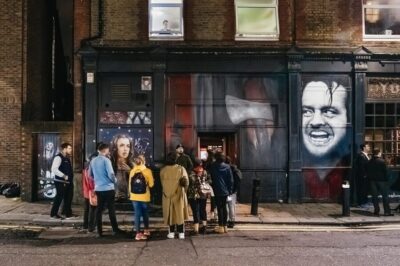
 ★ 5.0London Jack The Ripper Guided Walking TourTickets from $03,131 guest reviews
 ★ 4.6German Language : Original Jack the Ripper TourTickets from $241,805 guest reviews
 ★ 4.5Jack the Ripper Walking Tour – Ripper Vision ToursTickets from $261,752 guest reviews
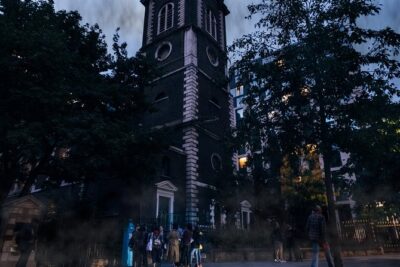 ★ 5.0Ultimate Jack the Ripper : Guided Tour of LondonTickets from $271,495 guest reviews
 ★ 4.9Jack the Ripper Evening Walking TourTickets from $331,449 guest reviews
Continue by place or experience