

REVIEW · BRITISH MUSEUM TOURS
The British Museum: a highlights tour with a TV historian
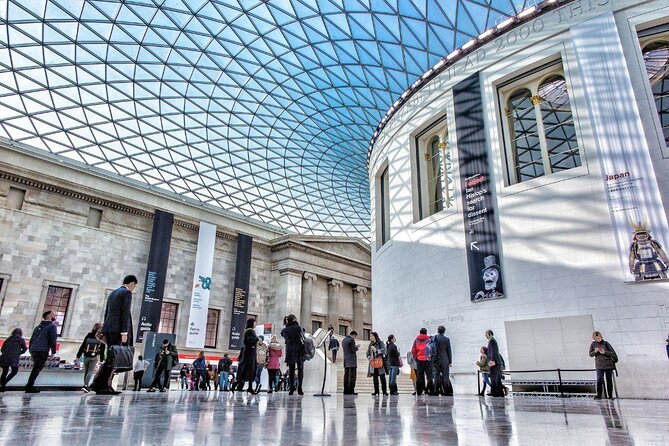
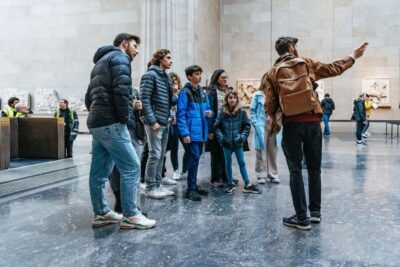
Big museum, smart stories, and real context. This 3-hour British Museum highlights tour is led by a TV historian and private, so you get focused attention while you hit headline objects like the Rosetta Stone and the Elgin Marbles, along with the “how we got these” questions behind the displays. I love the way the guide makes artifacts feel relevant, using modern references when you need them, including Harry Potter-style pop culture for kids who might otherwise tune out. I also love the energy of a guide who knows the museum so well he’s even been described as supervising sleepovers with the mummies.
One thing to plan for: even though museum entry is free, you still need to get your timed ticket from the British Museum website, and you should allow extra time to get in before the 11:00 start. If you arrive late, you may lose part of the tour flow.
Key points at a glance
- Private tour feel with only your group, so questions do not get lost
- TV historian storytelling that turns big names into clear, human-sized explanations
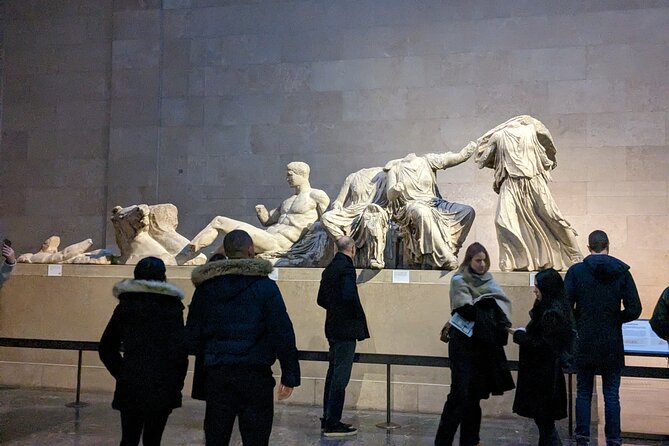
- Must-see lineup including Rosetta Stone, Elgin Marbles, and Parthenon Sculptures
- Decoding and writing systems like cuneiform, explained in plain language
- Reality checks on fakes like crystal skull stories and other myths
- Acquisition context so you hear what lies behind the display, not just what’s on it
A TV historian shortcut through a massive museum
The British Museum is the kind of place where you can wander for days and still miss the moments that stick. This tour helps because it routes you to highlights with someone who can explain what you are looking at without turning it into a lecture. You get a guided arc across cultures and time, not random gallery hopping.
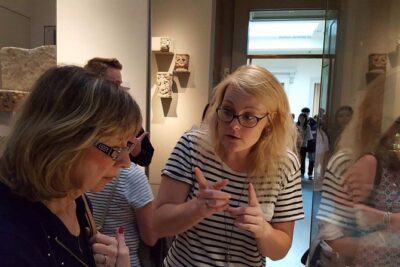
The private setup matters more than you might think. In 3 hours, every minute counts, and a small group lets the guide slow down when something is confusing, speed up when you want momentum, and pause for questions. You end up learning more with less fatigue.
And the tone is friendly. The itinerary even calls out that the guide can make it fun and relevant for kids, including Hollywood and contemporary references. If your group spans ages, this kind of flexibility is a big deal.
You can also read our reviews of more museum experiences in London



Rosetta Stone to hieroglyphs, decoded the way your brain likes
The star stop for many people is the Rosetta Stone, and this tour treats it like more than a famous object. You will hear how hieroglyphs were deciphered, which turns a “wow, it’s old” moment into a real understanding of how scholars figured it out.
You’ll also notice a pattern in the way the guide explains: not just what the writing system looks like, but why it mattered. That same approach shows up later when cuneiform gets explained too, so you do not just collect facts, you build a small framework for reading ancient worlds.
Rameses II, Montezuma, and Sutton Hoo in one connected storyline
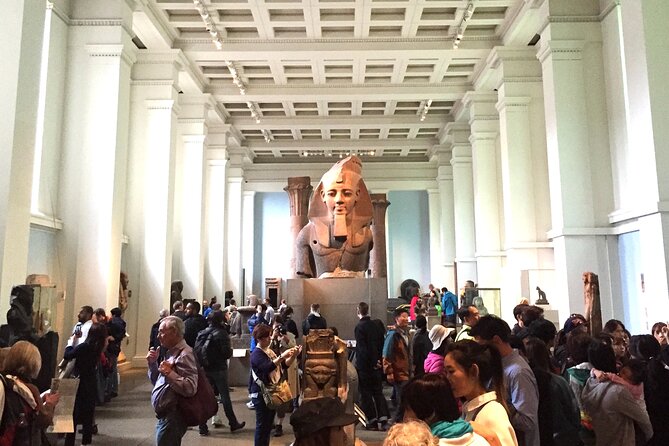
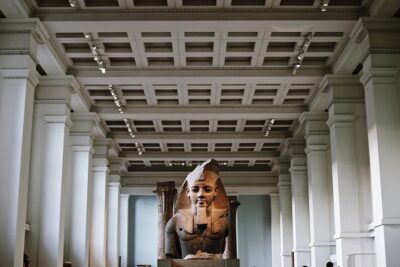
After the Rosetta Stone, the tour shifts across continents and empires, but it keeps the thread of storytelling. You see a bust of Rameses II, which gives you a direct face-to-power look at Egyptian royal imagery. You also encounter Aztec jewellery worn by Montezuma, a reminder that power and identity were displayed through objects long before modern fashion.
Then the tour swings to Anglo Saxon history with the Sutton Hoo material. This is a great moment for people who think of the museum as only ancient Egypt and Greece. Sutton Hoo anchors a different chapter of Europe, and it helps you see how the museum’s scale works, not just its star artifacts.
From there you hit the tour’s writing and story beats again with ancient epics, plus Mayan carvings. It’s the same teaching method: the guide points at what you are seeing, then connects it to broader themes like record keeping, belief systems, and what communities wanted remembered.
Old library to cuneiform translation, how we know what it says
One of the most valuable parts of this tour is the focus on how knowledge was created. You will see the oldest library concept and hear the story of cuneiform and how it was translated. That matters because many museum visits stop at interpretation, and you never get the behind-the-scenes story of decipherment.
When the guide explains translation, you start to understand that reading ancient scripts is a puzzle, not magic. It also sets you up to look at other inscriptions with a different eye, because you know what the key problems are, like broken context, missing pieces, and comparing scripts to known languages.
Fakes, crystal skulls, and mermaid myths in the museum
I like when a museum tour does not treat everything as automatically trustworthy. This one includes a stop on fakes, including crystal skulls and mermaids, and that gives you a useful reality check.
You learn to separate what is truly ancient from what people later imagined as ancient. And even if you already know the basic idea, it helps to see how myths stick in popular culture and how experts respond. The result is practical too, because you leave with better instincts for misinformation, even outside the museum.


Benin Bronzes, Celtic jewellery, and the Lewis Chess pieces
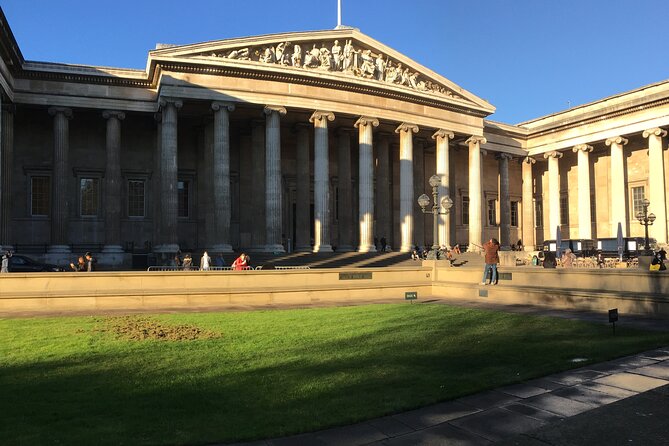
The tour keeps moving through objects that feel different in scale and style, which is a nice change from the biggest-ticket items. You’ll spend time with Benin Bronzes and Celtic jewellery, which gives you a sense of craftsmanship, cultural symbolism, and how metalwork can carry stories across generations.
Then you get the Lewis Chess pieces, one of those objects that is both instantly appealing and oddly profound. Chess is familiar, so your brain accepts the concept quickly. After that, you can focus on what the pieces themselves reveal, like how games, status, and skill were expressed in physical form.
If your group likes variety, this section is a good payoff. It breaks the museum’s rhythm of only kings and battles, and reminds you that everyday life and leisure also leave durable traces.
Assyrian war machine and the Parthenon Sculptures, with context intact
This tour is not shy about big, intense material. You will see an Assyrian war machine, and you will also encounter the Parthenon Sculptures, including the Elgin Marbles context that many visitors come to see.
What makes these stops better with a guide is framing. You do not just look for aesthetic beauty or shocking scale. You also learn what the objects were built to communicate, and why they were made the way they were.
You also hear acquisition context, meaning the story of how artifacts ended up in the museum. That is essential because it changes your emotional response from simple admiration to thoughtful understanding. You might not agree with every part of historical collection practices, but you can at least make sense of what you are seeing today.
Easter Island statue, Chinese Buddha, and Shiva from India
One of the coolest things about this highlights route is how it spans the world without feeling random. You’ll see an Easter Island statue, which can feel almost unreal in person, then shift to a Chinese Buddha and a Shiva statue from India.
These stops work well because the guide treats them as cultural objects with meaning, not just religions as separate trivia. Even if you come in with general knowledge, you still end up noticing different visual themes, symbols, and the way artistic choices carry messages about belief and community values.
For kids, this global mix can be a win. It turns the museum into a “map” rather than a wall of unrelated rooms.
Free museum entry, paid guide time
Here’s the practical math. The museum admission is free, but your tour is not, because you are paying for guiding services only. In other words, you are buying time, explanation, and a route that hits key highlights within a short window.
If you are the type who enjoys museums but hates doing all the planning, that is where the value lands. You do not need to spend hours researching what matters, and you do not need to guess how to interpret what you see.
If you already love solo museum wandering and you have the patience to build your own route, you might skip the guide. But for a 3-hour window, paying for a historian who knows the museum well usually saves you from the most common outcome, which is leaving with photos but not much understanding.
Timing and pacing for the 11:00 Reading Room start
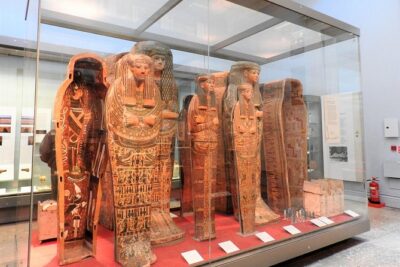
The meeting point is British Museum Reading Room, Great Russell St, and the tour begins at 11:00 am. The tour runs about 3 hours and ends back at the museum area, with the mention of finishing near the mummies gallery.
Pacing is part of the package. The tour includes time for breaks, and you should expect a guided rhythm rather than a nonstop sprint. That said, the museum is large, so your best move is arriving on time and being ready to step in quickly.
A detail that matters for comfort: you should allow about 30 minutes to get into the museum. Even if entry is free, timed entry tickets can add friction, and queues can eat your schedule.
Who this tour fits best
This is a strong choice if you want the British Museum highlights without doing a full day of research. It’s also a good fit for mixed groups, since the guide can adjust storytelling for kids who are not naturally history-focused.
If your group includes adults who like learning the “how,” this tour also covers the mechanics of discovery, like deciphering writing systems. And if you care about how objects got to the museum, the acquisition context gives you something more than surface-level viewing.
It is less ideal if you want total freedom to linger for long periods at your own pace. This is a highlights route, so you will see many things, but you will not have hours to park in one gallery.
Should you book this British Museum highlights tour?
I think you should book if your goal is to see the museum’s biggest, most meaningful objects in a short window and understand what they represent. The standout value is the historian style: clear explanations, pop-culture-friendly adaptability for kids, and the ability to connect objects across time.
If your group is the type that enjoys planning a route and reading on your own, you might get a lot out of solo time. But you will still face the same timed-entry reality at the museum, and you will not get the guided explanation and acquisition context that turn highlights into understanding.
For most people, especially first-timers or families with limited time, this is one of the more practical ways to experience the British Museum.
FAQ
How long is the British Museum highlights tour?
It lasts about 3 hours.
What language is the tour in?
The tour is offered in English.
Is the museum admission included?
The tour includes guiding services only. Museum admission is free, but you are advised to book your own free timed entry ticket directly from the British Museum website.
Is this a private tour?
Yes. It is a private tour/activity, so only your group will participate.
Where does the tour start?
You meet at the British Museum Reading Room, Great Russell St, London, UK.
Where does the tour end?
It ends at The British Museum, Great Russell St, London (near the Mummies gallery).
What time does the tour start?
The start time is listed as 11:00 am.
Do I get a mobile ticket?
Yes. The tour includes a mobile ticket.
Are service animals allowed?
Yes, service animals are allowed.
Can kids join, and will the guide adapt?
The tour info says the guide can make the museum fun and relevant for kids, including using Harry Potter references and other contemporary ideas.
What is the cancellation policy?
Free cancellation is available. You can cancel up to 24 hours in advance for a full refund.
More Museum Experiences in London


More Tours in London



More Tour Reviews in London
Not for you? Here's more nearby things to do in London we have reviewed










More British Museum Tours worth a look.
 ★ 4.3British Museum Guided TourTickets from $231,182 guest reviews
 ★ 5.0British Museum London Guided Tour Semi-Private 8ppl MaxTickets from $108984 guest reviews
 ★ 4.1Tour of the British MuseumTickets from $14678 guest reviews
 ★ 4.5British Museum Audio Tour & Priority Entrance TicketTickets from $9631 guest reviews
 ★ 5.0The British Museum London – Exclusive Guided Museum TourTickets from $108555 guest reviews
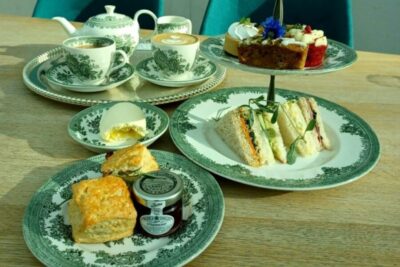 ★ 4.2Afternoon Tea at the British MuseumTickets from $58511 guest reviews
 ★ 4.0British Museum Guided TourTickets from $18470 guest reviews
★ 4.5British Museum Guided TourTickets from $39267 guest reviews
Continue by place or experience