
REVIEW · LONDON CITY TOURS
London Charles Dickens Puzzle Questo and Self-Guided Tour
A black-hat mystery in Dickens country. This self-guided puzzle walk turns famous London addresses into a riddle trail, starting at the Charles Dickens Museum and working toward Fleet Street. I like that you can go at your speed, and you get a surprisingly atmospheric route without paying for a traditional guide.
Two things I really like: you’ll learn the story of Dickens through the places he lived and wrote about, and the pacing is genuinely flexible, so you can pause whenever you need a breather. The only drawback to weigh is that there’s no physical guide, so if you want a live storyteller to explain every connection, you may miss that human layer.
Key Highlights at a Glance
- Start any time, resume later: build your day instead of squeezing it.
- Offline city game: no internet needed to play the clues.
- No human contact: private, quieter, and easier on the nerves.
- A Dickens route with real anchors: Doughty Street, Holborn, and Fleet Street landmarks.
- Balanced clue difficulty: challenging enough to feel fun, not so hard it ruins the mood.
A One-Hour Dickens Puzzle Walk Through Holborn and the City
This is a 1-hour experience designed as a mobile puzzle game, not a slow museum tour. You start at 47 Doughty Street in Holborn and end at 145 Fleet Street, with a string of literary and landmark stops along the way. The whole point is to keep you moving, but also to let you stop when you want, because the tour can be paused and resumed.
If you’re used to walking tours that feel like you must keep up, this will feel calmer. The route hits a mix of author house museums, historic inns, surviving Tudor-era structures, and major City landmarks, so even when you’re just scanning facades, you still get London context.
You can also read our reviews of more guided tours in London


Why This Self-Guided Format Feels Easier (and Safer)
You get the best parts of independent travel: you pick your pace, and you choose when to take breaks. Since it’s set up with a mobile ticket and an offline puzzle format, you’re not waiting on a guide to gather the group, translate, or redirect.
It’s also private. Only your group participates, which usually means you’re not constantly weaving through big crowds. One reader even highlighted that the day felt quiet while still being in the heart of the City, and that lines up with how this kind of self-led hunt tends to work.
The other thing to note is that you should be comfortable figuring things out yourself. No physical guide means the “why” behind each place comes through the game prompts and the on-site clues, not from a person explaining on the spot.
The Route: From Charles Dickens’ House to Fleet Street
Here’s what you’ll be walking through, in the order the route suggests, and what makes each stop worth your attention.
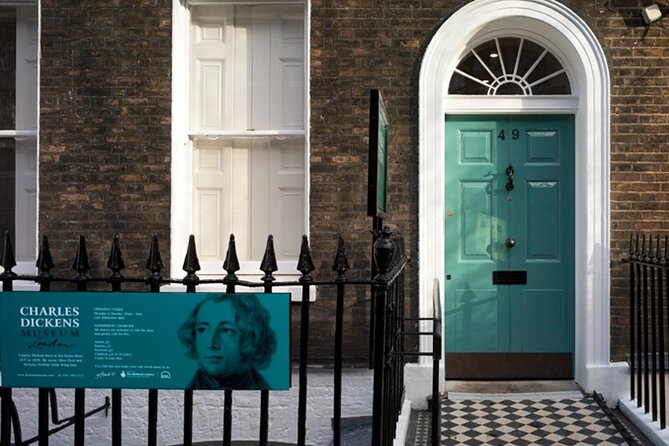
The Charles Dickens Museum at 48 Doughty Street (Start)
Your tour begins in an author’s house museum at 48 Doughty Street in Holborn. This is a typical Georgian terraced house where Dickens lived from 25 March 1837 to December 1839. It’s a tight, focused starting point, which helps the puzzle feel grounded right away.
Expect to look around and find the answer to the challenge that unlocks the next location. Practically, this is a great “get your bearings” stop, because it sets the tone: you’re reading details, not just walking past them.
Vine Street and the Man in the Moon Passage Area
Next you shift into the older street story around Vine Street and the Man in the Moon Passage area. The route notes this layout dates to around 1686, and that John Rocque’s Map of London (1746) shows Vine Street extending from Piccadilly northeast to Warwick Street. It also mentions that around 1720, the main properties there included a brewery and a carpenter’s yard.
This stop works well if you like seeing London as a place layered over time. The puzzle answer here depends on close looking, so slow down and scan the street elements rather than rushing straight through.
More London tours and experiences for the shortlist


The Inn Once Known as the Three Cripples (Oliver Twist Connection)
This area features a stylish inn dating to 1759, and the puzzle connects it to Dickens’ imagination. In 1838, Dickens changed its name to the Three Cripples and made it Bill Sykes’ watering hole in Oliver Twist.
You’re not just learning trivia here. The clue format nudges you to connect literary references to actual geography, which is a big reason these walks can feel more memorable than standard sightseeing.
Staple Inn (1585) and the Wool Trade
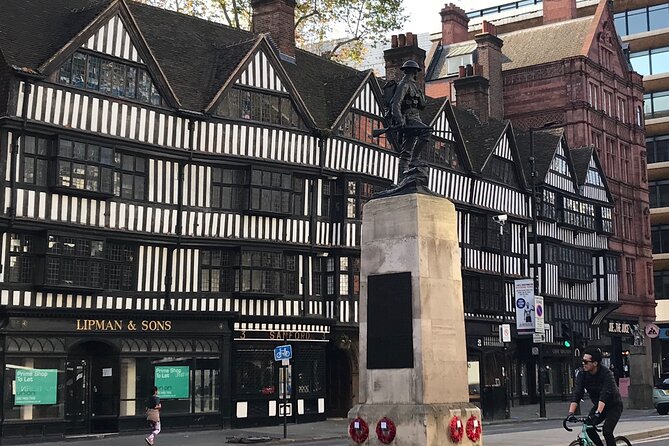
Staple Inn is dated to 1585, and the route gives you the business purpose up front: it was once the wool staple, where wool was weighed and taxed. It also survived the Great Fire of London, and later took damage in 1944 from a Nazi German Luftwaffe aerial bomb, before being restored.
This is one of those stops where you’ll likely enjoy taking a slower look because the building itself carries “story weight.” Since the game asks you to look around for the answer, plan a moment to notice design details rather than just standing in the open.
Lincoln’s Inn Fields Theatre (1661 to 1848)
The route then points you to the footprint of the Lincoln’s Inn Fields Theatre, which stood in the Fields from 1661 to 1848 and was demolished afterward. It also notes the earlier identity: it was originally called the Duke’s Theatre, created in 1695 by converting Lisle’s Tennis Court.
This is a good stop for readers who like “how things changed” history. A theatre in a tennis court conversion tells you London reused space, and that’s exactly the kind of background detail that makes a puzzle walk feel alive.
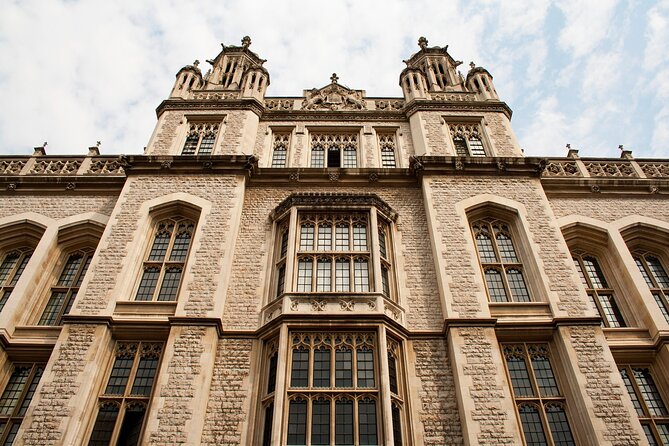
The Maughan Library Building (Gaunt Francis Renovation, Pennethorne Design)
Now you’re in a different category: a major university library building. The route says the Maughan was renovated for about £35 million by Gaunt Francis Architects, and it’s the largest new university library in the UK since World War II. It also highlights the older foundation: designed by Sir James Pennethorne and constructed in 1851, with extensions added between 1868 and 1900, and it’s Grade II listed.
Even if you’re not a library person, this stop adds contrast. You go from Dickens-era references to a building that shows how London keeps evolving while still protecting older structures. The puzzle challenge here again relies on observation, so take the time to look closely rather than just passing for photos.
Dr Johnson’s House (Rented 1748 to 1759)
Next comes Dr Johnson’s House, tied to one of English literature’s most famous voices. The route notes the house was probably originally built for a City merchant, and that Samuel Johnson rented it from 1748 to 1759.
I like this stop because Johnson is a natural bridge from Dickens’ world. The puzzle makes you “work” for the answer, which helps the literary connection stick.
Ye Olde Cheshire Cheese (Back to the Great Fire)
You’ll then reach Ye Olde Cheshire Cheese, with a story that goes way back. The route says the pub was originally built in the 1530s, but the original pub was lost in the Great Fire of London in 1666. The current pub dates from 1667 and is described as one of the first London buildings reconstructed after the fire.
This is a good point in the walk for a pause. In the shortest, most practical way, a historic pub stop fits what this tour is good at: letting you mix story hunting with real-world comfort. One key review also mentioned stopping at several pubs during the route, which makes sense here because the itinerary naturally includes places where you can step in or at least enjoy the vibe outside.
Church of St Peter of all Nations (1863, Basilical Style)
This next stop is a church consecrated on 16 April 1863, originally as The Church of St Peter of all Nations. The route notes that at the time of consecration it was the only basilica-style church in the UK. It also includes organ detail, with an organ built in 1886 by Belgian Anneesen, and a World War II note: Irish Pallottines used the church during a period when Italian immigrants were interned.
This is one of the places where the puzzle approach helps you pay attention. A lot of churches you walk past in London can blur together, but when the game is asking you to find an answer, you end up noticing the specific features that make this site different.
Royal College of Surgeons Origins (1540s and the Barber-Surgeons)
The route then brings you to the Royal College of Surgeons, explaining its early origins in the 1540s. It says the Company of Barbers and the Fellowship of Surgeons joined to form the Company of Barber-Surgeons. In the 1700s, the route notes that medicine became an academic discipline, and surgeons pushed for more recognition of their expertise.
This stop adds a surprising angle to a Dickens-themed route, because it reminds you that London’s story is not only authors and theatres. You’re tracking how institutions formed, and the puzzle questions here help you look at the site with a “timeline” mindset.
St Dunstan-in-the-West and the Romanian Orthodox Chapel
The final stop is Romanian Orthodox chapel St Dunstan-in-the-West, sharing its building with the Romanian Orthodox community (St George church). The route notes that the chapel to the left of the main altar is closed off by an iconostasis, originally from Antim Monastery in Bucharest, and that it was dedicated in 1966.
This ending works nicely because it’s a distinct cultural layer in the middle of a historic neighborhood. The puzzle asks you to look around for the answer, so give yourself a moment at the end rather than rushing out the door once you think you’re finished.
How the Man in Black Puzzle Energy Works on the Street
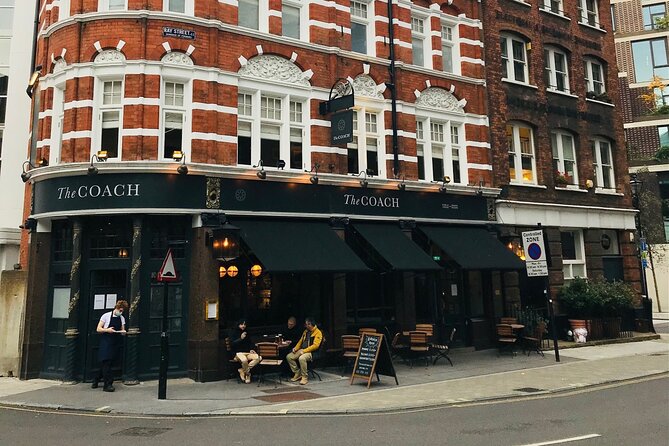
One theme that comes through in how people enjoy this experience is the fun of the hunt, specifically the idea of finding the Man in Black. The route is built to keep you searching, not just reading, which means you’re mentally active during the walk.
That’s a real value in London, where a lot of sightseeing turns into staring at stone and hoping it sticks. Here, you’re repeatedly “earning” progress through clue answers. And because the clues aren’t described as too easy or too hard, you get a better chance of feeling proud at the right moments instead of frustrated.
If you want this to go smoothly, treat it like a casual scavenger hunt. Take photos only if you won’t lose track of the clue. When you feel stuck, keep scanning the immediate area, then move a few steps and try again. The route is designed for observation, so tiny shifts in where you’re standing can be the difference between nothing and an answer.
Value Check: Does $8.33 Make Sense in London?
At $8.33 per person, this is priced like a budget-friendly activity, and the structure supports that. You get a full City walking route with many distinct stops, and you’re not paying for a live guide’s time. You also get flexibility built into the experience, because you can start any time and pause and resume.
The real “value” isn’t just the price. It’s that you get to control time. If you have a free afternoon slot, you can start when it works, rather than booking a fixed departure. And because the tour is playable offline, you’re less likely to lose time due to mobile data issues.
The main cost to you is attention. Since there’s no guide, you’re providing the effort, not just the ticket price. If you enjoy puzzles and learning through looking, the value is strong.
What to Expect Day-of, and How to Plan Your Time
This is designed as a roughly 1-hour outing, but you should plan for more if you like slow browsing. The route passes through places that can reward quick reading, but also places where you might want to stand and look longer once you spot something interesting.
You’ll want to start at 47 Doughty Street in Holborn and walk toward Fleet Street at the end. It’s a sensible flow, and it helps that the route ties together literature, architecture, and London’s evolving city fabric.
A small practical note: because this is a mobile experience, make sure your phone is ready for the task. Charge it, keep it handy, and keep your attention on the clue prompts rather than constantly juggling maps.
Best Fit for You, and Who Might Want Something Else
This tour is a great fit if you:
- like Dickens and want to learn through the places tied to him
- enjoy puzzle walks where you solve your way along a route
- want flexibility, start timing freedom, and a calmer experience without crowds
- like combining storytelling with realistic pauses, including pub territory along the way
You might not love it if you:
- want a guided narrative with detailed explanations at every stop
- dislike puzzle formats and prefer strictly interpretive signage or museum-style storytelling
- only want to spend time inside major venues, because the route is built around a walking and looking approach
Should You Book This Charles Dickens Puzzle Tour?
I’d book it if you want a low-cost, self-paced London walk that still feels literary and purposeful. The route covers major Dickens-adjacent locations, plus supporting landmarks that make the City feel like one connected story, not a list of unrelated sights. And the puzzle hunt style, including the appeal of finding the Man in Black*, is the kind of structure that makes urban history easier to remember.
Skip it only if you strongly prefer a live guide to do the explaining for you. Otherwise, this is exactly the kind of London activity that fits in your day without turning it into a rigid schedule.
FAQ
How long is the London Charles Dickens Puzzle Quest?
It lasts about 1 hour.
How much does the tour cost?
The price listed is $8.33 per person.
Do I need internet to play?
No. The tour is designed so you can play offline.
Can I start at any time and take breaks?
Yes. You can start when you like and take a break whenever you want, then resume later.
Is there a physical tour guide with the group?
No. It is self-guided and there is no physical guide.
What language is the experience offered in?
It is offered in English.
Where do I start and where does it end?
Start at 47 Doughty St, London WC1N 2LW, UK. End at 145 Fleet St, London EC4A 2BU, UK.
Is this a private experience?
Yes. It is private, and only your group will participate.
Can I cancel and get a full refund?
Yes. You can cancel up to 24 hours in advance for a full refund. If you cancel less than 24 hours before the start time, the amount you paid is not refunded.
More Guided Tours in London

More Tours in London



More Tour Reviews in London

Not for you? Here's more nearby things to do in London we have reviewed





More London City Tours worth a look.
 ★ 4.6The London Eye Entry TicketTickets from $3935,875 guest reviews
 ★ 4.7From London: Harry Potter Warner Bros Studio TourTickets from $11726,588 guest reviews
Westminster to Greenwich River Thames CruiseTickets from $2222,836 guest reviews
Magical London: Harry Potter Guided Walking TourTickets from $2022,044 guest reviews
 ★ 4.6Madame Tussauds LondonTickets from $3620,915 guest reviews
 ★ 4.5Stonehenge, Windsor Castle, and Bath from LondonTickets from $11118,662 guest reviews
 ★ 4.7Warner Bros. Studio Tour with TransfersTickets from $14417,586 guest reviews
 ★ 4.7Tower Bridge Entry TicketTickets from $2115,560 guest reviews
Continue by place or experience