
REVIEW · LONDON CITY TOURS
Burnings, Butchery & Black Death: A Walking Tour of London’s Bloody Past
Walk London’s darker side in two hours. This tour strings together plague pits, medieval markets, and the spots where fire and sickness left scars across the city, all within a compact route focused on London’s bloody past and more than a thousand years of change.
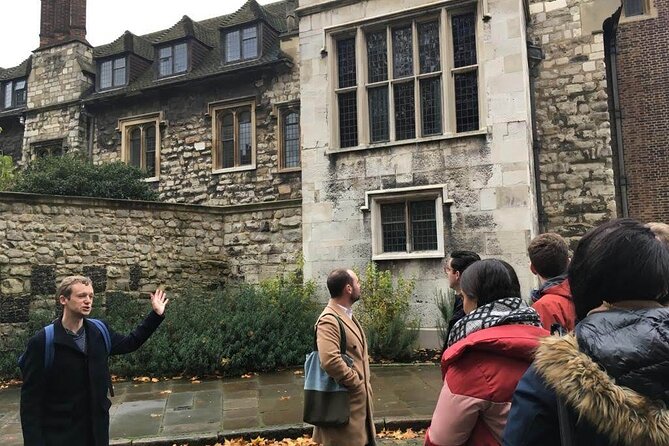
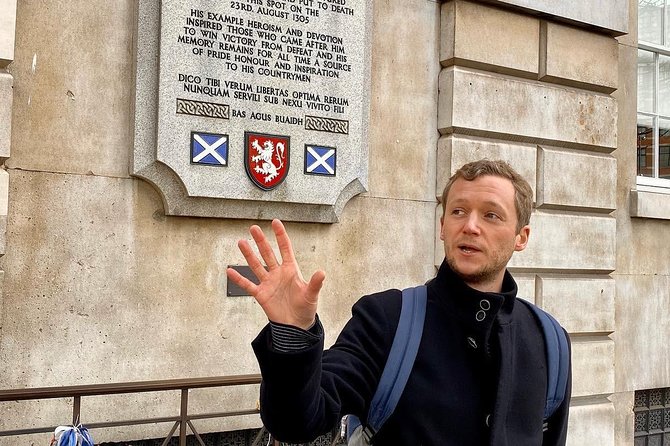
I love the small groups capped at 15, which keeps the experience personal and lets you ask questions without shouting over other people. I also like how the guide, Tom, brings the stories down to street level, linking grim details from the past to what you can still spot today.
One consideration before you book, it needs good weather, since you’re outdoors for most of the walk and the timing is about two hours.
Key Things You Should Know Before You Go
- A 1,000-year route in 2 hours, built around plague, markets, and major London events
- The Charterhouse plague pit stop, where medieval institutions meet public health horror
- Smithfield Market’s 1,000-year meat-market story, tying daily food to darker city history
- Victorian River Fleet turned into an open-air sewer, visible through the Holborn Viaduct area
- A strong ending sequence, with London’s oldest surviving parish church and the oldest surviving hospital museum stop
A Dark London Walk That Moves Through Centuries Fast
This is the kind of walking tour that feels efficient in the best way. You cover the Middle Ages, then keep moving through later centuries, so you get a real sense that London’s problems did not come from one single moment. They evolved, adapted, and kept repeating in new forms.
The theme is heavy, but it stays readable. You’re not stuck in one era, and you’re not required to be a history expert to follow along. The guide frames each stop like a clue, so the city starts making connections for you, not just impressing you with age.
What makes it especially interesting is the mix of places. You’re not only seeing churches and memorials. You’re also standing at sites connected to work, trade, and sanitation, which are usually the missing ingredients in the typical London highlights routine.
You can also read our reviews of more walking tours in London



Price and Group Size, and Why Value Feels Real Here
At about $27.73 per person for roughly two hours, this is priced like a serious neighborhood experience, not a generic sightseeing bus pass. The value comes from two things: the duration is long enough to feel like a real walk, and the group stays small enough to keep your attention on what matters.
The tour runs with a maximum of 15 people. That limit is not just a comfort perk, it changes the vibe. In a small group, the guide can slow down when you ask a question, and you get to hear the story without straining.
Also, most stops have admission listed as free. The one clear paid-included moment is the Church of St. Bartholomew the Great, where the admission ticket is included. In practice, that means you’re paying for guided context, not for a pile of add-on entry fees.
Meeting at Aldersgate, Ending Near Farringdon
The start is at Underground Ltd, Aldersgate St, Barbican, London EC1A 4JA. It’s a convenient launch point because you’re already in a part of London with plenty of transport options.
The walk ends on Ely Place, Ely Pl, London EC1N, around the corner from Farringdon Station. That matters because you can keep your day moving right after the tour, instead of adding time and hassle to your schedule.
Timing is also part of the value. The tour is listed at about two hours, and it runs as a steady sequence of short stops. Each one is brief, around 10 minutes, which helps you see more without turning the walk into a marathon.
Stop-by-Stop: The Charterhouse, Smithfield, and St John’s Gate
Stop 1 is The Charterhouse, a fourteenth-century monastery with a plague pit. This is the moment where the tour’s title stops being a label and starts being literal. You’re not just hearing the word plague, you’re standing where disease was handled in a very grim, very physical way.
Stop 2 is Smithfield Market, described as a meat market with about a thousand years behind it. This stop is useful because it shifts your thinking. Instead of focusing only on dramatic events, it shows how everyday life and food systems were tied to sanitation, waste, and the mess humans had to manage long before modern public health.
Stop 3 is St John’s Gate, home to the medieval Knights Hospitallers. This is a tonal change in the best way. The stories still fit the theme, but they introduce institutions that shaped how London functioned, including how care, duty, and power were organized in the medieval world.
Stop 4 is Cloth Fair, a quiet alley with a noisier past. Even if you arrive expecting something small, this is where the guide’s street-reading skill really helps. You see how a narrow lane can carry centuries of commerce, tension, and everyday movement.
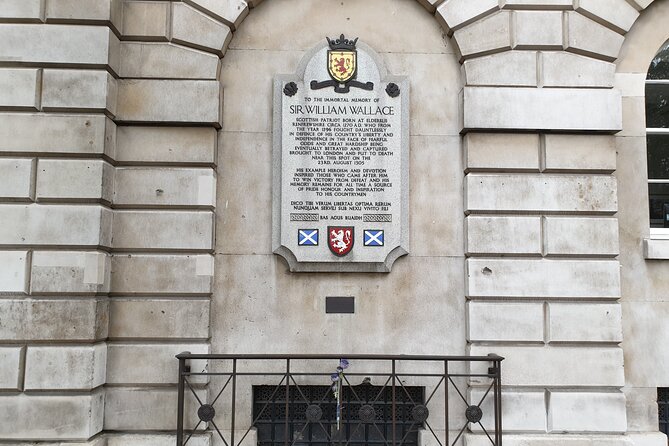
Stop 5 is the William Wallace Memorial. It’s a reminder that London’s story was never only local. People, politics, and conflicts traveled, and memorials like this one bring an outside figure into the London frame, tied to the name many visitors recognize from Braveheart.
St Bartholomew the Great and the Golden Boy at Pye Corner
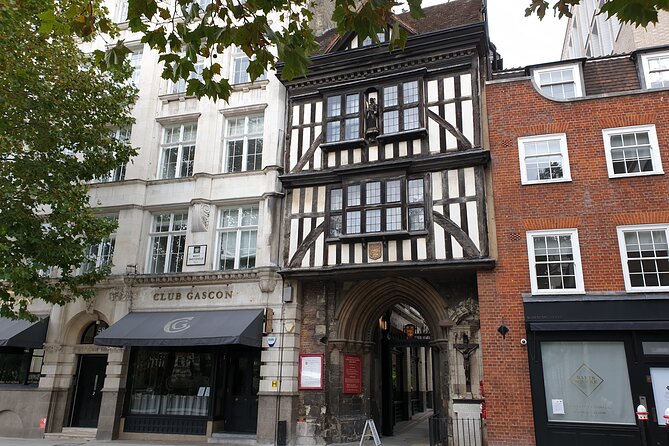
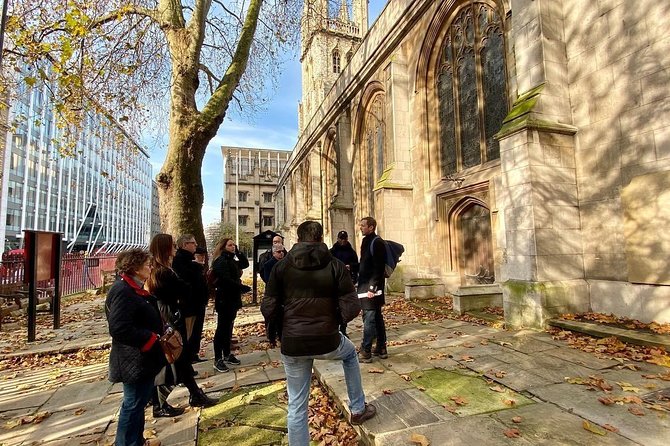
Stop 6 is Church of St. Bartholomew the Great, London’s oldest surviving parish church, and admission is included. This is a meaningful stop because it gives you a baseline for continuity. Fires happened. Rebuilding happened. But this church is still here, surviving as a living marker of long-term change.
What I like about this part of the tour is the way the guide treats architecture like evidence. You’re not just hearing that it is old. You’re learning why that age matters in a city where so much has been erased or remade.
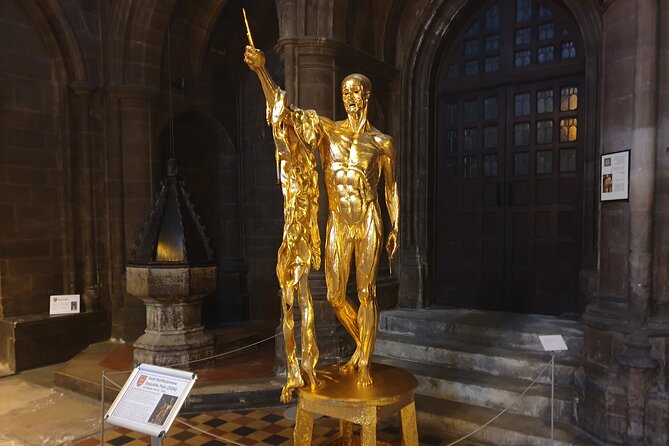
Stop 7 is Golden Boy of Pye Corner, the site where the Great Fire of 1666 died out, plus an eighteenth-century ghost-hysteria connection. This is where the tour leans into London’s taste for stories. A disaster ends, people interpret it, and then the city’s imagination runs wild, adding rumor, fear, and folklore to the historical record.
If you like the mix of real events and the human reaction to them, this stop is a strong payoff. It also helps you understand why certain corners of London become famous long after the original event.





Holborn Viaduct and the River Fleet Sewer Surprise
Stop 8 is Holborn Viaduct, tied to the River Fleet site. In Victorian London, that river became the largest open-air sewer in the city, according to the tour description. This is one of the most practical stops, even though it sounds unpleasant.
The main reason this matters is perspective. When you learn that something once flowed through a route and later became a sanitation problem, you start seeing the city differently. You realize that London’s modern streets sit on layers of function, including uncomfortable ones.
This part also explains the city’s constant reinvention. Over time, what used to be natural becomes managed, then repurposed, then covered. Walking past the viaduct gives you a physical anchor for that concept, and the guide helps translate it into a story you can keep in your head.
Ye Olde Mitre, Then the Hospital Museum Ending
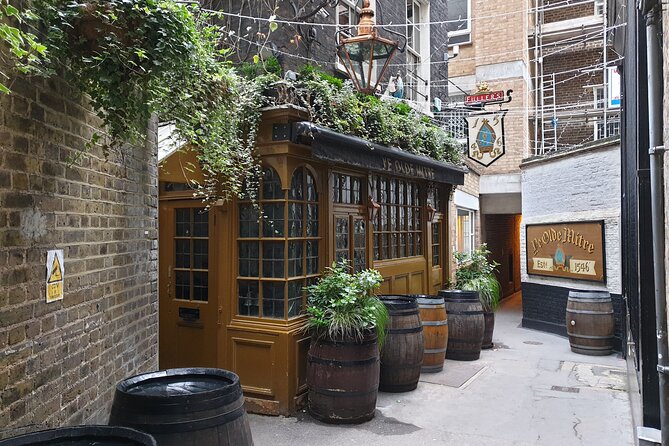
Stop 9 is Ye Olde Mitre, a pub hidden down an alleyway. It’s short, around 10 minutes, but it’s a smart choice for ending on something human. A pub stop gives you a place to reset your brain after the plague and sewer themes.
I also like that the tour doesn’t just point you at a generic landmark. You’re sent to a place that feels like it belongs to London street life, not a postcard. If you do decide to eat there, you can follow the lead people mention in reviews, including classic pub comfort food like cheese toasties and pork pies.
Stop 10 is Saint Bartholomew’s Hospital Museum, described as the oldest surviving hospital in the country. This is a fitting final note because it brings the theme back to care. Earlier stops were about disease, systems, and public realities. The hospital museum turns those topics into a story of how treatment and institutions tried to keep up.
If you tend to rush through museums, this stop can surprise you. In a short tour format, you’re not expected to absorb every detail in one sitting. You’re meant to leave with a sharper question in your mind, like how medicine changed, and how London’s institutions adapted to the constant threat of illness.
The Style of Guiding That Makes This Work
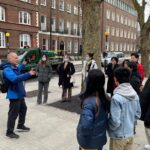
The best part of this tour for me is how the guide keeps pace while still making space for the grim details. The stories cover a lot of ground, from plague-related sites to major fires and Victorian sanitation. With a larger group, you’d lose parts. With a capped group size, the guide can keep it clear.
I also appreciate the small moments that make it feel like you’re walking with someone who really watches the area. People often point out that Tom’s delivery is clear and funny, but the humor does not erase the subject matter. It makes the history more digestible.
You’ll also get the benefit of a guide who can connect questions you didn’t think to ask. This matters for a topic like London’s bloody past, because you can go home with a list of names and not much else. Here, you’re more likely to leave with a sense of how the city’s problems formed, spread, and shifted.
Who This Tour Suits Best
This tour is a great fit if you want London history with teeth. If you’re the type who likes plague context, sanitation stories, and the practical side of how cities function under stress, you’ll enjoy the route.
It also works well if you’ve already done the big centerpiece attractions and you want something closer to the daily machinery of the city. The walk focuses on sites most visitors miss, including alleys and institutional spaces that you can pass without realizing what they represent.
On the other hand, if you hate walking in the open when the weather is iffy, plan carefully. The tour explicitly needs good weather, and it is structured as an outdoor route.
Should You Book This Bloody London Walking Tour?
Yes, if you want a compact, well-priced walk that covers centuries without turning into a bland highlights checklist. The combination of small group size, clear guiding, and a stop list that includes plague, markets, fires, sanitation, and care makes this a strong value.
I’d skip it only if you strongly prefer upbeat themes, or if you know you will struggle with an outdoor walk around central London. Otherwise, it’s one of the smarter ways to understand London’s darker turns in just a couple hours, with a guided thread that keeps it all coherent.
FAQ
How long is the walking tour?
The tour runs for about 2 hours.
Where do I meet, and where does it end?
You start at Underground Ltd, Aldersgate St, Barbican, London EC1A 4JA. You end on Ely Place, Ely Pl, London EC1N, around the corner from Farringdon Station.
Do I need to print a ticket?
No. It’s a mobile ticket.
Is any admission included?
Admission for the Church of St. Bartholomew the Great is included. The other listed stops show admission ticket as free.
How large is the group?
The tour is limited to a maximum of 15 travelers.
What if the weather is bad?
This tour requires good weather. If it is canceled due to poor weather, you’ll be offered a different date or a full refund.
More Walking Tours in London


More Tours in London


More Tour Reviews in London
Not for you? Here's more nearby things to do in London we have reviewed









More London City Tours worth a look.
 ★ 4.6The London Eye Entry TicketTickets from $3935,875 guest reviews
 ★ 4.7From London: Harry Potter Warner Bros Studio TourTickets from $11726,588 guest reviews
Westminster to Greenwich River Thames CruiseTickets from $2222,836 guest reviews
Magical London: Harry Potter Guided Walking TourTickets from $2022,044 guest reviews
★ 4.7From London: Harry Potter Warner Bros Studio TourTickets from $11726,588 guest reviews
Westminster to Greenwich River Thames CruiseTickets from $2222,836 guest reviews
Magical London: Harry Potter Guided Walking TourTickets from $2022,044 guest reviews
 ★ 4.6Madame Tussauds LondonTickets from $3620,915 guest reviews
 ★ 4.5Stonehenge, Windsor Castle, and Bath from LondonTickets from $11118,662 guest reviews
 ★ 4.7Warner Bros. Studio Tour with TransfersTickets from $14417,586 guest reviews
 ★ 4.7Tower Bridge Entry TicketTickets from $2115,560 guest reviews