
REVIEW · BRITISH MUSEUM TOURS
British Museum Guided Tour with Priority Timeslots(Small Group)
Two hours can feel like a cheat code. This small-group British Museum guided tour uses priority timeslots to help you beat the biggest crowd crush, then gives you headset-clear commentary as you glide through the museum’s must-sees.
I love that it is built for short stays, so you leave with a real sense of what matters.
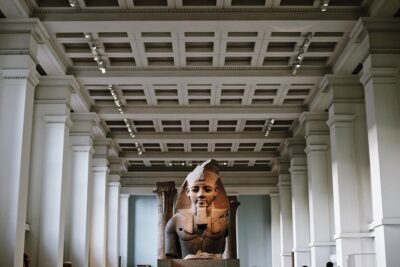
My other favorite part is the tight highlight route. You get the Elgin Marbles, the Ramesses II bust, Rosetta Stone, Assyrian winged bull, Easter Island Moai, Sutton Hoo ship burial, Lewis Chessman, and more, all in a way that does not feel rushed. The main drawback is also the point, it is only about 2 hours, so you will not cover everything the museum has to offer.
Key things I’d circle before you go
- Priority timeslots that help you enter through the main entrance without wasting your time in the busiest bits
- Optional headsets so you can hear the guide clearly even when rooms get packed
- A maximum group size of 15 for a more controlled, personal pace
- A highlight list that actually covers eras, from Egypt to Greece to Assyria to far-off island art
- An efficient plan, with time left to continue on your own after the tour ends
Priority Timeslots: How You Save Time at the British Museum
The British Museum is free to enter, which sounds simple. In practice, it is enormous, and it is crowded in the same places everyone wants to see. Paying for this tour is not about paying to get in, it is about buying back time and getting smarter routing.
The big win here is the priority timeslots for the main entrance. That matters because you are not just wandering in and hoping you find your way. You start with momentum, and you use your two hours for the objects that anchor the museum’s story.
You can also read our reviews of more guided tours in London


Meeting Point Setup: Where You Start and How You’ll Move
You meet at the British Museum on Great Russell St, London WC1B 3DG, right at the museum itself. The tour ends back at the meeting point, so you are not left figuring out where you ended up.
This is a small-group tour with a maximum of 15 people. That limit is a practical comfort. It helps the guide keep the group together while you circulate through rooms that can get tight.
Also, you are in English. If you prefer your museum time to be spoken, not just read, this format is a nice fit.
One planning note I like: this tour is commonly booked about 38 days in advance. If your dates are fixed, do not wait until the last week.
Your 2-Hour Highlight Route Inside the Museum
The tour is about two hours, give or take, and the whole idea is focus. You do not get the entire museum, you get the top pieces plus the stories that make them easier to place in your head.
Think of it as getting an efficient mental map first, then using your own time after. Many people start the museum overwhelmed and leave with confusion. This tour is designed to prevent that.
The guide also uses live commentary instead of you reading everything on the wall. That difference is huge in a crowded museum. You hear context while you are standing in front of the object, not later when you are tired.
Egyptian Highlights: Mummies, Statues, and the Ramesses II Bust
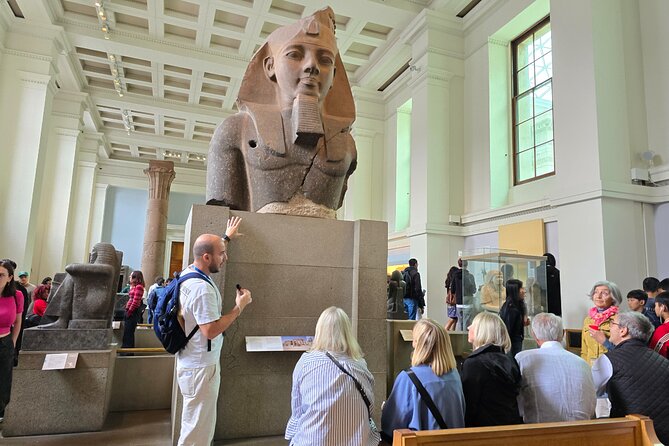
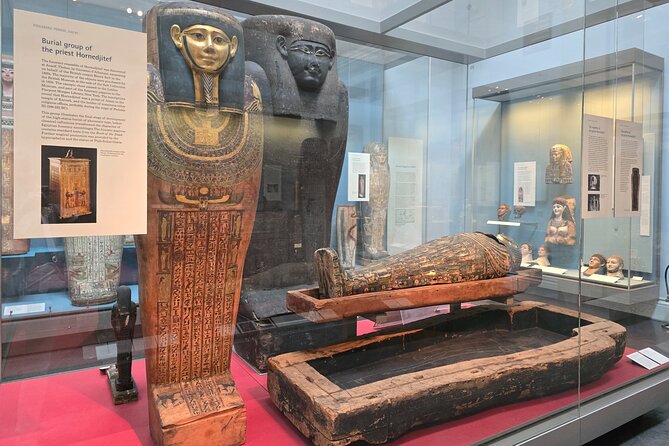
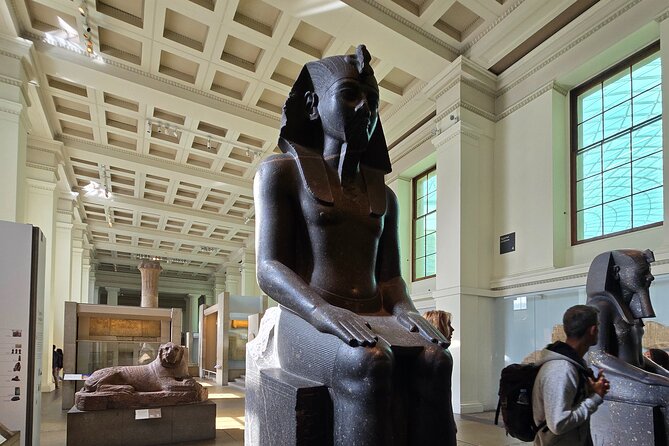
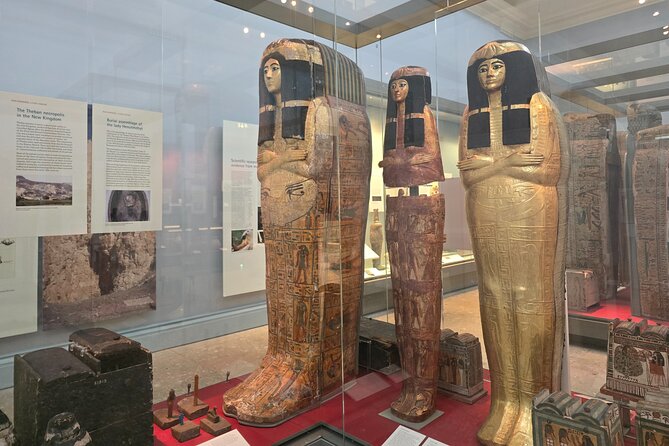
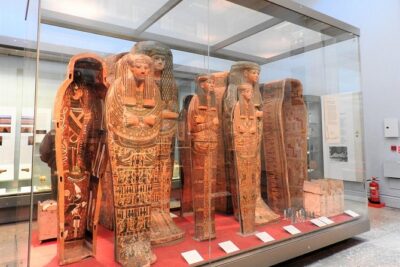
Egypt takes a lot of space in the British Museum, and it is easy to get lost. During the tour, you get pointed to the Egyptian highlights, including Egyptian statues and mummies, plus the Ramesses II bust.
I like how this part works because Egyptian art is not just eye candy. It is connected to power, religion, and how ancient Egyptians wanted rulers to be remembered. When the guide explains what you are looking at right then, the details on the objects make more sense.
There is also a practical element. Egypt rooms can be busy, so standing in the right spot matters. A good guide helps you spend your minutes on the most important angles and details, instead of drifting.
Rosetta Stone and Parthenon Sculpture: Greece’s Big Message
If you want one stop that anchors your whole museum visit, it is the Rosetta Stone. During the tour you see it as part of a wider route that also includes Parthenon sculpture, including the well-known Elgin Marbles.
These are objects people have heard about, but you still need help understanding why they matter. The Rosetta Stone is a turning point because it connects language and translation in a way that changes what scholars can do. Parthenon sculpture carries another kind of weight, linking art, politics, and how the ancient Greeks communicated ideals through public monuments.
The payoff of having a guide here is pacing. You get the meaning without needing to read every plaque line by line while other crowds press in.
You can also read our reviews of more museum experiences in London





Assyrian Winged Bull and a World of Far-Off Art
Next comes Assyrian art, including the Assyrian winged bull. This is the kind of object that can look intimidating at first, until someone explains its role and symbolism.
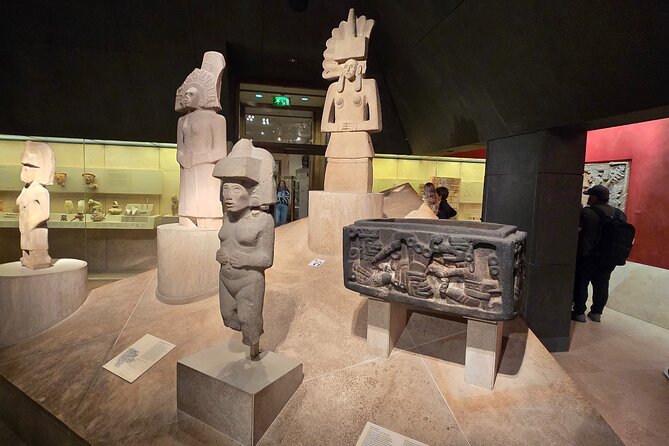
The tour also covers far-reaching highlights like the Easter Island Moai statue. That pairing is smart. It reminds you that the British Museum’s collection is not one culture story. It is a world collection, and the best way to appreciate it is to feel the shift in time and place.
What I like is that you are not just seeing famous items back to back. You get a sense of how curators organize meaning across very different civilizations. That is what makes the museum feel less like random rooms of stuff and more like an organized conversation.
Sutton Hoo Ship Burial and Lewis Chessman: British Treasures in the Mix
Then you hit some pieces that feel closer to home, including the Sutton Hoo ship burial and the Lewis Chessman.
Sutton Hoo is fascinating because it connects archaeology to national story, and it helps you see that the British Museum does not only house ancient empires from far away. The Sutton Hoo ship burial points to early medieval Britain in a way that feels grounded and human, not abstract.
Lewis Chessman is another favorite for visitors who love objects you can picture in daily life. It is not only about kings and battles. It is also about games, craftsmanship, and how people used culture to make sense of their world.
If you tend to walk museums in a straight line, this tour is a good correction. It gives you a more balanced sweep, including British material in the middle of global highlights.
Headsets in a Crowded Museum: Small Detail, Big Difference
This tour offers an option for headsets, and the practical value is real. The British Museum can be loud, especially where crowds cluster around famous objects. With headsets you can hear the guide’s live commentary clearly even from some distance.
I think this feature is worth it if you get easily frustrated by background noise or if you travel in a group and you want the whole party to hear the same story. It also helps you stay focused on the guide instead of constantly asking each other what was just said.
Small-Group Energy: How the Guide Keeps the Pace Fair
A two-hour highlight tour needs a careful pace. Too slow and you run out of time. Too fast and you lose the meaning.
The group size cap at 15 helps the guide manage the flow. You move with intention, and you get enough time at major stops to actually look, not just point and go.
You will also notice a common thread in guide styles. Guides named Daniel, Joey, James, Tony, Antonio, and Rebekka show up in past tours, and the consistent pattern is that they explain what you are seeing in clear, story-driven ways, not just recite facts from a wall label. Even on busy days, the approach focuses on keeping the tour moving while still answering questions.
After the Tour: Using Your Remaining Time Wisely
When the guided portion ends, you are free to explore at your own pace. I like this structure because it turns the tour into a primer, not a full substitute.
If you leave the tour with three or four objects and stories you now understand, you can explore the surrounding rooms much more confidently. You will also know what to look for next, instead of bouncing from room to room.
Here is how I’d use the extra time: pick one area you enjoyed most during the tour, then look for related displays nearby. You will get more satisfaction because you are connecting objects by theme, not by luck.
Value for Money: Why $48.60 Can Be Worth It
The price is $48.60 per person, and it might feel high at first glance, especially because the museum itself has free admission.
Here is the value math that makes sense. Your money goes toward:
- an expert guide
- entry tickets for the main entrance with priority timeslots
- optional headset support
- a route that hits the most meaningful highlights in about two hours
You are paying for speed plus interpretation. If you try to do this alone, you may spend your best time standing in line, searching for where to start, and reading half of the plaques while crowds interrupt you. This tour compresses that chaos into a guided plan so you get the key takeaways fast.
Also, the value is stronger when your London time is tight. If you are doing several major sights in one trip, a focused highlight tour becomes a smart move.
Who This Tour Fits Best
This tour is ideal if:
- you have limited time and still want the headline pieces
- you like museum visits with spoken context, not just self-guided reading
- you want a manageable group size and quieter listening experience with headsets
- you feel overwhelmed by huge museums and want a clear route
It might feel less ideal if:
- you want to spend hours deep in one collection area
- you prefer total freedom without a set route
- you plan to focus on only one niche topic, like only Egypt or only classical Greece
Should You Book This British Museum Priority Guided Tour?
If your goal is to see the British Museum’s most famous highlights in a short window, this is a strong booking. Priority timeslots help you start efficiently, the small group keeps the pace sane, and the headset option solves the biggest problem in crowded galleries, hearing the guide.
I would book it if you are doing the museum as a key stop and you want structure. I would skip it only if you have plenty of time for a slow, solo exploration and you already know exactly which rooms and objects you want to chase.
FAQ
How long is the British Museum guided tour?
It is about 2 hours.
What is included in the ticket price?
You get an expert guide, optional headset use, and entry tickets to the British Museum main entrance with priority timeslots.
Is museum admission included?
Yes. Admission is provided as part of the tour with priority timeslots for the main entrance.
How big is the group?
The maximum group size is 15 travelers.
Where does the tour start?
The meeting point is the British Museum, Great Russell St, London WC1B 3DG.
Is the tour in English?
Yes, the tour is offered in English.
What if I need to cancel?
You can cancel for a full refund up to 24 hours before the experience starts. If it is canceled due to poor weather, you will be offered a different date or a full refund.
More Guided Tours in London


More Tours in London




More Tour Reviews in London


Not for you? Here's more nearby things to do in London we have reviewed










More British Museum Tours worth a look.
 ★ 4.3British Museum Guided TourTickets from $231,182 guest reviews
 ★ 5.0British Museum London Guided Tour Semi-Private 8ppl MaxTickets from $108984 guest reviews
 ★ 4.1Tour of the British MuseumTickets from $14678 guest reviews
 ★ 4.5British Museum Audio Tour & Priority Entrance TicketTickets from $9631 guest reviews
 ★ 5.0The British Museum London – Exclusive Guided Museum TourTickets from $108555 guest reviews
 ★ 4.2Afternoon Tea at the British MuseumTickets from $58511 guest reviews
 ★ 4.0British Museum Guided TourTickets from $18470 guest reviews
★ 4.5British Museum Guided TourTickets from $39267 guest reviews
★ 4.0British Museum Guided TourTickets from $18470 guest reviews
★ 4.5British Museum Guided TourTickets from $39267 guest reviews
Continue by place or experience