
REVIEW · LONDON CITY TOURS
London: Medieval History Walking Tour from The Tower
Medieval London feels close when you walk the river instead of just looking at it. This 2-hour guided history stroll links Tower of London power, Thames trade, and Shakespeare-era streets into one easy route. You also get the rare mix of military history, medieval architecture, and everyday city life.
Two things I like a lot are the focus on the bigger picture (politics, religion, daily life, power struggles) and the sheer lineup of stops for the time you’re out. A solid bonus is that you’re not stuck staring at plaques, you’re guided through what each place meant and how it connects to the next.
The main drawback to consider is simple: it’s still a walk for 2 hours. So bring comfortable shoes and dress for rain or shine.
Key highlights you will feel on this walk
- Tower of London area to Tower Bridge, with a clear 1000-year timeline that makes the site click
- Tower Bridge explained beyond photos, including how it was built and why it matters
- HMS Belfast and its D-Day connection, putting the Thames in WW2 context
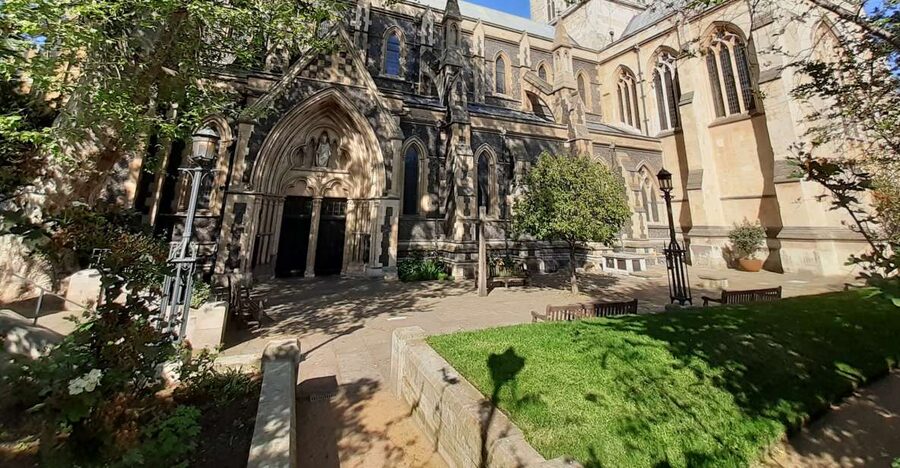
- Winchester Palace (12th century) and Southwark Cathedral (15th century) for real medieval atmosphere
- Shakespeare’s Globe area and riverside drama, tied to the people who lived and worked here
- St Paul’s Cathedral at the end, so the route lands with London’s grand church skyline
Tower Hill to St Paul’s, the medieval Thames route that makes sense
This tour is built for people who want the story of London, not a slideshow of big landmarks. You start at Tower Hill, then move along the Thames corridor where Roman, medieval, and modern London all overlap in the same view. The walk also has a smart rhythm, major sights early, then market and church history, and finally the Shakespeare and skyline ending.
You get an expert guide leading the whole way, and the best part is how they connect places into one narrative. Instead of treating each stop as a separate trivia card, the guide shows how power, faith, trade, and conflict shaped what you see today.
The route is also practical. Two hours is long enough to feel like you explored, yet short enough that you can still do other sites the same day. Just be prepared for standing and walking through busy areas, especially near bridges and popular riverside stops.
You can also read our reviews of more walking tours in London



Entering the Tower of London story at Tower Hill
You begin outside the western exit of Tower Hill tube station, near Trinity Square and the Citizen M Hotel, close to the Tower Hill Tram burger van. Your guide will be holding a flagpole with a flag, so it’s easy to spot the group before you even reach the buildings.
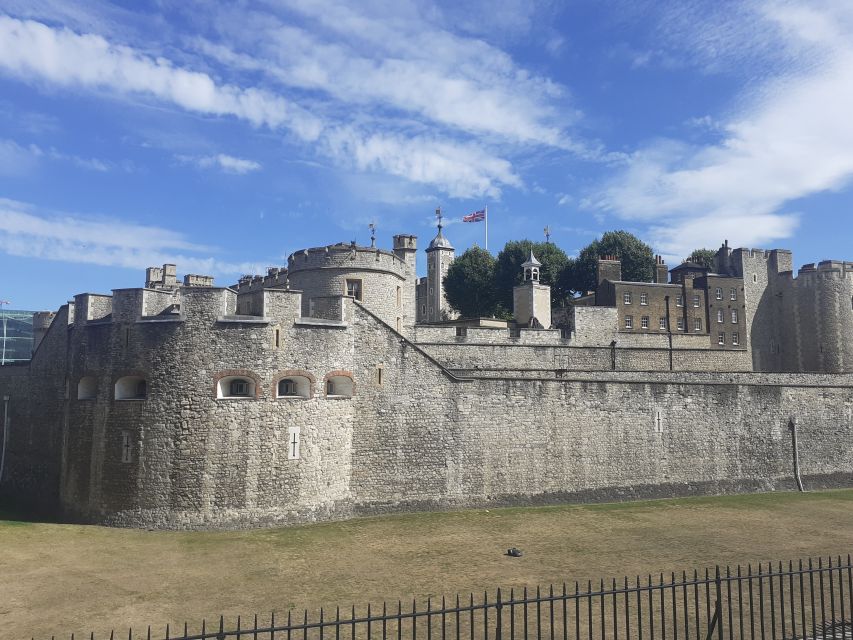
From there, the focus is the Tower of London and its sweep of history. The guide frames it as more than a famous fortress, it’s a place where authority was made visible and enforced. You’ll hear how this site connects to medieval politics and the way rulers used stone, ceremony, and control to project power.
What I like here is the sense of structure. Medieval London can feel chaotic if you’re learning it cold. Starting at the Tower gives you an anchor, then every later stop along the Thames helps you understand why people built where they built.
Tower Bridge on foot, and why it’s more than an Instagram backdrop
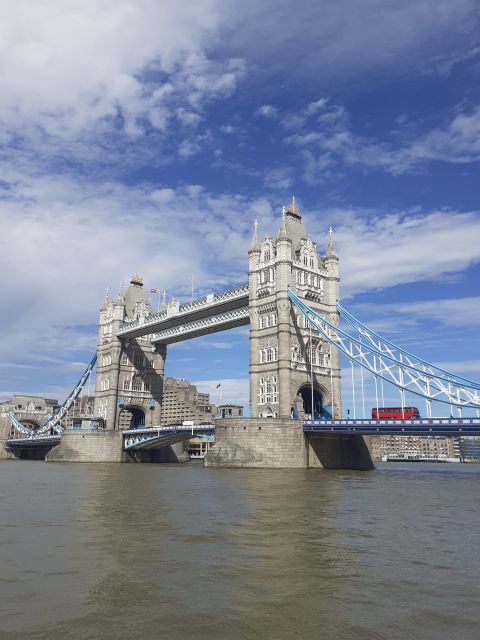
Next comes Tower Bridge, and the guide doesn’t treat it as a background for photos. You cross and get a clear explanation of how the bridge was built and why it became part of London’s identity. It’s a rare moment where engineering meets street-level history.
The Tower Bridge crossing also helps you understand the Thames as a working boundary. Even when the river looks calm from the promenade, it functioned as a major transportation route, a defense line, and a stage for moving goods and people.
If you like a bit of hands-on context, this section is a good one. You can watch the river, look at the river walls and neighboring streets, then tie it back to the bigger medieval story the guide is telling.
HMS Belfast and the Thames in WW2 time
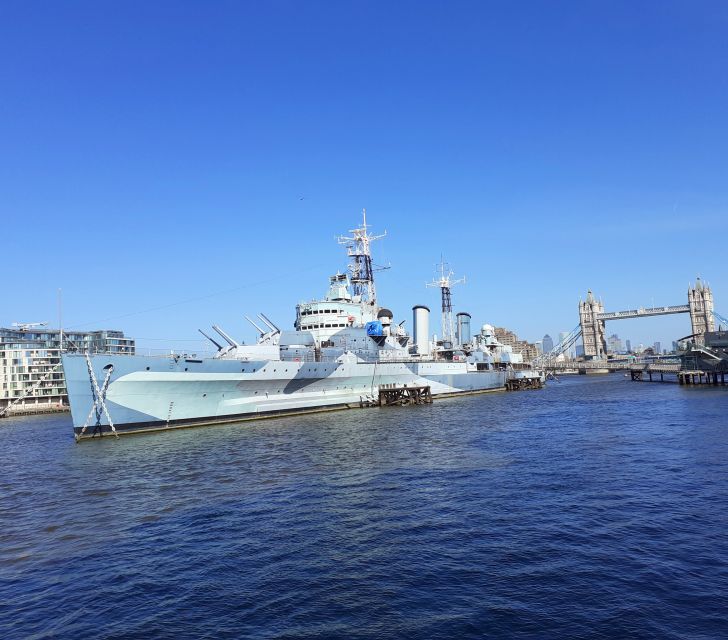
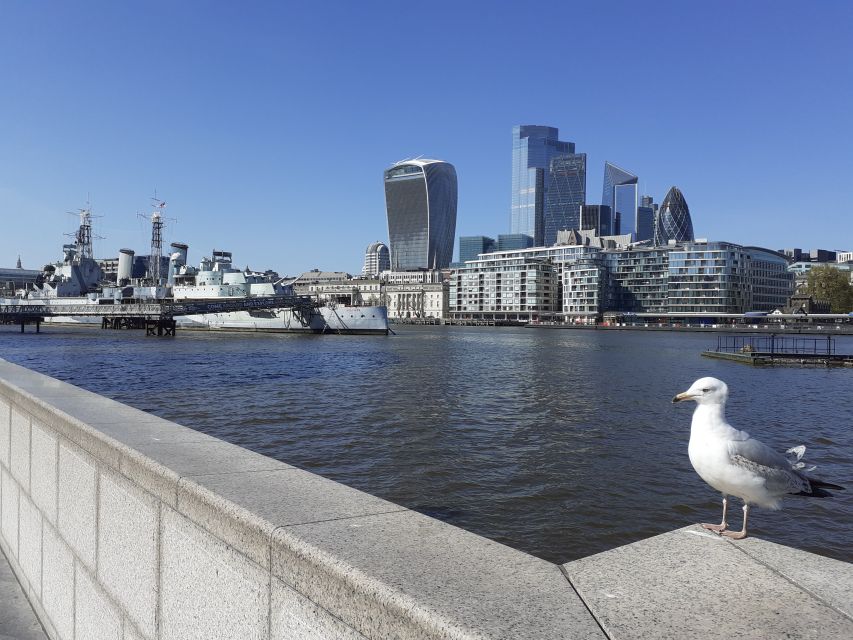
One of the most memorable shifts on this route is the stop at HMS Belfast. The connection to D-Day landings in WW2 makes the Thames feel instantly modern, even though the day is framed as medieval history.
This is where the tour earns its balance. The Tower and Southwark are medieval in feel, but London’s riverfront never truly stopped being strategic. By the time you reach a warship tied to the biggest turning points of the 20th century, you understand the continuity: the same river corridor that mattered in medieval times stayed important in wartime.
A practical tip: if you want photos, plan quick stops here. Museum ships and entrances can get crowded, and you don’t want to lose the pace the guide keeps for the whole group.
London Bridge, Borough Market, and the rhythm of daily life
After Tower Bridge, you move toward London Bridge and then into Borough Market. This part of the tour is a reminder that history is not only castles and cathedrals. It’s also the daily flow of food, commerce, and neighbors doing business near the river.
The guide uses this section to connect religion, power, and everyday life. Borough Market sits in the South Bank story, close to where medieval travelers, workers, and traders would have moved. Even if you visit the market today for lunch, you get a better sense of why it grew here and how the river helped keep it alive.
If you’re a planner, this is a good time to decide whether you’ll eat after the tour. You’ll have tasted the market’s significance by the time you’re there, so you can come back with better context.
You can also read our reviews of more historical tours in London





Southwark Cathedral and Winchester Palace, medieval London up close
The tour moves into classic South Bank history with Southwark Cathedral and Winchester Palace. You’ll learn about Southwark Cathedral’s 15th-century presence, and then switch to Winchester Palace, a 12th-century site tied to medieval power and proximity to the river.
This is one of those segments that changes how you read the city. When you walk past places like these, they can look like they’ve always been part of the skyline. The guide helps you understand that medieval buildings were also political tools, religious centers, and spaces shaped by who had influence at the time.
What makes this section work is the way it’s paced. You get enough explanation to make the architecture feel purposeful, but not so much that you lose momentum. It’s ideal if you want a guided understanding without turning the walk into a lecture.
Golden Hinde and Shakespeare’s Globe, trade and drama on the same riverside
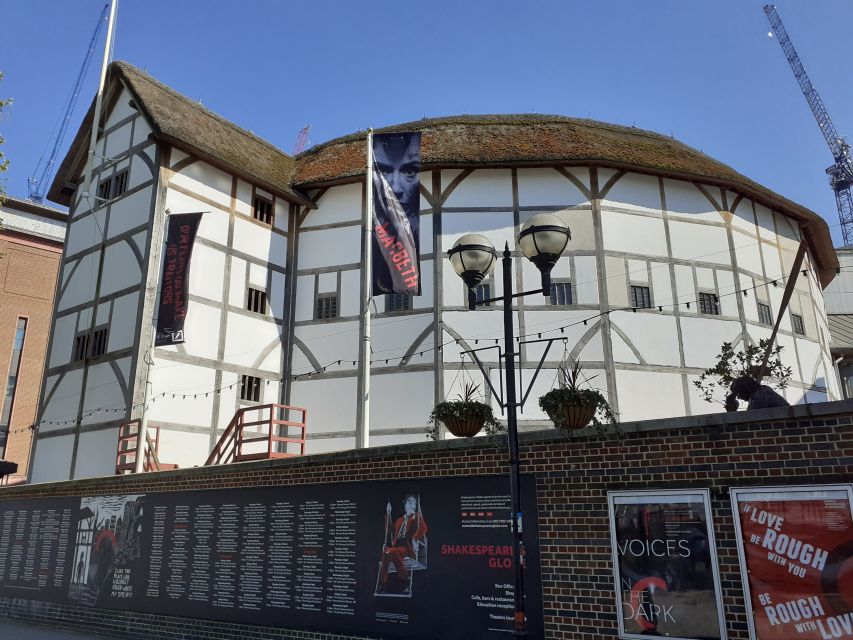
From palace and cathedral history, the route turns toward storytelling and movement. You’ll see the Golden Hinde, a replica tied to Sir Francis Drake, which helps connect London to the age of voyages and exploration. From there, you reach Shakespeare’s Globe Theatre, where the guide puts Shakespeare’s world into the larger river story.
This is the best part for many people because it links two sides of England: the practical world of ships, trade, and imperial ambition, and the cultural world of performance. The river becomes the connector. It’s the route ships used, and it’s also the geography that shaped how audiences and communities formed around major hubs.
If you like photo stops, this is where you’ll want to pause. Riverside viewpoints, theatrical facades, and ship-themed elements make for strong pictures. Just stay with the group so you don’t miss the guide’s “why this matters” explanations.
Following the Thames to the Millennium Bridge and St Paul’s
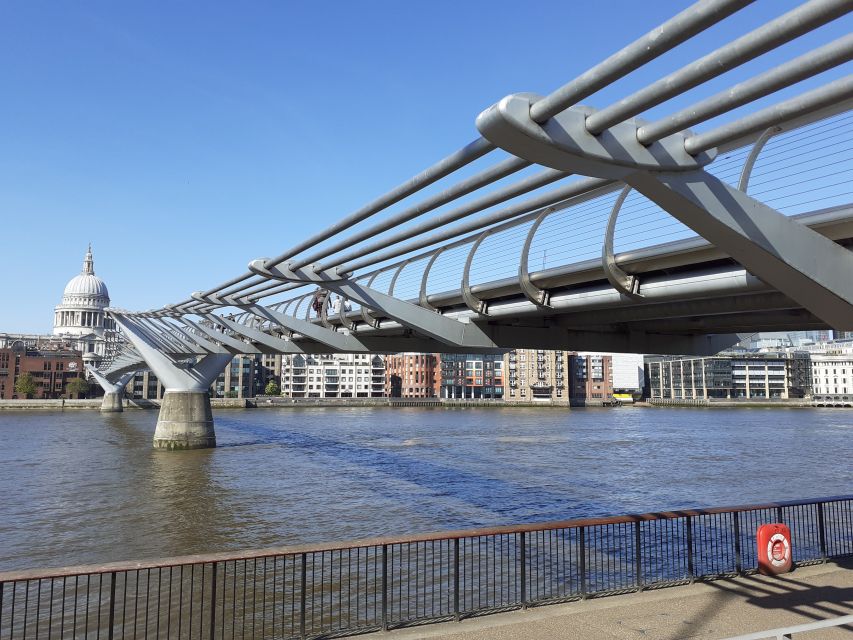
After the Globe area, the tour keeps you oriented by staying tied to the River Thames itself. You’ll pass by the Millennium Bridge and then end with St Paul’s Cathedral.
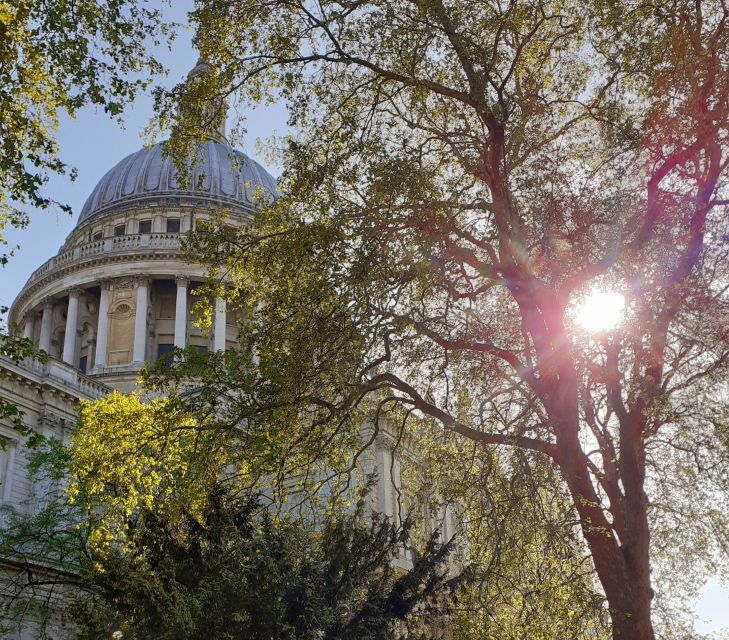
That ending matters. St Paul’s Cathedral is more than a famous dome you’ve seen in postcards. In the context of this walk, it becomes a way to understand how London’s religious centerpiece evolved while the river continued to shape movement and power.
This final section also helps you connect the dots. If the earlier stops feel like separate eras, the Thames line gives you continuity. You’re not just visiting places, you’re learning the pattern of how London grew.
What $24 buys you in a 2-hour history-and-landmarks walk
For $24 per person, you’re paying for two hours of guided storytelling with a stop list that hits major landmarks and some less obvious medieval sites. You also get something many cheap tours skip: context. The guide’s answers are designed to connect politics, religion, and daily life to the actual places you can see.
The value is strongest if you want variety in a short time. In two hours you can cover the Tower Bridge corridor, a warship tied to D-Day, a central market area, South Bank churches and palaces, and ends at St Paul’s. Compared to doing this on your own with an audio app, the guide saves you from piecing together the medieval timeline yourself.
You are not paying for a long museum day. That’s why the price feels fair: you’re buying interpretation and orientation, not a full-day itinerary.
Pace, weather, and comfort tips for a smooth Thames walk
This tour runs in all weathers, rain or shine. So if you hate getting cold, pack accordingly: a light waterproof layer beats hoping for sunshine.
The tour is wheelchair accessible, which is a big plus for people who need a route that works for mobility needs. Still, it’s a riverside walk, so expect real walking time even if the pace is managed for the group.
Bring comfortable shoes. Many people find the only real downside is foot fatigue. If you plan to do other things afterward, consider starting early in the day so your legs have time to recover before a second attraction.
Who this tour suits best
This is a great fit if you want medieval London explained in plain language, with stories that connect places. It’s also ideal if you like questions, because the guide style focuses on answering as you go rather than racing through prepared talking points.
You might also enjoy it if you’ve visited London before and want to see the riverfront without feeling like you missed the “real London.” The route is built to show you both the famous landmarks and the medieval layers between them.
If you prefer a slower pace with lots of inside time at each location, you may feel like two hours is tight. But if you want an efficient route with strong direction and clear context, this is the type of tour that helps you prioritize what to explore later.
Should you book this Tower of London to St Paul’s medieval walk?
If you want a short guided route that makes medieval London understandable, book it. This tour is strong when you’re trying to connect the Tower’s authority story to South Bank power, then tie that into Shakespeare and the river city as it evolved.
Book especially if you value:
- big-picture context over random facts
- a clear sequence from Tower Hill to the Thames to St Paul’s
- a guide who answers questions in a thoughtful way, not just rehearsed lines
Skip it if two hours of walking feels like too much for your plans. In that case, you might still enjoy parts of the route on your own, but you would lose the continuity the guide creates.
FAQ
Where does the tour meet?
Meet your guide outside the western exit of Tower Hill tube station, near Trinity Square and the Citizen M Hotel, by the Tower Hill Tram burger van. The guide will be holding a flagpole with a flag flying from it.
What is the tour duration?
The tour lasts 2 hours.
How much does it cost?
The price is $24 per person.
What language is the live guide?
The live tour guide is English.
Is the tour wheelchair accessible?
Yes, the tour is wheelchair accessible.
Does the tour run in good weather only?
No. The tour takes place in all weathers, rain or shine.
What should I bring?
Bring comfortable shoes and weather-appropriate clothing.
Where does the tour start and where does it end?
It starts at Tower Hill and finishes at EC4M 8AD.
What’s included in the price?
The tour includes an expert tour guide.
Is there a cancellation refund option?
Yes. There is free cancellation with a full refund if you cancel up to 24 hours in advance.
Is reserve and pay later available?
Yes. You can reserve now & pay later and keep your travel plans flexible.
More Walking Tours in London


More Tours in London




More Tour Reviews in London


Not for you? Here's more nearby things to do in London we have reviewed










More London City Tours worth a look.
 ★ 4.6The London Eye Entry TicketTickets from $3935,875 guest reviews
 ★ 4.7From London: Harry Potter Warner Bros Studio TourTickets from $11726,588 guest reviews
Westminster to Greenwich River Thames CruiseTickets from $2222,836 guest reviews
Magical London: Harry Potter Guided Walking TourTickets from $2022,044 guest reviews
★ 4.7From London: Harry Potter Warner Bros Studio TourTickets from $11726,588 guest reviews
Westminster to Greenwich River Thames CruiseTickets from $2222,836 guest reviews
Magical London: Harry Potter Guided Walking TourTickets from $2022,044 guest reviews
 ★ 4.6Madame Tussauds LondonTickets from $3620,915 guest reviews
 ★ 4.5Stonehenge, Windsor Castle, and Bath from LondonTickets from $11118,662 guest reviews
 ★ 4.7Warner Bros. Studio Tour with TransfersTickets from $14417,586 guest reviews
 ★ 4.7Tower Bridge Entry TicketTickets from $2115,560 guest reviews
Continue by place or experience