
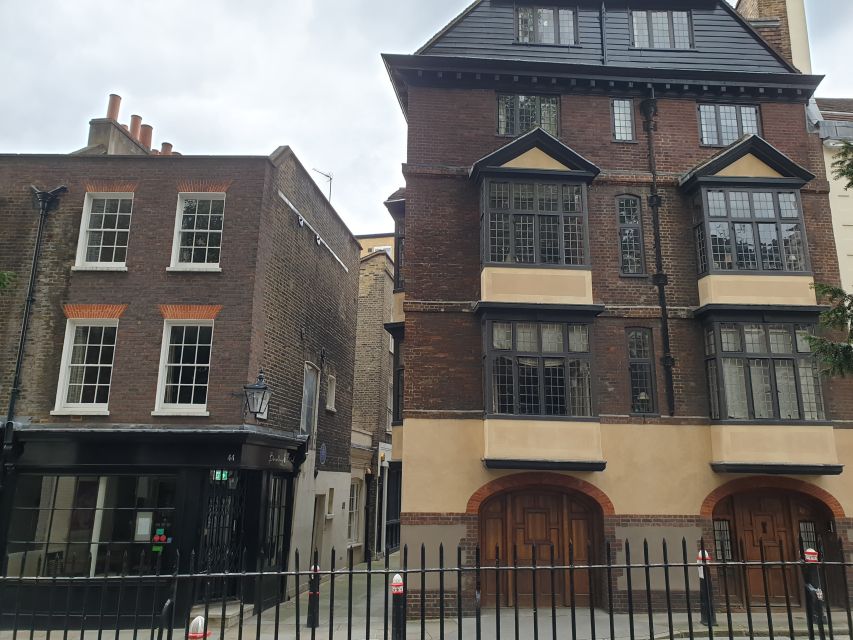
REVIEW · LONDON CITY TOURS
Burnings, Butchery & Black Death: London’s Bloody Past
A thousand years of London can feel compact. This 2-hour walking tour threads the city’s grim timeline from Smithfield’s slaughter to plague disposal and medieval executions, with stops that also explain how the area later slid into Dickens-style misery. I especially like how the guide makes the stories clear and entertaining, and how the walk stays short enough that you stay focused. The one drawback is that the subject matter is dark, so you’ll want to think twice if you do not enjoy gruesome history.
You start at Barbican and end near Farringdon, so it’s easy to plug into a sightseeing day without backtracking. The route is about 2 miles, and the tour is capped at a small group size (15), which helps questions actually get answered. Just remember it is not designed for kids, since it is listed as not suitable for children under 13.
If you like history that feels like real life, not dusty dates, you’ll fit right in. This is London’s shadow-side, told with humor and detail, and delivered in fluent English by a guide with a knack for mixing facts, myths, and storytelling.
Key things you’ll notice on this London history walk
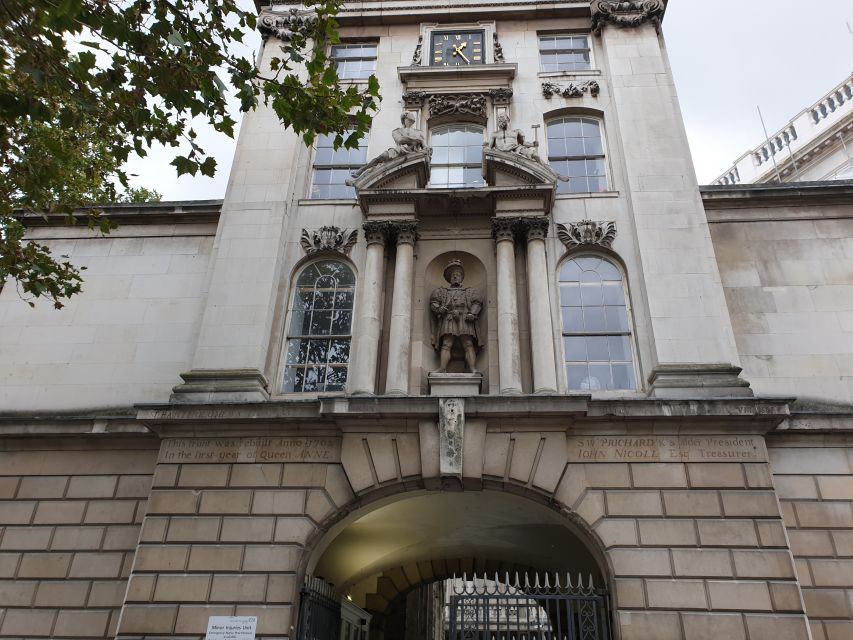
- Smithfield ties together animal and human slaughter, plus the city’s grim systems for handling disaster
- Black Death disposal is a central theme, including how London dealt with tens of thousands of bodies in the 1300s
- Execution methods get explained as part of the medieval justice story, not as random horror trivia
- Dickens and the slum shift show how a place can change in purpose and reputation over time
- Small group (15 max) makes the whole thing feel more like a guided conversation than a lecture
What this tour does best: a short walk with a long memory
London has plenty of tours that stop at pretty corners. This one does the opposite, using a compact route to show how the city treated death, disease, and punishment across centuries. That mix is the hook, and it’s why the experience feels memorable instead of repetitive.
You’ll also get a narrative structure that is easy to follow. The guide moves between locations like they are chapters, connecting themes such as plague management, executions, and how the same area shifted into something Dickens later highlighted in Oliver Twist.
The value here is not just the topic. It is the pacing and the group size. A 2-hour walk is long enough to build context, but short enough that you do not lose momentum, especially with only about 2 miles total.
You can also read our reviews of more tours and experiences in London.
Meeting at Barbican: where the tour starts and how it stays manageable
The walk begins just outside Barbican Station, at the exit on Aldersgate Street. Your guide stands there with an Historic London Tours sign, so you are not stuck wandering for long.
From the start, the tour setup feels practical. You are not dealing with complicated transfers or multiple meeting points, and the end point near Farringdon Station makes your next stop easy. That matters in London, where time lost to logistics is often the real enemy.
The pace also helps the content land. You will move between about a dozen locations, each with a short guide stop (roughly five minutes at most spots), which keeps the story fresh without demanding long standing. Wear comfortable shoes, since you are walking a bit each step, not just stepping from one doorway to another.
Charterhouse Square to Smithfield Market: why this stretch matters
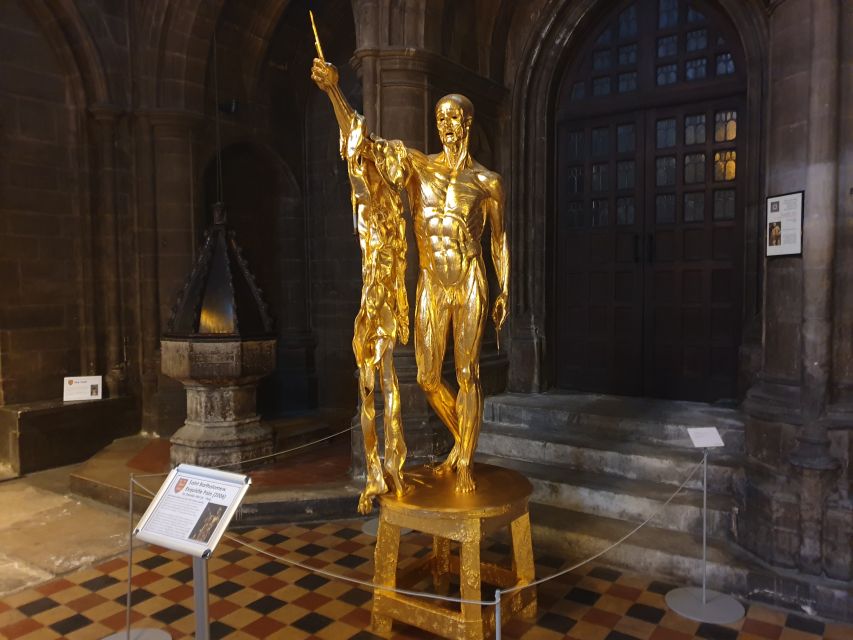
Early on, you hit Charterhouse Square, then move quickly into the heart of the story at Smithfield Market. This is where the tour earns its name. Smithfield is presented as, for centuries, London’s site of both animal and human slaughter, which becomes the anchor for everything that follows.
Why that matters to you is simple. When a city uses one place for slaughter for so long, that place stops being neutral. It becomes a symbol of how the city worked, what it prioritized, and what it had to process when life went wrong.
Then comes one of the tour’s core themes: how London disposed of the Black Death corpses in the 1300s. The tour frames it as tens of thousands of bodies, handled by the city with grim efficiency. If you like history that explains systems, not just disasters, this part is especially compelling.
A practical note: this tour stays in the realm of explanation rather than gore. Still, the subject matter is unmistakably dark, so keep that in mind if you prefer lighter cultural history.
St John’s Gate and Cloth Fair: connecting the dots between places
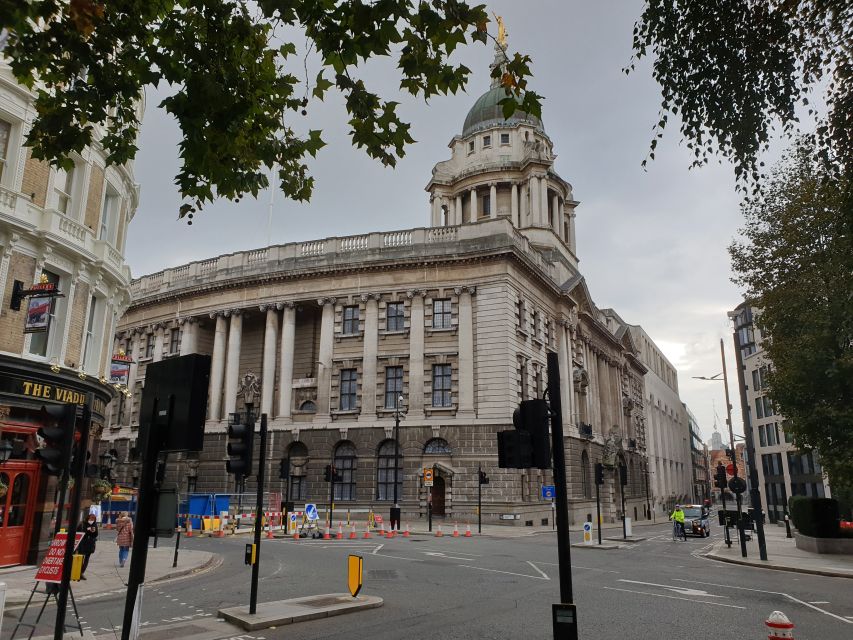
After Smithfield, the walk heads toward St John’s Gate and Cloth Fair. These stops work like bridges. They help the guide connect the physical geography of the area to the human story: how London’s reputation changes, how neighborhoods develop, and how the same overall zone can shift roles over time.
This is also where the tour leans into characters and folklore. The overall tour description signals stories that mix kings, body snatchers, Charles Dickens, and even an eighteenth-century ghost presence. You do not need to be a paranormal fan to enjoy this style, because the guide uses it as a storytelling device to keep the timeline moving.
If you want the tour to feel more than a list of grim facts, this middle section is where that happens. The guide’s tone helps you think about cause and effect. A plague changes how people live. Punishment changes how people fear authority. And over time, that leaves a reputation stamped onto streets.
St Bartholomew the Great: church stops and how to approach them
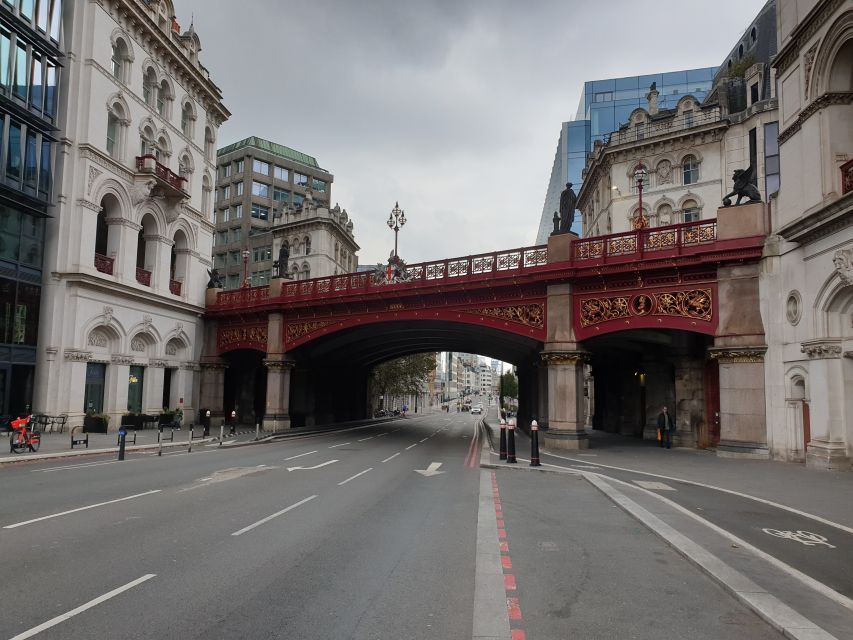
One of the more interesting logistics details is that the tour includes entry to churches, but only if there are no services in progress. That means your experience can vary slightly by day, and that flexibility is part of what you are paying for.
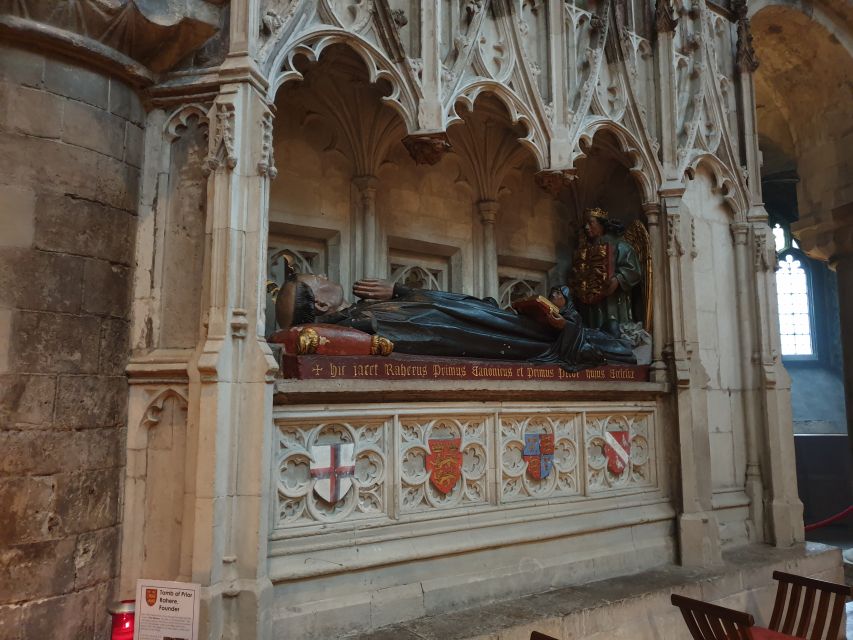
You stop at St Bartholomew the Great, and you’ll likely use the church moment as a contrast to the darker themes on the route. The guide often does this well, using religious or institutional sites to underline how London both ritualized death and built infrastructure around it.
Here is how I would approach these church pauses: keep your eyes on what the guide points out, not on trying to absorb everything on your own. The church visit is short by design, so the payoff comes from listening to how the guide links it back to slaughter sites, plague disposal, and medieval punishment.




Sir William Wallace Memorial: executions, myths, and Braveheart reality checks
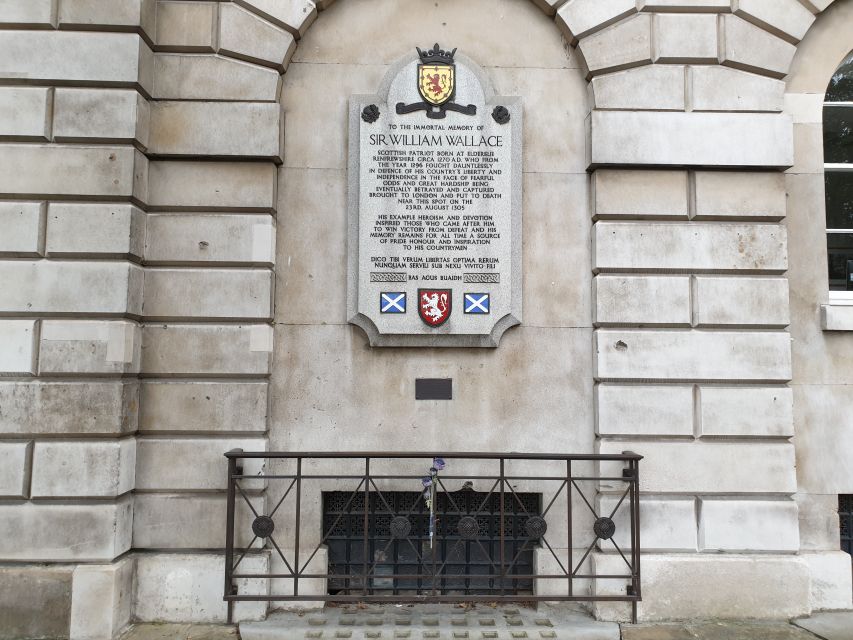
Then the tour takes a sharp turn into the execution storyline with the Sir William Wallace Memorial stop. The theme is medieval justice, including the execution methods used in the Middle Ages.
What I like about this segment is that it does not just repeat the legend. It’s framed as a correction of the movie version of bravery, including a playful nod to how William Wallace, nicknamed Braveheart, was in no fit state to shout Freeeedoooommmm! while being executed.
That humor matters because it keeps the tour from becoming grim in a flat way. You can handle serious topics better when they are delivered with clarity and a bit of levity. The guide’s style, described as entertaining and fluent, is a big part of why this section lands.
Also, this is where the tour’s mix of facts and myth becomes useful for you. If you have ever struggled to separate what you remember from film and what belongs to history, this is one place where the guide helps you sort that out quickly.
St Bartholomew’s Hospital: how the tour frames aftermath
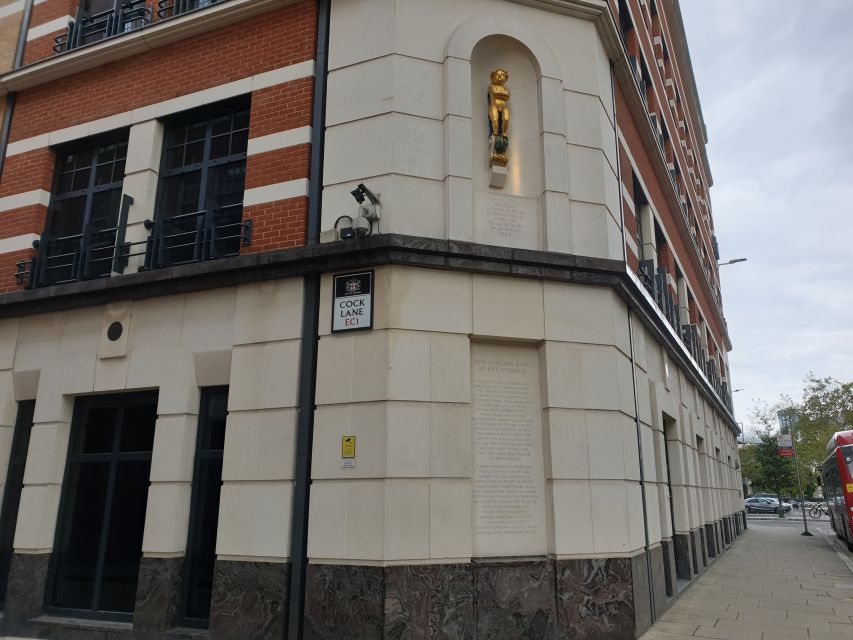
Next up is St Bartholomew’s Hospital. Even though the tour is not going deep into medical detail in the information you’re given, the stop fits the overall arc: a city that dealt with mass death eventually had to build institutions around suffering and recovery.
This part is also a reminder that London’s death economy was not only about slaughter and punishment. It was also about the long aftermath, when people needed care and the city had to keep functioning.
If you want a richer experience here, ask your guide a question. The reviews highlight that the guide encourages questions, and that responsiveness is part of what you get in a small group. With only about 15 people, you’re more likely to get an answer that connects to something you actually care about.
Golden Boy of Pye Corner: Dickens, slums, and how memory sticks
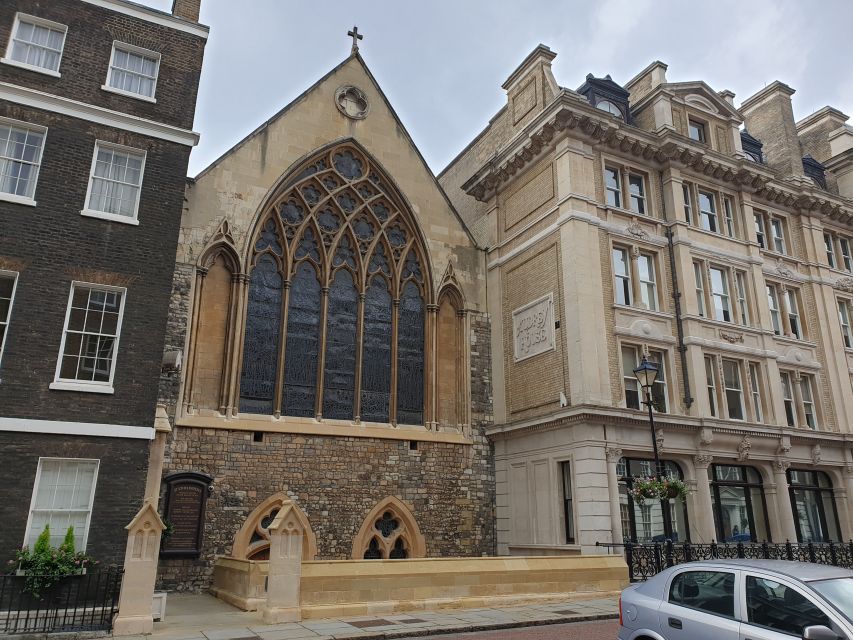
The tour heads to Golden Boy of Pye Corner, which is a standout moment because it ties symbolism to reputation. The overall story includes how Smithfield became a notorious slum, memorialised by Dickens in Oliver Twist.
That is a big shift, and it’s worth paying attention to. The same general area can be seen as a place of slaughter and disposal first, then later as a place associated with poverty and hardship. The tour uses landmarks like this to show how a city’s memory gets layered.
If you enjoy social history, this is one of your favorite stops. It turns the story from disaster management into everyday life, and it explains why literature like Dickens matters to your understanding of place. Even if you know Oliver Twist, the walk helps you connect that reading to real streets.
London Central Markets and Ely Place: finishing strong and moving on
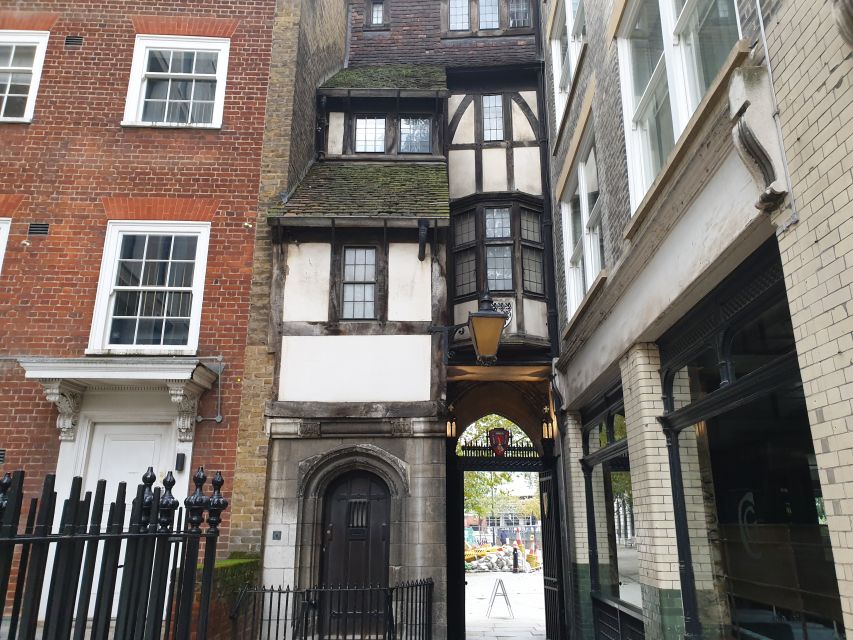
You’ll also pass through the broader Smithfield area again with London Central Markets (Smithfield Market) before finishing at Ely Place. The repetition is not a mistake. It helps the guide reinforce the geographical core of the tour, so Smithfield does not feel like a single stop. It feels like the spine of the whole narrative.
Then it ends near Farringdon Station, which is convenient if you want to keep exploring after two hours. You’ll likely feel a little stretched in your mind, not your legs. That is what a well-told walking tour should do, you leave with new connections, not just new facts.
If you want to turn this into a fuller day, pair it with nearby sights in the Clerkenwell and Farringdon area. The tour does not ask you to do more walking than you need, but it does give you names and themes you can pick up again elsewhere.
Price and value: what $26 buys you in real terms
At about $26 per person for a 2-hour, small-group walk, the real question is value. You are not paying for a bus ride or multiple admissions. You’re paying for expert storytelling tied to specific locations.
The included element that matters most is the live guide. The reviews consistently praise the guide as knowledgeable and entertaining, fluent, and able to combine historical facts, myths, and humor. That combination is the difference between hearing dark history and understanding it.
You also get a limited group size, with 15 attendees as the cap. For London tours, that is a practical value factor. It improves pacing, it helps questions get answered, and it makes the tour feel personal rather than crowded.
Church entry is another small but real inclusion, since stops can be adjusted if services are happening. You are not paying extra for the sites that are part of the narrative, and you still get the chance to step inside when allowed.
Who should book this tour, and who might want to skip it
This is a good fit if you like human-scale history tied to real streets. You’ll get the most out of it if you enjoy connecting plague stories, execution stories, and literature like Dickens into one coherent picture.
It’s also a good fit if you appreciate guides who can make the material stick. The standout feedback emphasizes that the guide was engaging, humorous, and attentive, including kindness toward elderly parents. That suggests the delivery style is practical and considerate, not just academic.
You should think twice if you are traveling with kids under 13, since the tour is explicitly not suitable for them. You should also consider your own comfort level with grim topics, since the themes include plague disposal and medieval execution methods.
Should you book Burnings, Butchery & Black Death?
If you want a London history walk that feels compact but serious, book it. This tour’s strength is its tight route, its small group size, and its guide-led storytelling that mixes fact, myth, and a light touch of humor to keep you engaged.
I would skip it only if you strongly dislike dark subject matter or if you need a family-friendly tour with gentle themes. If you fall on the other side, you’ll leave with a clear sense of how Smithfield became infamous, how the city managed catastrophe, and why Dickens’s London still echoes in real places.
FAQ
How long is the tour?
It runs for about 2 hours.
How far do you walk?
The total distance is about 2 miles.
Where do I meet the tour?
Meet just outside Barbican Station, on Aldersgate Street, at the exit. The guide will be holding an Historic London Tours sign.
Where does the tour end?
It ends near Farringdon Station, with the itinerary finishing at Ely Place.
Is the tour family-friendly?
No. It is not suitable for children under 13.
What language is the tour in?
The tour is in English.
Are church entries included?
Yes, you get entry to churches on the route, subject to there being no services in progress.
Is there a cancellation option and pay-later booking?
You can cancel up to 24 hours in advance for a full refund, and you can reserve now and pay later.
More Tour Reviews in London
Not for you? Here's more nearby things to do in London we have reviewed









More London City Tours worth a look.
 ★ 4.6The London Eye Entry TicketTickets from $3935,875 guest reviews
 ★ 4.7From London: Harry Potter Warner Bros Studio TourTickets from $11726,588 guest reviews
Westminster to Greenwich River Thames CruiseTickets from $2222,836 guest reviews
Magical London: Harry Potter Guided Walking TourTickets from $2022,044 guest reviews
 ★ 4.6Madame Tussauds LondonTickets from $3620,915 guest reviews
 ★ 4.5Stonehenge, Windsor Castle, and Bath from LondonTickets from $11118,662 guest reviews
 ★ 4.7Warner Bros. Studio Tour with TransfersTickets from $14417,586 guest reviews
 ★ 4.7Tower Bridge Entry TicketTickets from $2115,560 guest reviews