
REVIEW · LONDON CITY TOURS
Woolf & Dickens: London Literary Tour & Writing Workshop
London becomes your draft page fast. This 1.5-hour Woolf & Dickens tour mixes literary readings with a hands-on writing workshop around Waterloo Bridge, Somerset House, and St Mary Le Strand, so your brain shifts from sightseeing mode to noticing mode.
I like the way the prompts are tied to specific places, from Virginia Woolf’s wistful Waterloo Bridge reflections to T.S. Eliot’s study of time brought to life at St Mary Le Strand. I also like that your guide, Joseph, runs it like a supportive classroom, with relevant readings, good questions, and space to make each exercise your own voice.
One consideration: you will actually write. If you want pure walking-tour photos with zero homework, this may feel a bit too interactive, even though it stays kind and inclusive.
Key things I’d mark on your map
- Waterloo Bridge and Woolf’s viewpoint, a fast route into mood and memory
- Somerset House mindful writing, practical, not performance
- St Mary Le Strand for Eliot’s time theme, plus an ekphrasis exercise in the church
- The Aldwych timeline moment, where history and chronology become a prompt
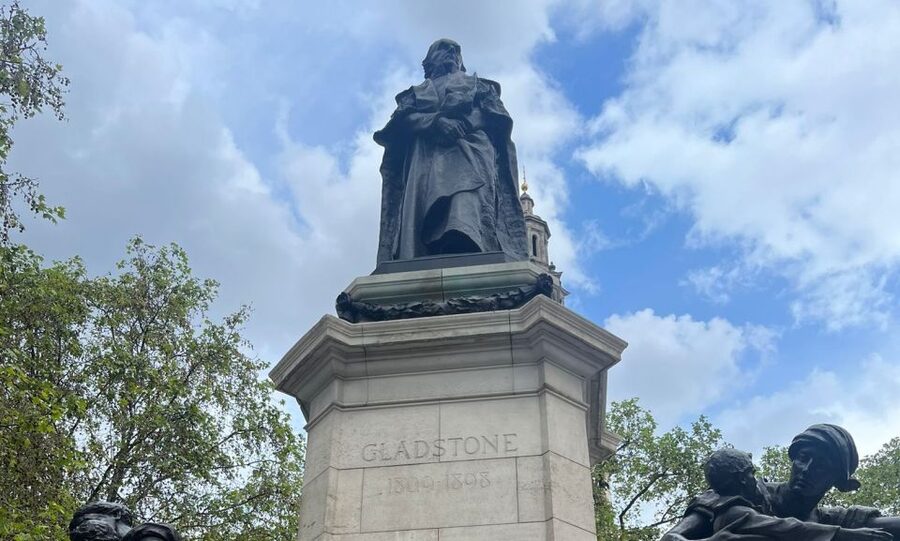
- Gladstone statue and a fact list task, built around truth, politics, and perspective
- Doctor Johnson’s dictionary reading, using language itself as the tool
Turning London into writing practice in 90 minutes
This isn’t a museum lecture, and it isn’t a sit-and-listen tour either. You walk a short stretch through central London and stop often enough to feel the “okay, now write” rhythm. The format works because it gives you two things at once: a story feed (readings from major English writers) and a do something with it task.
The tour is designed and delivered by an award-winning novelist with a PhD in Creative Writing. That matters for one reason. You are not just collecting trivia. You are using literary techniques in miniature, the same way writers learn by trying, failing, revising, and trying again. And because it’s built for all levels, you do not need to be a published author or even confident with prose. The exercises are structured so you can participate with whatever skill level you bring.
The tone is also part of the value. The experience aims for kindness and inclusivity, and in practice that means you get prompts that invite your own take instead of forcing one “correct” answer. Joseph, your guide, also comes across as serious about books without turning the session into a test. That’s the sweet spot for a writing workshop while you’re on vacation.
More London tours and experiences for the shortlist


Meeting at Waterloo Bridge, then Woolf makes the view personal
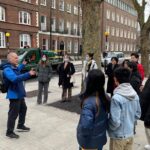
You meet at the north end of Waterloo Bridge. Look for the slope on the right that goes behind Somerset House. It is a good starting spot because it sets you up for city scale right away. You are not stuck indoors. You are standing where the Thames and the bridges do their daily job of moving people, time, and viewpoints.
From there, the tour anchors its first writing thread in Virginia Woolf. You consider her wistful reflections connected to the view from Waterloo Bridge. The trick here is that the prompt is not asking you to write a biography or a dramatic essay. It nudges you to mix observation with emotion, the way Woolf often folds past and present into the same sentence.
What I think makes this stop work for you is that it gives you a controlled starting line for your own writing. If you’ve ever stared at a blank page in a cafe, you know the problem is not effort, it’s starting. The Woolf prompt gives you a runway, then asks you to build your own draft. Even if your writing ends up short, you’ll leave with the feeling that the city handed you something specific to work with.
Somerset House and a mindful experiment that doesn’t waste your time
Next comes Somerset House, which is a smart choice because the setting is both historic and open. It feels like London at a human scale, not a movie set, and that helps when you’re asked to do a mindful writing experiment.
This is the part of the tour that feels most “useful” on vacation. You’re not just inspired, you’re doing a brief practice designed to sharpen attention. The prompts ask you to slow down just enough to notice how your thoughts land on paper. In other words, you learn a repeatable trick, not just a one-time moment.
The mindful style also helps if you’re traveling alone or you’re nervous about writing in front of others. You can focus on your own pace. And because the tour is designed for writers from novice to novelist, it should feel like a low-pressure workshop rather than a high-stakes performance.
Practical note: bring the pen and notebook the experience asks for, and also bring water. A writing workshop in London can get oddly dehydrating because you end up looking up, walking, and thinking faster than you expect.
Aldwych timeline echoes Eliot’s sense of history and time
After Somerset House, you hit an Aldwych stop tied to T.S. Eliot. The idea is that Eliot’s reflections on time and history are echoed in a timeline on the walls at Aldwych, which becomes part of your writing context.
This is a clever approach because it turns a static feature of the street into an active writing prompt. Instead of treating “history” as a separate topic, you treat it as a structure. What does the timeline make you notice? How do you measure what matters? What gets left out when you compress time into a sequence?
If you like writing that bends time, connects memory to place, or plays with chronology, this is likely the kind of prompt you’ll actually enjoy working on. Even if you don’t, the exercise should still push you to think in a new way, because the timeline gives you a concrete anchor.
St Mary Le Strand, Eliot’s time theme, plus ekphrasis in the church
The church of St Mary Le Strand is where the tour leans into atmosphere. This is not just a photo stop. You respond to T.S. Eliot’s study of time while touring the church, then practice an ekphrasis exercise inspired by the grand interior.
Ekphrasis is fancy word, but the task is straightforward. You write from what you see. You translate space into language. And because you’re in a church with strong architectural presence, you get lots of sensory material to work with, even if you’re not trying to produce something poetic.
A big value here is that the prompt is specific to the setting. You are not writing into the void. You’re writing from a scene that already contains tension, symbolism, and scale. That helps you bypass the usual travel writing problem: writing about the city, but not writing what the city is doing to you.
There’s also a thematic payoff. Eliot’s time and history idea threads through the day, so when you’re inside St Mary Le Strand, it feels like the tour is building a single line of thought rather than hopping between unrelated facts.
And yes, it’s still a workshop, not a lecture. You’ll be creating your own response, not just collecting impressions.





Gladstone to Doctor Johnson, politics, truth, and the structure of language
As the tour moves forward, you shift from time to politics and truth. The statue of Gladstone becomes a prompt for thinking about how politics, truth, and history can change depending on your perspective.
Then you write a list of facts, blending your personal history with the environment you’re part of. That sounds simple, but it’s a sharp exercise. Facts feel objective until you notice how memory and identity influence what you choose to include, what you interpret, and what you ignore. That tension is the point.
If you’ve ever felt that writing about politics turns into noise, this is a more grounded way to approach it. You start with the concrete, then you let your own stance show up through selection. It’s a truth-and-perspective exercise disguised as a short list.
The next stop brings Samuel Johnson into the mix, at Doctor Johnson’s house. You read from his delightful dictionary and consider how structures like religion, politics, art, and language make us who we are.
This part is valuable because it makes language feel physical. Johnson’s dictionary is not just an old book, it’s a reminder that words carry frameworks. When you write, you are not just expressing yourself, you’re choosing structures that shape how readers will interpret you. And since you’ve already been working with prompts built around history and truth, the Johnson stop ties the whole day together through craft.
Also, Dickens enters through the tour’s prompt strategy around truth and politics. You’re invited to use these writers as starting points, which is a fun twist if you know Dickens mainly from characters and plot. Here, you use the Dickens lens to think about ideas, not only entertainment.
Price and value: what $101 buys you for 1.5 hours
At $101 per person for 1.5 hours, you’re paying for more than a guided walk. You’re buying an instructor-led writing workshop anchored in London sites, with readings integrated into the process. And importantly, there are no entry tickets needed.
That matters for value because central London can be ticket-heavy. Here, the cost stays focused on the experience itself. You also avoid the common frustration of “guided tour with no time to actually do anything.” You get time for your own response, guided by literary prompts.
Is it expensive compared to a free walking loop? Sure. But if you want something you can’t get from an audio guide, this hits the mark. It’s a short, concentrated session with structure, readings, and writing practice. For many people, that’s the sweet spot during a trip: one focused activity that changes how you see the city.
What to bring so you can actually write
You will want to show up ready. The experience asks you to bring:
- a pen
- a notebook
- water
- an umbrella just in case
- internet access
That internet piece might not sound like a “writing” requirement, but it is listed, so plan to have your phone handy and functional. It’s the kind of small prep that saves you from mid-exercise stress.
Also, wear shoes you can walk in comfortably. The tour lasts 1.5 hours, so there is movement, but it is not a marathon. Still, you’ll do better if your feet feel good enough for your brain to focus.
Who this tour suits best, and who might skip it
This workshop style fits best if you like one or more of these:
- you enjoy writing prompts and want a structured way to get started
- you love English literary authors and want to see how their ideas connect to place
- you want a small, supportive activity where making something is the goal, not just watching
It’s also a good fit if you’re a beginner. The prompts are designed to suit novice to novelist, and Joseph’s approach emphasizes a welcoming learning environment.
If you only want sightseeing, then you might find the writing time a bit demanding. You can enjoy the walk and the locations, but the day is built around responding creatively. Plan to participate, not just observe.
A quick practical reality check before you book
One more practical note: this is a private group, and the tour is live with an English-speaking guide. That combination often makes activities like this feel less intimidating and more flexible.
Wheelchair accessibility is listed too, so if mobility is part of your planning, this is worth considering. Still, any short city walk can involve uneven surfaces, so it’s smart to think about your own needs when you choose what shoes and route comfort you bring.
Should you book Woolf & Dickens: London Literary Tour & Writing Workshop?
I’d book it if you want literature to do something to you, not just sit in the background. The biggest strengths are the hands-on writing exercises, the strong author-to-place connections (Woolf at Waterloo Bridge, Eliot at St Mary Le Strand, Johnson through his dictionary), and Joseph’s clearly welcoming, safe teaching style.
I’d hesitate if your ideal London day is all about uninterrupted wandering, big landmarks, and zero writing. This tour asks for participation, and that interaction is where the value lives.
Based on the overall quality shown by the top score and the emphasis on thoughtful prompts, good questions, and room for your own voice, this looks like one of those rare activities that can work for first-timers and still feel satisfying if you write often.
If you like the idea of using London as a prompt engine, not just a backdrop, then this is a solid $101 use of your time.
FAQ
How long is the Woolf & Dickens London Literary Tour & Writing Workshop?
It lasts 1.5 hours.
Where do we meet for the tour?
Meet at the north end of Waterloo Bridge at the slope on the right that goes behind Somerset House.
Is this a passive tour or do we write during it?
It is not passive. You take part in writing exercises throughout the walk and workshop.
Are entry tickets included for stops?
No entry tickets are needed.
What should I bring to the workshop?
Bring a pen and a notebook, plus water and an umbrella if needed. Internet access is also listed as something to bring.
What language is the tour conducted in?
The tour is offered in English.
Is the tour wheelchair accessible?
Yes, wheelchair accessibility is listed.
Is the group private?
Yes, it is a private group.
Can I cancel, and is payment flexible?
Free cancellation is available up to 24 hours in advance for a full refund. You can reserve now and pay later, with the option to pay nothing today.
More Workshops & Classes in London



More Tours in London



More Tour Reviews in London
Not for you? Here's more nearby things to do in London we have reviewed









More London City Tours worth a look.
 ★ 4.6The London Eye Entry TicketTickets from $3935,875 guest reviews
 ★ 4.7From London: Harry Potter Warner Bros Studio TourTickets from $11726,588 guest reviews
Westminster to Greenwich River Thames CruiseTickets from $2222,836 guest reviews
Magical London: Harry Potter Guided Walking TourTickets from $2022,044 guest reviews
 ★ 4.6Madame Tussauds LondonTickets from $3620,915 guest reviews
 ★ 4.5Stonehenge, Windsor Castle, and Bath from LondonTickets from $11118,662 guest reviews
 ★ 4.7Warner Bros. Studio Tour with TransfersTickets from $14417,586 guest reviews
 ★ 4.7Tower Bridge Entry TicketTickets from $2115,560 guest reviews
Continue by place or experience