
REVIEW · LONDON CITY TOURS
Ultimate introduction to photography in Central London
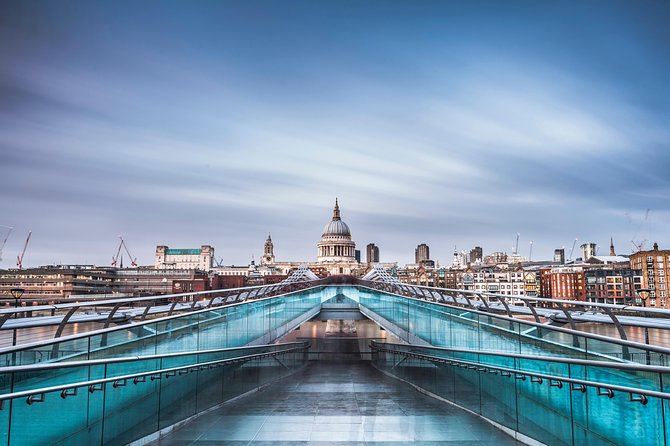
London photography can feel magical. This hands-on 5.5-hour workshop takes you past the London Eye and down to the Thames while a pro teaches the nuts and bolts of making shots, not just pressing buttons. I love the small group setup, you get real attention and time to try settings, and I love that you practice the core trio, ISO, shutter speed, and aperture, while the light is changing around you. One drawback to plan for is that the experience depends on good weather, so cloudy or rainy conditions can shift things.
The best part is the thinking behind the photos. Matthew Williams-Ellis runs the session with an in the field style, where you test ideas immediately at famous spots like St. Paul’s and the Leake Street Arches, then you wrap with a riverside sunset, blue hour, or a night shoot. I also think you should consider the walking and standing time, since it’s moderate, and you will be moving as you learn.
Key highlights worth getting excited about
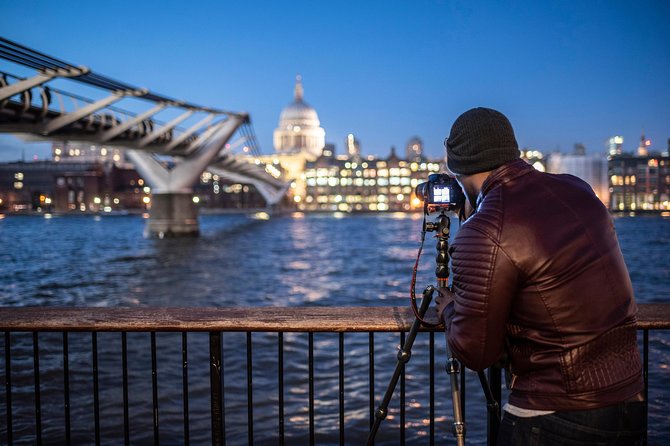
- Max 8 people means you can ask questions and actually try what you just learned
- ISO, aperture, and shutter speed taught as a working system, not as separate facts
- In the field practice at iconic landmarks plus the Leake Street Arches graffiti tunnels
- Slow shutter experiments that make motion and low light more controllable
- Thames finale with sunset, blue hour, or night photography depending on the conditions
Central London photo coaching in a small group of eight
If you want to learn photography in London, you need two things: good locations and good teaching. This workshop gives you both, with a group capped at eight people so it does not turn into a big lecture. That small size matters when you are trying to remember what ISO does, while your camera also needs you to focus, frame, and shoot.
You start in central South Bank territory and spend the afternoon working through a natural learning curve. Early on, you get the basics so you can stop guessing. Later, the session leans into low light and motion, so your photos start looking more intentional, not just correctly exposed.
Matthew Williams-Ellis teaches with patience and a calm style that works for beginners and also for people who have been stuck on auto mode for years. Several participants mention that he explains settings clearly and then makes sure everyone gets hands-on time, which is exactly what you need if you want skills you can use after the workshop.
You can also read our reviews of more photography tours in London
What you actually learn about cameras, ISO, and focus
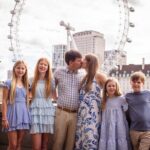
This is not a theory only class. It is a fundamentals first session built around shooting, reviewing in the moment, and trying again. You learn how ISO, aperture, and shutter speed interact so exposure stops feeling like random math and starts feeling like cause and effect.
Here’s the practical goal I like: you should be able to look at a scene and decide what to control. If you want a sharp subject at night, you know what will happen when you change shutter speed. If you want a brighter frame without totally blowing it out, you understand how ISO and aperture work together.
You also get into shooting modes and focusing, because those are the mechanics that decide whether your image is sharp, blurry, or just not what you pictured. Even if you use a DSLR or a compact camera, the mindset carries over. And if you prefer using your phone camera, you are not left out, since the workshop helps people make better use of their phone cameras too.
One extra thing I appreciate is the emphasis on thought. This session asks you to create photos, not just capture them. That means you practice seeing the scene as a story frame, and then choosing settings that support the story you want.
London Eye stop: turning a famous landmark into your own shot
The London Eye is the kind of landmark that tempts people into snapping the obvious angle. This workshop pushes you to slow down and make the landmark look like it belongs in your photo, not like it belongs in a postcard pile.
During this phase, you usually get the “get your settings under control” part of the day. That helps because the London Eye area can be bright in the daytime and then tricky as the afternoon moves toward dusk. You learn how to adjust for that shift rather than just hoping auto mode bails you out.
What makes this stop valuable is that it is a practice zone. You can test compositions quickly. You can change shutter speed and see how it affects brightness and motion. You can also experiment with focusing and framing while still staying near a big, recognizable subject.
A small warning for expectations: you will not spend all day at one spot posing. This is a moving workshop, so use the London Eye time to get your basics working, then let those skills carry you forward.
Leake Street Arches graffiti tunnels: motion and gritty composition
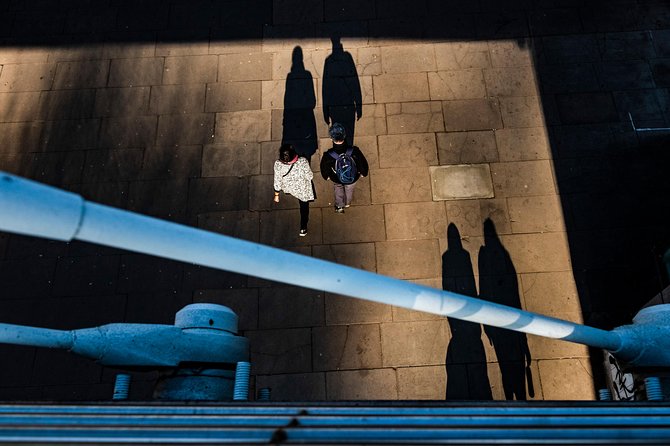
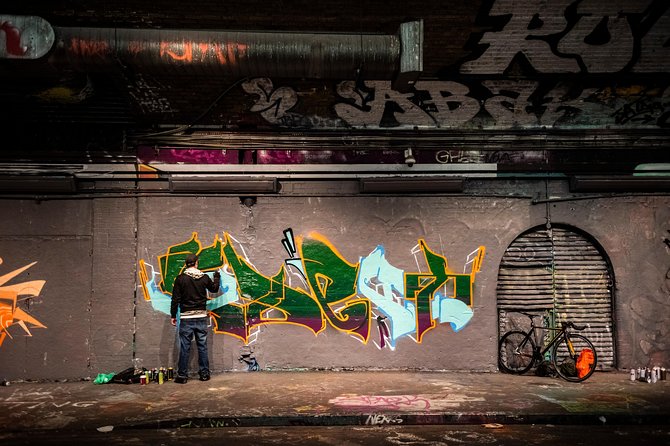
Leake Street Arches, also known as the Waterloo graffiti tunnels, is a super practical place to learn photography. Indoors in the sense of being under arches, but still outdoors in the city, you get light that feels dramatic. You also get texture, color, and surfaces that give composition something to grab onto.
This is where the workshop’s “photographic eye” part starts to click. Instead of shooting only the biggest thing in view, you learn to look for lines, repeating shapes, and leading paths that pull the viewer through the frame. Those ideas work in any city, even if the next place you visit has no graffiti tunnels at all.
The tunnels also create a different challenge than the bright riverfront. When you shift from light to shadow, you feel why aperture, shutter speed, and ISO do different jobs. And because the area is visually busy, you practice framing with more intention, so your photos do not just look like snapshots of a crowded scene.
If you like street photography, you will especially enjoy this stop. If you are more into clean, minimalist shots, it still helps because the tunnels force you to think about composition, not just exposure.
St. Paul’s Cathedral: getting sharp results as the light shifts
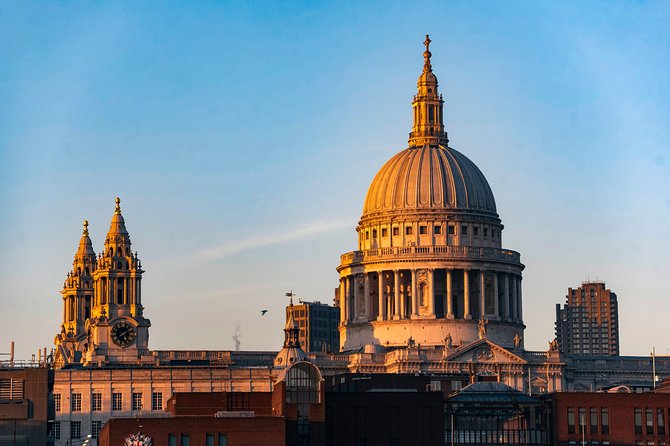
St. Paul’s is a classic subject, but it is also a good lesson in how to handle complex scenes. You have a major landmark, lots of verticals, and changing ambient light as the day progresses. That mix is perfect for learning focusing and composition, not just counting pixels.
This is typically the stop where you feel your camera skills starting to become repeatable. You learn what to adjust for the subject and the background, and how to avoid common mistakes like focusing in the wrong place or letting the background compete too hard.
If your camera has multiple focusing options, this is where you can learn which ones make sense for moving people and changing viewpoints. If you are using a phone, you can still apply the same thinking, since the main challenge becomes choosing what to keep sharp and what to let soften.
The upside here is that you end up with more than one style of cathedral shot. You can try tighter compositions that emphasize details, or wider compositions that show context. And because you are learning during the session, you will not walk away with only one safe setup.




South Bank skate park and slow shutter experiments
The South Bank skate park part of the day is where your photos start to look more energetic. You want dynamic shots, but you also want to avoid the “everything is blurry and unusable” trap. That means you learn how to balance shutter speed with the kind of motion you want.
This is also where the workshop turns a corner into low-light style. Once you are comfortable with the basics, you experiment with slow shutter approaches. The idea is not only to make bright scenes look cool. It is to use time as a creative tool, so motion becomes a feature instead of a failure.
I like this approach because it teaches you the underlying logic. If you slow the shutter, the camera sees more light over time. If you change aperture or ISO, you influence brightness and depth of field. Once you understand that, you can make smart choices instead of guessing.
Skate park subjects give you movement you can predict a little. You can practice timing and framing, and you can learn how your settings behave when the action changes quickly. That skill becomes useful anywhere, from musicians to traffic to people walking.
One thing to keep in mind: you might need a few tries to get the shutter feel right. That’s normal. The value of the workshop is that you can adjust immediately with feedback.
Thames sunset, blue hour, or night shoot: finishing with real atmosphere
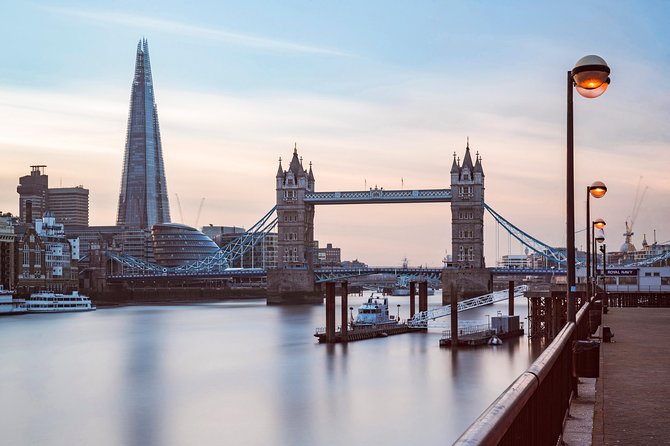
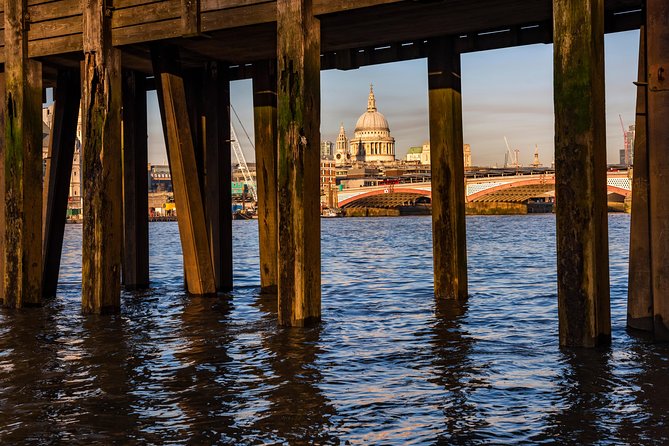
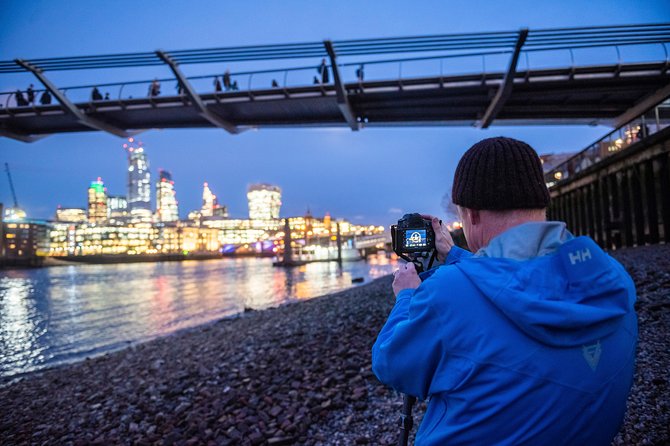
The finale is the riverside part that makes this workshop feel like more than a skills class. You wrap up with a sunset, blue hour, or a night shoot overlooking the Thames, depending on timing and conditions.
This portion matters because it teaches you how to shoot when the city stops being evenly lit. Blue hour can give you soft color and layered contrast. Night gives you reflections and point sources of light that can easily blow out if your settings are off.
You practice thinking about the scene as a whole. What is the subject? What is the light doing? What do you want to emphasize, the river texture, the landmark shapes, or the glow trails created by long exposures? That’s the same “create the photo” mindset emphasized earlier in the day.
And since this part is hands-on, you learn how to adjust rather than just watch. If your frame is too dark, you know what to change first. If highlights are too bright, you know what to rein in.
Even if you do not consider yourself a nighttime photographer, this is the segment that usually upgrades your portfolio fast. You come away with images that feel London, not just well exposed.
Price and value for a 5.5-hour hands-on workshop
At $232.25 per person for about 5 hours 30 minutes, you are paying for instruction plus time in multiple iconic settings. In a city like London, the value is not just the places. It is the pro guidance that helps you use those places to learn real technique.
The small group size is part of why the price makes sense. You are not competing for attention with strangers. You can get direct help on your camera, your settings, and your composition choices.
You also get a structured progression: fundamentals early, creative motion and slow shutter later, then a low-light finale. That arc is what turns a half-day into an actual learning session instead of a walk with some tips.
If you want editing tutorials or Lightroom specific lessons, that is not what this workshop is described to focus on. The emphasis stays on what you capture while you are out there, with settings and decisions you can reproduce later.
Pace, meeting point, and what you should prepare mentally
You meet at Starbucks Coffee on Belvedere Rd, London SE1 7GQ, and the activity ends back at the same meeting point. It is near public transportation, which helps because it keeps your logistics simple before you start moving for the day.
The physical level is listed as moderate. That usually means standing, walking between spots, and finding viewpoints at different levels of the riverfront and city streets. Wear shoes you can handle on cobblestones and uneven pavement, because your best shots tend to happen when you are willing to reposition quickly.
Confirmation comes within 48 hours of booking, assuming availability. You will also get a mobile ticket, which keeps the day easy if you like to travel light with minimal printed stuff.
One practical consideration: good weather is required. If conditions are poor, you get offered a different date or a full refund. That weather dependency is not a small footnote here, since sunset and blue hour are the whole payoff.
Who this workshop fits best (and who should skip it)
This course is ideal if you want an introduction to photography in Central London without getting stuck in beginner confusion. It is especially good if your camera is newer, older, or just collecting dust because you never learned what ISO, shutter speed, and aperture really do.
It is also a strong fit for people who want to improve both camera basics and their visual thinking. The combination of technical settings and composition mindset is what makes the photos improve on day one, not just over time.
If you are already an advanced photographer who fully understands exposure and wants specialized gear workflows, you might find the basics a bit slower than your usual pace. Still, the chance to practice slow shutter ideas and low-light shooting in a guided city setting can be useful even for experienced folks.
Should you book this tour?
Yes, if you want a structured, friendly way to learn photography in a part of London that gives you plenty of subjects fast. The small group size, Matthew Williams-Ellis’s coaching style, and the day’s progression from basics to slow shutter to Thames blue hour is a winning combo.
Book it especially if you have ever felt stuck on auto mode, or if you want phone camera help without feeling like you are taking a course meant only for DSLR users. The workshop’s focus on thinking and creating photos is the reason you should come away with images you feel proud of, not just images you managed to capture.
Skip it only if you know you dislike walking moderate distances, or you hate weather-dependent outdoor plans. Otherwise, this is a smart way to turn one afternoon into camera confidence.
FAQ
How long is the photography workshop?
It runs for about 5 hours 30 minutes.
How many people are in the group?
The group size is limited to a maximum of 8 travelers.
What does the workshop cost?
The price is listed as $232.25 per person.
Where do you meet, and where does it end?
You start at Starbucks Coffee on Belvedere Rd, London SE1 7GQ, and the experience ends back at the same meeting point.
What language is the workshop offered in?
The workshop is offered in English.
What are the main places you photograph during the session?
You visit London Eye, Leake Street Arches, and St. Paul’s Cathedral, and you also photograph areas like the South Bank skate park and finish with riverside sunset, blue hour, or a night shoot overlooking the Thames.
Does the workshop teach camera settings like ISO, aperture, and shutter speed?
Yes. You learn the basics of ISO, aperture, shutter speeds, shooting modes, and focusing, and you practice slow shutter techniques as the day progresses.
Can I use a phone camera instead of a traditional camera?
The course includes learning how to make full use of your phone camera more effectively, so it is not limited only to traditional cameras.
Is the workshop weather-dependent?
Yes. It requires good weather. If it is canceled due to poor weather, you are offered a different date or a full refund.
What is the cancellation and refund window?
You can cancel up to 24 hours in advance for a full refund. If you cancel less than 24 hours before the start time, the amount paid is not refunded.
More Photography Tours in London

More Tour Reviews in London

Not for you? Here's more nearby things to do in London we have reviewed




More London City Tours worth a look.
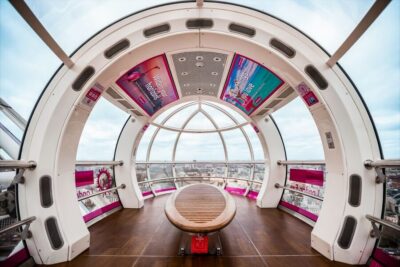 ★ 4.6The London Eye Entry TicketTickets from $3935,875 guest reviews
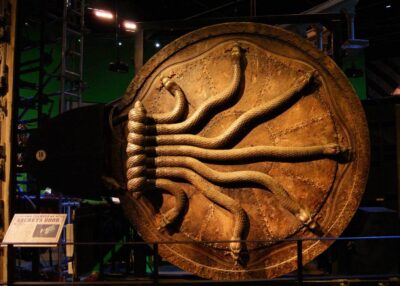 ★ 4.7From London: Harry Potter Warner Bros Studio TourTickets from $11726,588 guest reviews
Westminster to Greenwich River Thames CruiseTickets from $2222,836 guest reviews
Magical London: Harry Potter Guided Walking TourTickets from $2022,044 guest reviews
★ 4.7From London: Harry Potter Warner Bros Studio TourTickets from $11726,588 guest reviews
Westminster to Greenwich River Thames CruiseTickets from $2222,836 guest reviews
Magical London: Harry Potter Guided Walking TourTickets from $2022,044 guest reviews
 ★ 4.6Madame Tussauds LondonTickets from $3620,915 guest reviews
 ★ 4.5Stonehenge, Windsor Castle, and Bath from LondonTickets from $11118,662 guest reviews
 ★ 4.7Warner Bros. Studio Tour with TransfersTickets from $14417,586 guest reviews
 ★ 4.7Tower Bridge Entry TicketTickets from $2115,560 guest reviews
Continue by place or experience